
Reviewed · COOKING CLASSES
JEJU Cooking Class _Class & Dinner at Jeju Seaside Sunset Terrace
Come hungry, leave with recipes. This three-hour Jeju cooking class combines practical Korean dishes with a sunset meal beside the sea, making it more than a standard food demonstration. I especially like the small maximum group of six, which should give you useful time with chef Sue, and the focus on ingredients you can find at home. The class teaches food you can actually repeat, not just admire once.
I also like the cultural layer: you learn why Korean meals use spoons and chopsticks, then eat at a traditionally set table with an ocean view. The main consideration is transportation. Private transport is not included, and the listed itinerary includes several Jeju sights, so you should confirm exactly how those stops relate to the cooking class before booking. The meeting point is in Daepyeong, and you must make your own way there.
In This Review
- Key points at a glance
- Why this Jeju food class feels useful
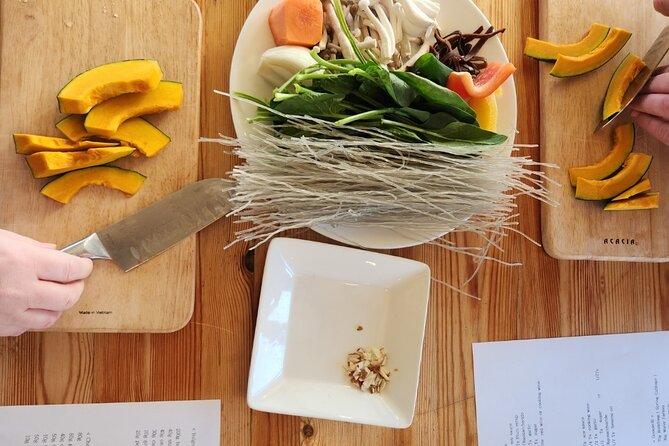
- Cooking bulgogi, japchae, and geotjeoli
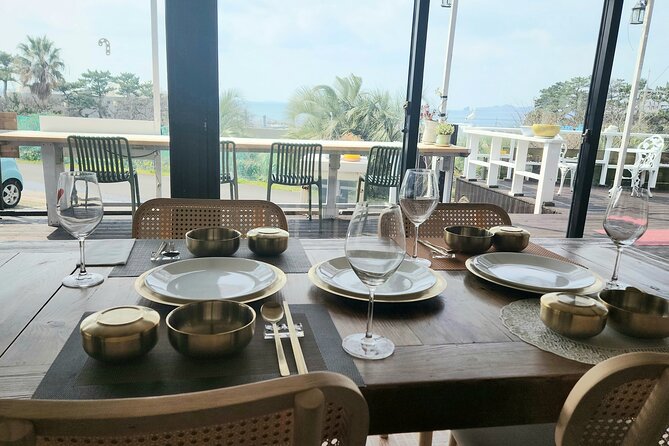
- A sunset table beside the Jeju ocean
- Understanding the listed Jeju stops
- What the $139 price includes
- Timing, meeting point, and group size
- Who will enjoy this most
- Should you book the Jeju cooking class?
- FAQ
- How long does the Jeju cooking class last?
- What time does the class begin?
- Where does the activity start and finish?
- How many people can join the class?
- Can one person book the experience?
- What dishes will be prepared?
- Are vegetarian or vegan meals available?
- Is a drink included with dinner?
- Is transportation included?
- Can I cancel for a full refund?
Key points at a glance
- Chef Sue teaches step by step: Her calm, hands-on approach suits beginners and families cooking together.
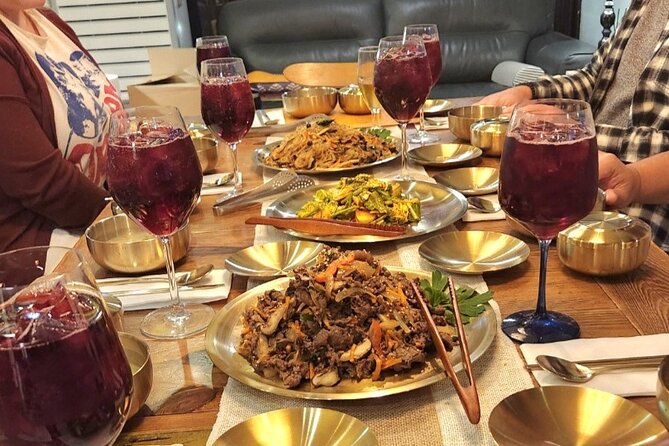
- Three main dishes and dessert: You prepare bulgogi, japchae, geotjeoli, and one dessert during the session.
- Recipes are built for home kitchens: The class uses ingredients that can be found outside Korea, making the lesson practical.
- Sunset dinner comes after the cooking: Sit down at a traditional Korean table and eat the meal you prepared.
- Vegetarian and vegan versions are possible: Tell the provider in advance so the dishes can be adapted.
- Only six people are accepted: This is a personal class rather than a large demonstration.
Why this Jeju food class feels useful
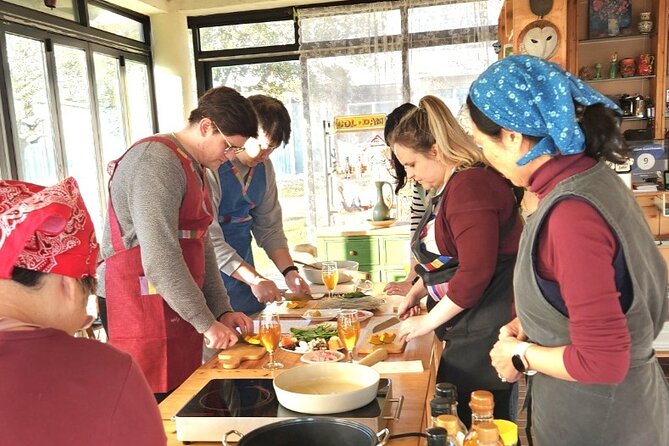
Many cooking classes are enjoyable for three hours and then fade into holiday memory. This one aims for a more useful result. The chef explains basic Korean recipes and seasonings with ingredients that are easy to find in your own area. That matters if you want to make Korean food after returning home, rather than spend the evening chasing specialist products.
The class also teaches more than a list of instructions. Korean traditional cooking is closely tied to the way food is served and eaten. You will hear about the use of spoons and chopsticks, then use them at the dinner table. That small cultural detail helps connect the preparation to the meal.
Chef Sue receives especially warm praise for making several dishes easy to follow. Her teaching style is described as enthusiastic and clear, and one family particularly valued having a one-on-one session. Since the group limit is six, you should have a better chance of asking questions than in a large commercial class.
If you have little kitchen experience, you are not expected to arrive with special skills. The chef guides you through each stage. This makes the class a good pick for beginners, couples, families, and anyone who wants an activity that does not require a packed sightseeing schedule.
More Jeju trips:
- Jeju: Eastern Jeju UNESCO Spots Day Tour
★ 4.9 · 1,148 reviews - Jeju: Western and Southern Sightseeing Day Tour
★ 4.8 · 972 reviews - East Jeju Essentials – Seongsan Ilchulbong (UNESCO) & Haenyeo
★ 5.0 · 939 reviews
Cooking bulgogi, japchae, and geotjeoli
The menu gives you a useful introduction to several sides of Korean food.
Bulgogi is stir-fried marinated beef. It introduces the balance of marinade, seasoning, and heat that makes Korean food so appealing. Because the recipe is designed around ingredients available in your area, you can focus on the method instead of worrying about finding every Korean product at home.
Japchae combines pork with glass noodles. The noodles give the dish a different texture from bulgogi, and the preparation helps show how Korean meals can bring several flavors and textures to one table. If you are interested in building a Korean meal at home, this is a strong dish to learn because it works as a substantial shared plate.
Geotjeoli is a Korean vegetable salad. It adds freshness and contrast to the cooked dishes. This is important in a meal with marinated beef and noodles, since the table does not rely on one heavy centerpiece.
The experience includes one dessert as well, though the specific dessert is not stated. You will prepare three main dishes and one dessert in total. That is a generous amount of food for a three-hour class, so the pace may be active. You should expect to move from one recipe to the next rather than spend the whole session perfecting a single dish.
Vegetarian and vegan versions are available. You need to tell the provider about your needs, ideally before the class, so the recipes can be adjusted properly. The supplied information does not specify the exact substitutions, so do not assume every dish will be adapted automatically at the last minute.
A sunset table beside the Jeju ocean
The cooking is only half of the appeal. After the preparation, you sit down to eat the food at a traditional Korean-style table overlooking the ocean. The evening starts at 5:00 pm, which is planned around the sunset setting, although the exact view will naturally depend on the season and weather.
This dinner format gives the class a pleasant rhythm. You begin with instruction and shared work, then finish without needing to search for a restaurant. The food on the table has a clear connection to your own effort, and that usually makes the meal more memorable than simply ordering familiar dishes.
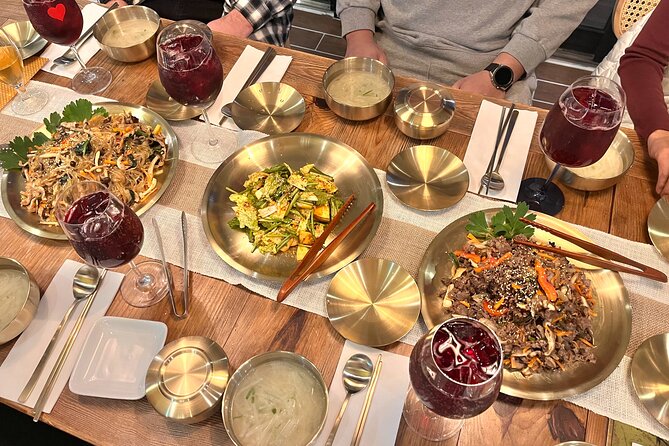
You can accompany dinner with Korean rice wine, listed as Mageoli, or Korean mulberry wine, Bokbunza. Nonalcoholic choices are also available. The drink is included, so you do not need to budget separately for it. If you do not drink alcohol, you still receive the full dinner experience.
The ocean view adds atmosphere, but it should not be the only reason you book. Weather can affect the sunset, and the core value comes from the cooking instruction, meal, and small group. Think of the terrace as a fine setting for the lesson, not a guaranteed show performed on schedule by nature.
Understanding the listed Jeju stops
The activity information names four Jeju locations: Jeju Olle Trail Routes, Jungmun Saekdal Beach, Sanbangsan Mountain, and the O’sulloc Tea Museum. These are attractive places to pair with a day in western or southern Jeju, but the cooking experience itself lasts about three hours and private transportation is not included.
For that reason, you should clarify the route before you plan your day around all four stops. The supplied details do not explain how long you spend at each place, how you move between them, or if they are suggested nearby sights rather than included visits. Do not assume a cooking booking provides a private sightseeing vehicle.
Jeju Olle Trail Routes are associated with the island’s walking culture and coastal scenery. If you are already exploring an Olle route, the class meeting point in Daepyeong may fit naturally into your plans. Build in enough time to reach the start address at 46 Daepyeong-ro, Andeok-myeon, Seogwipo.
Jungmun Saekdal Beach is another well-known coastal stop in the Seogwipo area. It may work before the 5:00 pm class, but only if your own transport or public transport connection gives you plenty of margin. Jeju distances can look short on a map and still take time by road.
Sanbangsan Mountain gives you a very different type of Jeju scenery, with a strong volcanic presence. It is not a stop I would try to squeeze in immediately before class unless you have checked the timing carefully.
O’sulloc Tea Museum is also named in the itinerary. It offers a tea-focused break that could pair well with a food-centered day, but again, the details do not state that admission, transport, or a fixed stop is included in this three-hour experience.
The practical lesson is simple: treat the cooking class meeting point and the listed sights as separate planning questions until the provider confirms otherwise.
More Cooking Classes in Jeju:
- Local Home Korean Cooking Class & Market Adventure in Seoul
★ 5.0 · 1,024 reviews - Master Korean traditional cooking with a Kimchi chef
★ 5.0 · 385 reviews - Seoul: Korean Cooking Class at a Local Home and Market Tour
★ 5.0 · 348 reviews - Seoul: Korean Cooking at Seoul Cooking Club!
★ 5.0 · 311 reviews
What the $139 price includes
At $139 per person, this is not a budget dinner. Its value depends on how much you want from the experience beyond a meal.
The price includes the cooking class, a traditional Korean dinner with three main dishes and one dessert, and a Korean alcoholic or nonalcoholic drink. You are also paying for direct instruction, the setting, and the chance to ask questions in a group of no more than six.
If you only want to eat bulgogi and japchae, a restaurant will cost less and require no preparation. If you want to learn techniques, understand basic seasonings, and recreate the food at home, the price becomes easier to justify. A private family session received particularly strong praise, and a small group can make the fee feel more reasonable for people who value personal teaching.
The lesson is also useful for visitors with limited cooking experience. You do not need to know Korean cuisine before arriving. The chef takes you through the recipes step by step, so part of the price buys confidence as well as food.
I would book this for someone who sees food as a central part of a trip, especially if you enjoy returning home with a recipe rather than another souvenir. I would skip it if your main goal is a low-cost meal or a full sightseeing tour with included transport.
Timing, meeting point, and group size
The class begins at 5:00 pm and lasts about three hours. Plan to arrive at the meeting point, 46 Daepyeong-ro, Andeok-myeon, Seogwipo, Jeju-do, South Korea, with enough time to find the location without rushing.
The activity is near public transportation, but the information does not provide a detailed route from your hotel. Check your route in advance, especially if you are staying outside Seogwipo or in another part of the island. Private transportation is not included.
The maximum group size is six people, and reservations require at least two participants. This arrangement suits couples, families, and small groups particularly well. If you are traveling alone, you should ask before booking because the experience is not presented as a solo activity.
A mobile ticket is provided, and confirmation arrives within 48 hours, subject to availability. The class is popular enough that people commonly reserve it well ahead, with an average booking lead time of 27 days. I would not leave this until the final evening of your Jeju stay, especially if your schedule is tight.
Free cancellation is available if you cancel at least 24 hours before the 5:00 pm start time. Changes or cancellations made inside that window are not accepted for a refund.
Who will enjoy this most
This class is a good match for:
- Beginners who want patient, guided instruction
- Families looking for a shared activity
- Couples who prefer a relaxed dinner with a view
- Food lovers who want recipes suited to home cooking
- Vegetarians and vegans who arrange adaptations in advance
- Visitors staying near the western Seogwipo area
The class may be less suitable if you want a fast sightseeing circuit, dislike participating in meal preparation, or need private transport included. The sunset setting is appealing, but the hands-on cooking is the main event.
I also like the fact that the class connects food with table customs. You are not simply shown how to cook. You learn about the spoon and chopstick traditions that shape the meal, then sit down to eat in a Korean-style setting. That gives the evening a sense of place without turning it into a lecture.
Should you book the Jeju cooking class?
Book it if you want a personal introduction to Korean food and would enjoy learning dishes you can make at home. Chef Sue’s clear, friendly teaching, the maximum of six people, and the oceanfront dinner are the strongest reasons to choose it.
Before paying, confirm the transportation details and ask how the four named Jeju stops fit into the three-hour schedule. Also provide vegetarian or vegan requests in advance. If those practical points work for your itinerary, the $139 price buys much more than dinner: it gives you a guided lesson, a cultural connection, and a sunset meal made with your own hands.
FAQ
How long does the Jeju cooking class last?
The experience lasts approximately three hours.
What time does the class begin?
The class starts at 5:00 pm.
Where does the activity start and finish?
It starts at 46 Daepyeong-ro, Andeok-myeon, Seogwipo, Jeju-do, South Korea, and ends back at the meeting point.
How many people can join the class?
The activity has a maximum of six travelers.
Can one person book the experience?
Reservations are available for two or more people, so solo booking is not specified.
What dishes will be prepared?
You will prepare bulgogi, japchae, geotjeoli, one dessert, and three main dishes in total.
Are vegetarian or vegan meals available?
Yes. Every dish can be prepared as vegetarian or vegan, but you need to let the provider know.
Is a drink included with dinner?
Yes. Dinner includes a Korean drink, either alcoholic or nonalcoholic. The alcoholic options are Korean rice wine, Mageoli, and Korean mulberry wine, Bokbunza.
Is transportation included?
Private transportation is not included. The activity is near public transportation.
Can I cancel for a full refund?
Yes, if you cancel at least 24 hours before the local start time. Cancellations or changes made less than 24 hours before the start are not accepted for a refund.
More Workshops in Jeju
- Yongpyong Ski Resort from Seoul with Optional Lesson and Packages
★ 5.0 · 217 reviews - Korean Cooking Class with Grocery Shopping at Seoul Local Market
★ 5.0 · 107 reviews - Korean cooking class in Haeundae, Busan
★ 5.0 · 92 reviews - Royal Seoul Cooking Class in a 100-Year-Old Hanok
★ 5.0 · 81 reviews
More Places to Eat in Jeju
- Seoul: Guided City Wall Sunset Hike with Korean Dinner
★ 4.9 · 227 reviews - Seoul: Baseball Game Ticket with Dinner/Beer with the host
★ 5.0 · 94 reviews - Busan Seafood Tour : Jagalchi market Seafood Tour & Dinner
★ 5.0 · 74 reviews - Full Day- Essential Seoul City Tour & Gourmet Tour(including Lunch and Dinner)
★ 5.0 · 73 reviews
Just added in Jeju
- Small Group 7D Korea package Tour with Seoul Gyeongju Busan Jeju★ 4.5 · 13 reviews
- Discover Jeju in 3days: A Curated All-Inclusive Experience★ 5.0 · 1 review
- 10 Days Essential Korea Tour(Seoul, Nami, DMZ, Andong, Gyeongju, Busan, Jeju)★ 5.0 · 1 review
- 1 Day Free schedule Tour a lot of experince driver in jeju island★ 5.0 · 2 reviews
- Jeju island: Van tour with a guide who the most loves JEJU★ 5.0 · 7 reviews
- Private schedule Day Tour With Local Taxi Driver in jeju island★ 5.0 · 1 review
- Jeju Unesco Eest course Package Private Van Guided Tour★ 5.0 · 17 reviews
- Full Day Jeju Private Customizable highlight Tour★ 5.0 · 5 reviews
Cooking Classes, compared.
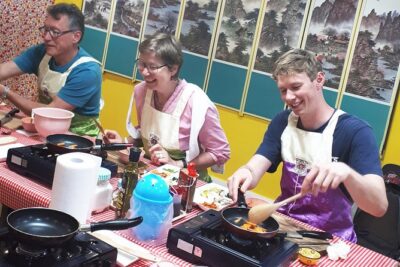
Local Home Korean Cooking Class & Market Adventure in Seoul
Read our review →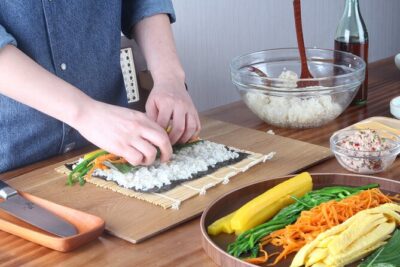
Master Korean traditional cooking with a Kimchi chef
Read our review →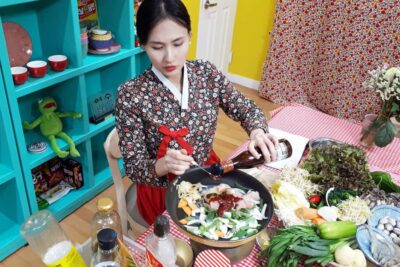
Korean Cooking Class at a Local Home and Market Tour
Read our review →
Korean Cooking Class with Grocery Shopping at Seoul Local Market
Read our review →
Korean Kimchi Making Day Experience with a Local Market Tour
Read our review →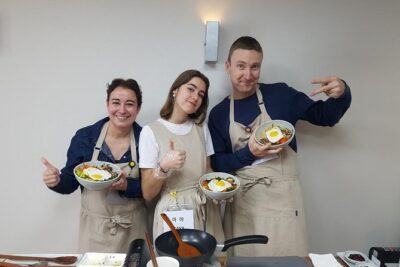
Browse the lists this tour appears in