
Reviewed · COOKING CLASSES
K-food cooking Japchae Mandu Tteokbokki & Fishcake
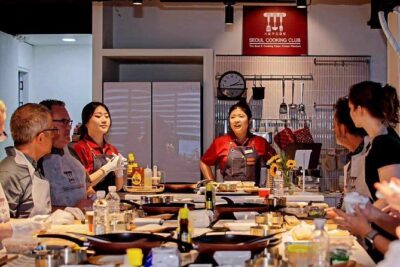
Four Korean classics, one small cooking class. This two-hour Seoul experience gives you a practical way to prepare japchae, mandu, tteokbokki, and fishcake, then sit down to eat what you made. I especially like the small group limit of six and the 30-minute supermarket visit afterward, where you can identify Korean snacks and seasonings for your own kitchen.
The food is prepared in a friendly, manageable setting rather than a large demonstration kitchen. I also like the seasonal Korean desserts, such as yakgwa, wind rice cake, and sesame rice cake. The main consideration is the fixed 5:30 pm start, plus the fact that the supermarket visit does not operate on the second and fourth Sunday of each month.
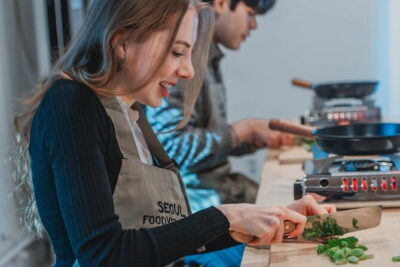
This is a hands-on introduction, not a long culinary course. You will not simply watch someone cook. You will help make a complete Korean table, arrange it for photographs, and eat together. At $81 per person, the price makes the most sense if you value instruction, a meal, dessert, ingredients, tools, and the market stop as one package.
In This Review
- Key points to know before booking
- Four Korean dishes with very different personalities
- A small class where the teacher can focus on you
- What the 5:30 pm start means for your Seoul day
- Seasonal Korean sweets add a useful final course
- Setting up your Korean table and taking photos
- Across the street: a four-floor indoor supermarket
- What is included for the $81 price
- Who will enjoy this evening most
- Practical booking advice for this Seoul class
- Should you book this K-food experience?
- FAQ
- Where does the cooking class meet?
- What time does the experience start?
- How long does the activity last?
- Which Korean foods will I make?
- Is the meal included?
- Are Korean desserts included?
- Is the supermarket visit included?
- What happens if I want to shop at the market?
- Are cooking tools and ingredients supplied?
- Can children join the experience?
- Is alcohol included?
- How many people can join the class?
- Is the supermarket tour available every Sunday?
- Can I cancel for a full refund?
Key points to know before booking
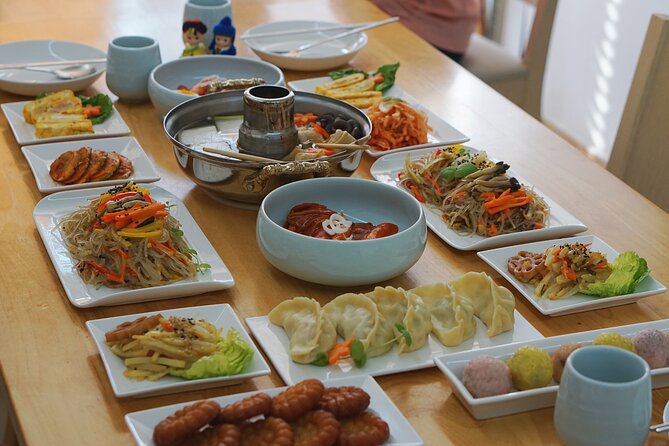
- Four famous Korean dishes in one session: Make japchae, tteokbokki with fishcake, and mandu in a single class.
- Small maximum group of six: The size allows more direct help and can make the cooking feel personal.
- Seasonal desserts are included: Sample Korean sweets and hear explanations about their background and changing ingredients.
- A four-floor indoor market follows the meal: Spend about 30 minutes looking at groceries, snacks, seasonings, and kimchi refrigerators.
- Everything for cooking is supplied: Materials, tools, and packaging are included, while alcoholic drinks are not.
- Children must be at least 10: Younger children are allowed only when accompanied by a guardian.
Four Korean dishes with very different personalities
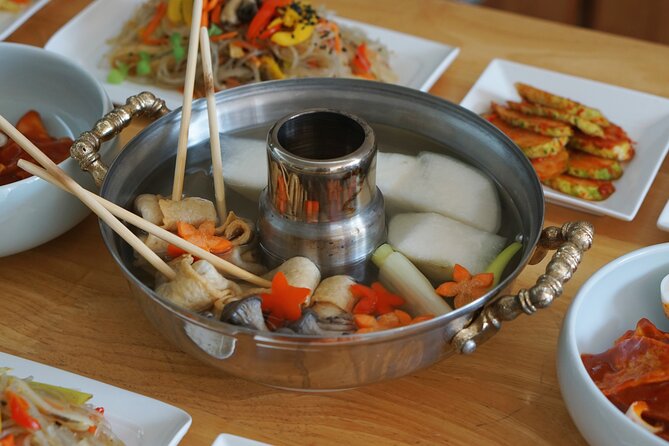
The strength of this class is variety. Japchae, mandu, tteokbokki, and fishcake do not all feel alike, so you get a useful introduction to several familiar Korean flavors and formats in one sitting.
Japchae is made with Korean glass noodles and is often served as a savory noodle dish with vegetables and seasoning. Here, you will prepare it as part of the larger meal rather than treating it as a stand-alone cooking lesson. It gives you a calmer task beside the stronger flavors of the other dishes.
Mandu are Korean dumplings. Making them adds a hands-on element that you would miss in a restaurant. The appeal is not only eating the finished dumplings. You also get a sense of the folding and preparation involved, which can help you repeat the dish at home.
Tteokbokki brings the familiar chewy rice cakes. Fishcake is served with it, giving the dish another texture and a classic Korean street-food connection. Preparing both together helps you understand how they fit into one popular dish rather than tasting them as unrelated samples.
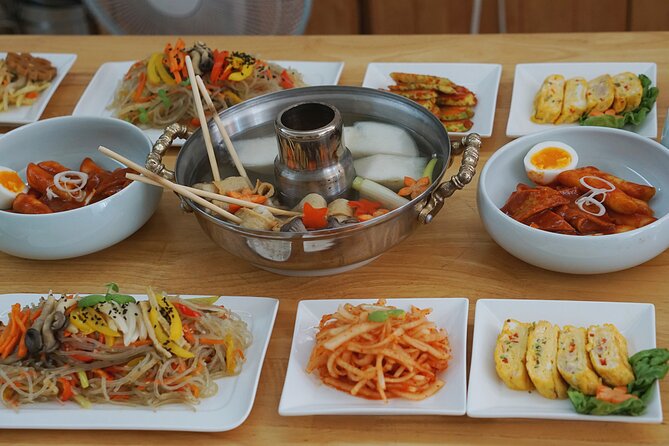
The cooking is designed around a complete Korean meal. Once the dishes are ready, you set them out neatly and take photographs. That small presentation step matters. It gives you a chance to slow down, look at what you made, and record the meal before everyone starts eating.
More Cooking Classes in Seoul:
- Local Home Korean Cooking Class & Market Adventure in Seoul
★ 5.0 · 1,024 reviews - Master Korean traditional cooking with a Kimchi chef
★ 5.0 · 385 reviews - Seoul: Korean Cooking Class at a Local Home and Market Tour
★ 5.0 · 348 reviews
A small class where the teacher can focus on you
The maximum group size is six people. That is a useful limit for a cooking class, since you can usually see what is happening and ask for help without competing with a large crowd.
The experience can be especially personal when attendance is low. One participant had the teacher Jenny to themselves and came away confident about making all four dishes at home. That is a strong sign of what the format can offer when the class is quiet: more time to ask questions, more direct help, and less waiting for a turn.
Jenny was described as calm and pleasant, which suits this kind of evening activity. Cooking classes work best when the pace leaves room for questions. If you are nervous about handling unfamiliar ingredients or shaping mandu, a small group and a patient teacher are worth more than a flashy venue.
The class is open to children aged 10 and older. Children under 10 may attend with a guardian, but the information does not describe a separate children’s menu or child-focused program. I would consider this a better fit for older children who can take part in the cooking rather than very young children who may need constant supervision.
What the 5:30 pm start means for your Seoul day
The meeting point is at 199 Baekbeom-ro, Mapo-gu, Seoul, and the activity ends back there. The location is near public transportation, so you can reach it without arranging a private vehicle.
The start time is 5:30 pm, with the full experience lasting about two hours. That makes it a useful evening plan after sightseeing, but you should leave enough time to reach the address. Cooking is not an activity you want to join while rushing through the door.
The timing also shapes the meal. You cook, arrange the food, photograph it, eat together, and then cross the street for the indoor market visit. The supermarket stop lasts around 30 minutes, so the evening has a clear rhythm rather than an open-ended shopping session.
The second and fourth Sunday of each month require special attention. The market is closed then, so the supermarket visit will not take place. The cooking class itself may still be available, but you should not book expecting the full market portion on those dates.
Seasonal Korean sweets add a useful final course
After the savory food, you receive seasonal Korean desserts. Examples include yakgwa, wind rice cake, and sesame rice cake, though the exact selection changes with the season.
This is more useful than simply adding a sweet bite at the end. The class includes explanations of the desserts and their history, giving you some context for foods you might see in Korean markets or gift shops. The changing selection also means the dessert course is not fixed throughout the year.
You should keep your expectations practical. The main focus remains the four cooked dishes, and the supplied information does not promise a dessert-making lesson. Think of the sweets as a tasting and explanation that rounds out the meal.
For many people, this may be the most culturally interesting part of the evening. Japchae and tteokbokki are easy to find in restaurants, but traditional sweets can be less familiar. Sampling them with an explanation helps you decide what to look for later in Seoul.
More Food Tours in Seoul:
- Seoul Street Food Market Tour
★ 5.0 · 1,226 reviews - Seoul: Night Market Food Tour with Local Guide
★ 4.9 · 943 reviews - Downtown Seoul Guided Food & Market Tour with 8+ Local Tastings
★ 5.0 · 580 reviews - Seoul Night Palace & Market Food Tour with Vehicle
★ 5.0 · 275 reviews
Setting up your Korean table and taking photos
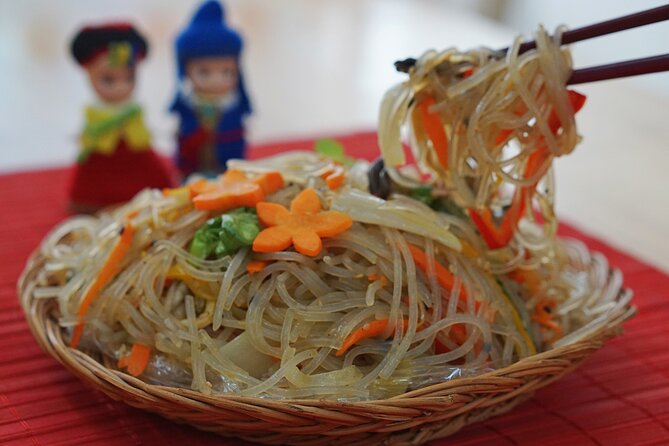
Once cooking is finished, the food is arranged as a Korean table. You can take time to photograph it carefully before eating.
That photography pause is built into the experience, rather than treated as an interruption. If you enjoy documenting meals or sharing food images online, you have a clean moment to arrange the dishes and show the finished result. You can also use it as a practical check on your work. A neatly set table makes the class feel like a meal you created, not just a series of cooking tasks.
The class includes packaging, too. That is handy if you want to take some prepared food with you, although the available information does not specify which dishes or how much food can be packed. Ask the teacher at the start if taking leftovers with you is important.
Across the street: a four-floor indoor supermarket
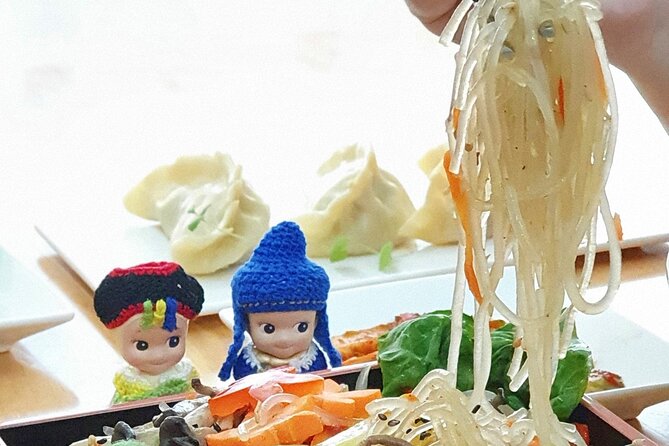
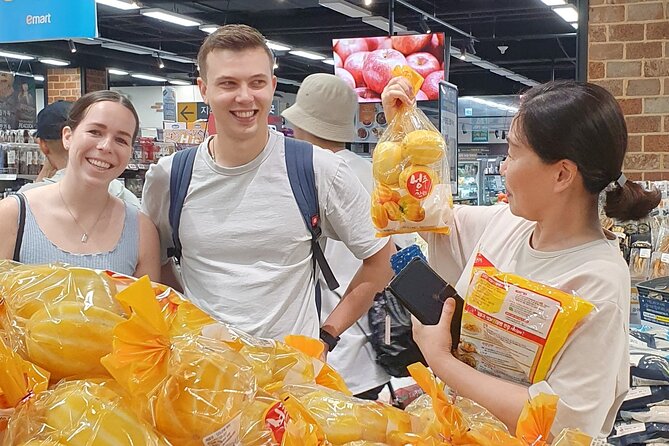
After the meal, you visit a large indoor market directly across from the studio building. The tour lasts about 30 minutes and covers four floors.
This is a strong addition because it connects the cooking lesson with everyday shopping. You can see groceries, snacks, seasonings, and the large kimchi refrigerators used in Korean homes. A market visit turns ingredients from abstract cooking-class items into products you can recognize on a shelf.
The teacher can help you choose Korean snacks or seasonings to buy. That guidance is valuable if Korean packaging feels difficult to read or if you are unsure how a seasoning fits into home cooking. You are not left to wander through a giant store with no idea what to put in your basket.
A 30-minute visit is enough for a focused look, but not enough for a leisurely four-floor shopping trip. I would make a short list before crossing the street: one snack, one seasoning, or one ingredient you want to investigate. Otherwise, the number of choices may make the stop feel quick.
You can receive an immediate tax refund on purchases over 30,000 won including VAT when you present your passport and follow the purchase process. Bring your passport if you plan to shop and want to use this benefit. The tax refund applies to eligible purchases through the stated process, not automatically to every item you see.
What is included for the $81 price
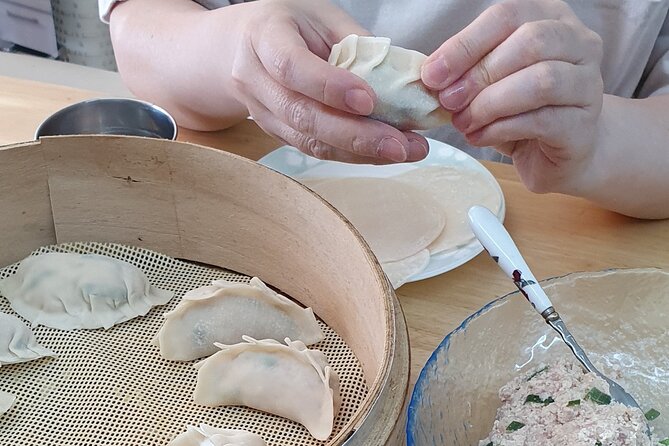
The cost is $81 per person. That is not a low-cost meal, but it covers more than dinner at a casual Korean restaurant.
Your fee includes all cooking materials, tools, and packaging. You also receive the prepared meal, seasonal desserts, cooking instruction, and the indoor supermarket visit. Alcoholic drinks are not included, so plan on paying for those separately if they are available or desired.
I see the best value here for someone who wants to learn dishes they can repeat at home. The class provides four recipes in one sitting, and the market visit helps you recognize ingredients afterward. If you only want to eat tteokbokki and japchae, a restaurant will cost less and take less time.
The small group limit helps justify the price. A class with only a few people can offer more personal instruction than a crowded demonstration. One participant was the only person booked and received one-to-one time with Jenny, an unusually personal arrangement that can make the fee feel worthwhile.
Still, you should be clear about what you are paying for. This is a short introductory class, not professional chef training. The value comes from the combination of cooking, eating, dessert, cultural explanation, packaging, and market advice.
Who will enjoy this evening most
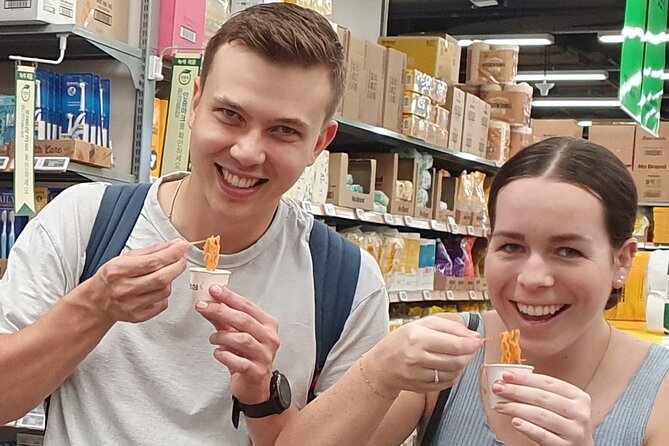
I would recommend this class to you if you want to do more than order familiar Korean dishes. It suits first-time visitors who want a direct introduction to food, as well as returning visitors who want practical ideas for cooking at home.
It is also a good choice for couples, families with older children, and solo participants. Solo attendance can work particularly well if the group is small, since you may receive more direct conversation and help. The six-person maximum keeps the class from feeling like a large tour.
Food-focused visitors will appreciate the market stop. You can connect the dishes you just prepared with the packaged foods and seasonings sold across the street. The tax-refund process adds a practical shopping benefit for eligible purchases over 30,000 won.
You may want to skip it if your schedule cannot accommodate a 5:30 pm start, if you dislike hands-on cooking, or if you are looking for a long and highly technical lesson. The experience is friendly and useful, but it is built for a compact introduction.
Practical booking advice for this Seoul class
The booking confirmation is normally issued when you reserve. If you book within two days of the date, confirmation can take up to 48 hours and depends on availability. I would avoid leaving this until the last moment if your Seoul schedule is tight.
Free cancellation is available until 24 hours before the start time for a full refund. Cancellations or changes made within 24 hours are not accepted and are not refunded. The cut-off uses Seoul local time.
The activity requires a minimum number of participants. If that minimum is not reached and the experience is canceled, you will be offered another date or experience, or receive a full refund.
You should arrive ready to take part, not simply observe. Wear something comfortable for a cooking session, keep your passport with you if you plan to shop, and remember that the supermarket portion is not held on the second or fourth Sunday.
Should you book this K-food experience?
Book it if you want a friendly, compact cooking lesson with a real shopping connection. The strongest reasons are the four dishes, the small group size, the seasonal dessert tasting, and the market visit where you can learn what to buy afterward.
At $81, it is best viewed as a food-and-culture activity rather than a cheap dinner. You are paying for instruction, ingredients, tools, food, packaging, dessert, and market guidance. If that mix matches your interests, it offers a useful evening in Seoul and several dishes you can try to make again at home.
Skip it if you only want a quick meal or cannot attend at 5:30 pm. Also check the date carefully if the supermarket tour matters to you, since it is not held on the second and fourth Sunday of the month.
FAQ
Where does the cooking class meet?
The meeting point is 199 Baekbeom-ro, Mapo-gu, Seoul, South Korea.
What time does the experience start?
The class starts at 5:30 pm.
How long does the activity last?
The experience lasts approximately two hours.
Which Korean foods will I make?
You will make japchae, tteokbokki with fishcake, and mandu. The experience describes these as four kinds of K-food because tteokbokki and fishcake are included together.
Is the meal included?
Yes. After cooking, you can eat the dishes together as a meal.
Are Korean desserts included?
Yes. Seasonal desserts such as yakgwa, wind rice cake, and sesame rice cake are provided. The selection changes with the season.
Is the supermarket visit included?
Yes. After the meal, you receive a 30-minute tour of a four-floor indoor supermarket across from the studio.
What happens if I want to shop at the market?
The teacher can help you choose Korean snacks and seasonings. With your passport, you can receive an immediate tax refund for purchases over 30,000 won including VAT, following the stated purchase process.
Are cooking tools and ingredients supplied?
Yes. All materials, tools, and packaging are included.
Can children join the experience?
Children aged 10 and older can attend. Children under 10 are allowed when accompanied by a guardian.
Is alcohol included?
No. Alcoholic beverages are not included.
How many people can join the class?
The experience has a maximum of six participants.
Is the supermarket tour available every Sunday?
No. The supermarket is closed on the second and fourth Sunday of each month, so the market tour is not held on those dates.
Can I cancel for a full refund?
Yes, if you cancel at least 24 hours before the experience start time. Cancellations within 24 hours are not refunded, and changes within that period are not accepted.
Just added in Seoul
- Seoul: Korean & English Language Exchange Global Party★ 5.0 · 28 reviews
- Your Personal Seoul Photographer!★ 4.1 · 15 reviews
- You’re Invited to Our Home in Seoul: The Only Cooking Class!★ 5.0 · 8 reviews
- From Seoul: Yongpyong Ski Day Tour with Transportation★ 4.9 · 40 reviews
- From Seoul: Hwacheon Ice Fishing and Lighting Festival Tour★ 4.5 · 4 reviews
- Seoul: Gangneung BTS K-Pop & K-Drama Filming Locations Tour★ 4.6 · 14 reviews
- Unique Native Experience : Han River Picnic, Board game, BBQ★ 5.0 · 3 reviews
- Seoul: Euljiro Gastroventure Tour★ 4.0 · 1 review
Cooking Classes, compared.
Local Home Korean Cooking Class & Market Adventure in Seoul
Read our review →
Master Korean traditional cooking with a Kimchi chef
Read our review →
Korean Cooking Class at a Local Home and Market Tour
Read our review →
Korean Cooking Class with Grocery Shopping at Seoul Local Market
Read our review →
Korean Kimchi Making Day Experience with a Local Market Tour
Read our review →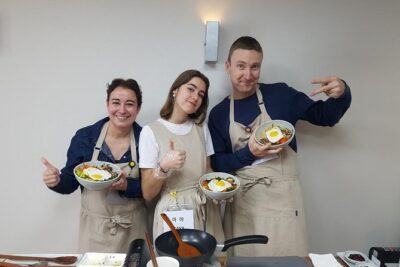
Browse the lists this tour appears in