
Reviewed · HANOK VILLAGE TOURS
Seoul: Bukchon Hanok Village Walking Tour
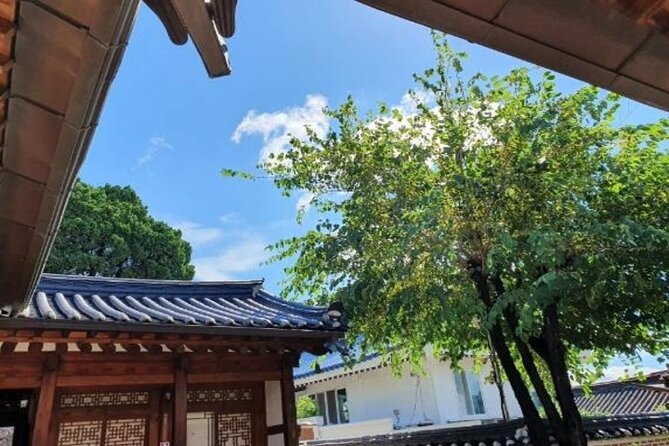
Bukchon rewards slow walking. This two-hour Seoul tour links old hanok homes, family crafts, traditional tea, and quiet lanes north of Jongno. I like the clear contrast between modernized and traditional architecture, and I like that the route includes living cultural traditions rather than only photo stops. The main drawback is that the tour needs at least four participants, and the afternoon timing may feel short for such a layered neighborhood.
Meeting at Anguk Station Exit 3 keeps the start simple, and the route finishes where it began. The $50 price is fair if you want context, translation, and access to places you might otherwise pass without understanding. It is less appealing if you prefer to wander alone or already know Bukchon well.
The single published review gives the tour a five-star rating and specifically praises guide Alan Han for explaining the area while showing many traditional houses. That is useful praise here, since Bukchon can look like a pretty maze unless someone explains why its homes, lanes, workshops, and tea spaces matter.
In This Review
- Key details at a glance
- Why Bukchon works best with a guide
- Starting at Anguk Station and Gyedong-gil
- The Bukchon Traditional Culture Center
- A slower walk along Gyedong-gil
- Reading Bukchon’s architecture
- Kum Bak Yeon and the gold leaf tradition
- Baekinje and Joseon-era upper-class life
- Tea and traditional liquor at Sool Gallery
- Is $50 a fair price?
- Practical points before you book
- Who will enjoy this Bukchon walk?
- Should you book it?
- FAQ
- Where does the Bukchon Hanok Village walking tour start?
- What time does the tour begin?
- How long does the tour last?
- How many people can join the tour?
- Is Korean traditional tea included?
- Can I cancel for a full refund?
Key details at a glance
- Anguk Station Exit 3 begins the walk: The meeting point is close to public transportation, and the tour returns there after about two hours.
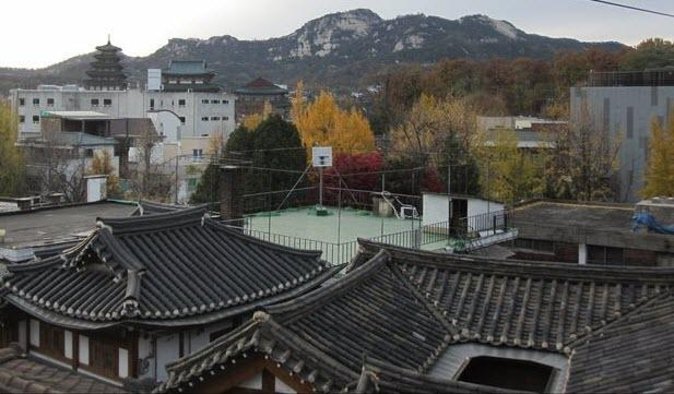
- Modern and traditional hanok appear side by side: Onion Anguk Cafe provides a useful look at a hanok adapted for modern use, while the Bukchon Traditional Culture Center presents older architectural ideas.
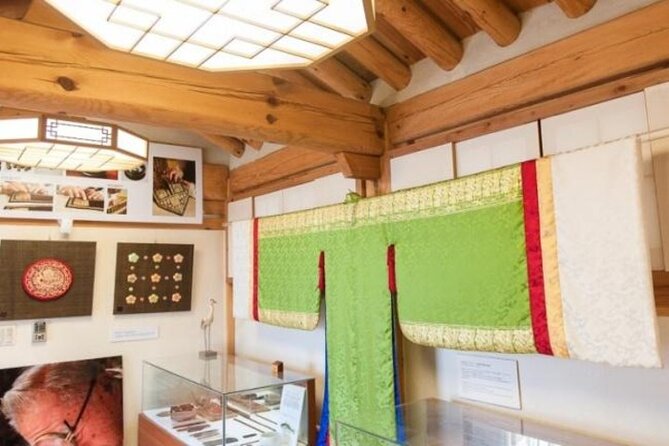
- Gold leaf craft adds real cultural depth: At Kum Bak Yeon, you learn about a Joseon-era family trade involving gold leaf applied to royal silk.
- Baekinje shows upper-class Joseon housing: This traditional home on Bukchon-ro 7-gil became a Seoul Folk Cultural Heritage site in 1977.
- Tea and Korean liquor close the route: Sool Gallery offers an introduction to traditional Korean liquor and Korean tea.
- A small group is possible, but a minimum applies: The group can reach 15 people, yet the tour may be canceled if fewer than four book.
Why Bukchon works best with a guide
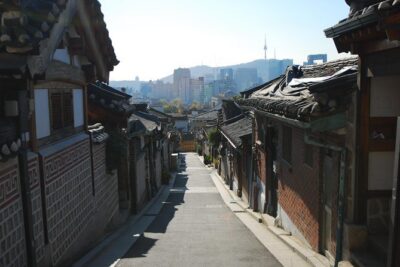
Bukchon sits north of Cheonggyecheon Stream and Jongno, in one of Seoul’s oldest urban areas. Its main appeal is not a single monument. It is the way narrow lanes, tiled roofs, courtyards, workshops, galleries, and ordinary city life meet in a compact district.
Hanok is the Korean traditional house style. Its form developed across different periods, so the word does not describe one fixed design. Roof shape, timber, courtyards, decorative details, and the relationship between rooms and outdoor space can change from one home to another.
That is why I like the structure of this tour. It does not treat Bukchon as a backdrop for photographs. It asks you to compare buildings and think about how Korean architecture reflects daily life, social rank, climate, and ideas about space.
You also get a useful local framework through Seoul’s OraeGage program. The name refers to older shops that have carried on Seoul traditions and that people hope will continue for many more years. In Bukchon, that idea points you toward crafts, food, manners, art, and businesses that keep older practices visible in a modern capital.
A guide matters because many of the homes are private or functioning businesses. You should not assume you can walk through every courtyard or enter every building. The value is in learning what you are seeing, then looking more closely as you move through the public lanes.
More Walking Tours in Seoul
- Seoul moonlight walking tour with local historian
★ 5.0 · 940 reviews - Seoul: Nighttime Hidden Gems Walking Tour
★ 5.0 · 775 reviews - Seoul: Evening Dark History, Folklore & Ghost Story Walking Tour
★ 5.0 · 593 reviews
Starting at Anguk Station and Gyedong-gil
The tour starts at 1:00 p.m. at Anguk Station Exit 3. From there, the guide introduces the theme and gives you the basic story of Bukchon before leading you into its winding streets.
The first stretch is a good way to get your bearings. You pass well-preserved hanok houses, each with its own appearance and past. The five-minute stop listed at the station is brief, but the real point is the movement through the lanes that follows.
Next comes Gyedong-gil, including a stop at Onion Anguk Cafe. The cafe occupies a modernized hanok, making it a useful first comparison. You see how an old Korean house can be adapted for present-day use without losing every trace of its original form.
I like this stop because it avoids a common problem in old districts. A tour can make the past seem frozen, as if historic buildings only belong behind glass. A working cafe shows another option: old architecture can remain part of daily city life.
The stop itself is short, about five minutes. You should not count on a long cafe break or a separate drink purchase as part of the tour. The purpose is architectural explanation, not an extended cafe visit.
The Bukchon Traditional Culture Center
The route then shifts from a modernized hanok to the Bukchon Traditional Culture Center. The listed visit takes about 20 minutes, giving the guide more time to explain the look and function of traditional houses.
This is one of the strongest parts of the walk for first-time visitors. Once you understand the basic elements of a hanok, the rest of Bukchon becomes easier to read. You can pay attention to rooflines, timber, open areas, and the way a home connects private rooms with the outside.
The experience is meant to engage more than your camera. You are encouraged to observe, listen, and feel the surroundings. That wording points to a slower kind of sightseeing, though you should remember that this is still a compact walking tour with several stops.
The center also helps explain the values of the upper social classes during earlier periods. The tour connects food, manners, and art with the homes themselves, so you are not looking at architecture in isolation.
If you have limited time in Seoul, this context is valuable. A self-guided walk can show you attractive houses, but it may not explain why some details mattered or how domestic spaces related to social position.
A slower walk along Gyedong-gil
The next portion returns to Gyedong-gil, surrounded by hanok lanes. The listed walking time is about ten minutes, and the route is described as suitable for a relaxed stroll.
This is where you get a feel for Bukchon as a neighborhood rather than a set of formal attractions. The narrow streets and repeated rooflines create the visual character people come to see, but the appeal depends on your pace. You will get more from the walk if you pause to notice small differences between houses instead of rushing from one stop to the next.
Be respectful as you walk. Much of Bukchon remains a lived-in area, not an open-air museum. Keep voices down, avoid blocking narrow lanes, and do not assume that a closed gate invites a closer look.
The afternoon start has a practical advantage. You avoid an early morning meeting, and the tour fits neatly into a day that includes other central Seoul sights. The tradeoff is that Bukchon can have a full schedule of places to see, while this route gives you only about two hours.
More Hanok Village Tours in Seoul:
- Seoul: Gyeongbok Palace, Bukchon Village, and Gwangjang Tour
★ 4.9 · 2,321 reviews - Seoul City Sightseeing Tour Including Gyeongbokgung Palace, N Seoul Tower, and Namsangol Hanok Village
★ 5.0 · 1,423 reviews - Seoul: Gyeongbok Palace, Bukchon Village, and Gwangjang Tour
★ 5.0 · 1,044 reviews - Seoul: Gyeongbok Palace and Bukchon Hanok Walking Tour
★ 4.8 · 157 reviews
Reading Bukchon’s architecture
The main Bukchon Hanok Village stop lasts about 20 minutes. Here, the guide discusses hanok features and compares Korean and Western architecture.
That comparison can make the buildings easier to understand. Western architectural traditions often emphasize different arrangements of rooms, facades, and structural lines. Korean hanok developed its own relationship between rooms, courtyards, timber, roof forms, and the surrounding setting.
You do not need an architecture background to benefit from this section. A good guide can point out what your eye should notice, then let you see the difference for yourself.
The tour description also presents this portion as a chance for healing in the hanok. I would treat that as a promise of a calm, reflective walk rather than a formal wellness activity. There is no spa treatment or separate relaxation program. The quieter lanes and traditional homes provide the restful part.
At this stage, Alan Han’s reported strength becomes relevant. The only published assessment praises him for showing many traditional houses and explaining the area. That combination is exactly what Bukchon needs: enough information to sharpen your view, but enough walking time to keep the experience from becoming a lecture.
Kum Bak Yeon and the gold leaf tradition
One of the most unusual stops is on Bukchon-ro 12-gil, at Kum Bak Yeon. The workshop is connected with a family business that practiced the art of applying gold leaf to royal silk during the Joseon Dynasty.
This is a valuable addition because it moves the tour beyond buildings. Gold leaf work is a skilled craft passed down through generations, and the workshop gives you a direct connection to the hands and techniques behind an older tradition.
The planned visit lasts about 20 minutes. That is enough time for an introduction to the craft, though you should not expect a full workshop course. The emphasis is on appreciating the artistry and understanding why this family tradition has cultural importance.
For me, this is where the OraeGage idea becomes especially clear. A historic neighborhood is not preserved only through roofs and walls. It also survives through people who continue making, teaching, and presenting older forms of art.
The stop may be especially worthwhile if you enjoy craft, design, textiles, or the human side of history. If you are interested only in street views, it may feel like a detour. Still, it gives the walk a stronger sense of purpose than a route made entirely of scenic viewpoints.
Baekinje and Joseon-era upper-class life
At Bukchon-ro 7-gil, you visit Baekinje, a traditional house from the Joseon Dynasty. Seoul designated it as a Folk Cultural Heritage site in 1977.
This stop gives you a chance to consider social class through architecture. The house represents the upper class of the Joseon period, so it helps show how status could be expressed through the scale, arrangement, and finish of a home.
The visit lasts about 15 minutes. That is enough for a focused explanation, but not a long historical seminar. You will want to listen closely because the route keeps moving.
Baekinje also balances the gold leaf workshop. One stop shows a family trade and artistic skill. The other shows the domestic setting of people with social power. Together, they broaden your understanding of Joseon society.
The tour does not promise that every room will be open for unrestricted exploration. Your experience depends on the areas available during the visit and on the guide’s explanation. Even so, seeing a recognized heritage house from the outside and learning its place in Seoul’s past is more useful than simply collecting another photograph.
Tea and traditional liquor at Sool Gallery
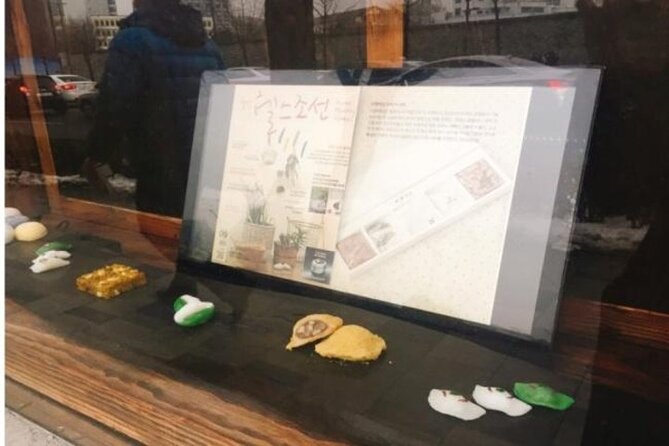
The final stop is Sool Gallery on Bukchon-ro. Here you learn about Korean traditional liquor and have Korean traditional tea.
This is a pleasant way to finish a walking tour. It gives you a seated cultural moment after a route through sloping lanes and narrow streets. The tea also adds a taste-based element to a tour that has already covered homes, manners, art, and craft.
The stop is listed at about ten minutes, so keep your expectations modest. This is an introduction, not a long tasting session or a complete survey of Korean drinks.
The word sool refers to Korean alcohol, and the gallery setting connects beverages with the country’s food traditions and social customs. The tea portion offers a nonalcoholic pause and makes the finish suitable for people who do not drink alcohol.
I like that the tour ends with something you can experience directly. You have looked at architecture, heard stories, and watched craft traditions take shape. Tea gives the final section a simple sensory focus.
Is $50 a fair price?
At $50 per person, this is not the cheapest way to see Bukchon. The streets themselves are free, and you can walk between many of these areas without paying an admission fee.
The price makes more sense if you value interpretation. You are paying for a guide, a planned route, cultural explanations, entry to the included stops, and the chance to connect several different traditions in one short visit. The route also saves you from researching what to see and in what order.
The tour can include up to 15 people, which is still manageable for a walking group, though a full group will feel less personal than a small one. The minimum of four is important. If fewer than four people book, the activity may be canceled, with a different date or experience or a full refund offered.
I would book it if you have only one visit to Bukchon and want the neighborhood explained. I would skip it if you already know Seoul’s architecture and prefer to set your own pace, linger at cafes, or spend extra time taking photographs.
The free cancellation rule gives you some protection. You can cancel for a full refund up to 24 hours before the 1:00 p.m. start time. Changes or cancellations inside that window are not accepted, and no refund is provided.
Practical points before you book
You receive a mobile ticket, and confirmation is sent within 48 hours, subject to availability. The operator also uses email or WhatsApp for meeting details and schedule notices, so provide a working contact number or a messaging account available in Korea.
Arrive before the start. Joining after the tour begins is not allowed because late arrivals would disrupt the group. Recording or filming the tour is not permitted, and pets cannot join because there is no place to leave them during the walk.
Most people can participate, and the meeting point is near public transportation. The information supplied does not give a detailed accessibility assessment, so contact the provider if you need specific help with slopes, steps, or walking conditions.
The operator does not accept private-tour estimates automatically. If you want a private experience, request a quote by email. This could suit families or groups who want more time at the cultural stops, but the standard price and format apply to the regular shared tour.
Who will enjoy this Bukchon walk?
I would recommend it most to first-time visitors to Seoul who want more than attractive streets. It suits you if you enjoy architecture, craft, social history, and food traditions, and if you like having a guide connect separate details into one story.
It is also a good fit for anyone who feels unsure about reading Korean cultural sites alone. The guide can help you understand what is old, what has been adapted, what is still practiced, and why the neighborhood matters.
The tour is less suitable if you want a long cafe stop, a private guide, extensive shopping time, or a photography-focused outing. Two hours passes quickly, and the route includes several short visits rather than one long stay.
Families may appreciate the variety, but keep in mind that Bukchon is a walking neighborhood with winding streets. Anyone who dislikes hills, narrow lanes, or a steady schedule should ask about the route before booking.
Should you book it?
Book this tour if you want Bukchon explained, not just photographed. The strongest features are the contrast between modern and traditional hanok, the gold leaf workshop at Kum Bak Yeon, the Joseon-era home at Baekinje, and the tea stop at Sool Gallery.
The five-star assessment for Alan Han supports the guide-led format, especially for people who want clear explanations while seeing many traditional houses. The price is reasonable for that added context, though it is high for anyone content with a free self-guided walk.
If you can commit to the 1:00 p.m. meeting, provide reliable contact details, and accept the minimum group requirement, this is a focused and worthwhile introduction to one of Seoul’s most distinctive neighborhoods.
FAQ
Where does the Bukchon Hanok Village walking tour start?
The tour starts at Exit 3 of Anguk Station in Seoul. The exact meeting information is also sent by email or WhatsApp.
What time does the tour begin?
The scheduled start time is 1:00 p.m.
How long does the tour last?
The experience lasts approximately two hours. It ends back at the Anguk Station meeting point.
How many people can join the tour?
The tour accepts a maximum of 15 participants. It requires at least four participants to operate.
Is Korean traditional tea included?
Yes. The stop at Sool Gallery includes an introduction to Korean traditional liquor and Korean traditional tea.
Can I cancel for a full refund?
Yes, if you cancel at least 24 hours before the local start time. Cancellations or changes made less than 24 hours before the start are not accepted and are not refunded.
Just added in Seoul
- Seoul: Korean & English Language Exchange Global Party★ 5.0 · 28 reviews
- Your Personal Seoul Photographer!★ 4.1 · 15 reviews
- You’re Invited to Our Home in Seoul: The Only Cooking Class!★ 5.0 · 8 reviews
- From Seoul: Yongpyong Ski Day Tour with Transportation★ 4.9 · 40 reviews
- From Seoul: Hwacheon Ice Fishing and Lighting Festival Tour★ 4.5 · 4 reviews
- Seoul: Gangneung BTS K-Pop & K-Drama Filming Locations Tour★ 4.6 · 14 reviews
- Unique Native Experience : Han River Picnic, Board game, BBQ★ 5.0 · 3 reviews
- Seoul: Euljiro Gastroventure Tour★ 4.0 · 1 review
Hanok Village Tours, compared.
Gyeongbok Palace, Bukchon Village, and Gwangjang Tour
Read our review →
Seoul City Sightseeing Tour Including Gyeongbokgung Palace, N Seoul Tower, and Namsangol Hanok Village
Read our review →Gyeongbok Palace, Bukchon Village, and Gwangjang Tour
Read our review →
Gyeongbok Palace and Bukchon Hanok Walking Tour
Read our review →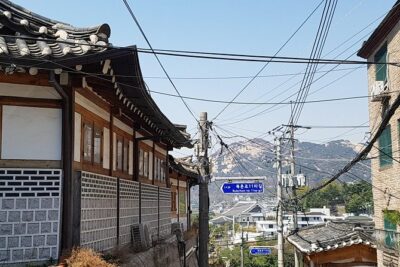
Best Walking Tour to Gyeongbok Palace Bukchon Hanok Village
Read our review →
Royal Seoul Cooking Class in a 100-Year-Old Hanok
Read our review →
Jeonju Hanok Village Full-Day Tour:Jangtaesan Autumn Foliage
Read our review →
Afternoon Seoul: Hanok Vibes, Netflix Street Food & N Seoul Tower
Read our review →Browse the lists this tour appears in