
Reviewed · COOKING CLASSES
Seoul Food: Banchan, Bibimbap, and Beyond
Come hungry, leave curious. This five-hour private walk pairs Seoul landmarks with family-run food stops, traditional dishes, and the stories behind Korean cuisine. I like the way the experience connects food to Korea’s changing history, and I like that guide Eunice has helped make it feel personal, witty, and relaxed for many different kinds of visitors. The main consideration is the price: at $195 per person, this is a serious investment, especially since you walk between stops and admission tickets are not the main value.
You begin near Dongdaemun and finish back at the same meeting point after visiting major sights in Dongdaemun and Jongno. Food, drinks, bottled water, snacks, and a licensed guide are included, but private transportation is not. If you want a quick introduction to Korean food with context instead of a simple list of dishes, this tour makes a strong first-day choice.
In This Review
- Key points at a glance
- Why this Seoul food walk feels different
- Starting near Dongdaemun Gate
- Dongdaemun Design Plaza and Seoul’s modern side
- Walking beside Cheonggyecheon Stream
- Gyeongbokgung Palace and the food story
- Bukchon Hanok Village and the old Seoul image
- What you may eat along the way
- Eunice and the value of a private guide
- Is $195 per person a fair price?
- Timing, meeting point, and practical details
- Who should book this Seoul food tour?
- Should you book Seoul Food: Banchan, Bibimbap, and Beyond?
- FAQ
- How long does Seoul Food: Banchan, Bibimbap, and Beyond last?
- What time and where does the tour begin?
- Where does the tour end?
- Is this a private tour?
- What is included in the price?
- Is private transportation included?
- Can I cancel for a full refund?
Key points at a glance
- Family-run food stops: Expect traditional Korean meals, market food, snacks, and dishes served in backstreet settings rather than a standard restaurant circuit.
- Eunice’s cultural storytelling: Her explanations connect Korean food with Chinese, Japanese, and Western influences, along with Korea’s own adaptations.
- A full five-hour outing: The walk combines eating with Dongdaemun Gate, DDP, Cheonggyecheon Stream, Gyeongbokgung Palace, and Bukchon Hanok Village.
- Private group format: Only your group participates, which allows for a more personal pace and easier conversation with the guide.
- Food beyond the usual basics: Past experiences have included chicken noodle soup, Korean beef, steak tartare, a special sauce, markets, a record store, and a tent bar.
- A practical first-day tour: The central meeting point, included dinner and drinks, and broad introduction to Seoul make this useful early in a South Korea trip.
Why this Seoul food walk feels different
Many food tours focus on eating as many dishes as possible. This one uses food as a way to explain Seoul. That distinction matters.
Korean cuisine is not presented as a fixed set of famous dishes. Instead, the tour looks at how Korea has taken outside influences and reshaped them through local ingredients, habits, and pride. That may mean discussing Chinese or Japanese influence, then showing how the resulting food became distinctly Korean. Western ideas also enter the story, not as replacements for Korean traditions, but as ingredients in the country’s continuing reinvention.
The result is a tour that reaches beyond bibimbap. You may already know kimchi, barbecue, or bulgogi. Here, the useful question becomes why Korean meals are arranged the way they are, how side dishes fit into the table, and how older family-run businesses continue serving food in parts of the city that are easy to miss.
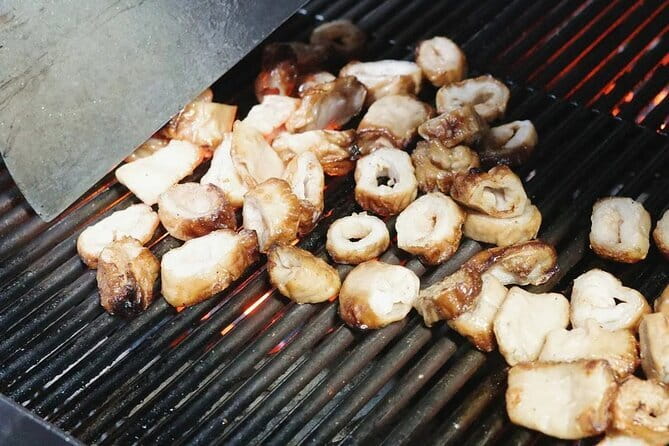
The food is not always presented for perfect photographs. One past description specifically noted that some backstreet dishes were plain to look at but tasty and plentiful. That is a fair warning, and also part of the appeal. This is closer to everyday Seoul cooking than a polished tasting menu.
More Cooking Classes in Seoul:
- Local Home Korean Cooking Class & Market Adventure in Seoul
★ 5.0 · 1,024 reviews - Master Korean traditional cooking with a Kimchi chef
★ 5.0 · 385 reviews - Seoul: Korean Cooking Class at a Local Home and Market Tour
★ 5.0 · 348 reviews
Starting near Dongdaemun Gate
The tour begins at JW Marriott Dongdaemun Square Seoul at 1:00 pm. From there, the first major sight is Dongdaemun Gate, also called Heunginjimun.
This gate was built in the late fourteenth century and was one of Seoul’s Eight Gates. It served as a main entrance through the city’s defensive walls, giving you an early reminder that Seoul was once a fortified royal capital rather than the modern megacity you see today.
The planned stop is about an hour, which gives the guide time to place the neighborhood in context before the food stops take over. That historical framing is useful. You are not simply walking from one restaurant to another. You are seeing how old city structures, commercial streets, and modern architecture occupy the same part of Seoul.
The gate itself is free to visit. Since the experience is private, you can ask questions without worrying about holding up a large group. That suits visitors who want more explanation about Seoul’s past, though anyone seeking a rapid food crawl may find the opening history section a little slow.
Dongdaemun Design Plaza and Seoul’s modern side
A short visit to Dongdaemun Design Plaza follows. Designed by Zaha Hadid, DDP is a dramatic contrast to Heunginjimun. Its sweeping forms, open spaces, exhibitions, fashion events, and cultural programs show a very different image of the city.
You get about 30 minutes here. That is enough for photographs and a look around, but not enough for a serious exhibition visit. Think of DDP as a visual pause between the historic gate and the food-focused walking route.
This stop also supports the larger theme of the tour. Seoul is comfortable placing traditional architecture beside bold new design. Korean culture is not treated as something frozen in the past. The modern city takes ideas from elsewhere, changes them, and gives them a local character. DDP makes that idea easy to see before you taste it.
Walking beside Cheonggyecheon Stream
Cheonggyecheon Stream provides the longest change of pace on the route, with about an hour scheduled for the area. The stream passes through Dongdaemun and Jongno and offers a calmer walking path away from the traffic and dense streets.
The setting is especially pleasant later in the day, when lights reflect on the water. Since the tour begins at 1:00 pm, the exact mood will depend on the season and sunset, so you should not assume the entire walk takes place after dark. Still, the stream gives your feet and stomach a break between food stops.
That pacing is one of the better features of the experience. A food tour can become tiring when every stop arrives before you have finished the last bite. Here, the walking sections give you time to talk, look around, and get ready for another dish.
Wear comfortable shoes. The route includes several sights and walking sections, and private transportation is not included. The tour is near public transportation, but the advertised experience itself is built around walking between places.
More Food Tours in Seoul:
- Seoul Street Food Market Tour
★ 5.0 · 1,226 reviews - Seoul: Night Market Food Tour with Local Guide
★ 4.9 · 943 reviews - Downtown Seoul Guided Food & Market Tour with 8+ Local Tastings
★ 5.0 · 580 reviews - Seoul Night Palace & Market Food Tour with Vehicle
★ 5.0 · 275 reviews
Gyeongbokgung Palace and the food story
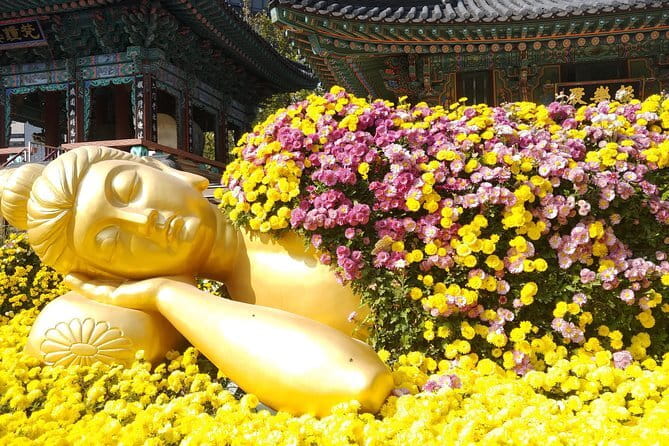
Gyeongbokgung Palace is the grandest historical stop on the route. It was the main royal palace of the Joseon Dynasty and remains one of Jongno’s defining landmarks.
The scheduled visit lasts about an hour. You can expect impressive palace buildings, gardens, and wide ceremonial spaces. More important for this food tour, the palace gives the guide a setting for explaining how court traditions, regional habits, social class, and national history shaped Korean cooking.
The connection between palace culture and ordinary meals should not be oversimplified. The tour’s strength is that it presents Korean cuisine as something shaped by resilience and adaptation, not just royal recipes or restaurant trends. You may hear how food customs changed through outside contact and difficult periods, then see how Korean cooks made those influences their own.
Admission is listed as free for the stop, so you are paying for the guide, food, drinks, and private access to the experience rather than a bundle of costly entrance tickets. If you want extensive palace touring, you may wish for more time here. If you want the palace to support the culinary story, one hour is a reasonable balance.
Bukchon Hanok Village and the old Seoul image
Bukchon Hanok Village is a collection of traditional Korean houses in the center of Jongno. Its narrow lanes and hillside views offer a glimpse of older residential Seoul.
The planned visit is about 30 minutes. That is enough for a short walk and photographs, but Bukchon is not treated as a full neighborhood exploration. The compact timing makes sense because the tour’s center of gravity is food, not architecture.
You should also remember that Bukchon is a living residential area, not an open-air museum. Keep your voice down in the lanes and respect homes as you pass. The short stop works best if you see it as a final cultural layer rather than expecting a long, unhurried wander.
By this point, the tour has moved from a historic city gate to futuristic design, a restored stream, a royal palace, and traditional houses. That range helps explain why the food portion is not an isolated activity. Seoul’s cooking makes more sense when you see the city’s constant conversation between old and new.
What you may eat along the way
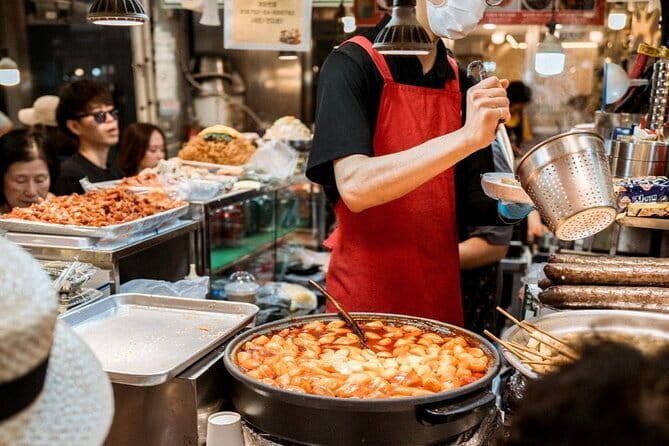
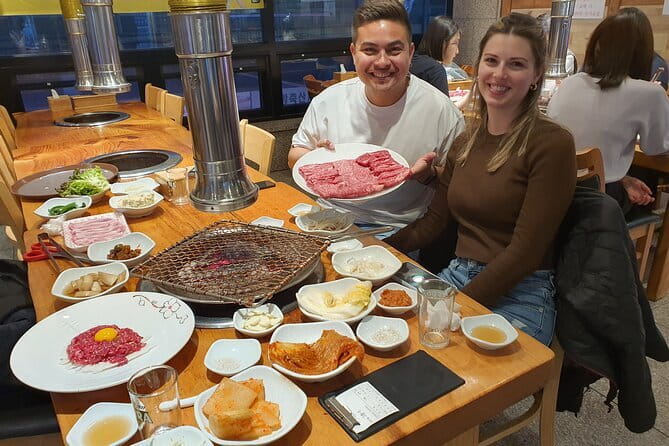
The exact food sequence is not fully specified, so you should not book this expecting a fixed tasting menu. The experience includes dinner, snacks, alcoholic beverages, and bottled water, with food stops shaped around the guide and the local businesses used that day.
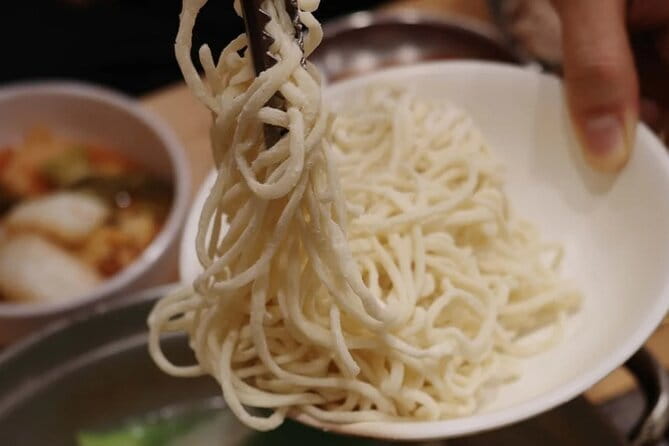
Past food experiences associated with this tour have included hearty chicken noodle soup, Korean beef served in several ways, steak tartare, and a memorable special sauce. Traditional sit-down restaurants, markets, and tent-bar settings have also been part of the experience. A record store was even included on one outing, showing that the day can connect food with other parts of local culture.
That variety is a major reason to choose this walk. You are not limited to one famous dish or a single market. You might move from a substantial meal to small snacks, then finish with a drink in a casual local setting.
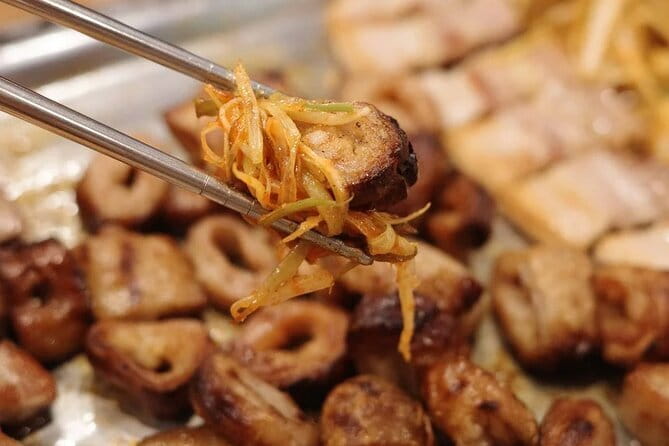
Banchan, the small side dishes served with Korean meals, are central to understanding the table. They show how a meal can offer many flavors without turning each item into a separate course. Bibimbap, suggested by the tour title, gives you another useful window into Korean cooking, where rice, vegetables, seasonings, and other ingredients come together in one bowl.
The food may be plentiful. One family experience found there was so much to eat that the walking breaks became especially welcome. If you have a small appetite, tell Eunice or your guide early. The private format should make food conversations easier, but the supplied details do not confirm specific substitutions or dietary arrangements, so ask before booking if you have strict dietary needs.
Eunice and the value of a private guide
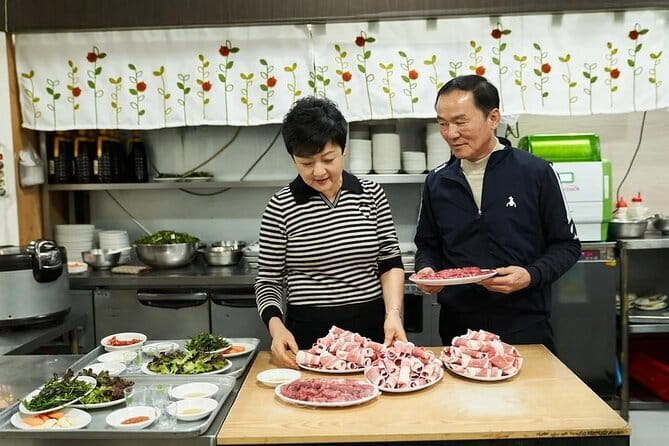
Eunice is the guide most often praised in the available feedback. Her role appears to go well beyond pointing out restaurants. She explains how history shaped Korean culture and cuisine, introduces the people who prepare the food, and keeps the tone friendly rather than formal.
That personal quality matters in a private tour. You can ask why a dish is eaten in a certain way, what a sauce contains, or how a market fits into Seoul life. You are also less likely to feel like a number in a large group.
Her style has been described as witty, engaging, warm, and easy to spend a day with. That is especially valuable on a five-hour outing. A guide can know a lot and still make a food tour feel like a lecture. Eunice’s strength appears to be making history useful at the table.
The private setup also suits solo visitors and families. One solo participant used the experience as a first introduction to Korea and appreciated meeting the people behind the food. A family with an 11-year-old found that even prior familiarity with Korean cuisine did not eliminate the chance to learn something new.
Is $195 per person a fair price?
At $195 per person, this is not a budget food walk. You are paying for a private experience, a licensed guide, a five-hour itinerary, dinner, snacks, alcoholic drinks, and bottled water. The cost also reflects the time spent linking food with several major Seoul sights.
The price makes more sense if you are a solo visitor, couple, family, or small group that values direct attention and a flexible conversation. A private tour can also save you from guessing what to order in unfamiliar restaurants, which has real value during a short visit.
The value is weaker if you mainly want cheap street food or a high number of tastings. You could spend much less eating independently, and the major landmarks themselves do not carry separate admission charges in the supplied details.
I would think of this as a half-day orientation with serious eating, not simply a dinner tour. Book it early in your trip if you want the guide’s explanations to shape the rest of your time in Seoul.
Timing, meeting point, and practical details
The tour begins at 1:00 pm at JW Marriott Dongdaemun Square Seoul, 279 Cheonggyecheon-ro, Jongno District, Seoul. It lasts about five hours and ends back at the meeting point.
A mobile ticket is provided, and confirmation arrives when you book. The route is near public transportation, but private transportation is not included, so plan your route to and from the hotel area yourself.
Most people can participate, but the itinerary includes walking through historic areas, along the stream, and through narrow village lanes. The details do not specify the exact distance, number of stairs, or accessibility arrangements. Ask the operator before booking if mobility needs are important to you.
The experience is private, meaning only your group participates. It requires a minimum number of participants, and if that minimum is not met, you will be offered another date or experience, or a full refund. You can cancel for a full refund up to 24 hours before the local start time. Within 24 hours, refunds and changes are not accepted.
Who should book this Seoul food tour?
I would recommend it to you if you want context with your meals, enjoy walking, and prefer small local businesses to a polished restaurant showcase. It is a particularly good fit for a first visit, since the route introduces several central neighborhoods and gives you a working sense of Korean food customs.
Families can benefit from the private pace, especially if children are open to trying different dishes. Solo visitors may also find the guide helpful during the first days of a Korea trip. The food is described as varied and plentiful, with enough choices to make the experience feel like a full meal rather than a few samples.
You may want another option if you dislike walking, need a guaranteed fixed menu, or are mainly interested in palace interiors and architecture. You should also think carefully about the cost if your priority is inexpensive eating.
The strongest part of the experience is the link between people, place, and food. You are not only told what a dish is called. You get a chance to understand where it fits in Seoul life, then eat it in the setting where that explanation matters.
Should you book Seoul Food: Banchan, Bibimbap, and Beyond?
Book it if you want a personal introduction to Seoul’s food culture, with a guide who can connect dishes to history and everyday life. The private format, generous food, and mix of old and new Seoul give the five hours a clear purpose.
At $195 per person, it is best treated as a premium half-day experience. If you want the lowest possible food cost, skip it and eat independently. If you want someone to lead you through backstreets, traditional meals, markets, landmarks, and local stories without assembling the day yourself, this tour earns serious consideration.
FAQ
How long does Seoul Food: Banchan, Bibimbap, and Beyond last?
The experience lasts approximately five hours.
What time and where does the tour begin?
It begins at 1:00 pm at JW Marriott Dongdaemun Square Seoul, 279 Cheonggyecheon-ro, Jongno District, Seoul, South Korea.
Where does the tour end?
The experience ends back at the starting meeting point.
Is this a private tour?
Yes. Only your group participates in the activity.
What is included in the price?
The price includes a licensed guide, alcoholic beverages, bottled water, dinner, and snacks.
Is private transportation included?
No. Private transportation is not included. The experience is near public transportation.
Can I cancel for a full refund?
Yes. You can cancel at least 24 hours before the local start time for a full refund. Cancellations or changes made less than 24 hours before the start time are not accepted for a refund.
Just added in Seoul
- Seoul: Korean & English Language Exchange Global Party★ 5.0 · 28 reviews
- Your Personal Seoul Photographer!★ 4.1 · 15 reviews
- You’re Invited to Our Home in Seoul: The Only Cooking Class!★ 5.0 · 8 reviews
- From Seoul: Yongpyong Ski Day Tour with Transportation★ 4.9 · 40 reviews
- From Seoul: Hwacheon Ice Fishing and Lighting Festival Tour★ 4.5 · 4 reviews
- Seoul: Gangneung BTS K-Pop & K-Drama Filming Locations Tour★ 4.6 · 14 reviews
- Unique Native Experience : Han River Picnic, Board game, BBQ★ 5.0 · 3 reviews
- Seoul: Euljiro Gastroventure Tour★ 4.0 · 1 review
Cooking Classes, compared.
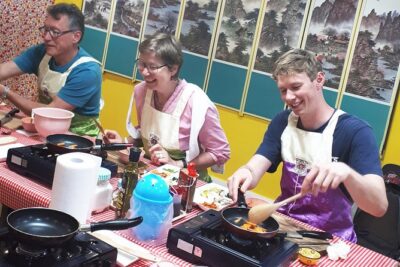
Local Home Korean Cooking Class & Market Adventure in Seoul
Read our review →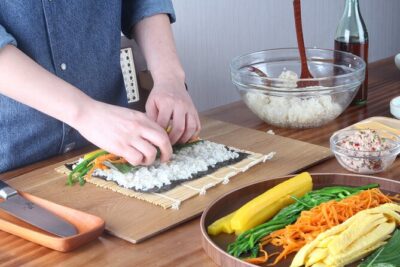
Master Korean traditional cooking with a Kimchi chef
Read our review →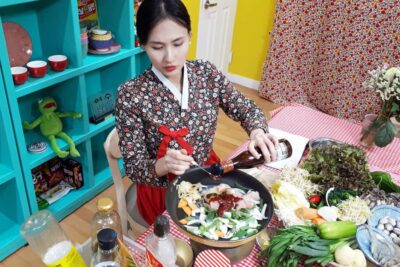
Korean Cooking Class at a Local Home and Market Tour
Read our review →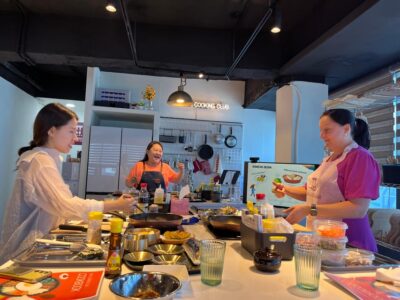
Korean Cooking Class with Grocery Shopping at Seoul Local Market
Read our review →
Korean Kimchi Making Day Experience with a Local Market Tour
Read our review →
Browse the lists this tour appears in