
Reviewed · BUSAN TOURS
Busan Seafood Tour : Oyster village Tour with Oyster cuisines
Oysters tell a different story of Busan. This four-hour outing takes you from Hadan Station by city bus to an island fishing village where oyster farming shapes daily life, then serves fresh oyster soup, rice, and oyster pancake at a well-known local restaurant. I like the close look at working oyster culture, including the tools and shucking process, and I like that lunch is built around food from the village itself. The main drawback is the short season: this experience runs only from November through February.
The tour also gives you a small taste of Korean food and drinking customs, explained as you eat. Guide Su Yang has been praised for combining the village walk with Korean history, while Mr Chang has been noted for anticipating practical needs. Still, you should be comfortable with moderate walking, a city-bus ride, and possible waiting at the restaurant.
In This Review
- Key Points At A Glance
- Meeting At Hadan Station At 10:00
- The Bus Ride To An Island Fishing Village
- Walking Through The Oyster-Producing Village
- Lunch At A Famous Oyster Restaurant
- Returning To Busan By Bus At 13:30
- Is $180 A Fair Price?
- Who Will Enjoy This Winter Seafood Tour?
- Practical Details Before You Book
- Should You Book The Oyster Village Tour?
- FAQ
- Where does the oyster village tour start?
- Where does the tour end?
- How do you reach the oyster village?
- What food is included?
- Are drinks included?
- When is the tour available?
- How many people can join?
- What happens if bad weather cancels the tour?
Key Points At A Glance
- Working oyster village: See farming tools, village life, and oyster shucking rather than only eating seafood at a restaurant.
- Fresh local lunch: Oyster soup with rice and oyster pancake are included in the price.
- Winter-only timing: The tour operates from November through February, when oyster dishes are the focus.
- Public-transport adventure: Round-trip bus fare from Hadan Station is included, giving you a practical look beyond Busan’s central sights.
- Small group format: The maximum group size is 15 people, small enough for questions and guide conversation.
- Food culture included: Your guide explains Korean food and drinking customs during lunch. Alcohol costs extra.
Meeting At Hadan Station At 10:00
The day begins at Hadan subway station, Exit 3, on Line 1, station number 102. You meet at 10:00, then take a city bus toward the oyster village. The return bus brings you back to Hadan Station at about 14:30.
That starting point matters. Hadan is not a central tourist landmark, so you need to plan your route across Busan before the meeting time. The upside is that the tour uses ordinary public transport instead of hiding the journey behind a private vehicle. You get a practical view of how people move through the city and its outer districts.
The tour information says pickup is offered, but the stated schedule begins at Hadan Station. I would confirm the exact pickup arrangement before booking if you are not planning to meet there. The clearest fixed meeting detail is Hadan Station Exit 3.
The bus ride takes you from the city toward a fishing community outside Busan. That change of setting is part of the point. You are not simply being driven to a seafood restaurant. You are following the route that connects the city with one of its nearby sources of food.
More Busan trips:
- Busan: Gyeongju Guided Day Trip to Three Kingdoms Capital
★ 4.8 · 1,925 reviews - Small Group Full Day Busan Tour (Max 6 Pax)
★ 5.0 · 1,464 reviews - From Busan: Gyeongju UNESCO World Heritage Guided Day Tour
★ 4.8 · 1,250 reviews
The Bus Ride To An Island Fishing Village
The village is reached by city bus, with arrival planned for about 11:30. This leaves roughly ninety minutes between the meeting and arrival, including the transfer and the route out toward the island community.
The journey may feel long for a four-hour activity, but it gives the tour a useful sense of place. Busan is widely known as a major port city, yet its seafood identity does not end at the harbor or fish market. Oyster farming continues in communities near the city, and this trip shows you that working side of Busan.
You should keep your expectations realistic. This is not a polished attraction with a visitor center, staged demonstrations, or a long museum presentation. The appeal is the village itself, the farming equipment, and the chance to see people working with oysters. If you prefer a compact food stop in the city center, the bus journey may seem like too much effort. If you want a local food story with a real setting, it adds value.
The maximum group size is 15. That is useful on a village walk, since a guide can usually answer questions without the outing feeling like a large procession. The available information names Su Yang and Mr Chang as guides associated with the experience. Su Yang has been praised for explaining oysters and Korean history during the walk, while Mr Chang has been praised for being attentive to the group’s needs.
Walking Through The Oyster-Producing Village
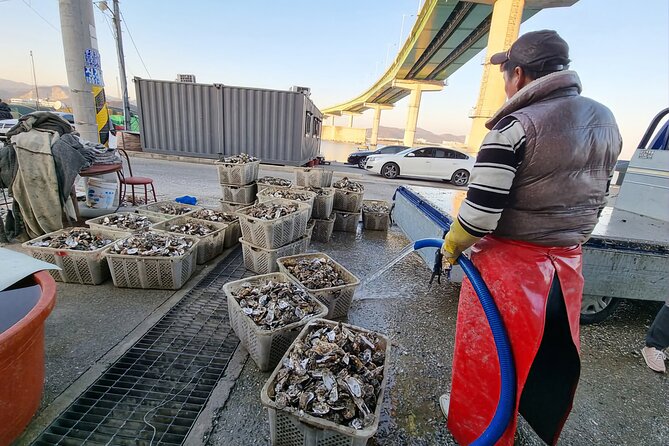
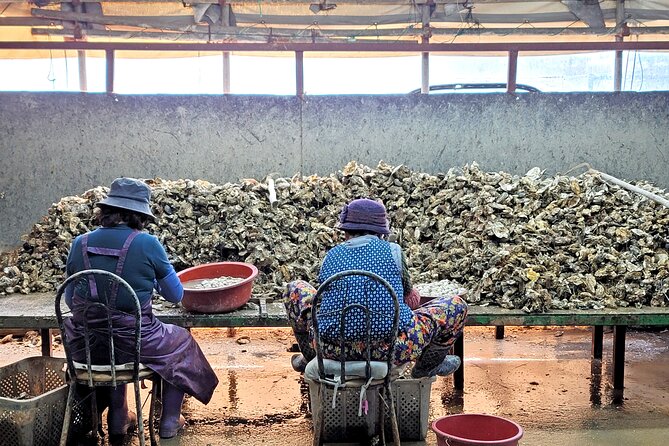
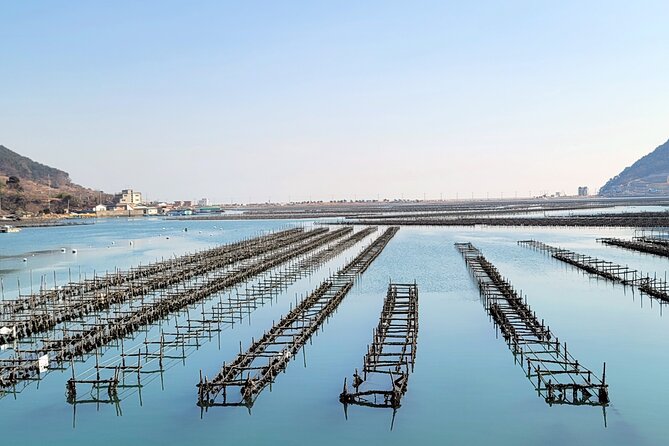
Once you arrive, the focus shifts from transport to observation. The walk takes you around the fishing village and its oyster-producing areas. You can take photographs, see the tools used in oyster farming, and watch workers shucking oysters.
This is the most distinctive part of the experience. Many seafood tours take you to a market, point at the catch, and move quickly to a meal. Here, you see some of the work behind the plate. The tools make oyster farming more tangible, while the shucking gives you a direct look at how the shellfish is prepared.
I like that the village walk is not treated as a quick excuse for lunch. The guide explains what you are seeing, and the walk has room for questions. The available feedback gives special credit to Su Yang for teaching about oysters and adding Korean history to the outing. That combination helps you connect the food to the place instead of treating it as a one-off dish.
The pace should suit anyone with moderate physical fitness. You will be walking around a working village, not following a fully accessible indoor route. The activity notes specifically call for a moderate fitness level, so wear shoes you can walk in and prepare for outdoor conditions.
Weather matters here. The experience requires good weather, and poor conditions can lead to a different date or a full refund. That policy is sensible for an outdoor village walk, but it also means you should keep some flexibility in your schedule.
Lunch At A Famous Oyster Restaurant
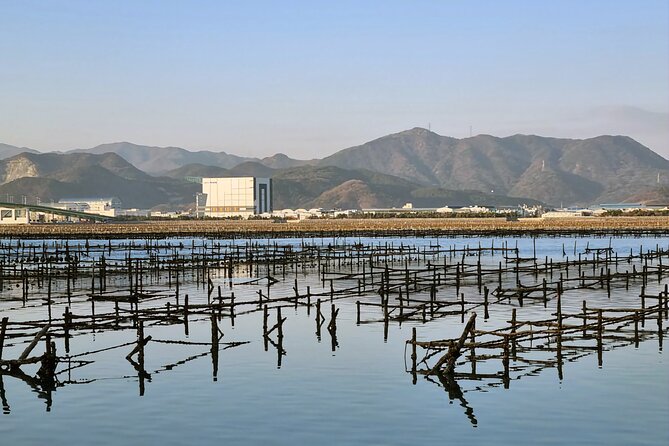
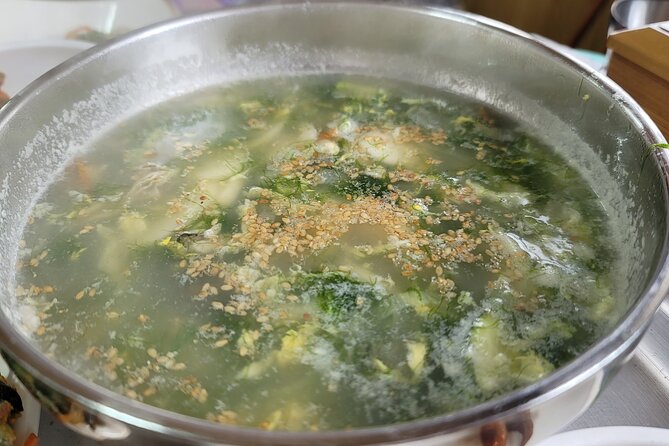
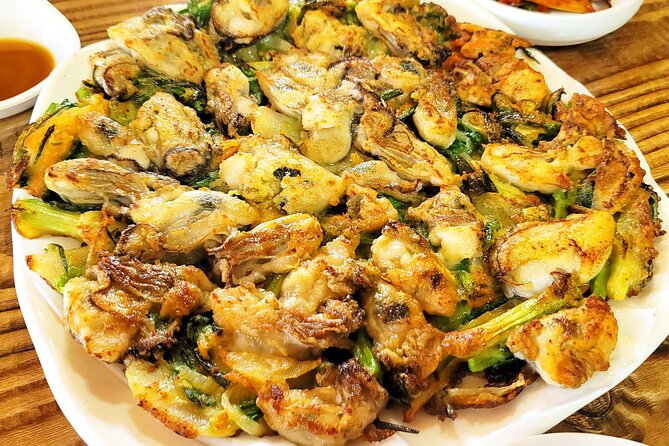
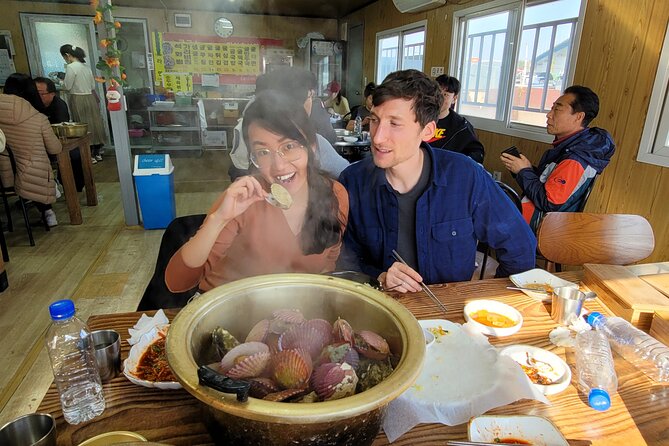
Lunch is scheduled for about 12:00 and includes oyster soup with rice and oyster pancake. These dishes offer two different ways to taste the local catch.
Oyster soup with rice is the more comforting plate, especially during the November to February season. The warm broth gives you a chance to taste the oysters in a simple format, while the rice makes the meal filling. The oyster pancake adds texture and a more substantial, pan-cooked style.
The meal is not an optional add-on. It is included in the $180 price, along with the round-trip bus fare from Hadan Station. That makes the food a central part of what you are paying for, not a minor snack between sightseeing stops.
The restaurant is described as famous and popular, and one tour response notes a wait of about 30 minutes before the table was ready. That is worth knowing. The schedule places lunch at 12:00, but the timing may shift if the restaurant is busy. The wait can be a drawback for anyone expecting a tightly timed four-hour tour, though it may also signal that the meal is a genuine local stop rather than a dining room reserved only for tour groups.
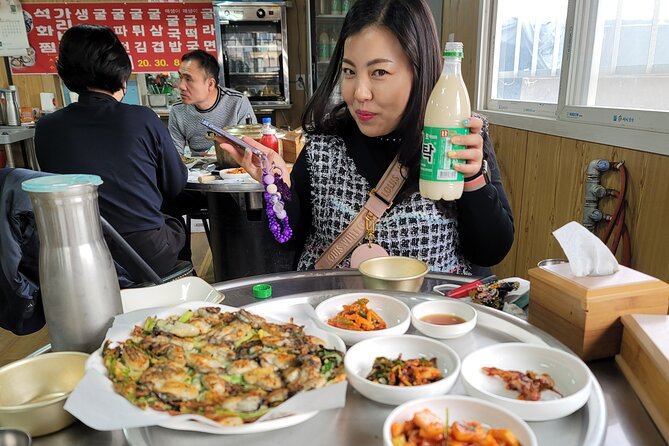
Alcoholic drinks are not included. Your guide explains Korean food culture and drinking culture during lunch, which adds context to the meal, but you pay separately for any alcohol. If you are interested in Korean dining customs, this part can be more useful than a standard restaurant visit because the explanation comes while you are eating.
The strongest praise for the food is clear: the oyster dishes have left a lasting impression, and the soup and pancake are repeatedly singled out as especially enjoyable. You should still remember that oysters are the theme of the meal. This is not a flexible menu for someone who dislikes oysters or needs a broad range of alternatives.
A completely different kind of day:
- Busan Private Tour with licensed tour guide + private vehicle
★ 5.0 · 1,143 reviews - Busan: Coastal Treasures Beach Train, Culture Village & More
★ 4.7 · 832 reviews - Busan’s Cultural Wonders with Beach Train & Gamcheon Village etc
★ 4.5 · 663 reviews - Gyeongju UNESCO World Heritage Guided Day Tour from Busan
★ 5.0 · 660 reviews
Returning To Busan By Bus At 13:30
At about 13:30, you take the bus back toward Busan. The tour ends at Hadan Station around 14:30, where it began.
The return journey gives the experience a clean half-day shape. You can spend the morning and early afternoon on the coast, then continue with other Busan plans. Since the tour ends at the same station, you do not need to arrange a separate ride back from a remote village.
The schedule is approximate rather than a guarantee. The restaurant wait, bus conditions, weather, and village walk can affect the actual return time. I would avoid booking a separate activity with a strict start time immediately after 14:30.
Is $180 A Fair Price?
At $180 per person, this is not a budget food excursion. The value depends on what you want from a Busan seafood experience.
The price covers a guide, the village visit, round-trip bus fare from Hadan Station, and the included lunch. You are also paying for access to a food story that is harder to arrange on your own. Reaching the oyster village by public transport, finding the right areas to visit, understanding the farming equipment, and choosing the restaurant would take time and local help.
The value is strongest if you care about how food is produced, not only how it tastes. You receive an explanation of oyster farming, a look at shucking, a village walk, and a meal tied to the area. It is less attractive if your main goal is simply to eat inexpensive oysters, since you could likely find seafood in Busan without spending $180.
The small maximum group size helps justify some of the cost. A group of up to 15 is more manageable than a large coach tour, especially in a working village. The guide’s role also matters. Su Yang’s history and oyster explanations, along with Mr Chang’s attentive approach, suggest that the quality of the day depends heavily on who leads it.
Group discounts are available, so the price may work better for couples, families, or friends booking together. Ask about the exact discount before committing, since the available details do not give a fixed reduced rate.
Who Will Enjoy This Winter Seafood Tour?
I would recommend this outing to you if you want to see a less familiar side of Busan. It suits people who enjoy local food, small communities, public transport, and conversations with a guide. It is especially appealing if you want seafood connected to a real working place rather than a generic restaurant meal.
Food-focused visitors will get the most from the included lunch. The oyster soup, rice, and pancake give you a focused introduction to regional seafood cooking, while the guide’s explanation of Korean food and drinking customs adds cultural context.
The tour can also suit repeat visitors to Busan. If you have already seen the central port areas, markets, and major sights, the oyster village offers a different kind of outing. It shows how the city’s seafood economy extends into nearby communities.
I would hesitate if you dislike oysters, need a broad choice of dishes, or have limited mobility. The activity requires moderate physical fitness, includes an outdoor walk, and depends on public buses. I would also think twice if you only have one day in Busan and want to stay near the major city sights.
The seasonal limit is another major consideration. You can book this only from November through February. That restriction is inconvenient, but it also points to the experience’s focus on the winter oyster season. If your visit falls within those four months, the timing works in your favor.
Practical Details Before You Book
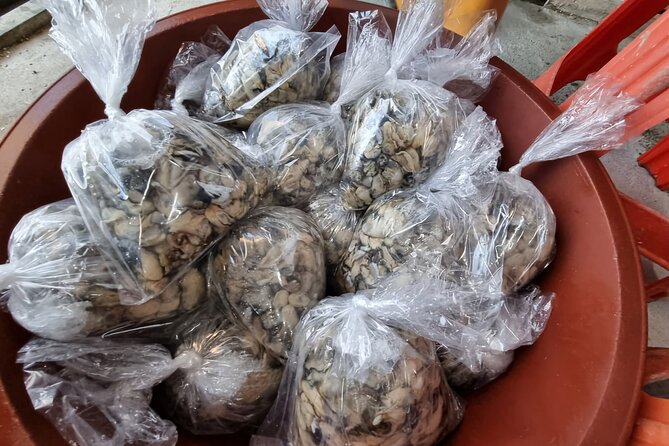
The experience lasts about four hours, from the 10:00 meeting at Hadan Station to the 14:30 return. The group maximum is 15 people, and mobile tickets are accepted.
Wear comfortable shoes and allow time to reach Hadan Station. Since the day includes a village walk and outdoor viewing, check the forecast before you go. The activity can be canceled in poor weather, with the choice of another date or a full refund.
Free cancellation is available if you cancel at least 24 hours before the start time. Cancellations made less than 24 hours ahead are not refunded, and late changes are not accepted. Confirmation is normally sent at booking, though bookings made within nine days of the travel date may take up to 48 hours, subject to availability.
Travel insurance is not included. Alcohol is also not included, while lunch and the bus fare are covered.
Should You Book The Oyster Village Tour?
Book it if you want a small-group seafood outing with a real village setting, not just another meal in central Busan. The combination of oyster farming, worker shucking, Korean food explanation, and a fresh oyster lunch gives the day a clear purpose.
Skip it if you need a flexible menu, dislike bus travel, or are visiting outside November through February. At $180, the tour asks you to pay for the guide, the setting, and the cultural explanation as much as the food itself. For someone who values that added context, it is a worthwhile half-day. For someone seeking only a cheap seafood lunch, it is not the best match.
FAQ
Where does the oyster village tour start?
It starts at Hadan subway station, Exit 3, on Line 1, station number 102, at 10:00.
Where does the tour end?
The tour ends back at Hadan Station at about 14:30.
How do you reach the oyster village?
The group takes a city bus from Hadan Station to the island fishing village. Round-trip bus fare is included.
What food is included?
Lunch includes oyster soup with rice and oyster pancake.
Are drinks included?
Alcoholic beverages are not included. The guide explains Korean food and drinking culture during lunch.
When is the tour available?
The tour is available from November through February.
How many people can join?
The maximum group size is 15 people.
What happens if bad weather cancels the tour?
If poor weather causes cancellation, you are offered a different date or a full refund.
Just added in Busan
- Small Group 7D Korea package Tour with Seoul Gyeongju Busan Jeju★ 4.5 · 13 reviews
- Private Transfer from Seoul to Busan(up to 12 passengers)★ 5.0 · 1 review
- Jinhae Cherry Blossom + Busan Sunrise from Seoul★ 4.5 · 5 reviews
- 7 days Flexible Tour for Major Cities(Seoul,Busan,Gyeongju etc)★ 5.0 · 5 reviews
- PREMIUM 5 Days Tour for Wonder of Korea(Mt. Seoraksan, Andong, Gyeongju, Busan)★ 5.0 · 1 review
- 5 Days Tour for Korea’s past and present(Mt.Seoraksan, Andong, Gyeongju, Busan)★ 5.0 · 1 review
- 7 Days Highlight Korea Tour(Seoul, Nami, DMZ, Andong, Gyeongju, Busan)★ 5.0 · 1 review
- 5-Day Korea Golden route by K-shuttle Tour from Seoul Including Busan, Yeosu★ 4.5 · 37 reviews
Busan Tours, compared.

Gyeongju Guided Day Trip to Three Kingdoms Capital
Read our review →

Gyeongju UNESCO World Heritage Guided Day Tour
Read our review →
Busan Private Tour with licensed tour guide + private vehicle
Read our review →
Coastal Treasures Beach Train, Culture Village & More
Read our review →
Busan’s Cultural Wonders with Beach Train & Gamcheon Village etc
Read our review →
Gyeongju UNESCO World Heritage Guided Day Tour from Busan
Read our review →
Private Busan Tour -Explore Cultural Landmarks with a Local Guide
Read our review →Browse the lists this tour appears in