
Reviewed · HISTORICAL TOURS
Gwangju May 18 History Tour (Small group Max.5)
Gwangju remembers out loud. This seven-hour tour traces the May 18 Democratic Uprising through memorials, archives, military sites, and local food stops. I like the maximum five-person group, which should make it easier to ask questions about painful and complex events. I also like the guide’s personal connection to Gwangju. Veronica, the named guide in the tour’s feedback, was praised for clear history and local food advice.
The main consideration is the subject itself. This is not a light sightseeing outing, and several stops deal with military violence, imprisonment, death, and grief. Lunch is not included, either, so you should bring extra money for the food stop. The tour costs $95 per person, which is fair if you value private transportation and close guidance, but less attractive if you prefer to explore museums on your own.
In This Review
- Key points at a glance
- Why May 18 matters in Gwangju
- Starting at May 18 Democracy Square
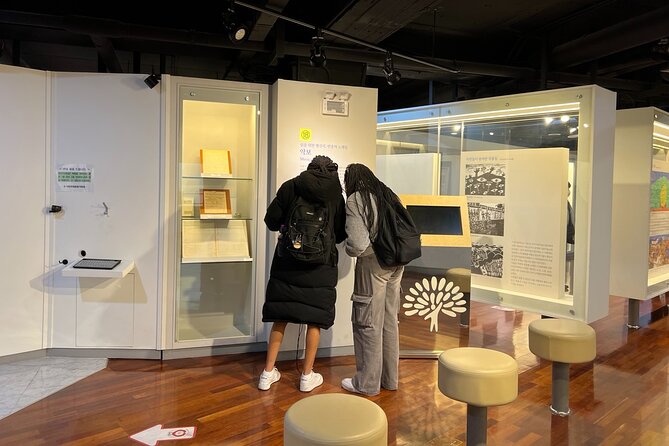
- Reading the past at the May 18 Archives
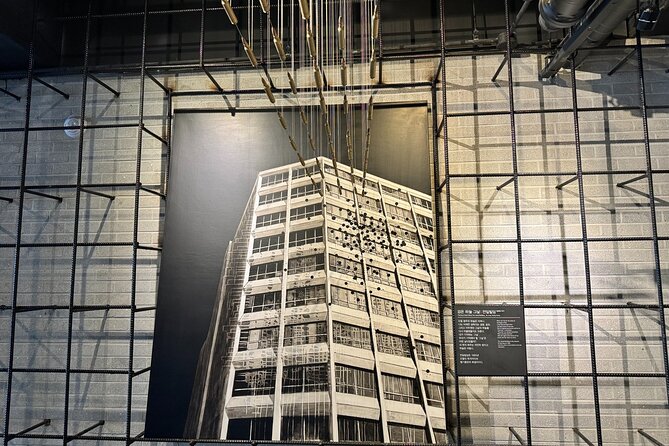
- Seeing the 245 marks at Jeonil Building 245
- Taking a food break on Dongmyeong-dong Cafe Street
- Paying respects at May 18 National Cemetery
- Entering May 18 Liberty Park
- What the $95 price really covers
- Who should book this Gwangju history tour?
- Should you book it?
- FAQ
- How long does the Gwangju May 18 History Tour last?
- Where does the tour begin?
- Where does the tour end?
- What is the maximum group size?
- Is lunch included in the tour price?
- What happens if I need to cancel?
Key points at a glance
- The tour begins at May 18 Democracy Square, the former South Jeolla Provincial Office area and the uprising’s final stronghold.
- The group is limited to five people, giving you a more personal setting for questions and discussion.
- The May 18 Archives uses original records and preserved material to explain what happened during the uprising.
- Jeonil Building 245 preserves evidence of helicopter gunfire, including 245 bullet marks on its exterior.
- Dongmyeong-dong Cafe Street adds a local food break, with dishes selected from food popular in Gwangju.
- The day ends at May 18 Liberty Park and Kimdaejung Convention Center Station, making the route useful if you are continuing by metro.
Why May 18 matters in Gwangju
The May 18 Democratic Uprising took place during ten tense days in 1980. Citizens in Gwangju resisted military dictatorship and demanded democracy. The uprising was met with overwhelming force, and many people died or suffered injuries, imprisonment, and other harm.
For a first-time visitor, the hardest part can be understanding why this local story matters across South Korea. May 18 became part of the country’s long movement toward democracy, and the memory remains central to Gwangju’s identity. The May Spirit refers to the resistance, sacrifice, sharing, and solidarity shown by local people during those ten days.
I find this context important because the tour is not simply a walk through old buildings. Each place connects to a specific part of the city’s public memory. The sites show where people gathered, where evidence was preserved, where victims are remembered, and where the military structure involved in the crackdown once operated.
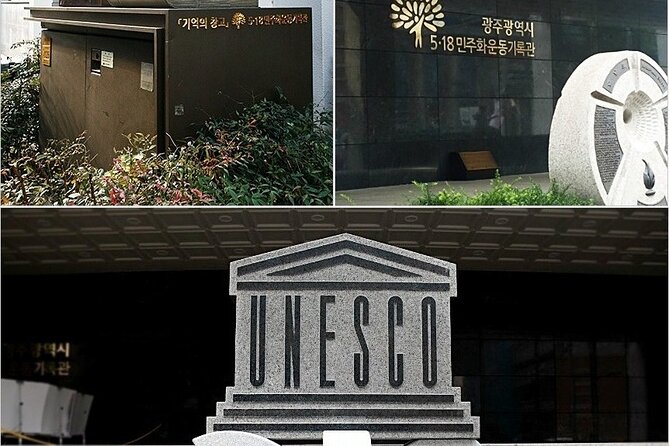
The uprising was listed in the UNESCO Memory of the World register in 2011. That recognition gives the story international importance, but the tour’s strongest feature is its local focus. You are not only being given a national history lesson. You are being shown how that history is remembered in Gwangju itself.
More History Tours in South Korea:
- From Busan: Gyeongju UNESCO World Heritage Guided Day Tour
★ 4.8 · 1,250 reviews - Gyeongju UNESCO World Heritage Guided Day Tour from Busan
★ 5.0 · 660 reviews - Seoul: Evening Dark History, Folklore & Ghost Story Walking Tour
★ 5.0 · 593 reviews
Starting at May 18 Democracy Square
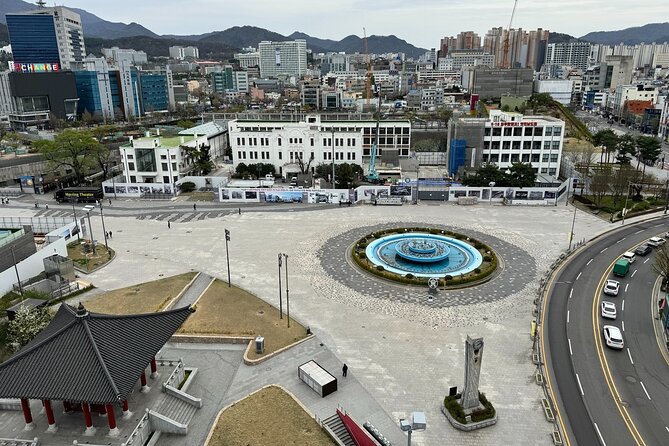
The tour starts at 10:00 a.m. at May 18 Democracy Square on Geumnam-ro. The square includes the circular fountain and open plaza in front of the former South Jeolla Provincial Office.
This was the final stronghold of the uprising, so it is a fitting place to begin. The wide space makes the setting easy to understand. Rather than starting in a museum with dates and display cases, you begin outdoors at a place tied directly to public gatherings and the final stage of the movement.
The planned visit lasts about 30 minutes, with no admission fee. That short opening should help you get your bearings before spending longer periods indoors and at the memorial sites.
I would pay close attention to the guide’s explanation here. The physical setting can look ordinary at first, especially if you arrive without much background. Its meaning comes from the events connected to it. A local guide can explain why this particular square remains so important to Gwangju.
Because the group is capped at five people, you should have a reasonable chance to ask about the buildings, the plaza, and the sequence of events. That matters on a history tour, where one unanswered question can leave the rest of the day confusing.
Reading the past at the May 18 Archives
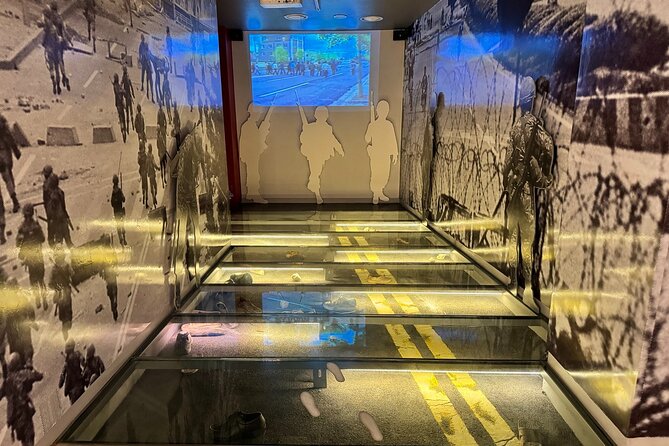
The May 18 Archives occupies the former Gwangju Catholic Center. Established in 2015, it collects, preserves, and shares historical records related to the uprising.
You spend about an hour here, and admission is free. This is likely to be the most document-focused part of the tour. The archives can add detail to the events introduced at the square by showing how the story has been recorded and preserved.
I value this stop because archives help you move past a simple heroic narrative. The May Spirit is powerful, but the records also point to the human cost of the uprising and the effort required to protect its memory. Documents, photographs, and other preserved material can make the period easier to understand in a way that a short outdoor explanation cannot.
Give yourself room to process what you see. The tour schedule is fairly full, and an hour can pass quickly in a place devoted to such a large subject. If you have a strong interest in modern Korean history, you may wish the visit were longer. The advantage of having the guide with you is that you can ask for help placing the material in context rather than trying to make sense of every display alone.
The former Catholic Center also adds a layer of place to the visit. You are seeing history in a building connected to Gwangju’s civic life, not only in a newly built museum designed from scratch.
Seeing the 245 marks at Jeonil Building 245
The next stop lasts about an hour at Jeonil Building 245. Its name refers to the 245 bullet marks preserved on the outside of the building.
This site is especially important because it connects memory with physical evidence. The building carries scientific evidence of helicopter gunfire during the uprising. Seeing the marks in person can give the history a direct, unsettling presence.
I would not expect a polished sightseeing attraction here. Its value comes from the evidence itself. The building’s exterior is a reminder that the events were not distant or abstract. Damage was left on a real structure in the city, and those marks remain part of the public record.
The stop also shows why a guided visit can be useful. A guide can explain what the marks mean and how they fit into the wider account of May 18. Without that explanation, you might see damage on a wall without understanding its importance.
This is another serious section of the day. If you are traveling with children or with someone who prefers light cultural outings, think carefully about the emotional weight before booking. The tour is designed for people who want to face difficult history, not skip around it.
A completely different kind of day:
- Best DMZ Tour Korea from Seoul (Red Suspension Bridge Optional)
★ 5.0 · 41,422 reviews - DMZ Tour: 3rd Tunnel, Option(Suspension Bridge, Boat) from Seoul
★ 5.0 · 21,373 reviews - DMZ tour south Korea from Seoul (NK experience hall, defector)
★ 5.0 · 20,599 reviews - DMZ Insider Tour: 3rd Tunnel, NK Defector Meet & Red Bridge
★ 4.9 · 15,214 reviews
Taking a food break on Dongmyeong-dong Cafe Street
After several demanding historical stops, the route moves to Dongmyeong-dong Cafe Street for about 90 minutes. This is the most relaxed part of the day and gives you a chance to experience Gwangju through food.
The tour selects popular local dishes, including yukjeon, described as thinly sliced food prepared in a local style. You choose what you want and pay for it on the spot. Lunch is not part of the $95 price, so keep some extra money available.
I like this arrangement more than a fixed meal included in the tour price. You can choose according to your appetite and budget. It also lets the guide point you toward food that local people enjoy rather than sending you to a generic restaurant selected only for convenience.
The drawback is that your final cost is not completely fixed. The tour price covers coffee or tea and private transportation, but not lunch or personal travel insurance. If you are tracking every won, ask yourself how much you want to spend during the food stop.
The 90-minute break is useful for another reason. May 18 is emotionally demanding, and you need a pause. Eating in a local neighborhood can help you think through what you have seen without turning the day into one long sequence of memorials.
The food stop also gives the guide a chance to show another side of Gwangju. The city is known for generous portions and good food, and this section brings ordinary local life into a tour mostly concerned with extraordinary events.
Paying respects at May 18 National Cemetery
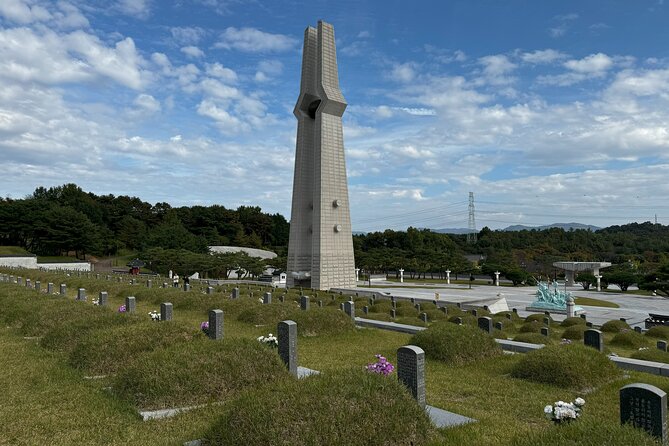
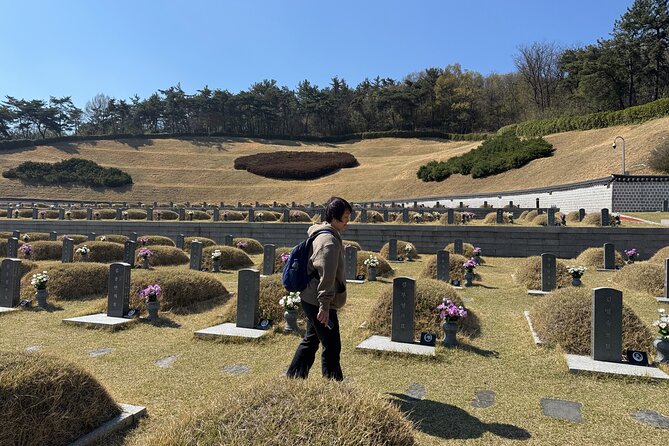
The May 18 National Cemetery is dedicated to people who died in connection with the Democratic Uprising. It opened in May 1997 and became the final resting place for those who lost their lives during the events.
The planned visit lasts about 90 minutes, and admission is free. I would expect this to be one of the quietest and most reflective sections of the day. After learning about the uprising through public spaces, records, and physical evidence, you reach a place centered on the people who paid the highest price.
A cemetery can change the way you understand history. Dates and political terms become personal when you are standing among graves and memorials. The site asks you to slow down and consider the lives behind the movement, not only the national story that followed.
Your guide’s role matters here. A local explanation can help you understand why the cemetery carries such importance for Gwangju and how it relates to the May Spirit. The small group should also suit the setting better than a large bus tour. You can listen without the noise and movement that often come with a bigger crowd.
Plan for a respectful visit. This is not a photo stop to rush through before the next attraction. The schedule gives you enough time to look around, listen, and reflect, though the amount of time you want may depend on how closely you engage with the memorials.
Entering May 18 Liberty Park
The final major stop is May 18 Liberty Park, located on the former site of the Sangmudae military base. The tour allows about 90 minutes here.
During the uprising, martial law troops held important meetings at this site. The park also relates to the treatment of people during and after the uprising. Its importance comes from what happened on the former military base, and the location helps you understand the institutional side of the events.
The day’s route has moved from citizens gathering in a public square to records, visible damage, graves, and finally a former military site. That order creates a useful progression. You first learn about public resistance, then examine evidence, honor victims, and confront the structures that controlled the response.
I appreciate that the tour includes this place rather than focusing only on memorials. A full understanding of May 18 requires attention to both the people who demanded democracy and the military system that opposed them.
By this point, you will have spent about seven hours moving through emotionally serious material. The pace is steady, with the food stop providing a break. Still, you should wear comfortable shoes and bring enough energy for a long day. The tour includes private transportation, which reduces the strain of getting between sites, but it does not turn the experience into a passive ride.
What the $95 price really covers
At $95 per person, this is not the cheapest way to visit Gwangju’s May 18 sites. The value depends on how much help you want with transport, history, and local food.
The price includes private transportation, coffee or tea, and a full day with a local guide. The small group is a major part of the value. With no more than five people, the tour can feel closer to a private outing than a standard group excursion. You are paying for access to an organized route and personal explanation, not simply entry tickets.
All listed stops have free admission, so the tour is not saving you money on entrance fees. Instead, it saves you the work of arranging transport between sites and building a coherent route through Gwangju’s May 18 locations.
The price makes the most sense if you are visiting Gwangju for a limited time, do not speak Korean, or want a local person to explain the story as you go. It is less compelling if you already know the history, have your own transport, and prefer to read museum material independently.
The food stop gives you control over spending, but lunch remains an extra cost. Personal travel insurance is also not included. Group discounts may be available, though the group limit remains five people.
Who should book this Gwangju history tour?
I would recommend this experience to you if you want a serious look at modern Korean democracy rather than a general city sightseeing tour. It suits solo visitors, couples, and small groups who value conversation and local interpretation.
It is also a good fit if you want to see several related sites in one day. The route includes a public square, an archive, a building marked by bullet damage, a local food area, a cemetery, and a former military base. That range gives you a fuller picture than visiting one memorial alone.
You may want to skip it if your schedule is tight. Seven hours is a large part of a day, and the subject requires attention. You should also consider the tone if you are looking for entertainment or a relaxed outing. The coffee, food, and small group add comfort, but they do not change the nature of the history.
The tour is available to most people, and service animals are allowed. It begins near public transportation and ends at the north side of Kimdaejung Convention Center Station, which is useful if you plan to continue by metro. The starting point is May 18 Democracy Square, so check the meeting location carefully before the 10:00 a.m. start.
Confirmation arrives when you book. Free cancellation is available up to 24 hours before the start time. Changes or cancellations inside that 24-hour window are not accepted for a refund, and poor weather can lead to a different date or a full refund because the experience requires good weather.
Should you book it?
Book this tour if you want Gwangju’s May 18 story explained through real places and a local guide, with transport handled for you. The strongest reasons are the five-person limit, the clear sequence of sites, and Veronica’s warm, personal approach, which has been praised for making the history memorable while also showing good local food spots.
I would not book it simply to fill a free day. The tour asks you to spend seven hours with difficult subject matter, and lunch costs extra. But if you want to understand why Gwangju is linked so strongly with democracy in South Korea, this is a focused and well-priced way to do it.
FAQ
How long does the Gwangju May 18 History Tour last?
The tour lasts approximately seven hours, beginning at 10:00 a.m.
Where does the tour begin?
It begins at May 18 Democracy Square on Geumnam-ro, in Geumnamno 1(il)-ga, Dong-gu, Gwangju.
Where does the tour end?
The tour ends at the north side of Kimdaejung Convention Center Station in Gwangju.
What is the maximum group size?
The tour has a maximum of five travelers.
Is lunch included in the tour price?
No. Lunch is not included. At Dongmyeong-dong Cafe Street, you choose your preferred food and pay for it on the spot.
What happens if I need to cancel?
You can receive a full refund if you cancel at least 24 hours before the experience start time. Cancellations or changes made less than 24 hours before the start time are not accepted for a refund.
Just added in South Korea
- Seoul: Korean & English Language Exchange Global Party★ 5.0 · 28 reviews
- Your Personal Seoul Photographer!★ 4.1 · 15 reviews
- You’re Invited to Our Home in Seoul: The Only Cooking Class!★ 5.0 · 8 reviews
- From Seoul: Yongpyong Ski Day Tour with Transportation★ 4.9 · 40 reviews
- Yeosu: Private Taxi Car Private Charter Tour★ 4.7 · 3 reviews
- From Seoul: Hwacheon Ice Fishing and Lighting Festival Tour★ 4.5 · 4 reviews
- Yangdong village & Gyeongju Unesco Site Private Van Tour★ 5.0 · 1 review
- Seoul: Gangneung BTS K-Pop & K-Drama Filming Locations Tour★ 4.6 · 14 reviews
Historical Tours, compared.
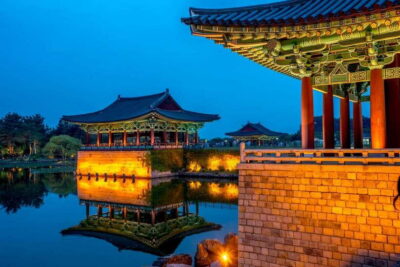
Gyeongju UNESCO World Heritage Guided Day Tour
Read our review →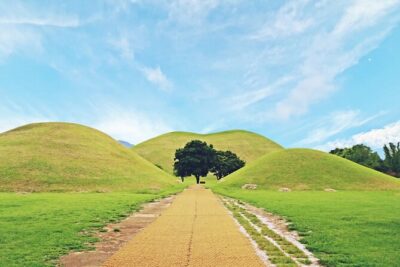
Gyeongju UNESCO World Heritage Guided Day Tour from Busan
Read our review →
Evening Dark History, Folklore & Ghost Story Walking Tour
Read our review →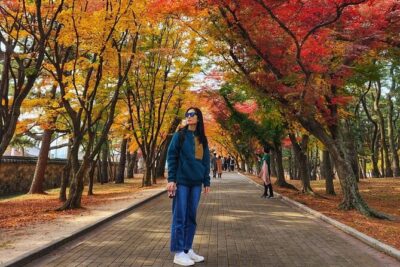
Old Korea Thousand History Tour of Gyeongju from Busan
Read our review →
Hanbok Photoshoot and History Tour at Gyeongbokgung Palace
Read our review →
UNESCO Heritage Tour Including Bulguksa Temple
Read our review →
Gyeongju UNESCO World Heritage Sites and History Full-Day Tour with Lunch
Read our review →Browse the lists this tour appears in