
Reviewed · HANOK VILLAGE TOURS
Tour Seoul’s oldest district with a storyteller from Bukchon
Bukchon rewards slow walking. This private storytelling tour turns Seoul’s old lanes into a connected tale of kings, politicians, artists, and ordinary residents. Guide Dong, who grew up in Bukchon and now works as a filmmaker and university screenwriting professor, brings a personal view that a standard sightseeing walk cannot easily match. I especially like the links between royal history and modern Korea, and the relaxed pace that gives you time to listen and look around. The main consideration is that the route involves hills, narrow lanes, and roughly two to three hours on foot, so it suits people aged 12 and above with moderate fitness.
I also like the tour’s focus on places you could easily pass without noticing, such as Seokjeong Boreum Well and the old school connected with Winter Sonata. The price is $39.20 per person, which is fair for a private walk with a local guide, though you should confirm whether your booking includes the Plus Tour’s traditional handicraft activity.
In This Review
- Key points to know before you book
- Why Bukchon makes a strong starting point for old Seoul
- Starting at Unhyeongung with a royal succession story
- Cafe Onion Anguk and architecture from three eras
- Hanoks explained at the Traditional Culture Center
- Seokjeong Boreum Well and the stories beneath the pavement
- Choong Ang High School, films, and Korea’s modern past
- Samcheongdong and Bukchon, where power changed hands
- Bukchon Hanok Village and the man who reshaped it
- What Dong adds as a local storyteller
- Pace, hills, and the practical side of the walk
- Is $39.20 good value?
- Who should book this Bukchon walk?
- Booking advice and final verdict
- FAQ
- Where does the Bukchon Storytelling Tour start?
- What time does the tour begin?
- How long does the tour last?
- Where does the tour finish?
- Is this a private tour?
- How many people are needed for the tour to operate?
- Is the tour suitable for children?
- Is the handicraft activity included?
- What does the price include?
Key points to know before you book
- A hometown guide leads the walk: Dong was born and raised in Bukchon, and his memories connect the area’s past with its recent changes.
- Seven stops cover 600 years: The route moves from Unhyeongung to Bukchon Hanok Village, with royal, political, cultural, and neighborhood stories along the way.
- The tour goes beyond postcard views: You learn about feng shui, wells, schools, landowners, and the 1920s and 1930s redevelopment of Bukchon.
- It is a private activity: Only your group participates, although the tour may be canceled if fewer than two people book.
- The walking is manageable but not effortless: Expect alleys, slopes, and standing time, with moderate physical fitness recommended.
- A craft activity is an upgrade: Traditional Korean handicraft is included only with the Plus Tour, not the standard tour.
Why Bukchon makes a strong starting point for old Seoul
Many first-time visitors see Bukchon as a photogenic collection of hanok houses. That is true, but it is only the surface. This district links Seoul’s royal court, political class, schools, business families, independence-era history, and modern popular culture.
The tour’s central idea is that Bukchon was at the heart of Korean public life from the founding of the Joseon dynasty in 1392 through the 1980s. That gives the walk a clear shape. You are not simply moving from one pretty lane to another. You are following how power, money, education, and housing changed over time.
Dong’s background matters here. He grew up in the neighborhood, so he can explain Bukchon as a lived-in place rather than only a historic zone. His work as a filmmaker and screenwriting professor also helps explain why the tour relies so heavily on scenes, characters, turning points, and local anecdotes.
The personal angle is one of the strongest reasons to book. You hear about what Bukchon was like before it became one of Seoul’s best-known cultural areas, and how rapidly the neighborhood has changed. That recent perspective helps balance the older royal stories.
More Hanok Village Tours in Seoul:
- Seoul: Gyeongbok Palace, Bukchon Village, and Gwangjang Tour
★ 4.9 · 2,321 reviews - Seoul City Sightseeing Tour Including Gyeongbokgung Palace, N Seoul Tower, and Namsangol Hanok Village
★ 5.0 · 1,423 reviews - Seoul: Gyeongbok Palace, Bukchon Village, and Gwangjang Tour
★ 5.0 · 1,044 reviews
Starting at Unhyeongung with a royal succession story
Meet at 10:00 a.m. at Anguk Station Exit 4, in Jongno District. The first stop is Unhyeongung, a free-admission royal residence with an unusually dramatic connection to the Joseon throne.
The story begins with a king who dies without a crown prince. An 11-year-old royal boy, born and raised at Unhyeongung, becomes the 26th king of Joseon. For the next decade, his father governs the country from this site.
That is a strong opening because it quickly shows how Bukchon’s houses and courtyards were tied to national decisions. You spend about 20 minutes here, enough time to understand the setting without turning the tour into a long palace lecture.
Unhyeongung also gives you useful context for the rest of the walk. Bukchon was not an isolated residential quarter. It sat close to the court and became home to people connected with government and royal administration.
Cafe Onion Anguk and architecture from three eras
The second stop is Cafe Onion Anguk, where the focus shifts from royal drama to the built environment. You spend around 10 minutes admiring architecture said to represent 600, 100, and 50 years of history.
The cafe itself is a modern Seoul stop, but its setting helps show how old structures are reused. The value is not simply having a coffee location on the route. It is learning to read the layers of a city where traditional forms, older urban buildings, and contemporary businesses sit close together.
Coffee and tea are not included, so treat the stop as an architectural pause rather than a promised cafe break. If you want a drink, plan to pay separately. The short visit is useful for people interested in design, but it may feel brief if you hoped to sit down.
Hanoks explained at the Traditional Culture Center
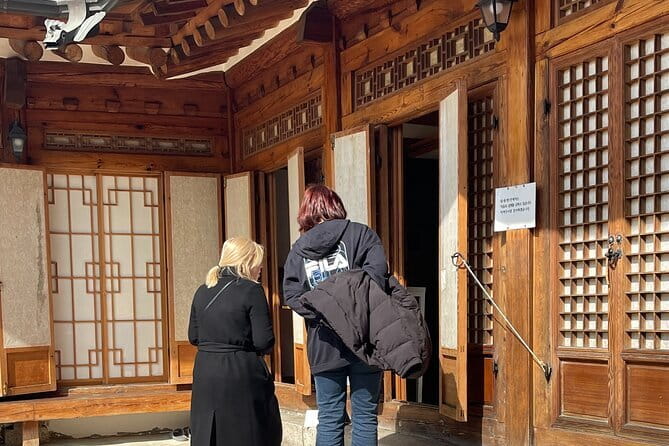
At the Bukchon Traditional Culture Center, Dong explains hanoks associated with the yangban, the ruling class that generally lived in Seoul. You spend about 10 minutes here.
This stop helps you see hanok houses as social spaces, not just attractive wooden buildings. The houses reflect who had status, where influential families lived, and how traditional Seoul was organized.
It is also a good point to ask questions. The tour is designed as a private activity for your group, so you have more room to steer the conversation toward architecture, class, daily life, or the changes Bukchon has faced.
The stop is short, and no admission fee is listed. Do not expect a long indoor museum visit. Think of it as a focused explanation before continuing through the lanes.
A few more options to weigh up in Seoul
- Best DMZ Tour Korea from Seoul (Red Suspension Bridge Optional)
★ 5.0 · 41,422 reviews - DMZ Tour: 3rd Tunnel, Option(Suspension Bridge, Boat) from Seoul
★ 5.0 · 21,373 reviews - DMZ tour south Korea from Seoul (NK experience hall, defector)
★ 5.0 · 20,599 reviews - Seoul: DMZ Tour with Optional Suspension Bridge
★ 4.8 · 5,277 reviews
Seokjeong Boreum Well and the stories beneath the pavement
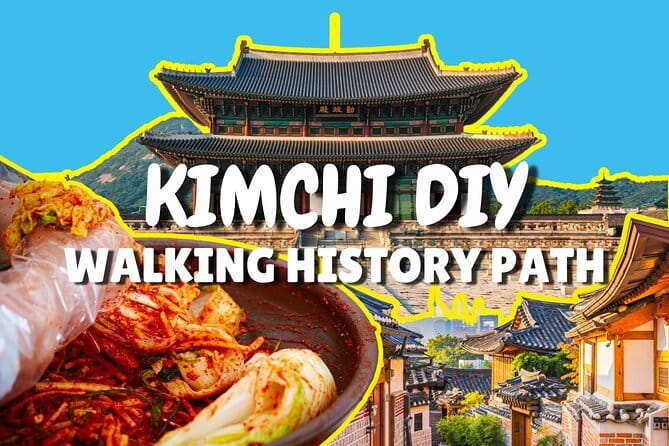
The well stop lasts about 10 minutes, but it may be one of the tour’s more unusual moments. At Seokjeong Boreum Well, Dong talks about wells you may have heard about in childhood stories and compares those old tales with what history has revealed.
This is the kind of stop that separates a storytelling walk from a basic route between major attractions. A well can look like a minor feature, yet it opens questions about water, neighborhood life, memory, and folklore.
The available details do not promise that you will draw water or enter a special interior area. The attraction lies in the explanation. Keep your expectations focused on the story rather than a large monument.
Choong Ang High School, films, and Korea’s modern past
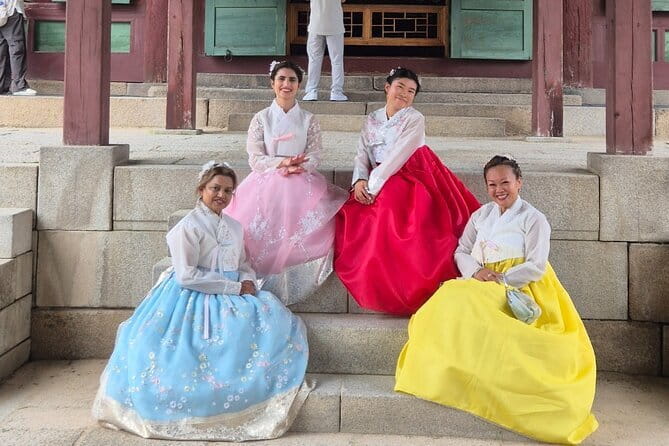
Choong Ang High School is known as a filming location for Winter Sonata, along with many other dramas and music videos. That pop-culture connection may be what first catches your attention, but Dong presents the school as more than a backdrop.
The school occupies a historic space that helped shape Korea into the country it is today. The tour explores its less obvious past and the secret history behind its public image.
You spend about 10 minutes here. That is enough for a concise story and a look at the setting, but not a full school tour. Since it is an active educational site, you should also approach it as a place to observe respectfully rather than as a film set built for sightseeing.
This stop works especially well if you like the way Korean history appears in current media. It connects the Korea of royal courts and political movements with the Korea represented in television and music.
Samcheongdong and Bukchon, where power changed hands
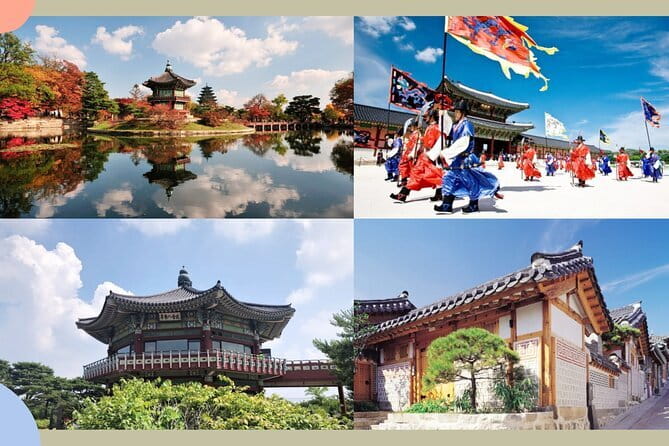
The route then moves through Samcheongdong and Bukchon for about 20 minutes. Here, the subject is power: politicians and business tycoons who once owned land in the district, their rise and fall, and the role of Bukchon in national affairs.
The tour also explains why the area was chosen as a capital under principles of feng shui. Bukchon was regarded as an auspicious site, and the idea of geographic fortune mattered to people seeking power, prosperity, or control.
You do not need to share those beliefs to find the subject worthwhile. Feng shui gives you a way to understand how geography, authority, and symbolism worked together in Korea. It also adds a different lens to the streets around you. The hills and placement of the district are not just scenic details. They are part of the political story.
This section appears to be one of the tour’s main narrative centers. It moves beyond buildings and introduces the people who shaped the district, then shows how influence can disappear as quickly as it arrives.
Bukchon Hanok Village and the man who reshaped it
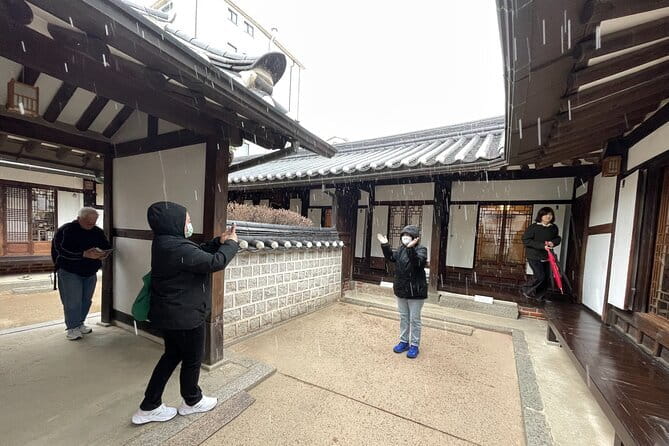
The final listed stop is Bukchon Hanok Village, with about 15 minutes devoted to the person who changed the face of Bukchon during the 1920s and 1930s.
That period is important because the neighborhood you see today is not simply an untouched Joseon-era relic. Bukchon changed as Seoul grew, and its houses and streets were shaped by later decisions, development, and changing patterns of life.
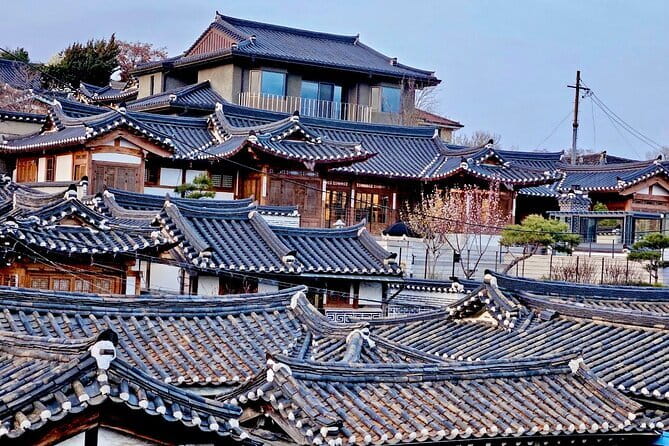
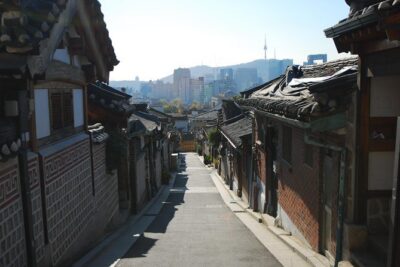
This is a useful correction to the common picture of hanok villages as frozen time capsules. Dong’s account places the village in a longer story of adaptation. You can appreciate the tiled roofs and lanes while also recognizing that the district has been altered and reinterpreted over many decades.
The activity ends in a different location from the starting point. The provided details do not specify the exact final address, so check the booking information before planning your next appointment.
What Dong adds as a local storyteller
The most praised element of this experience is Dong himself. His local connection is not a vague claim. He was born and raised in Bukchon, and his firsthand memories give the tour a sense of continuity between the old neighborhood and the changing Seoul around it.
His style appears to be conversational and unhurried. People who joined the walk describe a relaxed pace, personal anecdotes, local tips, and answers to questions. One participant also received help confirming an appointment and advice about getting around Seoul, which suggests that Dong may be willing to offer practical guidance when time allows.
His creative work adds another layer. As a filmmaker and university screenwriting professor, he naturally frames places through people and events. You may find the tour more memorable than a list of dates because each stop has a character or conflict attached to it.
He also gives recommendations based on individual interests. That could be useful if you want to extend your Seoul visit beyond the main sights. Still, keep in mind that recommendations are an added benefit, not a formal second itinerary.
Pace, hills, and the practical side of the walk
The tour lasts approximately two to three hours. The schedule lists stop times totaling about 95 minutes, so the remaining time covers walking, transitions, and fuller explanations along the route.
You should expect a moderate amount of walking through alleys and sloped streets. The operator recommends moderate physical fitness, and the age guidance favors participants 12 and older. The concern is not speed. It is the combination of uneven urban walking, hills, and standing while listening.
Wear comfortable shoes and consider the weather before you book. One account describes a cold day, while another mentions Seoul heat in July. The guide has also noted that rainy walks can be tricky with umbrellas. These details point to a simple rule: Bukchon is enjoyable in many conditions, but your comfort will depend on suitable clothing and footwear.
The tour begins near public transportation at Anguk Station Exit 4. There is no hotel pickup, so you must make your own way to the meeting point. Admission is free at every listed stop, which keeps the price focused on the guide’s time and the private format.
Is $39.20 good value?
At $39.20 per person, the tour offers a reasonable deal if you want context rather than only photographs. You are paying for a private walk, a professional guide from Bukchon, and a route that covers royal history, architecture, folklore, politics, film locations, and neighborhood change.
The value is strongest for a first visit to Seoul or for someone who has already seen the major palaces and wants more explanation around them. The tour does not appear to include paid attractions, meals, drinks, insurance, transportation, or hotel pickup. That keeps the cost clear, but you should budget for your own refreshments and local transport.
A group discount is available, and the private format means the price may work especially well when several people share the experience. The exact group-discount terms are not provided, so check them before booking.
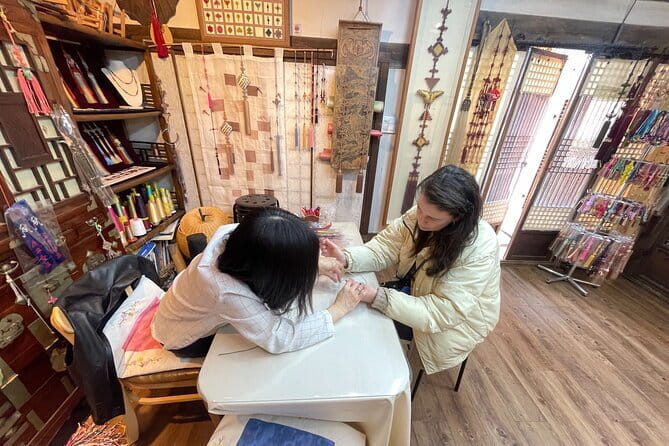
The traditional Korean handicraft experience is included with the Plus Tour only. If making a craft is important to you, confirm that you are selecting the correct option. Some accounts describe making traditional Hopae tags, but the standard tour description does not include that activity.
Who should book this Bukchon walk?
I would choose this tour if you want a human story attached to Seoul’s old streets. It suits visitors who enjoy history, local memory, architecture, Korean political stories, feng shui, and the connection between real places and popular culture.
It is also a good choice if you prefer a calm, question-friendly walk instead of a large group moving quickly between landmarks. The tour is private, and the guide’s background makes it especially appealing to anyone who wants to understand what Bukchon was like before its recent fame.
I would be more cautious if you are traveling with young children, need a step-free route, dislike hills, or want a long palace tour with formal admission sites. The tour is recommended for ages 12 and above, and the listed route is built around outdoor walking and storytelling.
The experience may also be canceled if fewer than two people join. That is worth checking if your schedule is tight.
Booking advice and final verdict
The cancellation policy allows a full refund when you cancel at least 24 hours before the experience. Booking confirmation is provided at the time of purchase, and mobile tickets are available.
You should book the Bukchon Storytelling Tour if you want the district explained by someone who grew up there. Dong’s personal memories, film background, and interest in local history give the walk a clear identity. The strongest moments are likely to be the connections between royal succession, political power, feng shui, modern development, and everyday neighborhood life.
Skip it if you want a fast checklist of famous sights or a tour built around indoor attractions. For everyone else, $39.20 is a sensible price for a private, story-led introduction to one of Seoul’s most important districts.
FAQ
Where does the Bukchon Storytelling Tour start?
It starts at Anguk Station Exit 4 in Unni-dong, Jongno District, Seoul, South Korea.
What time does the tour begin?
The listed start time is 10:00 a.m.
How long does the tour last?
The experience takes approximately two to three hours.
Where does the tour finish?
It ends at a different location from the starting point. The exact end details should be checked in the booking information.
Is this a private tour?
Yes. Only your group participates in the activity.
How many people are needed for the tour to operate?
The tour may be canceled if fewer than two people join.
Is the tour suitable for children?
The operator strongly recommends the storytelling walk for participants aged 12 and above. Children aged 12 and under may find the walking and storytelling challenging.
Is the handicraft activity included?
Traditional Korean handicraft is included with the Plus Tour only. It is not listed as part of the standard tour.
What does the price include?
The $39.20 price includes a professional guide from Bukchon. Travel insurance, hotel pickup, personal expenses, and coffee or tea are not included.
Just added in Seoul
- Seoul: Korean & English Language Exchange Global Party★ 5.0 · 28 reviews
- Your Personal Seoul Photographer!★ 4.1 · 15 reviews
- You’re Invited to Our Home in Seoul: The Only Cooking Class!★ 5.0 · 8 reviews
- From Seoul: Yongpyong Ski Day Tour with Transportation★ 4.9 · 40 reviews
- From Seoul: Hwacheon Ice Fishing and Lighting Festival Tour★ 4.5 · 4 reviews
- Seoul: Gangneung BTS K-Pop & K-Drama Filming Locations Tour★ 4.6 · 14 reviews
- Unique Native Experience : Han River Picnic, Board game, BBQ★ 5.0 · 3 reviews
- Seoul: Euljiro Gastroventure Tour★ 4.0 · 1 review
Hanok Village Tours, compared.
Gyeongbok Palace, Bukchon Village, and Gwangjang Tour
Read our review →
Seoul City Sightseeing Tour Including Gyeongbokgung Palace, N Seoul Tower, and Namsangol Hanok Village
Read our review →Gyeongbok Palace, Bukchon Village, and Gwangjang Tour
Read our review →
Gyeongbok Palace and Bukchon Hanok Walking Tour
Read our review →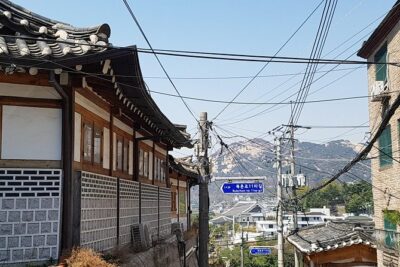
Best Walking Tour to Gyeongbok Palace Bukchon Hanok Village
Read our review →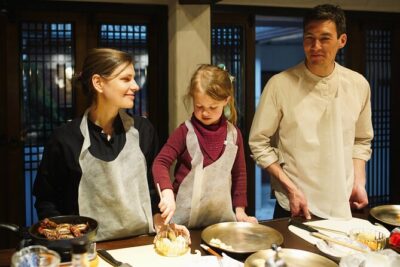
Royal Seoul Cooking Class in a 100-Year-Old Hanok
Read our review →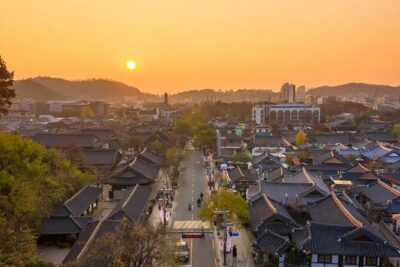
Jeonju Hanok Village Full-Day Tour:Jangtaesan Autumn Foliage
Read our review →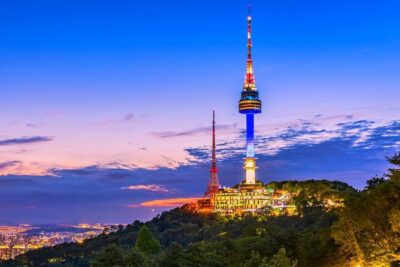
Afternoon Seoul: Hanok Vibes, Netflix Street Food & N Seoul Tower
Read our review →Browse the lists this tour appears in