
Reviewed · HISTORICAL TOURS
Buam dong Walking Tour Art, History and Parasite in Seoul
Quiet Seoul has a story to tell. This 2.5-hour walk through Buam-dong trades crowded palace routes for hillside streets, mountain views, art, and Korean history. I like the visit to Cheongun Literature Library, Seoul’s first Hanok library, and the way the route links the Seoul City Wall with Changuimun Gate. The stop at a Parasite filming location adds a fun modern touch.
The main drawback is the walking itself. You need moderate physical fitness, and Buam-dong’s hillside setting means this is not a flat city stroll. The 2 p.m. start also places you outdoors through the afternoon, so comfortable shoes and weather-ready clothing matter.
In This Review
- Key points about this Buam-dong walking tour
- Why Buam-dong makes a good Seoul walking route
- The 10-minute bus ride into Buam-dong
- Cheongun Literature Library and the calm side of Seoul
- Choi Gyu-sik and the weight of Cold War history
- The Hill of Poet Yoon Dong-ju and mountain views
- Changuimun Gate and Seoul’s old defenses
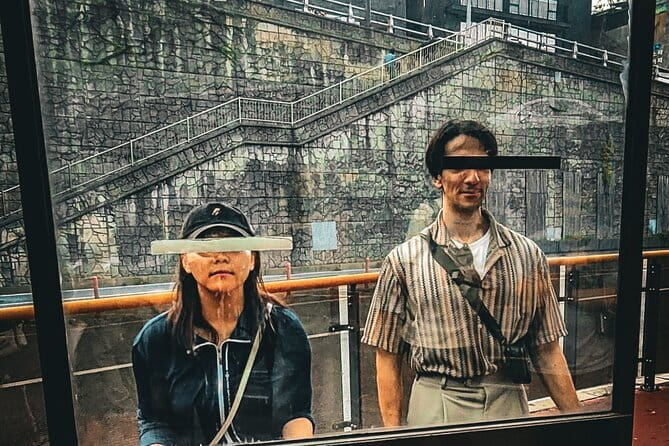
- The Parasite filming location and modern Seoul
- Mugyewon and a traditional Korean house
- Is the $38.50 price good value?
- Who should book this walk?
- Should you book the Buam-dong walking tour?
- FAQ
- How long is the Buam-dong walking tour?
- What time does the tour start?
- Where does the tour begin?
- Where does the tour end?
- How many people can join the tour?
- Is the tour physically demanding?
- What is the cancellation policy?
Key points about this Buam-dong walking tour
- A small group of up to 15 people keeps the walk more personal than a large city tour.
- Buam-dong offers a quieter side of Seoul, with mountain views and traditional buildings close to the city center.
- The Cheongun Literature Library is Seoul’s first Hanok library, combining reading, architecture, and calm surroundings.
- Changuimun Gate and the Seoul City Wall bring Seoul’s defensive past into view.
- Cold War history, the Hill of Poet Yoon Dong-ju, and a Parasite filming location give the route unusual variety.
- Guide Jon receives special praise for his interesting stories, friendly manner, and sense of humor.
Why Buam-dong makes a good Seoul walking route
Seoul is easy to experience through royal palaces, shopping streets, and major museums. Buam-dong gives you something different: a quieter hillside district where art, literature, military history, old homes, and nature share the same route.
That mix is the real strength of this tour. You are not simply walking from one famous monument to another. You are seeing how several layers of Seoul fit together. One moment brings a mountain view. The next brings a memorial to a painful period in modern Korean history. Then you enter a traditional Korean house or pause outside a small cultural space.
I especially like the scale of the group. With a maximum of 15 people, the guide has a better chance to answer questions and keep the pace together. A small group also suits Buam-dong, where narrow streets and quiet public spaces can feel awkward with a large crowd.
The tour is offered by ZenKimchi Experiences and begins at 2 p.m. near 시민약국 at 106-3 Jeokseon-dong in Jongno District. You should plan to arrive with enough time to find the meeting point. The route includes a 10-minute bus ride to Buam-dong, and the guide uses that ride to explain the area before the walking begins.
More History Tours in Seoul
- Seoul: Evening Dark History, Folklore & Ghost Story Walking Tour
★ 5.0 · 593 reviews - Hanbok Photoshoot and History Tour at Gyeongbokgung Palace
★ 5.0 · 276 reviews - From Seoul: Dae Jang Geum Park Historic K-Drama Set Tour
★ 4.9 · 143 reviews
The 10-minute bus ride into Buam-dong
The short bus trip is more useful than it may first sound. Instead of beginning with a long lecture on a sidewalk, the guide introduces Buam-dong while you are moving toward it. You learn why this part of Seoul feels different and how its position near the mountains shaped its character.
This also helps the tour get beyond the usual central Seoul pattern. The bus connects the starting area with the hillside neighborhood, while the walk itself focuses on places you might not choose on your own.
Public transportation is nearby, which makes the starting point practical for a sightseeing day in Jongno. The bus ride is included in the tour flow, but the tour information does not state whether the ticket cost is included in the tour price. It is sensible to carry a transportation card or other payment method for Seoul transit.
Cheongun Literature Library and the calm side of Seoul
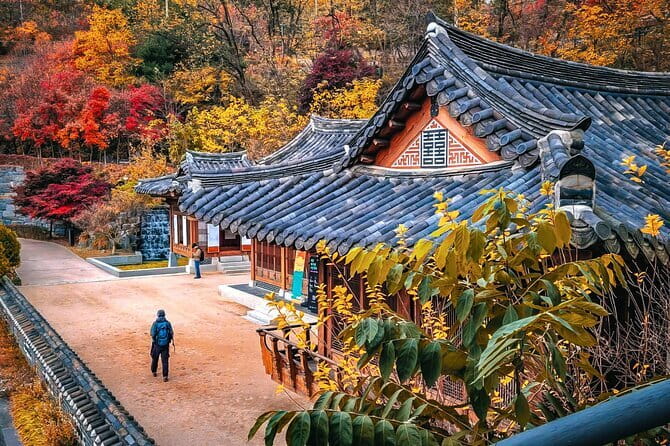
The first major stop is Cheongun Literature Library, also spelled Chungwoon in some references. It is Seoul’s first Hanok library, housed in traditional Korean architectural surroundings.
You have about 20 minutes here. That is enough time to appreciate the setting and take in the contrast between a working library and a Hanok-style building. The attraction is not just the books. It is the feeling of quiet created by traditional design, the hillside setting, and the literary theme.
I would not treat this as a long independent library visit. The stop is brief, and the tour continues through several other sites. Still, it gives the route a graceful beginning. You get a chance to slow down before the history-heavy sections of the walk.
For anyone interested in Korean literature, architecture, or peaceful public spaces, this is one of the strongest parts of the outing. You may also appreciate it if you need a break from Seoul’s busy commercial districts.
Choi Gyu-sik and the weight of Cold War history
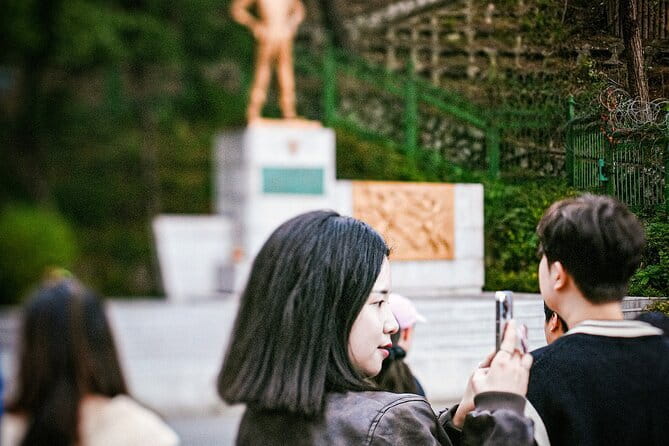
The tour also visits the Choi Gyu-sik Memorial Statue and discusses Cold War history. This section adds a serious edge to the walk.
The supplied tour information does not give a full account of the events connected with the memorial, so your guide’s explanation matters here. Jon is praised for telling interesting stories about Korean history, and this is the kind of stop where a good guide can turn a statue into a meaningful part of the larger story.
The value is not in spending a long time at a single monument. It is in understanding that Seoul’s peaceful neighborhoods have also been shaped by conflict, political tension, and national division. That context makes the later city wall and gate feel more than picturesque old structures.
If your main interest is food, shopping, or photo stops, this part may feel more serious than expected. If you want a better sense of modern Korea beyond the usual palace narrative, it is an important inclusion.
More Walking Tours in Seoul
- Seoul moonlight walking tour with local historian
★ 5.0 · 940 reviews - Seoul: Nighttime Hidden Gems Walking Tour
★ 5.0 · 775 reviews - Seoul: Dark Side of the City and Ghost Stories Walking Tour
★ 4.8 · 484 reviews - Gangnam Walking Tour on Youth and Society in Seoul Korea
★ 5.0 · 401 reviews
The Hill of Poet Yoon Dong-ju and mountain views
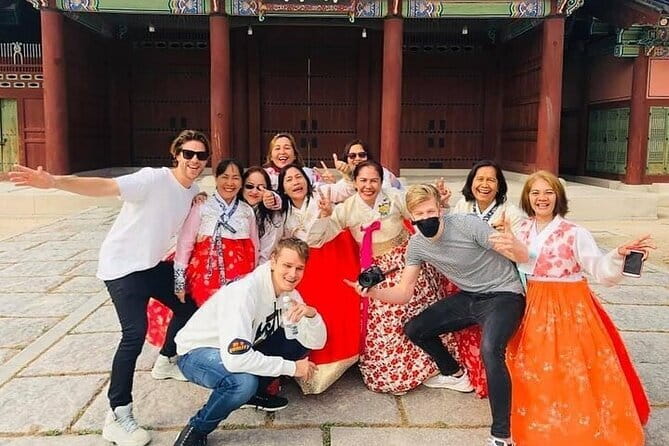
The Hill of Poet Yoon Dong-ju brings art and scenery together. The route offers views toward Bugaksan, Inwangsan, and Bukhansan, giving you a broad sense of the mountains around Seoul.
These views are one of the best reasons to choose this walk. Buam-dong is not only about buildings and memorials. The elevation gives the route a different visual rhythm, with city spaces opening toward wooded mountain slopes.
The tour information does not specify how long you spend at the poet’s hill, but it is part of the walking route rather than a separate ticketed attraction. You should expect a short interpretive stop and time to look around, not a formal literary program.
This section will appeal to anyone who likes the connection between place and creative work. It also gives photographers a useful change of subject. The city wall, gate, and mountain views provide more variety than a route made up only of streets and façades.
Changuimun Gate and Seoul’s old defenses
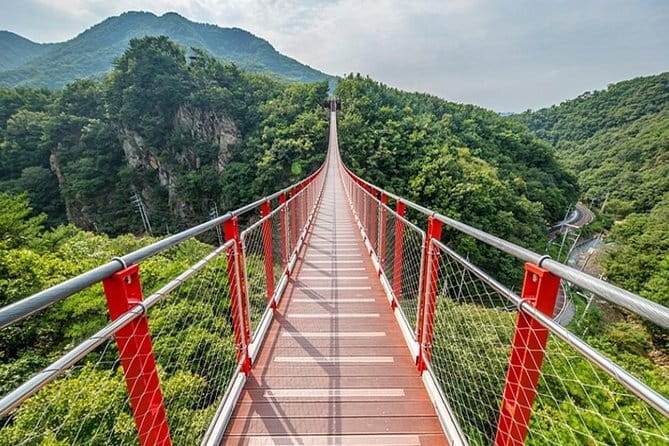
Changuimun Gate, also called Jahamun Gate, is one of the central historical stops. The tour covers both the gate and the Seoul City Wall, explaining their role in Seoul’s defense and heritage.
You spend about 15 minutes at Changuimun Gate. That is a compact visit, but the gate works well as part of a walking route because its value comes from its setting and connection to the wall. You can see how Seoul’s older defenses were tied to the surrounding hills rather than placed on a flat urban grid.
This is also where the route’s physical demands become more important. Buam-dong is hilly, and walking near the wall can involve slopes and uneven sections. The official guidance calls for moderate fitness, so this is not the best choice if you need a fully level path.
I like this stop because it avoids treating Korean history as a list of dates. You are standing beside a surviving gate and wall, with the mountains still shaping the view. That physical connection makes the explanation easier to remember.
The Parasite filming location and modern Seoul
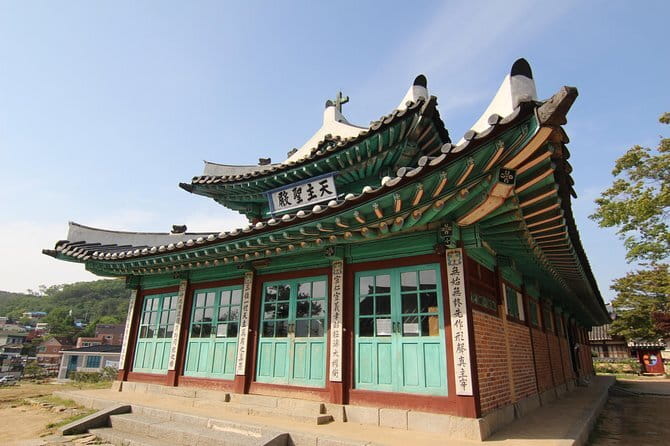
The Parasite filming location adds a popular-culture link to the route. The information provided does not identify the exact scene or location details, so you should expect the guide to point out the site and explain its connection rather than take part in a film-themed activity.
This is a smart addition. The tour already covers literature, traditional architecture, memorial history, and old defenses. A film location shows how the neighborhood also appears in modern Korean culture.
For fans of the movie, the stop gives the walk a personal hook. For everyone else, it offers a quick reminder that familiar streets can carry several identities at once. You are seeing a real neighborhood first, not a set built only for tourists.
The film connection should be treated as one piece of the day, not the main reason to book. If you want a tour devoted entirely to Parasite, this route may feel too broad. If you want a wider look at Seoul with one film-related stop, the balance works well.
Mugyewon and a traditional Korean house
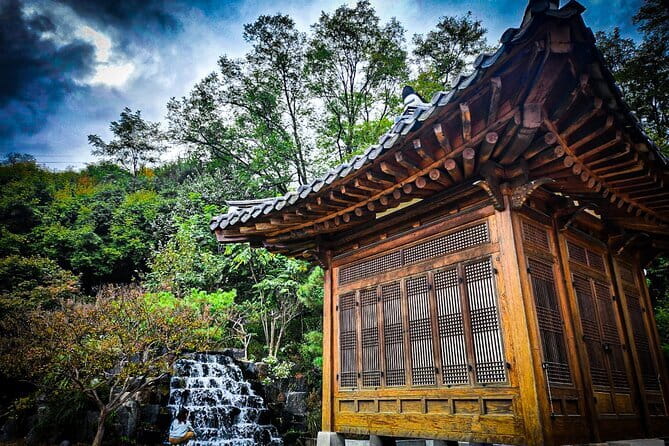
The tour finishes at Mugyewon, a Hanok cultural space that once served as the villa of Grand Prince Anpyeong. You spend about 20 minutes here.
Mugyewon provides a fitting final stop because it brings the route back to traditional architecture after the memorials, wall, mountain views, and film site. The old-world design offers a quiet ending and a chance to reflect on how much variety you have covered in a short distance.
The tour information does not specify whether a cultural program takes place inside Mugyewon. You should think of this as a visit to a historic and cultural space, not a guaranteed performance or workshop.
The experience ends back at the meeting point. Since the route includes several different themes, Mugyewon helps give the walk a clear finish rather than leaving you at an unrelated location.
Is the $38.50 price good value?
At $38.50 per person, this is not the cheapest way to spend an afternoon in Seoul. You can visit many public streets, gates, and outdoor viewpoints without paying an admission fee.
The value comes from the guide and the route design. You are paying for a 2.5-hour walk that combines places you might otherwise visit separately, along with the 10-minute bus transfer and historical explanation along the way. All listed stops are free admission, so the fee is mainly for the guided experience rather than entry tickets.
That distinction matters. If you are comfortable researching Buam-dong, using transit, and finding each site yourself, you could spend less. If you want the neighborhood’s stories explained in a logical order, the price is more reasonable.
The small group also improves the value. A maximum of 15 people is large enough to keep the price moderate but small enough to make questions possible. The strongest praise goes to Jon, whose funny and friendly approach adds something you cannot get from a map.
Group discounts are available, and mobile tickets make the booking side simple. The tour is also recommended by all recorded participants, with a five-star rating based on 24 reviews. That is a small sample, but it supports the main point: the guide and storytelling are central to the appeal.
Who should book this walk?
I would choose this tour if you have already seen Seoul’s biggest central sights or want to start your visit away from the busiest routes. It suits culture lovers, people interested in Korean history, architecture fans, film fans, and anyone who prefers neighborhoods to shopping centers.
It is also a good match for photographers and readers. The library, poet’s hill, Hanok spaces, old gate, wall, and mountain views give you many different subjects in one afternoon.
You may want to skip it if you dislike hills, prefer a fully self-guided day, or want a tour focused only on one subject. The route moves across several themes, so it is broad rather than deeply specialized in literature, military history, or film.
The 2 p.m. start works well if you want a slower afternoon after a morning palace visit. It also means you should consider the day’s weather, since much of the experience takes place outdoors.
Service animals are allowed, and the tour runs near public transportation. The stated fitness requirement is moderate, but no detailed accessibility information is provided, so you should contact the provider if slopes, steps, or walking distance are a concern.
Free cancellation is available if you cancel at least 24 hours before the local start time. Changes or cancellations made later are not accepted for a refund.
Should you book the Buam-dong walking tour?
Book it if you want Seoul with fewer crowds and more connections between old and new. The strongest reasons are the small group, Jon’s engaging storytelling, the mountain views, and the unusual range of stops from a Hanok library to a Parasite filming location.
At $38.50, the tour makes the most sense for you if historical context and a well-planned route matter more than free admission. Bring comfortable shoes, allow time to find the starting point, and expect hills.
I would not book it for a flat, quick sightseeing loop. I would book it for a thoughtful afternoon in a part of Seoul where literature, Cold War memory, poetry, traditional homes, cinema, and mountain scenery meet.
FAQ
How long is the Buam-dong walking tour?
The tour lasts approximately 2 hours and 30 minutes.
What time does the tour start?
The tour starts at 2 p.m.
Where does the tour begin?
It begins near 시민약국 at 106-3 Jeokseon-dong, Jongno District, Seoul, South Korea.
Where does the tour end?
The activity ends back at the meeting point.
How many people can join the tour?
The tour has a maximum group size of 15 people.
Is the tour physically demanding?
Participants should have a moderate level of physical fitness. The route is in hilly Buam-dong and includes walking between several sites.
What is the cancellation policy?
You can cancel at least 24 hours before the local start time for a full refund. Cancellations or changes made less than 24 hours before the start time are not accepted for a refund.
Just added in Seoul
- Seoul: Korean & English Language Exchange Global Party★ 5.0 · 28 reviews
- Your Personal Seoul Photographer!★ 4.1 · 15 reviews
- You’re Invited to Our Home in Seoul: The Only Cooking Class!★ 5.0 · 8 reviews
- From Seoul: Yongpyong Ski Day Tour with Transportation★ 4.9 · 40 reviews
- From Seoul: Hwacheon Ice Fishing and Lighting Festival Tour★ 4.5 · 4 reviews
- Seoul: Gangneung BTS K-Pop & K-Drama Filming Locations Tour★ 4.6 · 14 reviews
- Unique Native Experience : Han River Picnic, Board game, BBQ★ 5.0 · 3 reviews
- Seoul: Euljiro Gastroventure Tour★ 4.0 · 1 review
Historical Tours, compared.
Gyeongju UNESCO World Heritage Guided Day Tour
Read our review →
Gyeongju UNESCO World Heritage Guided Day Tour from Busan
Read our review →
Evening Dark History, Folklore & Ghost Story Walking Tour
Read our review →
Old Korea Thousand History Tour of Gyeongju from Busan
Read our review →
Hanbok Photoshoot and History Tour at Gyeongbokgung Palace
Read our review →
UNESCO Heritage Tour Including Bulguksa Temple
Read our review →
Gyeongju UNESCO World Heritage Sites and History Full-Day Tour with Lunch
Read our review →Browse the lists this tour appears in