
Reviewed · DAY TRIPS IN BUSAN
Busan: Winter Healing Park and (Gyeongju/Daegu) One Day Tour
Snow makes old Korea feel new. This 11-hour trip pairs Kookmin Healing Park with either Gyeongju’s temples and historic streets or Daegu’s food market and icy mountain scenery. I like the choice between two routes, and I like that admission and round-trip Busan transport are included. The main drawback is the long day, with traffic and winter conditions able to change the schedule.
I especially like the optional canoe ride at the park, which adds a real activity instead of another quick photo stop. The guides also add value: Amy helped with photos and local suggestions, while Sophie and Lee were praised for their care and clear explanations. You should know that the canoe costs extra in cash, and the Daegu route’s final nature stop depends on ice conditions.
In This Review
- Key points at a glance
- Why this Busan winter day trip works
- Snow, sledges, and canoes at Kookmin Healing Park
- The Gyeongju route: temples, village life, and evening lights
- Bulguksa Temple and Korea’s stone artistry
- Gyochon Traditional Village and the Choi family story
- Hwangridan Street for snacks and modern Gyeongju
- Woljeong Bridge after dark
- The Daegu route: market food and a frozen nature stop
- Seomun Market and lunch on your own
- Songhae Park or Biseulsan Recreational Forest
- What the $65 price really covers
- Guides, languages, and the human side of the day
- Who should choose each option?
- Practical advice before you book
- Should you book this winter day trip?
- FAQ
- How long does the tour last?
- Can I choose between Gyeongju and Daegu?
- Is the canoe ride included?
- Are meals included?
- Which languages are available?
- Can the final Daegu stop change?
Key points at a glance
- Choose between two winter routes: Visit historic Gyeongju or combine Daegu’s Seomun Market with a frozen nature stop.
- Kookmin Healing Park is the anchor: Expect snow, sledging, walks beside ice, and optional canoeing.
- Gyeongju packs in major sights: Bulguksa Temple, Gyochon Traditional Village, Hwangridan Street, and Woljeong Bridge all fit into one day.
- The canoe is worth considering: It costs KRW 30,000 for one to four seats or KRW 50,000 for five to eight seats, payable in cash.
- Guides are a strong point: Amy, Sophie, and Lee received specific praise for care, explanations, recommendations, and photography.
- Plan for winter uncertainty: Road traffic, weather, ice, and the meeting point can affect the day.
Why this Busan winter day trip works
Busan is South Korea’s lively coastal gateway, but its best winter day trips head inland. North Gyeongsang Province gives you a very different setting: snow-covered recreation areas, old temples, traditional neighborhoods, and market food.
This tour is built for people who want variety without arranging several separate train rides, tickets, and local transfers. You leave Busan by included round-trip transport and spend the day with an English, Chinese, or Korean-speaking guide. Admission fees are covered, which makes the $65 price easier to judge.
I see this as an efficient introduction rather than a slow, deeply focused visit. You will cover several places, but each stop gives you a different look at the region. The tradeoff is simple: less free time at each sight, but far less planning.
The route lasts about 11 hours, or 810 minutes. That is a full day, so wear comfortable shoes, bring warm layers, and expect some time on the road. Traffic and weather can affect the order or length of stops.
More Day Trips in Busan
- Busan: Gyeongju Guided Day Trip to Three Kingdoms Capital
★ 4.8 · 1,925 reviews - 1-Day Busan Shore Excursion – City Highlights for Cruise Guests
★ 4.5 · 36 reviews - 7 Highlights Gyeongju City One Day Small Group Tour from Busan
★ 5.0 · 24 reviews
Snow, sledges, and canoes at Kookmin Healing Park
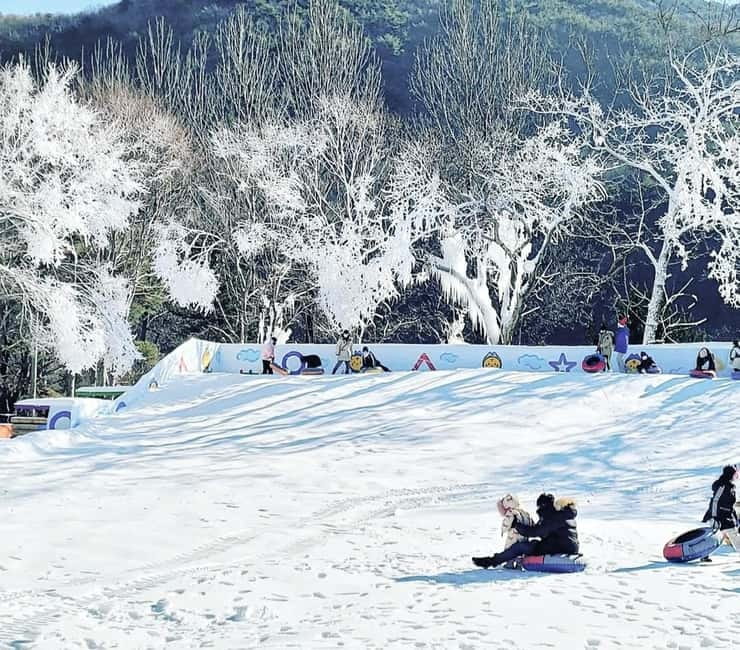
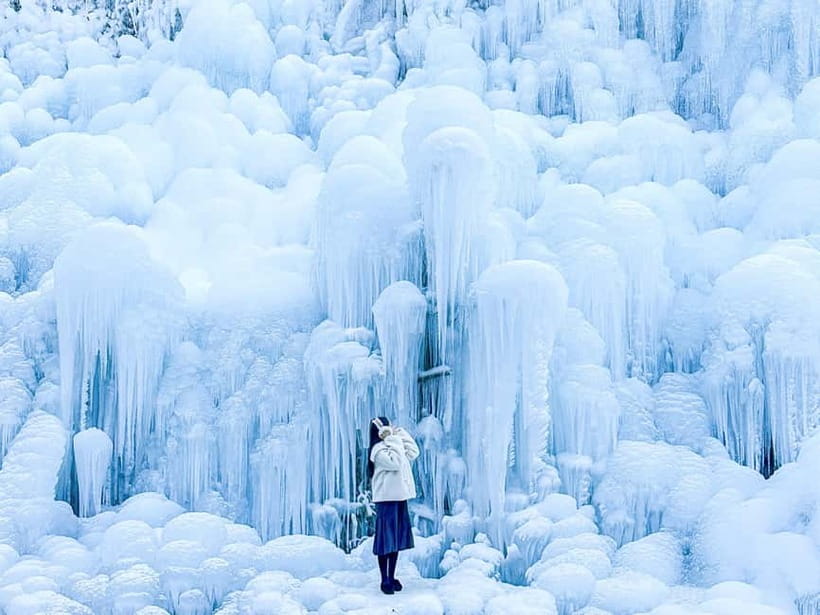
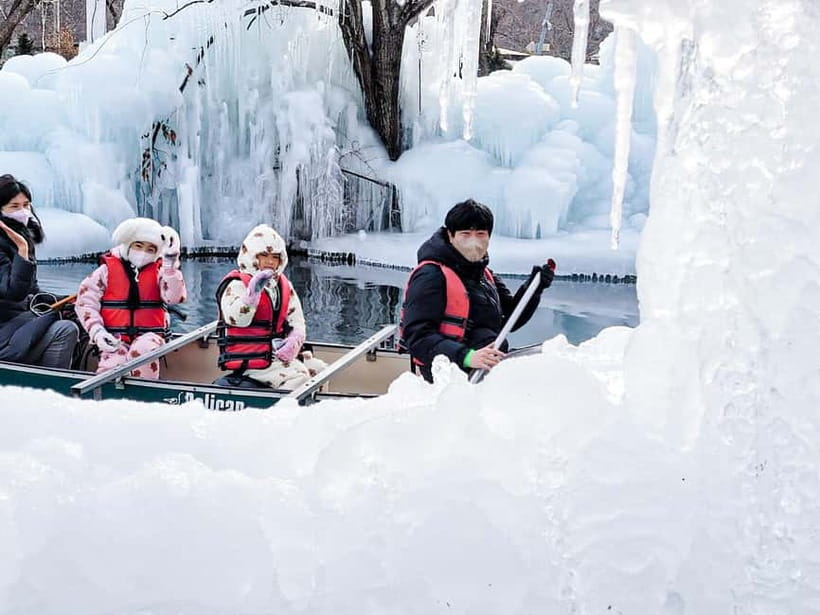
The day’s winter centerpiece is Gyeongju Kookmin Healing Park. In snowy weather, the park takes on a bright, wintry look, with icy scenery, walking paths, and frozen water adding more than simple decoration.
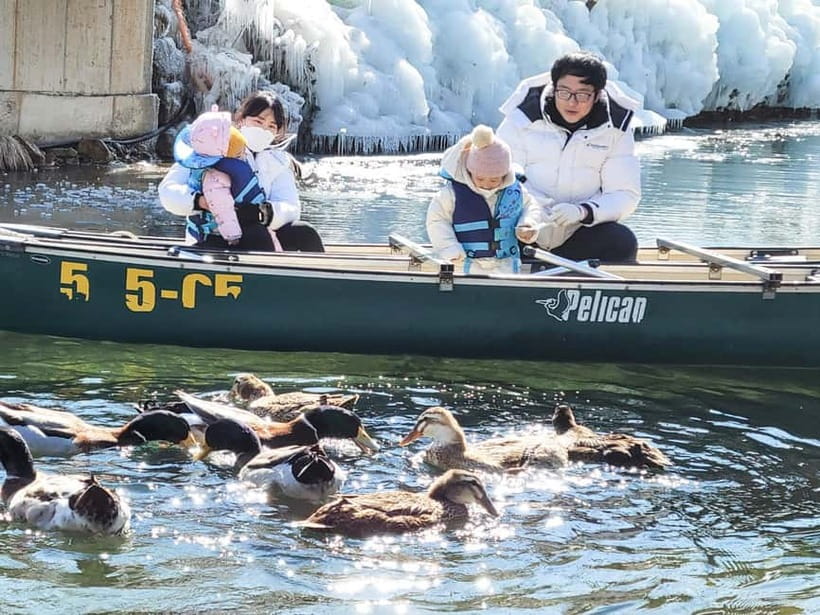
You can enjoy a sledge ride, stroll around the park, and take in the cold-weather setting at an easy pace. This part of the day is active but not built around a difficult hike, making it suitable for families and for anyone who wants to play in the snow without committing to a full mountain excursion.
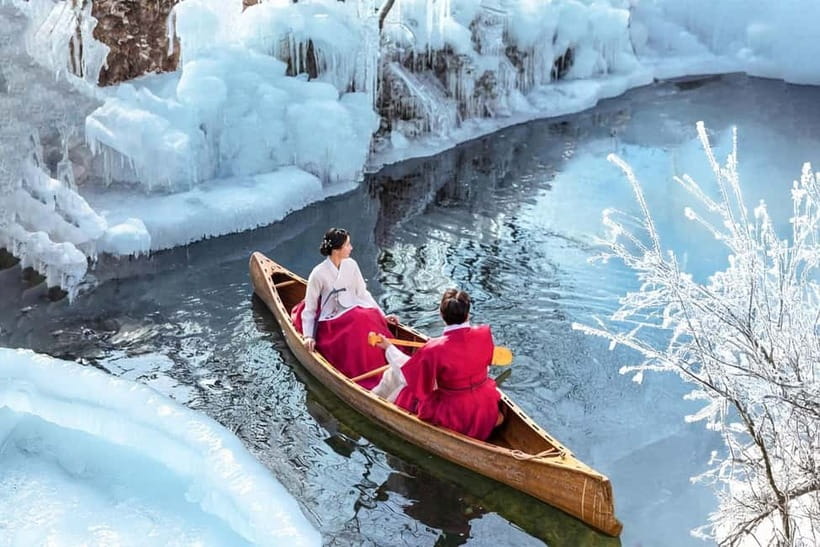
The optional canoe ride is the most distinctive extra. It gives you a closer view of the icy surroundings and turns the park visit into an activity rather than a photo stop. The canoe fee is not part of the tour price and must be paid in cash on site:
- One to four seats: KRW 30,000
- Five to eight seats: KRW 50,000
Kyla from the United States called the canoe one of the day’s highlights, and I can see why. It offers a memorable way to experience the park, especially if you are traveling with family or friends and can share the boat cost.
You should make your own weather judgment. The park’s appeal depends heavily on winter conditions, and the schedule can change with snow or road conditions. If you are hoping for a specific amount of ice or snow, keep expectations flexible.
The Gyeongju route: temples, village life, and evening lights
The Gyeongju option is the stronger choice if you want Korean history and cultural sights. It follows the park with four distinct stops: Bulguksa Temple, Gyochon Traditional Village, Hwangridan Street, and Woljeong Bridge.
Bulguksa Temple and Korea’s stone artistry
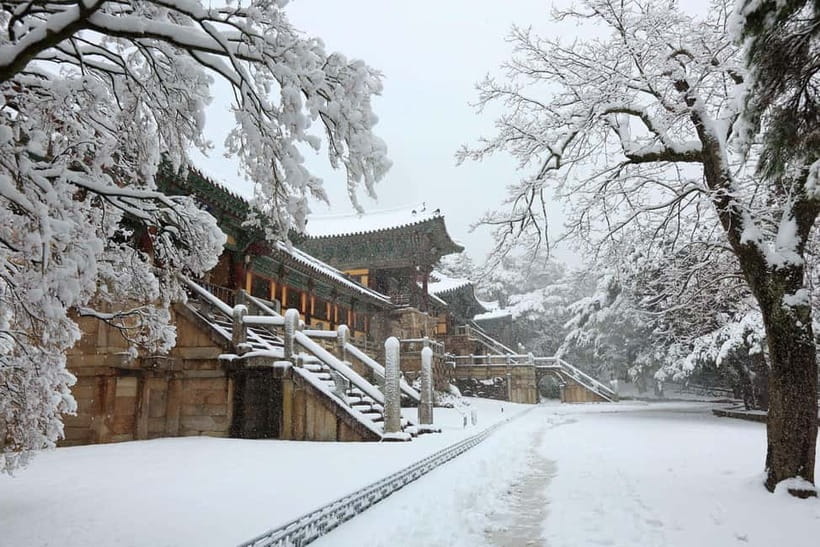
Bulguksa is one of Gyeongju’s essential sights. The temple was designated a UNESCO World Cultural Asset in 1995, and the visit gives you a chance to see why Gyeongju is so important in Korean history.
The site is known for its temple buildings and stone relics. The value here is not only the age of the place, but also the careful design and craftsmanship visible in the stonework. A guide can help you connect the details to the wider story of Gyeongju, which is useful if you are seeing historic Korean architecture for the first time.
Winter may bring a quieter, more restrained mood to the temple grounds. Snow can make the stone and painted structures especially striking, though cold weather may limit how long you want to linger outside. Keep your hands warm for photographs and allow time to listen to the guide before moving on.
More Busan trips:
- Small Group Full Day Busan Tour (Max 6 Pax)
★ 5.0 · 1,464 reviews - From Busan: Gyeongju UNESCO World Heritage Guided Day Tour
★ 4.8 · 1,250 reviews - Busan Private Tour with licensed tour guide + private vehicle
★ 5.0 · 1,143 reviews - Busan: Coastal Treasures Beach Train, Culture Village & More
★ 4.7 · 832 reviews
Gyochon Traditional Village and the Choi family story
Gyochon Traditional Village centers on the Gyeongju Choi Clan. The family is remembered for preserving its wealth over 12 generations and producing many influential figures.
That detail gives the village a human angle. Instead of looking only at old homes as pretty scenery, you can think about how status, money, education, and family reputation shaped local society. This stop is also a useful contrast to Bulguksa. The temple presents religious art and architecture, while Gyochon offers a glimpse into family life and traditional community structures.
The village is best appreciated at a walking pace, but this is also one reason the full day can feel busy. You may want more time than the group schedule allows, especially if you enjoy photographing traditional buildings or pausing to absorb the setting.
Hwangridan Street for snacks and modern Gyeongju
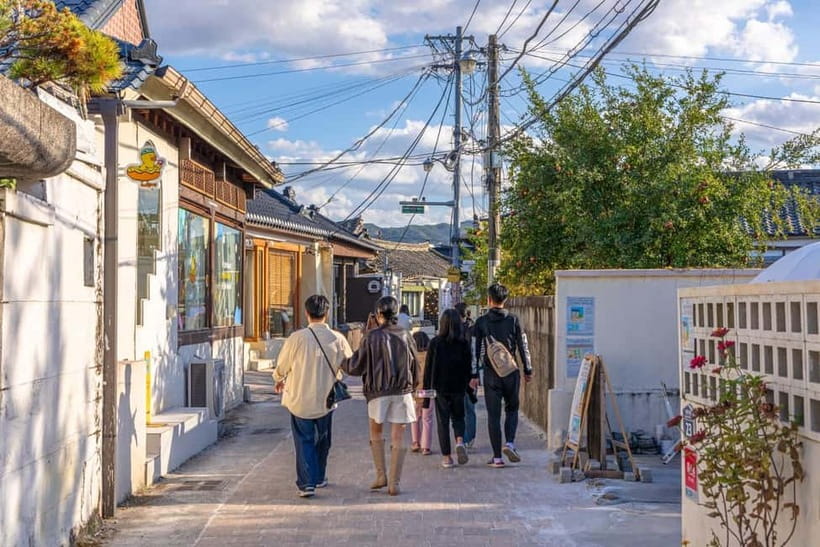
Hwangridan Street shifts the mood again. Here you will find street food, cafes, and contemporary shops in a part of Gyeongju that blends old-town atmosphere with current Korean food and design trends.
I like this stop because it prevents the day from becoming a string of solemn historic sites. You can try local snacks, browse a cafe, or simply watch the street scene. Meals are not included, so this is a practical place to buy food at your own expense.
Your time may be limited, and popular food stalls or cafes can require a little patience. Still, the stop gives you a chance to choose your own experience. You can eat, take photos, or enjoy a short break from the bus and formal sightseeing.
Woljeong Bridge after dark
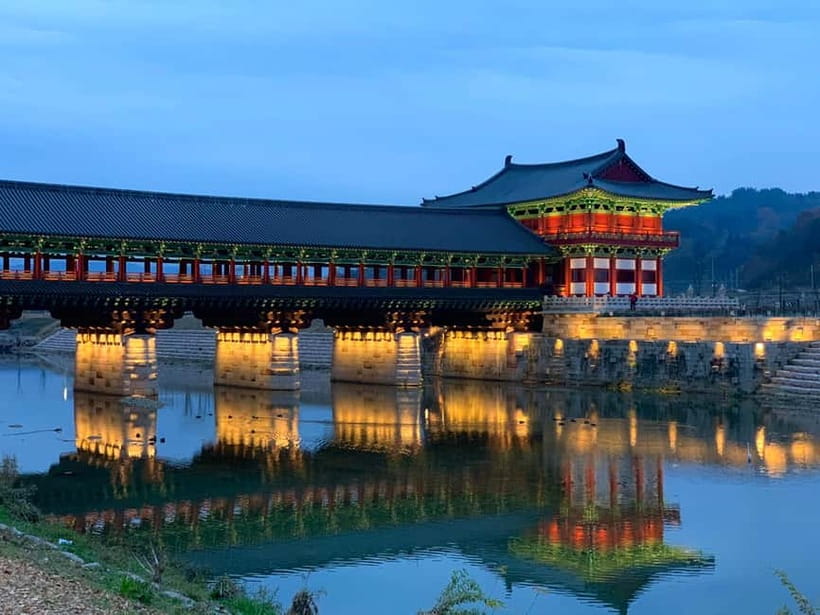
The final Gyeongju stop is Woljeong Bridge. The bridge has centuries of history and was built with stone arches, reflecting the engineering methods of the period.
Its position at the end of the route is well chosen. After temples and village lanes, the bridge gives you a broad architectural view and a memorable final photo opportunity before returning to Busan. Depending on the season and timing, winter darkness may add atmosphere, though it can also make the stop colder and shorter.
Jasper from the United States particularly enjoyed seeing different parts of Gyeongju and learning about its past. That is exactly where this route earns its keep. You get several pieces of the city’s story instead of seeing only one famous monument.
The Daegu route: market food and a frozen nature stop
Choose the Daegu route if food and winter scenery appeal more than a concentrated history program. After Kookmin Healing Park, you visit Seomun Market, then continue to either Songhae Park at Okyeon Reservoir or Biseulsan Recreational Forest.
Seomun Market and lunch on your own
Seomun Market is a practical and lively middle stop. Its stalls offer street food, crafts, and local products, giving you room to choose lunch instead of receiving a fixed meal.
Because food is not included, bring enough Korean won for what you want to eat and for other personal purchases. The market is a good place to sample small items, but you can also keep lunch simple if you prefer not to spend extra.
This route suits you if tasting local food is a major part of your travel style. It also gives the day a different rhythm: snow activities first, market browsing second, and a quieter natural setting to finish.
Songhae Park or Biseulsan Recreational Forest
The last stop depends on ice conditions. You may visit the ice wall at Songhae Park near Okyeon Reservoir, or go to Biseulsan Recreational Forest.
The intended experience is winter scenery: frozen water, icy paths, mountain air, and quiet walks near frozen streams. This is not a guaranteed single attraction, since the final location can change according to the condition of the ice. That flexibility is sensible for safety and scenery, but it means you should not book this option only because you have your heart set on one exact site.
If you like calm outdoor stops after a busy market, this ending should suit you. If you want a fixed cultural landmark with a predictable viewing experience, the Gyeongju route is the safer choice.
What the $65 price really covers
At $65 per person, the tour offers solid value for a full day from Busan. You receive round-trip transportation, a live guide, and admission fees. Organizing the same combination independently would require you to coordinate transport between Busan, the park, Gyeongju or Daegu, and the final stop.
The price does not include meals, travel insurance, personal purchases, or the canoe. Those exclusions are reasonable, but they matter when you set your budget. Add lunch, snacks, drinks, and the optional canoe fee before deciding what the day will cost you.
The biggest value is convenience. You can see several widely separated places without handling each transfer yourself. The biggest cost is time. An 11-hour group outing leaves less room for spontaneous wandering and requires you to follow the day’s pace.
I would call it good value for a first visit to the area, especially if you are based in Busan and have only one free day. It is less suitable if you prefer independent travel, long meals, or an unhurried visit to one site.
Guides, languages, and the human side of the day
The tour offers live guidance in English, Chinese, and Korean. A good guide matters here because the route includes places where context adds real meaning, particularly Bulguksa and Gyochon Village.
Amy received praise for useful recommendations and taking excellent photos. Sophie was described as caring and attentive, while Lee was praised for explaining the places clearly and taking good photographs. Guide assignments can change, so you should not assume one specific person will lead your date, but these comments point to the kind of service the tour aims to provide.
Photo help is not a minor detail on a long day. At a snowy park, temple grounds, bridges, and market streets, a guide who knows where to position you can save time and give you better memories of the trip.
The group setting also has benefits. You get a social day with shared stops and a guide who keeps the route moving. The downside is less control over how long you spend eating, shopping, or taking photographs.
Who should choose each option?
Pick Healing Park plus Gyeongju if you want:
- Temple architecture and Korean history
- A UNESCO-designated cultural site
- Traditional homes and family history
- Street food and cafes
- A visually strong final stop at Woljeong Bridge
Pick Healing Park plus Daegu if you want:
- More time around food and local stalls
- Lunch at Seomun Market
- A final stop focused on ice and mountain scenery
- A less history-heavy day
- Flexibility about the final nature location
Families may enjoy the sledging and canoe option, though infants ride free without a seat. If you plan to bring a baby stroller, tell the operator in advance. The information provided does not promise a dedicated stroller arrangement, so advance notice is important.
I would also avoid treating this as a relaxed spa day simply because the park has healing in its name. The tour includes outdoor activity, sightseeing, and a long return journey. It is a winter day out, not a quiet wellness retreat.
Practical advice before you book
Wear shoes that can handle cold, wet, or slippery ground. Warm socks, gloves, and layers will make the park, bridge, and nature stops much more enjoyable.
Keep cash available for the canoe and personal spending. The Seomun Market stop is your own lunch opportunity, and food is not included anywhere in the $65 price.
Check the meeting point carefully because it can vary by route. The start time also changes by availability, so confirm the details for your selected option before setting your Busan plans.
Build in patience for traffic and weather. The route covers a lot of ground, and winter conditions can alter the schedule. For the Daegu option, the last stop may change from Songhae Park to Biseulsan Recreational Forest depending on the ice.
Free cancellation is available up to 24 hours before departure, and you can reserve now and pay later. Those terms help if your winter schedule is still shifting, but they do not remove the need to check the meeting point and selected route.
Should you book this winter day trip?
Book it if you want an easy, full-day escape from Busan with snow activities, a guide, and a choice between culture and food. The Gyeongju route is my pick for first-time visitors who want the strongest sense of place and history. The Daegu route makes more sense if Seomun Market and frozen scenery sound more appealing than temples.
Skip it if you dislike long group days, need a fixed schedule, or want several hours at one attraction. For everyone else, the combination of Kookmin Healing Park, optional canoeing, and either Gyeongju or Daegu makes the $65 fare a practical way to see more of North Gyeongsang Province in winter.
FAQ
How long does the tour last?
The tour lasts 11 hours, or 810 minutes. Starting times vary, so check availability for your chosen date.
Can I choose between Gyeongju and Daegu?
Yes. You can select the Healing Park plus Gyeongju route or the Healing Park plus Daegu route.
Is the canoe ride included?
No. The canoe is optional and must be paid for in cash on site. One to four seats cost KRW 30,000, while five to eight seats cost KRW 50,000.
Are meals included?
No. Meals are not included. On the Daegu route, you can buy lunch at Seomun Market at your own expense.
Which languages are available?
Live guidance is available in English, Chinese, and Korean.
Can the final Daegu stop change?
Yes. The Daegu route may finish at Songhae Park near Okyeon Reservoir or Biseulsan Recreational Forest, depending on ice conditions.
More Winter Activities in Busan
- [OFFICIAL] Eden Valley Resort Winter Ski Day Tour from Busan
★ 4.5 · 20 reviews - Winter Wonderland Healing Park and Gyeongju/Daegu Tour from Busan
★ 4.5 · 2 reviews - Busan: Eden Valley Resort Winter Ski Snowboard Sled Day Tour
★ 5.0 · 1 review - Jisan Ski Resort from Seoul by Shuttle(Opt Winter Skiing Package)
★ 5.0 · 194 reviews
Just added in Busan
- Small Group 7D Korea package Tour with Seoul Gyeongju Busan Jeju★ 4.5 · 13 reviews
- Private Transfer from Seoul to Busan(up to 12 passengers)★ 5.0 · 1 review
- Jinhae Cherry Blossom + Busan Sunrise from Seoul★ 4.5 · 5 reviews
- 7 days Flexible Tour for Major Cities(Seoul,Busan,Gyeongju etc)★ 5.0 · 5 reviews
- PREMIUM 5 Days Tour for Wonder of Korea(Mt. Seoraksan, Andong, Gyeongju, Busan)★ 5.0 · 1 review
- 5 Days Tour for Korea’s past and present(Mt.Seoraksan, Andong, Gyeongju, Busan)★ 5.0 · 1 review
- 7 Days Highlight Korea Tour(Seoul, Nami, DMZ, Andong, Gyeongju, Busan)★ 5.0 · 1 review
- 5-Day Korea Golden route by K-shuttle Tour from Seoul Including Busan, Yeosu★ 4.5 · 37 reviews
Day Trips in Busan, compared.
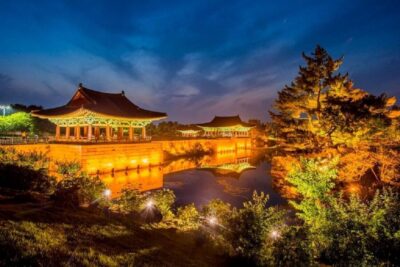
Gyeongju Guided Day Trip to Three Kingdoms Capital
Read our review →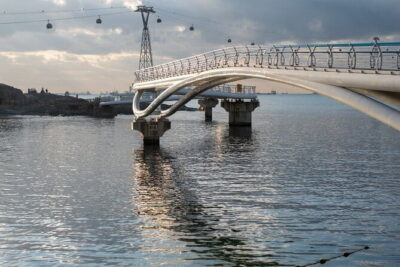
1-Day Busan Shore Excursion – City Highlights for Cruise Guests
Read our review →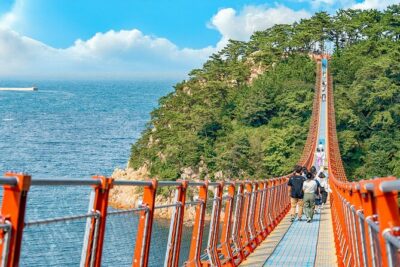
7 Highlights Gyeongju City One Day Small Group Tour from Busan
Read our review →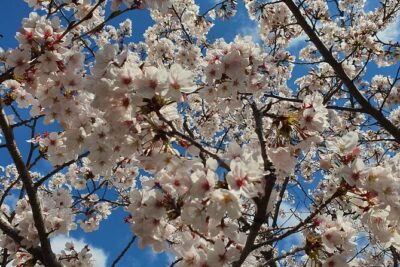
Jinhae Cherry Blossom Day trip from Busan – A Spring Adventure!
Read our review →
Naejangsan National Park Autumn Foliage One Day Tour from Busan
Read our review →
Day trip to beautiful Korean marine national park, Hallyeohaesang
Read our review →
Busan Day Trip from Seoul by KTX – Private Tour with Local Guide
Read our review →Browse the lists this tour appears in