
Reviewed · WINTER ACTIVITIES
Winter Wonderland Healing Park and Gyeongju/Daegu Tour from Busan
Snow gives southern Korea a different face. This long day from Busan pairs the icy fun of Kookmin Healing Park with your choice of historic Gyeongju or wintery Daegu, making it a handy way to reach places that are awkward to combine by public transport. I especially like the choice between temple courtyards, old villages, and cafes in Gyeongju, or market food and frozen scenery around Daegu. I also like that admission and air-conditioned transport are covered in the $63.21 price. The catch is the length: with 11 to 14 hours on the road, traffic and weather can make this a tiring day.
The tour earns a 4.5 rating from two reviews, and one gives special credit to guide Juna for making the day more enjoyable. That personal touch matters on a full coach outing. You should also know that canoeing at Kookmin Healing Park costs extra in cash, and the Daegu nature stop may change according to ice conditions.
In This Review
- Key points to know before booking
- Starting with snow at Kookmin Healing Park
- Choosing Gyeongju for temples and old streets
- Bulguksa Temple, about two hours
- Gyochon Traditional Village, about one hour
- Hwangridan Street, about 90 minutes
- Woljeonggyo Bridge, about 30 minutes
- Choosing Daegu for food and icy nature
- Seomun Market, about 1 hour 50 minutes
- SongHae Park or Biseulsan Forest, about 85 minutes
- How the two routes compare
- Is $63.21 a fair price?
- Transport, group size, and the daily rhythm
- Who will get the most from this tour?
- Final verdict: book Gyeongju or Daegu?
- FAQ
- How long does the tour last?
- Is transportation included?
- Are admission fees included?
- How much does canoeing cost at Kookmin Healing Park?
- Can I choose between the Gyeongju and Daegu routes?
- Are meals included?
Key points to know before booking
- Kookmin Healing Park leads the day with winter activities: You get about 1 hour and 40 minutes for sledding, icy walks, and optional canoeing.
- You choose Gyeongju or Daegu: The two routes offer very different days, one focused on heritage and one on food and winter scenery.
- The Gyeongju route has the stronger cultural focus: Bulguksa Temple, Gyochon Traditional Village, Hwangridan Street, and Woljeonggyo Bridge make a varied program.
- The Daegu route includes a market meal stop: Seomun Market is useful for lunch at your own expense and a look at local crafts and street food.
- The price includes transport and entry fees: At $63.21, the value is strongest if you want a simple round-trip plan from Busan.
- Expect a large group: The maximum is 43 people, so this is organized sightseeing rather than a quiet private tour.
Starting with snow at Kookmin Healing Park
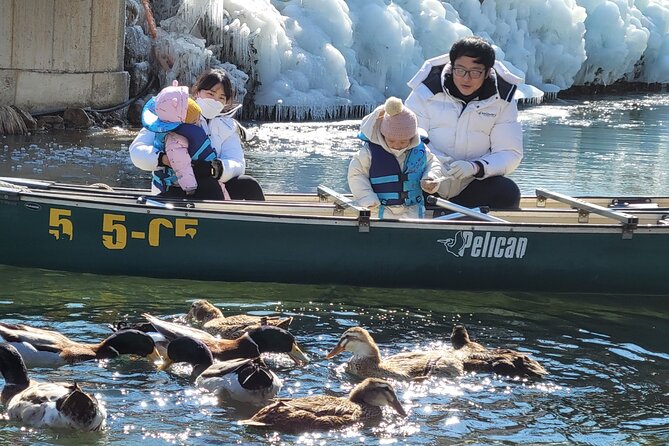
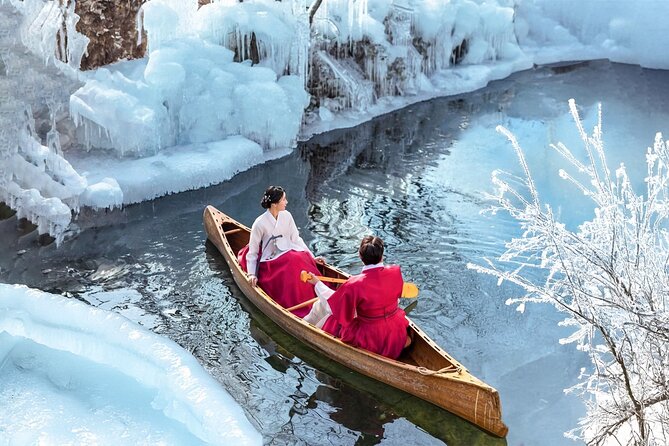
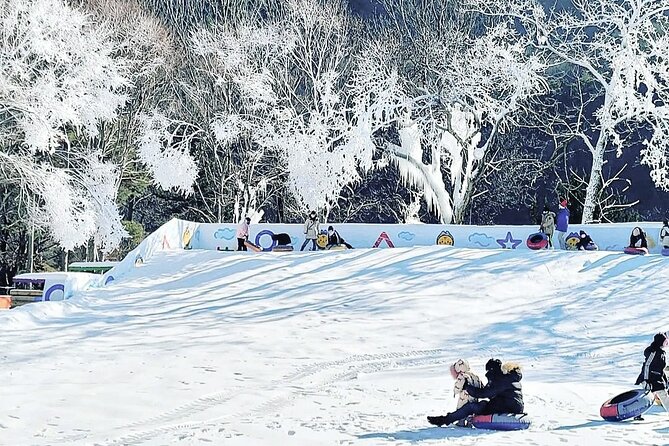
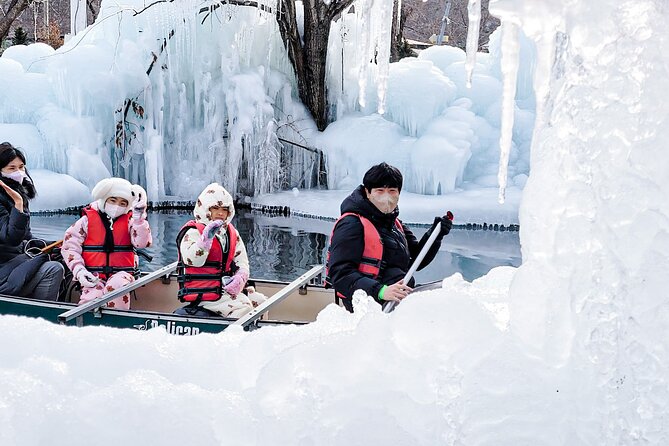
Kookmin Healing Park is the common opening stop for both routes. The park is presented as a snowy winter setting with sledding, canoeing, icy paths, and time to enjoy the cold-weather scenery. You have roughly 1 hour and 40 minutes here, with admission included.
The sled rides are the simplest way to enjoy the stop. You do not need to plan a separate winter activity, and the fixed visit gives you enough time to try the main features without spending the entire morning in one place. If you prefer a slower pace, the walks around the ice provide a calmer break before the longer sightseeing portion.
Canoeing is optional and costs extra. The fee is KRW 30,000 for a one-to-four-seat canoe or KRW 50,000 for a five-to-eight-seat canoe, payable in cash on site. That is an important detail for your budget. The basic tour price does not cover it, so carry Korean won if you want to paddle.
I would treat the canoe as a bonus rather than a reason to book the entire tour. Weather and ice conditions are central to this experience, and the park’s appeal depends on how wintry the setting is on your date. The tour schedule itself is also subject to weather and traffic changes.
More Busan trips:
- Busan: Gyeongju Guided Day Trip to Three Kingdoms Capital
★ 4.8 · 1,925 reviews - Small Group Full Day Busan Tour (Max 6 Pax)
★ 5.0 · 1,464 reviews - From Busan: Gyeongju UNESCO World Heritage Guided Day Tour
★ 4.8 · 1,250 reviews
Choosing Gyeongju for temples and old streets
The Gyeongju option is the better pick if you want history, architecture, and time in a traditional setting. After the park, you visit four distinct places: Bulguksa Temple, Gyochon Traditional Village, Hwangridan Street, and Woljeonggyo Bridge.
Bulguksa Temple, about two hours
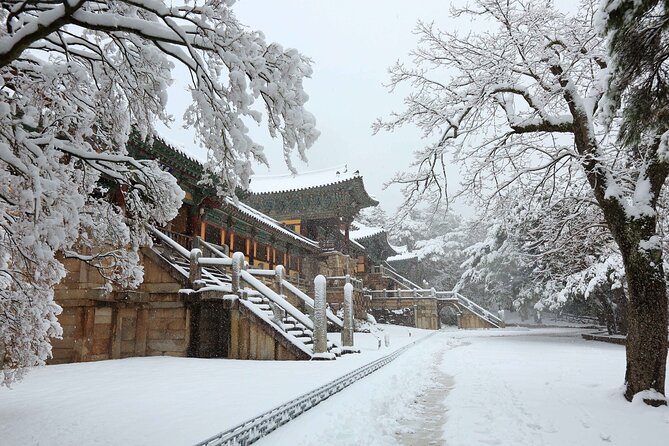
Bulguksa is Gyeongju’s best-known historic site and received UNESCO World Cultural Asset designation in 1995. The visit lasts about two hours, with admission included.
This is the most substantial cultural stop of the day. The temple’s value comes from its carved stonework, Buddhist setting, and careful layout rather than from a quick photo opportunity. Winter can also make the grounds feel more restrained and peaceful, though cold weather may affect how long you want to linger outside.
Two hours is a useful amount of time for a guided visit, but it is not unlimited. You will need to keep moving with the group rather than study every detail at your own pace. If Bulguksa is your main reason for choosing Gyeongju, listen closely to the guide and use the free time for the details that interest you most.
Gyochon Traditional Village, about one hour
Gyochon Traditional Village centers on the Gyeongju Choi Clan, a family known for preserving its wealth over 12 generations and producing influential figures. The stop gives you a look at the family’s place in Gyeongju life and the traditional homes connected with it.
I like this change of pace after Bulguksa. Instead of focusing only on monuments, you get a sense of how an established Korean family lived and maintained its position. The one-hour visit is enough for a walk and a general look around, though anyone interested in social history may want more time than the schedule allows.
This is also a good place to keep your expectations realistic. It is not a full museum program or a long independent exploration period. Think of it as a compact introduction to one important local family and the traditional village around it.
More Gyeongju trips:
- Gyeongju UNESCO World Heritage Guided Day Tour from Busan
★ 5.0 · 660 reviews - Old Korea Thousand History Tour of Gyeongju from Busan
★ 5.0 · 518 reviews - Busan: Gyeongju UNESCO Legacy Tour with National Museum
★ 5.0 · 172 reviews - From Busan to Gyeongju UNESCO Legacy Tour with National Museum
★ 5.0 · 87 reviews
Hwangridan Street, about 90 minutes
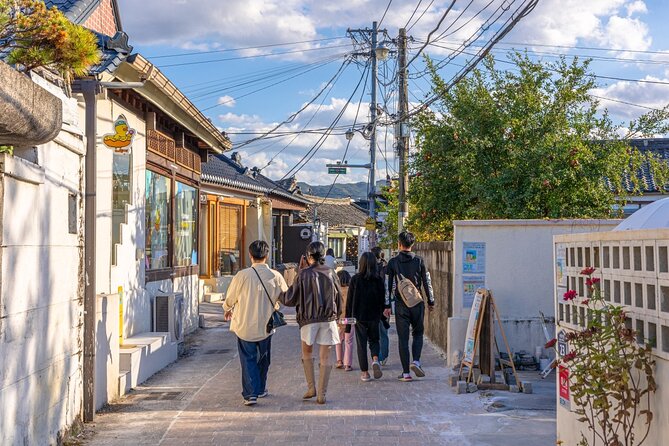
Hwangridan Street presents a newer side of Gyeongju. The area combines older Korean-style buildings with street food, cafes, and modern small businesses. The stop lasts about 1 hour and 30 minutes, so you have more freedom here than at the temple.
This is the most flexible Gyeongju stop. You can browse, choose a snack, sit in a cafe, or simply walk through the area. The contrast with Bulguksa and Gyochon is the point: Gyeongju is not only an ancient capital preserved behind gates. It also has a current food and cafe scene.
Food and drinks are not included, so budget a little extra if you want to sample something. Since the tour does not specify a fixed meal here, Hwangridan Street may serve as your most convenient chance to eat on the Gyeongju route.
Woljeonggyo Bridge, about 30 minutes
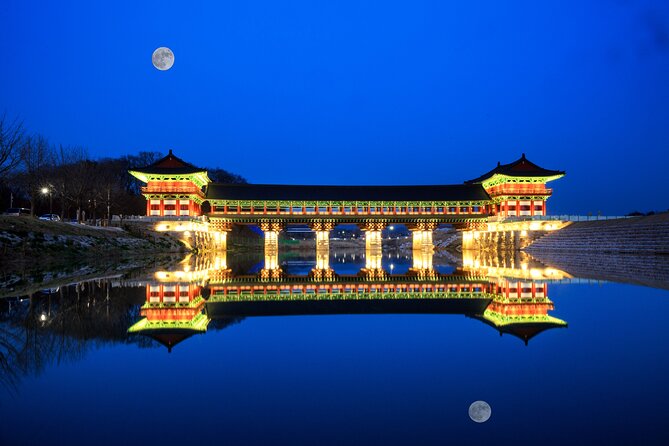
The final Gyeongju stop is Woljeonggyo Bridge, with a short 30-minute visit. The bridge is known for its stone arches and centuries-old construction, offering a compact look at the engineering skills behind Gyeongju’s historic sites.
Thirty minutes is enough for photographs and a guided explanation, but not for a long stop. The bridge works well as a final visual highlight because it is very different from both the temple and village. You will not get a deep visit here, yet the brief stop rounds out the route neatly.
Choosing Daegu for food and icy nature
Pick Daegu if you prefer a market meal and a winter nature stop over several heritage sites. This route has a simpler structure: Seomun Market followed by either SongHae Park or Biseulsan Natural Recreation Forest.
Seomun Market, about 1 hour 50 minutes
Seomun Market is the Daegu route’s main urban stop. You get about 1 hour and 50 minutes to look through food stalls, local crafts, and other goods, with lunch at your own expense.
This is a practical meal stop because you can choose what you want instead of being tied to a group restaurant. If you enjoy trying small portions and browsing local products, the market gives you more freedom than a set menu. It also brings a different kind of local experience to the day, centered on everyday shopping and food rather than formal sightseeing.
The tradeoff is that market visits work best when you can explore at your own pace. With a group schedule, you will need to watch the meeting time carefully. Meals are not included, so bring spending money in Korean won or use the payment method accepted at the stalls you choose.
SongHae Park or Biseulsan Forest, about 85 minutes
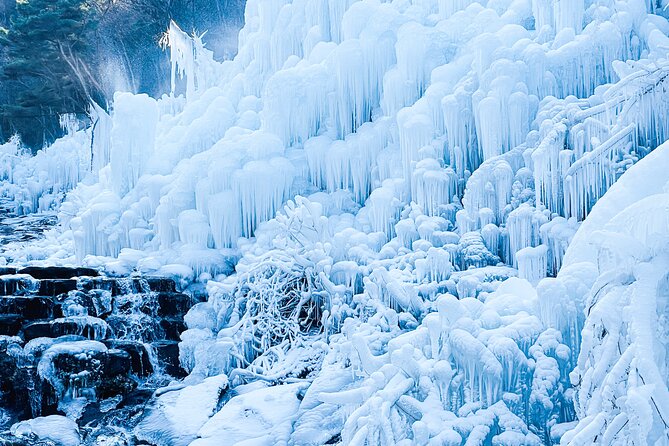
The last nature stop depends on ice conditions. You may visit SongHae Park to see an ice wall and walk along frozen paths, or go to Biseulsan Natural Recreation Forest for an icy stream and mountain air. Either option lasts about 1 hour and 25 minutes, and admission is included.
SongHae Park is the more dramatic choice if the ice wall is in good condition. The frozen formation gives you a strong winter photo stop, while the icy trails offer a short walk in the cold. Biseulsan is a better fit if you prefer a forest setting and the sound and sight of a frozen stream.
The changing stop is both a strength and a limitation. The guide can respond to actual ice conditions instead of taking you to a site that has lost its winter appeal. On the other hand, you cannot guarantee which place you will see when you book. If one specific location matters to you, the Daegu route carries more uncertainty than Gyeongju.
How the two routes compare
Gyeongju gives you the fuller cultural day. Bulguksa is the major anchor, while Gyochon, Hwangridan Street, and Woljeonggyo Bridge add different textures. I would choose it for a first visit to the Gyeongju area, especially if you want your winter outing to include major Korean heritage sites.
Daegu feels more casual and seasonal. Seomun Market gives you room to choose lunch, and the final stop is shaped by the condition of the ice. I would choose Daegu if food markets and outdoor winter scenery sound more appealing than temples and historic neighborhoods.
Both routes begin with the same snowy activity park, so the decision mostly comes down to what you want after lunch. Do not choose based only on the word winter. Gyeongju is a winter sightseeing route with culture at its center, while Daegu offers food, shopping, and a flexible ice-focused ending.
Is $63.21 a fair price?
At $63.21 per person, the tour is priced as a convenient full-day excursion from Busan. The fee includes admission, an English- and Chinese-speaking guide, and transport by air-conditioned bus, coach, or minivan. That combination matters because the tour covers distant stops in another city or region, and transport time is included in the 11 to 14-hour total.
You are paying for simplicity as much as for entry tickets. Instead of arranging several connections, checking seasonal access, and managing a return journey after a cold day outdoors, you have one organized route back to Busan. For many people, that is the main value.
The price does not include meals, insurance, personal expenses, or canoeing. The Daegu route in particular requires a lunch budget at Seomun Market. Add the optional canoe fee if you want that activity, and remember that the lower headline price does not cover every possible extra.
The value is less convincing if you dislike long coach days or want extended time at one place. Much of the total duration comes from travel between Busan and the stops. You should book this as a broad day trip, not as a slow visit to one attraction.
Transport, group size, and the daily rhythm
The maximum group size is 43 people. That allows the tour to operate at a relatively accessible price, but it also means you should expect a clear meeting structure and less personal attention than on a small private outing.
The guide speaks English and Chinese. The guide’s role is especially useful at Bulguksa and Gyochon, where context helps you understand what you are seeing. Juna is specifically praised for making the day more fun and enjoyable, which is encouraging on a schedule this long.
The tour is near public transportation, and most people can take part. You receive confirmation at booking and use a mobile ticket. These details make the outing easy to add to a Busan stay without arranging a separate ticket pickup.
Leave room for delays. Traffic can affect a cross-city day, and the schedule may change with weather. The Daegu nature stop is also selected according to ice conditions. Wear warm clothing and shoes suitable for outdoor paths, though the supplied information does not specify any required equipment.
Who will get the most from this tour?
I would recommend the tour to you if you have limited time in Busan but want to see more of southern Korea. It is particularly useful for first-time visitors who prefer a fixed plan, included transport, and a guide handling the day’s basic structure.
The Gyeongju route suits people who want a balanced mix of historic sites, traditional homes, food, and modern cafes. Families and mixed-interest groups may appreciate the variety, since no single stop defines the entire day.
The Daegu route suits you if you like choosing your own lunch and want a seasonal outdoor finish. It is also a good option if the possibility of changing the final nature stop feels sensible rather than frustrating.
I would hesitate if you want a relaxed pace, a small group, or long independent time at every site. The day is full, and the 43-person maximum can make departures and regrouping more structured. Cold weather adds another practical concern, especially during the outdoor portions.
Final verdict: book Gyeongju or Daegu?
Book this tour if you want an efficient winter day from Busan and value transport, admission, and a guide bundled into one price. Choose Gyeongju for the stronger cultural program and more dependable sightseeing plan. Choose Daegu for Seomun Market, flexible lunch, and an ice-based nature stop that may change with conditions.
The best booking decision comes down to your tolerance for a long day. If you can handle 11 to 14 hours and pack for the cold, the combination of Kookmin Healing Park and a second destination gives you a lot for $63.21. Cancel at least 24 hours before the start time if your plans change, since that is the deadline for a full refund.
FAQ
How long does the tour last?
The full experience lasts approximately 11 to 14 hours, including travel between Busan and the stops.
Is transportation included?
Yes. Transport is provided by air-conditioned bus, coach, or minivan, and travel time between locations is part of the total tour duration.
Are admission fees included?
Admission fees are included for the scheduled attractions. The optional canoe experience at Kookmin Healing Park is not included.
How much does canoeing cost at Kookmin Healing Park?
The canoe fee is KRW 30,000 for one to four seats or KRW 50,000 for five to eight seats. Payment is made in cash on site.
Can I choose between the Gyeongju and Daegu routes?
Yes. You can select the Gyeongju Winter package or the Daegu Winter package. The Daegu route’s final nature stop is selected according to ice conditions.
Are meals included?
No. Meals are not included. On the Daegu route, you have time for lunch at Seomun Market at your own expense.
More Winter Activities in Busan
- [OFFICIAL] Eden Valley Resort Winter Ski Day Tour from Busan
★ 4.5 · 20 reviews - Busan: Winter Healing Park and (Gyeongju/Daegu) One Day Tour
★ 5.0 · 5 reviews - Busan: Eden Valley Resort Winter Ski Snowboard Sled Day Tour
★ 5.0 · 1 review - Jisan Ski Resort from Seoul by Shuttle(Opt Winter Skiing Package)
★ 5.0 · 194 reviews
Just added in Busan
- Small Group 7D Korea package Tour with Seoul Gyeongju Busan Jeju★ 4.5 · 13 reviews
- Private Transfer from Seoul to Busan(up to 12 passengers)★ 5.0 · 1 review
- Jinhae Cherry Blossom + Busan Sunrise from Seoul★ 4.5 · 5 reviews
- 7 days Flexible Tour for Major Cities(Seoul,Busan,Gyeongju etc)★ 5.0 · 5 reviews
- PREMIUM 5 Days Tour for Wonder of Korea(Mt. Seoraksan, Andong, Gyeongju, Busan)★ 5.0 · 1 review
- 5 Days Tour for Korea’s past and present(Mt.Seoraksan, Andong, Gyeongju, Busan)★ 5.0 · 1 review
- 7 Days Highlight Korea Tour(Seoul, Nami, DMZ, Andong, Gyeongju, Busan)★ 5.0 · 1 review
- 5-Day Korea Golden route by K-shuttle Tour from Seoul Including Busan, Yeosu★ 4.5 · 37 reviews
Winter Activities, compared.
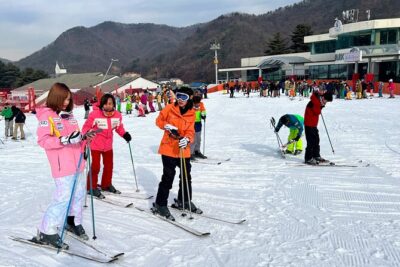
Jisan Ski Resort from Seoul by Shuttle(Opt Winter Skiing Package)
Read our review →
![[OFFICIAL] Eden Valley Resort Winter Ski Day Tour from Busan](https://j2.koreatourreviews.com/wp-content/uploads/official-eden-valley-resort-winter-ski-day-tour-from-busan-400x267.jpg)
[OFFICIAL] Eden Valley Resort Winter Ski Day Tour from Busan
Read our review →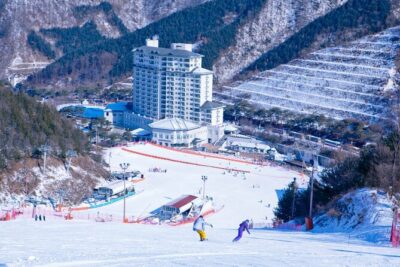
Elysian Gangchon Winter Ski + Eobi Ice Valley Day Tour fr Seoul
Read our review →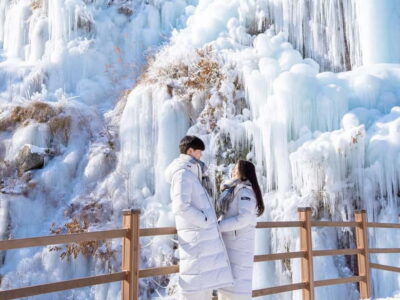
Vivaldi Park Winter Ski with Eobi Ice Valley Day Tour
Read our review →
Elysian Gangchon Winter Ski with Nami Island Day Tour from Seoul
Read our review →
Vivaldi Park Winter Ski with Eobi Ice Valley Day Tour from Seoul
Read our review →Browse the lists this tour appears in