
Reviewed · HISTORICAL TOURS
Discover Seoul: Local Life and History
Seoul rewards curious walkers. This 3.5-hour route links Gwanghwamun and Jongno with royal landmarks, Confucian and Buddhist traditions, tea houses, craft shops, and old hanok lanes. I like the clear progression from modern Seoul Plaza to Joseon-era sights, and I like that the route ends in Bukchon, where you can keep exploring on your own. The main drawback is the pace: several stops receive only 30 minutes, so this is an introduction rather than a full palace or neighborhood visit.
The tour costs $96.75 per person, which is a serious price for a walking tour with no listed admission fees. You are paying mainly for the guide’s historical explanation, local food and drink advice, and the convenience of joining a small group capped at 20 people. Guides Moises and Gemma receive especially warm praise for clear English, good historical context, and practical recommendations, including traditional tea houses and Korean fried chicken.
In This Review
- Key points to know before booking
- Why this route works for a first day in Seoul
- Seoul City Hall and the modern capital
- Gwanghwamun Square and the two figures who shaped Korea
- Gyeongbokgung and the royal heart of Seoul
- Insadong, where the route becomes more personal
- Bukchon Hanok Village and the uphill finish
- What the guides add to the walk
- Is $96.75 a fair price?
- Who should book this Seoul walking tour?
- My verdict: book it for context, not admission tickets
- FAQ
- How long does the Seoul walking tour last?
- Where does the tour begin?
- Where does the tour finish?
- What places are included?
- Is admission included for the sights?
- How many people can join the tour?
- Can I cancel for a refund?
Key points to know before booking
- Seoul Plaza begins the story: You start at City Hall, a useful point for understanding how modern government and older royal Seoul meet.
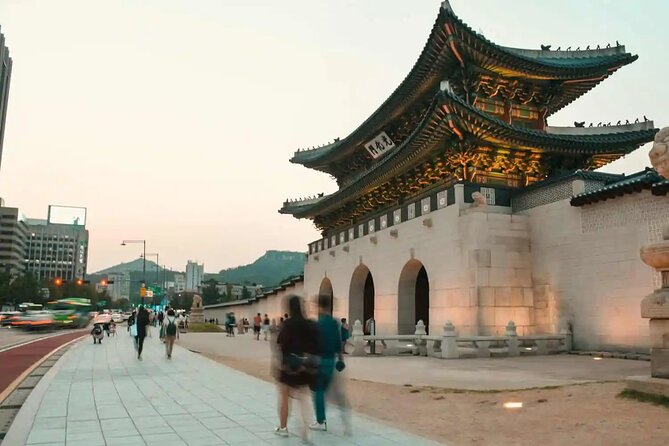
- Gwanghwamun gives you the big picture: The main avenue, palace gate, and statues of King Sejong and Admiral Yi Sun-sin provide an easy introduction to Korean history.
- Gyeongbokgung is an outside-focused stop: You receive an introduction to Seoul’s main royal palace and see the guard change, but the listed stop lasts about 30 minutes.
- Insadong adds local texture: Tea houses, galleries, bars, craft shops, and hanok-lined lanes break up the formal monuments.
- Bukchon is the scenic finish: The preserved village sits on a hill between the royal palaces, so expect traditional lanes and some uphill walking.
- The guide can shape your Seoul stay: Moises and Gemma are praised for English explanations and food advice, making this useful early in a visit.
Why this route works for a first day in Seoul
This tour is built around contrast. Seoul City Hall and Gwanghwamun Square show the capital as a modern public center, while Gyeongbokgung, Insadong, and Bukchon take you back toward the Joseon dynasty. You do not spend the whole morning inside one palace. Instead, you walk through the connections between government, royalty, religion, commerce, and daily life.
I like that arrangement because Seoul can feel overwhelming at first. The city is large, fast, and visually crowded with signs, towers, shops, and transit routes. This walk gives you a simple mental map. You begin in Jung District at Seoul Plaza and finish in Jongno District near Anguk, with the route moving through some of the city’s best-known historic areas.
The tour runs Monday through Friday, generally between 10:00 a.m. and 5:00 p.m. The exact starting time should be checked when you book, especially since the published details and guide responses refer to different start times. Some Tuesday visits to Seoul City Hall may also be affected by closure.
More History Tours in Seoul
- Seoul: Evening Dark History, Folklore & Ghost Story Walking Tour
★ 5.0 · 593 reviews - Hanbok Photoshoot and History Tour at Gyeongbokgung Palace
★ 5.0 · 276 reviews - From Seoul: Dae Jang Geum Park Historic K-Drama Set Tour
★ 4.9 · 143 reviews
Seoul City Hall and the modern capital
The meeting point is Seoul Plaza, at 110 Sejong-daero. From there, the first 30 minutes introduce Seoul City Hall and the city’s history. This is a sensible opening because you start with the capital as it functions today before turning toward its royal past.
The attraction here is context rather than a grand interior visit. City Hall helps frame Seoul as a national center of politics and public life. If this is your first morning in the city, the stop can help you understand why the central avenues and public spaces matter.
The free admission is useful, but remember that the tour price does not represent a package of paid sightseeing tickets. Its value depends on how much you want a guide to explain the setting and connect it with what comes next.
One practical concern is the note that City Hall may be closed on some Tuesdays. Since the tour can still include the surrounding area, this may not ruin the walk, but you should not assume the building will always be open for viewing.
Gwanghwamun Square and the two figures who shaped Korea
The walk continues to Gwanghwamun Square, Seoul’s main avenue, for about 35 minutes. This is one of the route’s strongest sections because it gives you a broad public setting rather than a single monument.
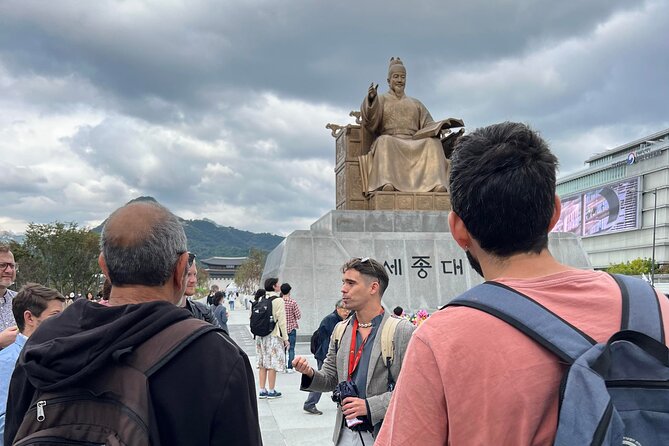
The square features statues of King Sejong the Great and Admiral Yi Sun-sin, two central figures from the Joseon period. A short 10-minute stop focuses directly on their stories. King Sejong is associated with the development of Hangul, the Korean alphabet, while Admiral Yi Sun-sin is remembered for his military leadership. These details are not just names on a map. They help explain why both figures receive such prominent places in the capital.
I find this part valuable because the guide can turn a large avenue into a readable historical scene. You are not simply photographing statues. You are learning why these people remain so important in Korean public life.
The square is open and exposed, so weather matters. The tour requires good weather, and that condition makes sense here. Rain or strong sun can make a long outdoor walk less comfortable, although one French-language review noted that Moises kept the visit interesting even in rain.
Gyeongbokgung and the royal heart of Seoul
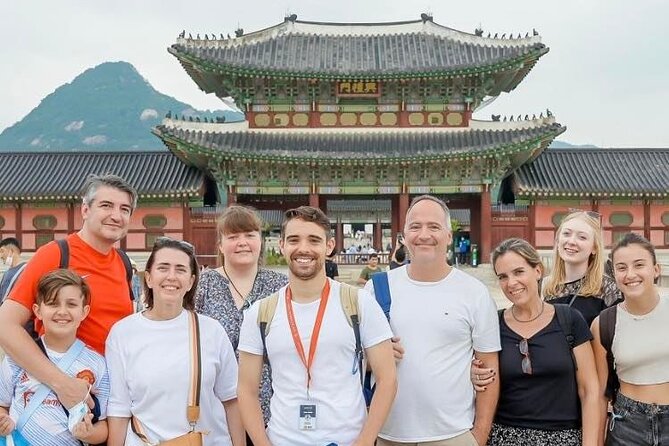
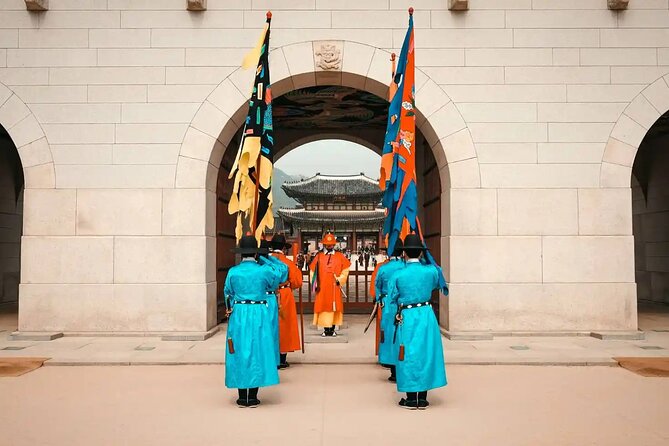
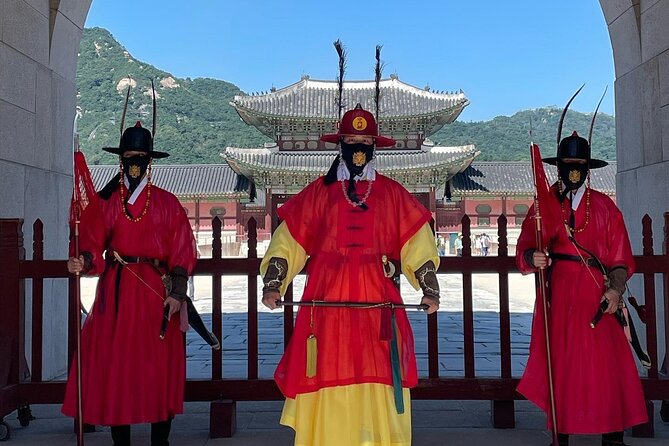
Gyeongbokgung Palace is the main historic stop. The tour allows about 30 minutes for an introduction to the palace and the changing of the guards. That gives you a useful first look, but it is not enough time for a full palace visit.
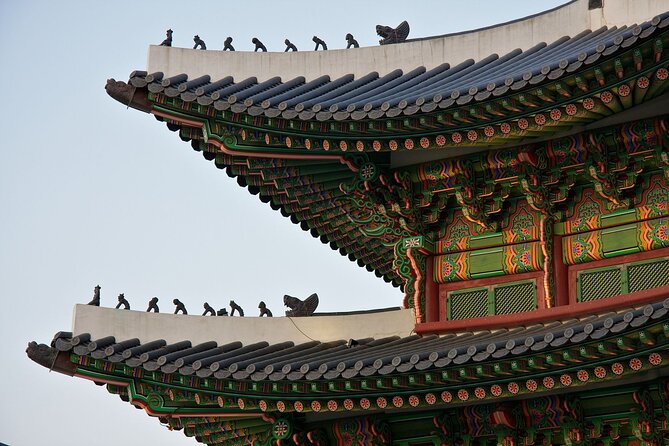
Gyeongbokgung was the principal royal palace of Seoul, and its location helps explain the shape of the old capital. The palace area links directly with Gwanghwamun, the great gate at the southern approach. Seeing the gate and the guard ceremony makes the royal setting easier to picture.
The changing of the guards is a visual highlight, but timings can matter. The supplied details do not give a ceremony schedule, so confirm the day’s timing if this is your main reason for booking. A short stop also means you should expect an overview, not a room-by-room examination of palace buildings.
That limitation is worth taking seriously. If you want detailed palace architecture, interior courtyards, and a slow visit, plan separate time for Gyeongbokgung. This tour is better for learning how the palace fits into Seoul’s wider story.
There is also a practical value here. A guide can explain the palace before you return independently, which may make a later self-guided visit more rewarding. You will already understand the basic setting instead of wandering through a large complex with little context.
A completely different kind of day:
- Best DMZ Tour Korea from Seoul (Red Suspension Bridge Optional)
★ 5.0 · 41,422 reviews - DMZ Tour: 3rd Tunnel, Option(Suspension Bridge, Boat) from Seoul
★ 5.0 · 21,373 reviews - DMZ tour south Korea from Seoul (NK experience hall, defector)
★ 5.0 · 20,599 reviews - Seoul: DMZ Tour with Optional Suspension Bridge
★ 4.8 · 5,277 reviews
Insadong, where the route becomes more personal
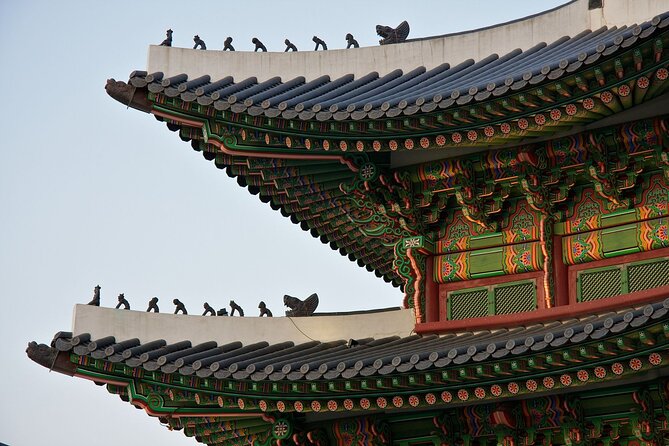
After the formal spaces of City Hall, Gwanghwamun, and the palace, the route turns into Insadong for around 30 minutes. This is where the walk shifts from national history to everyday culture.
Insadong is one of Seoul’s oldest neighborhoods. Its narrow streets include traditional tea houses, galleries, bars, and craft shops, with hanoks appearing among the newer businesses. The word labyrinthine fits the area well: it is easy to lose your sense of direction, and that is part of its appeal.
The tea house stop is one of the most praised details of the tour. One visitor on an airport layover described the tea house as the best part of the outing and left Seoul wanting to return for a longer visit. That is a useful clue about the tour’s character. The strongest moments may come between the major monuments, when a guide takes you somewhere you might not choose on your own.
You also receive tips on food and drink, including Korean beer chicken and authentic street food. Moises is specifically praised for knowing where to find good local food, while Gemma is praised for bringing the city’s history to life and offering useful sightseeing advice.
The time is short, so do not expect a long shopping session or an extended tasting visit. Think of Insadong as a guided orientation. You can return later for tea, crafts, galleries, or a meal with a better idea of where to look.
Bukchon Hanok Village and the uphill finish
The final major stop is Bukchon Hanok Village, about 30 minutes from the information provided. The village lies on a hill between Gyeongbokgung Palace and other royal sites. It is known for traditional alleys and hanok homes, with the area preserved to show a 600-year-old style of Seoul.
This is a memorable place to finish because the buildings and lanes feel different from the broad avenues earlier in the walk. You get a closer look at the older residential city, not just royal gates and official squares.
Expect some uphill walking. The information describes Bukchon as being on top of a hill, so comfortable shoes are a sensible choice. The narrow lanes also make this a place where you should follow the guide closely and respect the residential setting.
The tour finishes near Cafe Onion Anguk, at 5 Gyedong-gil, in Jongno District. The meeting and ending points are far enough apart to give the route a satisfying one-way shape. You do not simply circle back to where you began. Afterward, you can continue around Anguk, return to Insadong, or use the nearby area as a base for more sightseeing.
The listed end point is also practical for anyone who wants coffee or a rest after the walk, though the tour information does not promise any included food or drink.
What the guides add to the walk
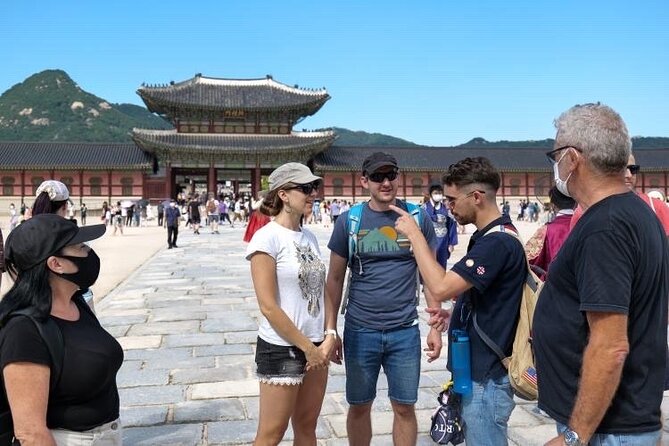
The strongest praise centers on the guides. Moises is praised for excellent English, clear historical explanations, and thoughtful food recommendations. Gemma receives similar praise for explaining the country’s history and making the city’s past connect with its present.
That matters because the route contains familiar headline sights. You can find Gwanghwamun, Gyeongbokgung, Insadong, and Bukchon in any basic Seoul guidebook. The difference is how well someone explains the links between them.
The reviews also suggest that the guides adjust well to different interests. One guide gave a visitor enough history to understand Korean culture without turning the outing into a lecture. Another kept the tour worthwhile despite rain. Those details point to a useful balance: you receive explanation, but the walk still leaves room for seeing the city around you.
The group can include up to 20 people. That is not a private tour, and a group of that size may feel less personal in narrow Bukchon lanes. Still, it is smaller and more manageable than a large coach outing, especially for a walking route.
Is $96.75 a fair price?
At $96.75 per person, this is not a bargain walking tour. The listed stops show free admission, and the main attractions are viewed as part of a guided route rather than as a ticket bundle. You are paying for approximately three and a half hours of time, walking assistance, historical interpretation, and local suggestions.
I would consider the price reasonable only if you want a guide-led introduction and plan to use the advice afterward. The tea house recommendation, food tips, and neighborhood guidance add value that is difficult to measure in an admission ticket. If you are comfortable researching Seoul on your own, the cost may feel high.
The tour makes more financial sense for a short visit. Someone with an airport layover used it to see Seoul efficiently, and the one-way route covers several major areas without requiring you to plan every turn. It can also suit visitors who want to start their trip with practical suggestions about where to eat and drink.
Since the tour is often booked about 24 days ahead, it is wise to reserve early if your dates are fixed. You receive a mobile ticket, and free cancellation is available until 24 hours before the local start time. If poor weather cancels the walk, you are offered another date or a full refund. The same applies if the minimum number of participants is not reached.
Who should book this Seoul walking tour?
I would recommend it to a first-time visitor who wants a clear introduction to Seoul’s central historic districts. It is particularly useful if you enjoy walking, prefer a human explanation to a recorded audio guide, and want suggestions for tea, food, and later sightseeing.
It also suits a short-stay visitor. The route packs City Hall, Gwanghwamun, the palace area, Insadong, and Bukchon into one morning or afternoon. That gives you a strong first impression without requiring a full day.
You may want something else if your priority is a long palace visit, extensive shopping, or a private custom route. The 30-minute palace and Bukchon sections are enough for orientation but not for slow exploration. A group of up to 20 people may also feel too large if you prefer constant one-to-one attention.
The walk is listed as suitable for most participants, allows service animals, and runs near public transportation. Even so, the hill at Bukchon and the length of the route make comfortable footwear a good idea.
My verdict: book it for context, not admission tickets
Book this tour if you want Seoul’s major historic areas explained in one connected walk. The guides are the main reason to choose it, with Moises and Gemma receiving strong praise for English, history, food advice, and calm handling of wet weather.
Do not book it expecting a full palace tour or a cheap way to collect entrance tickets. The price pays for guidance and local orientation. For a first day in Seoul, a short stay, or an airport layover, that can be worth it. If you have plenty of time and enjoy planning independently, you may prefer to visit each area at your own pace and spend the $96.75 elsewhere.
FAQ
How long does the Seoul walking tour last?
The tour lasts approximately 3 hours and 30 minutes.
Where does the tour begin?
It begins at Seoul Plaza, at 110 Sejong-daero in Jung District, Seoul.
Where does the tour finish?
It finishes near Cafe Onion Anguk at 5 Gyedong-gil, Jongno District, and the tour information identifies Bukchon Hanok Village as the final area.
What places are included?
The route includes Seoul City Hall, Gwanghwamun Square, the statues and stories of King Sejong and Admiral Yi Sun-sin, Gyeongbokgung Palace, Insadong, and Bukchon Hanok Village.
Is admission included for the sights?
The listed stops show free admission. The tour provides introductions to the sites and the changing of the guards, but the information does not list separate paid attraction tickets.
How many people can join the tour?
The maximum group size is 20 participants.
Can I cancel for a refund?
You can cancel up to 24 hours before the experience starts for a full refund. Cancellations or changes made less than 24 hours before the start time are not refunded or accepted. If bad weather or insufficient participation cancels the tour, you are offered another date or a full refund.
Just added in Seoul
- Seoul: Korean & English Language Exchange Global Party★ 5.0 · 28 reviews
- Your Personal Seoul Photographer!★ 4.1 · 15 reviews
- You’re Invited to Our Home in Seoul: The Only Cooking Class!★ 5.0 · 8 reviews
- From Seoul: Yongpyong Ski Day Tour with Transportation★ 4.9 · 40 reviews
- From Seoul: Hwacheon Ice Fishing and Lighting Festival Tour★ 4.5 · 4 reviews
- Seoul: Gangneung BTS K-Pop & K-Drama Filming Locations Tour★ 4.6 · 14 reviews
- Unique Native Experience : Han River Picnic, Board game, BBQ★ 5.0 · 3 reviews
- Seoul: Euljiro Gastroventure Tour★ 4.0 · 1 review
Historical Tours, compared.
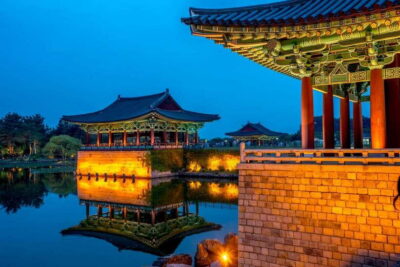
Gyeongju UNESCO World Heritage Guided Day Tour
Read our review →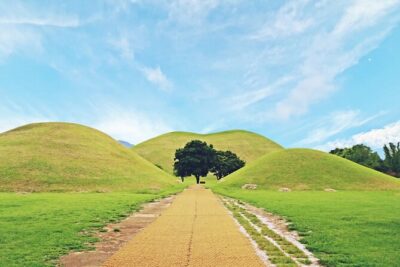
Gyeongju UNESCO World Heritage Guided Day Tour from Busan
Read our review →
Evening Dark History, Folklore & Ghost Story Walking Tour
Read our review →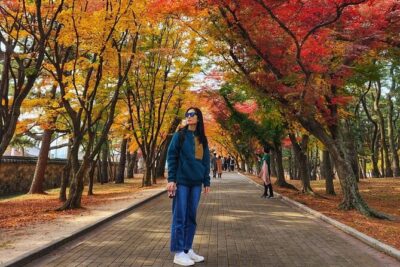
Old Korea Thousand History Tour of Gyeongju from Busan
Read our review →
Hanbok Photoshoot and History Tour at Gyeongbokgung Palace
Read our review →
UNESCO Heritage Tour Including Bulguksa Temple
Read our review →
Gyeongju UNESCO World Heritage Sites and History Full-Day Tour with Lunch
Read our review →Browse the lists this tour appears in