
Reviewed · TEMPLE STAYS
Junam Wetlands and Haeinsa Temple Tour
Birds first, carved scripture later. This full-day private outing pairs Junam Wetlands with Haeinsa Temple, giving you two very different views of South Korea beyond Busan. I like the chance to see migratory birds in a Ramsar-listed wetland, then hear about the ancient Silla Dynasty and the 13th-century Tripitaka Koreana at one of Korea’s three jewel temples. I also like the small group size, hotel pickup, onboard WiFi, and English-speaking guide.
The main consideration is the $324 per-person price, which only makes strong sense if you are traveling with at least three people and value private transport and personal guiding. You should also expect a long day, roughly nine hours, with a moderate amount of walking and a schedule that can change with local weather.
In This Review
- Five things to know before you go
- Why this Busan day trip is worth considering
- Junam Wetlands: birds, water, and seasonal change
- Haeinsa Temple and the Tripitaka Koreana
- How the nine-hour schedule works
- What the private format really adds
- What to pack and how to prepare
- Who will enjoy this experience most
- Booking, cancellation, and practical value
- Should you book the Junam Wetlands and Haeinsa Temple tour?
- FAQ
- How long does the Junam Wetlands and Haeinsa Temple tour last?
- What time does the tour start?
- Is hotel pickup and drop-off included?
- How many people are required to book?
- Is lunch included?
- What birds might I see at Junam Wetlands?
- Can I cancel for a full refund?
Five things to know before you go
- Junam Reservoir changes with the season: winter brings migratory birds, while spring brings lotus flowers across the wetland.
- Haeinsa Temple holds the Tripitaka Koreana: these 13th-century woodblocks are the main cultural prize of the visit.
- Private means genuinely small-scale: only your own group joins the tour, with a maximum of nine people.
- Guide Jade earns special praise: he is described as polite and generous with detailed explanations.
- The day begins early: hotel pickup is scheduled for 8:00 am, leaving time for the long journey between Busan and the two sites.
- Lunch is your responsibility: food and drinks are not included, although bottled water is provided.
Why this Busan day trip is worth considering
Busan has plenty to keep you busy, but this tour takes you well beyond the city’s usual coastal and urban sights. You spend part of the day watching wildlife and part of it with an important Buddhist monument and national cultural treasure. That contrast gives the outing a clear purpose instead of feeling like a string of unrelated stops.
I especially like the way the tour connects nature and history. Junam Wetlands shows how birds use Korea as a stopping point along their migration routes. Haeinsa then shifts your attention to human effort, faith, and preservation through its famous carved woodblocks.
The private format matters here. You do not have to keep pace with a large bus group, and your English-speaking guide can explain what you are seeing as the day unfolds. A maximum of nine people is still large enough for a social outing, but far more manageable than a full coach tour.
There are limits. The listed stops themselves account for about two hours and ten minutes, while the complete experience lasts around nine hours. That means a substantial part of your day is spent on the road. For some people, that is a fair trade for reaching Haeinsa Temple. For others, the distance may feel too great for a single day from Busan.
More Temple Visits in Busan
- Busan Tour: Gamcheon Village & Haedong Yonggungsa Temple + Lunch
★ 5.0 · 119 reviews - Full Day Busan Tour Including Haedong Yonggungsa Temple
★ 4.5 · 71 reviews - Private Busan tour with gamcheon culture village and the temple (Customizable)
★ 5.0 · 62 reviews
Junam Wetlands: birds, water, and seasonal change
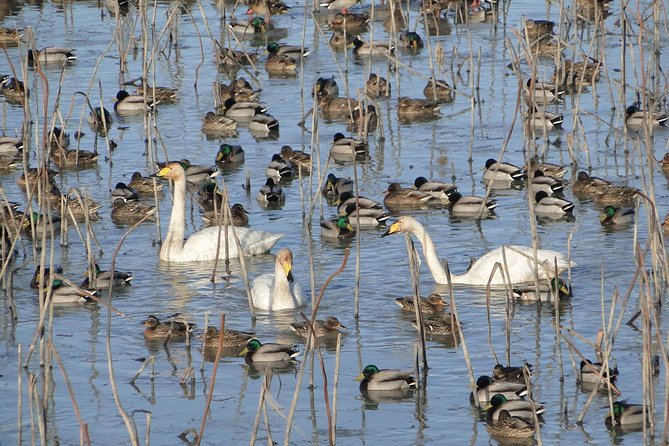
The first stop is Junam Reservoir, part of Junam Wetlands Park. The wetland is listed under the Ramsar Convention, an international agreement that recognizes important wetland areas. That designation gives the visit more meaning than a simple walk beside a pond. You are looking at a protected habitat used by a wide range of waterfowl.
The scheduled visit lasts about one hour, with admission included. You follow walking trails through the park with your guide, keeping an eye out for white-naped cranes, spoonbills, and white herons. The guide explains the birds’ habitat and migratory patterns, so the stop is designed as guided nature watching rather than a quick photo break.
Winter is the strongest season for bird sightings. The wetlands can host large numbers of migratory birds at that time, including the species named in the tour description. You should still treat wildlife sightings as natural possibilities, not guarantees. Birds move, weather affects visibility, and the tour is subject to change when conditions are poor.
Spring offers a different reason to visit. Lotus flowers spread across the wetland, creating a softer and more plant-focused scene than the winter bird season. If you are choosing dates specifically for wildlife, winter seems the better fit. If flowers and open wetland views appeal more, spring may be your preferred season.
The one-hour stop is useful for getting an introduction to the area, but it is not a full birding expedition. You should expect a focused walk rather than hours with binoculars and long periods of silent observation. Comfortable shoes are important because the tour involves a moderate amount of walking.
Haeinsa Temple and the Tripitaka Koreana
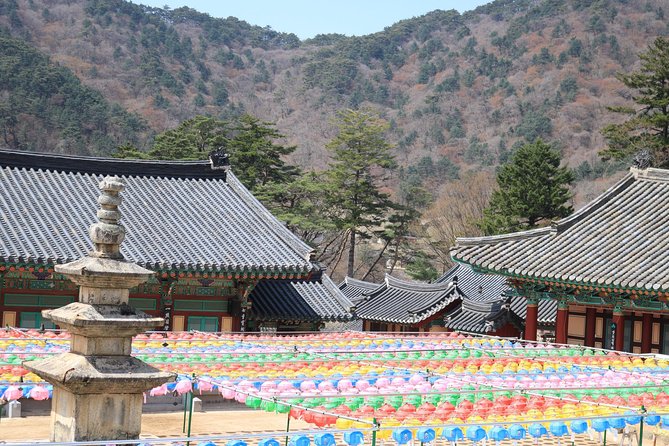
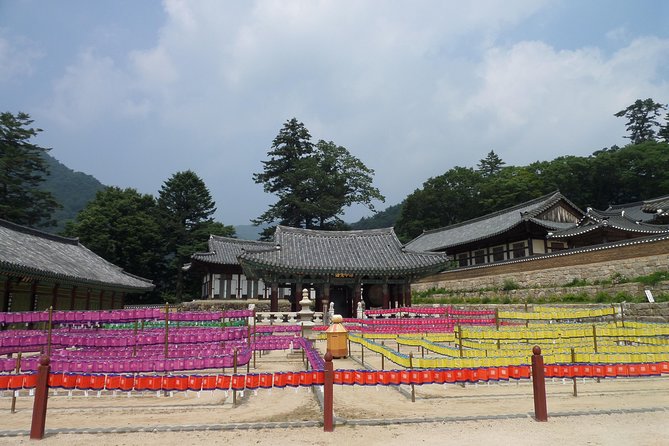
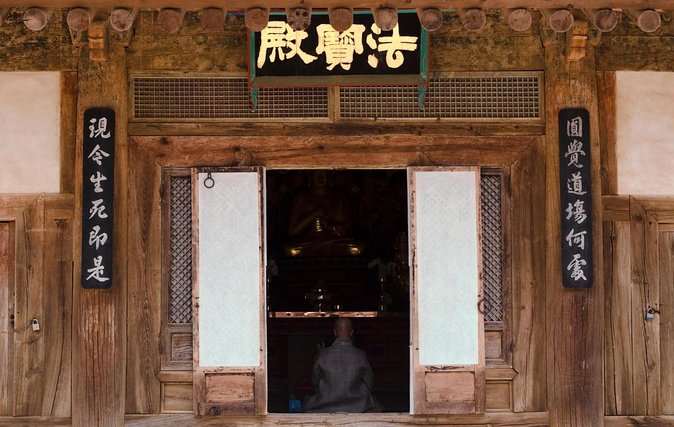
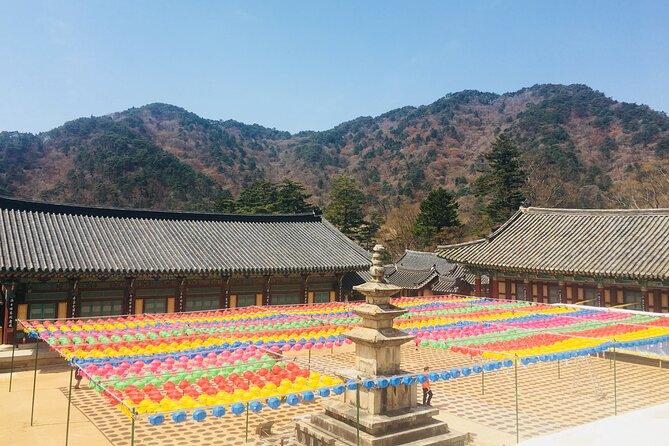
Haeinsa Temple is the cultural center of the day. Located on Mount Gaya, it is known as one of Korea’s three jewel temples. The name reflects its importance in Korean Buddhism, and the site is especially famous for housing the Goryeo Daejanggyeong, better known internationally as the Tripitaka Koreana.
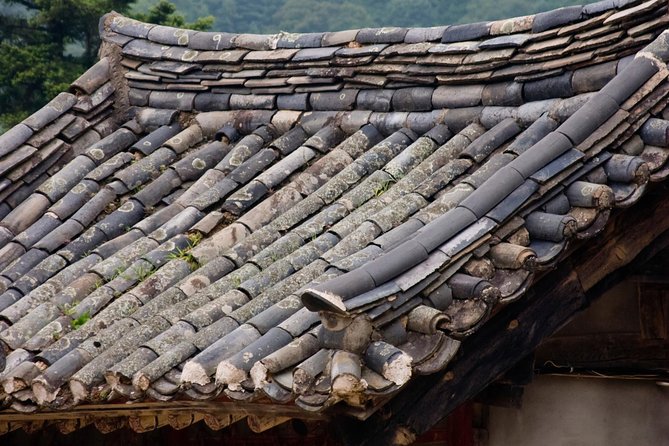
The temple visit lasts about one hour and ten minutes, with admission included. That is enough time for a guided introduction and a look at the temple grounds, though it is not an unhurried monastery visit. Your guide can put the buildings and traditions into context, helping you understand why Haeinsa matters beyond its attractive setting.
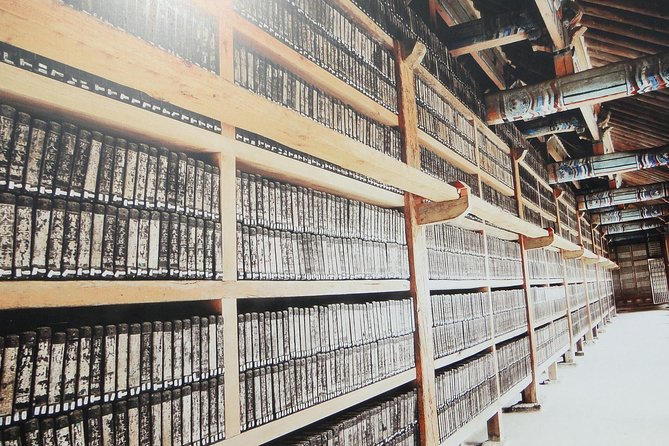
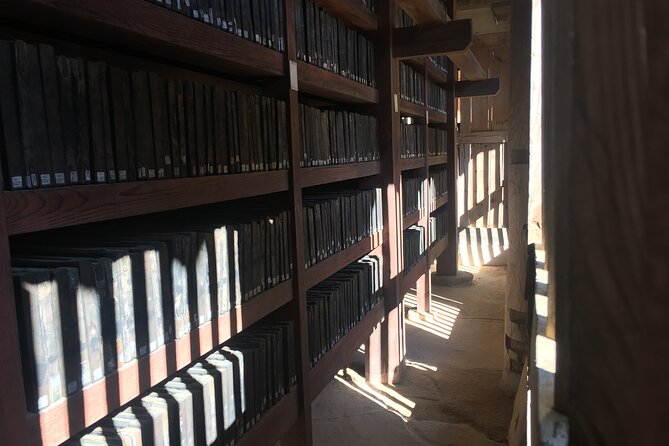
The Tripitaka Koreana is the key reason to come. It consists of 13th-century carved wooden printing blocks containing Buddhist scriptures. The workmanship and survival of the collection are remarkable, and the woodblocks represent a major chapter in Korea’s cultural history.
You may find the contrast with Junam especially effective. At the wetland, your attention moves outward toward birds, water, and seasonal patterns. At Haeinsa, you look closely at a human-made collection created centuries ago and preserved for later generations.
The available tour information does not promise a long temple ceremony or an extended religious program. You should think of this as a guided cultural visit, not a retreat or worship experience. The temple is active and significant, but the schedule keeps the stop compact.
The guide can make a large difference here. Jade is praised for being polite and for offering detailed explanations about the places visited. That kind of commentary is useful at Haeinsa, where the importance of the Tripitaka Koreana may not be obvious if you are simply walking past storage buildings and temple halls.
How the nine-hour schedule works
Pickup begins at 8:00 am from your hotel. The tour is conducted by coach, and hotel pickup and drop-off are included. WiFi is available onboard, and bottled water is provided, which helps during a long day of driving.
The two named sightseeing stops take just over two hours combined. The remaining time covers travel, transitions, and the practical movement of a private day trip between Busan, Junam Wetlands, and Mount Gaya. Exact travel times are not provided, so I would avoid booking anything tight for the evening.
The early start is sensible. It gives you a better chance of reaching both sites within the nine-hour window, and morning pickup leaves room for the distance between the city and the attractions. Still, you should prepare for a full day rather than a relaxed half-day outing.
There is no included lunch. Bring food or plan to purchase something during the day only if your guide and schedule allow it. Since the tour details do not specify a restaurant stop, do not assume that a sit-down meal is part of the program.
The day is also weather dependent. Local conditions can cause changes without notice, especially at an outdoor wetland. The temple visit is not the same kind of weather-sensitive activity, but the overall schedule can still shift.
A completely different kind of day:
- Busan: Gyeongju Guided Day Trip to Three Kingdoms Capital
★ 4.8 · 1,925 reviews - Small Group Full Day Busan Tour (Max 6 Pax)
★ 5.0 · 1,464 reviews - From Busan: Gyeongju UNESCO World Heritage Guided Day Tour
★ 4.8 · 1,250 reviews - Busan Private Tour with licensed tour guide + private vehicle
★ 5.0 · 1,143 reviews
What the private format really adds
A private tour is most valuable when you want explanations tailored to your interests. At Junam, you can ask more about birds, migration, or the wetland’s protected status. At Haeinsa, you can focus on Buddhist traditions, Silla Dynasty history, or the making of the Tripitaka Koreana.
The group limit is nine people, and only your own party participates. That makes the outing a good fit for a family, a group of friends, or several adults traveling together. A private coach also removes the need to find your way to an off-site meeting point.
The minimum booking requirement is three people. At the advertised $324 per person, a solo visitor cannot simply book alone, and a couple would need to check whether the provider accepts the reservation. The published conditions clearly require at least three people per booking.
The price is high compared with a simple admission-and-transport day. What you are paying for is the private vehicle, hotel service, English-speaking guide, onboard WiFi, bottled water, and the ability to see two distant sites in one day without organizing the route yourself.
For three people, the cost buys convenience and personal attention, but it remains a major expense. For a group of six to nine, the private arrangement may feel more reasonable because the service is shared across your party. Group discounts are offered, though the exact savings are not specified.
What to pack and how to prepare
Wear comfortable shoes. The tour includes walking trails at the wetlands and movement around the temple grounds, with a moderate amount of walking overall.
Bring your own lunch or snacks because food and drinks are excluded. Bottled water is included, but you may want additional water for a long day, particularly if the weather is warm.
A light jacket or weather layer is sensible because the wetland portion is outdoors and conditions can change. The tour provider may adjust the plan for local weather, so a flexible attitude is more useful than a rigid expectation of exact timings.
You may also want a camera or phone with enough battery for the day. The wetland offers bird and lotus views, while Haeinsa provides an important cultural setting. WiFi onboard is included, but you should not rely on that as a substitute for a charged device.
Who will enjoy this experience most
I would recommend this tour to you if you have already seen much of Busan and want a day focused on nature and heritage. It also suits anyone who prefers a private guide to a large group, especially families and small groups of friends.
Birdwatchers should consider visiting in winter, when migratory species are the main attraction. Spring is appealing if lotus flowers are your priority. The tour can still work in other seasons, but the strongest seasonal details are clearly connected to winter birds and spring lotus blooms.
History-minded visitors will get the most from Haeinsa, particularly if the Tripitaka Koreana interests you. The Silla Dynasty connection adds another layer, although the provided schedule allows only about seventy minutes at the temple.
This may not suit you if you want a slow, independent day with long periods at each site. The schedule covers considerable ground, and the nine-hour duration includes a lot of transport. It is also less suitable for anyone who dislikes early starts, outdoor walking, or weather-related changes.
Most people can participate, but the tour does involve moderate walking. Adult pricing applies to nearly everyone, including children over age two, so families should calculate the total carefully.
Booking, cancellation, and practical value
Confirmation is provided when you book. Free cancellation is available if you cancel at least 24 hours before the 8:00 am start time. If you cancel later, or request changes within that period, you will not receive a refund and changes will not be accepted.
The tour is offered by Kangsan Travel Service Co., Ltd. Its strongest selling point is not a long list of attractions, but the efficient combination of two hard-to-reach places with private transport and an English-speaking guide.
The available rating is five out of five from one published rating. That is encouraging, but it is a small sample, so I would treat it as a positive signal rather than proof of consistent performance. The specific praise for Jade is useful: polite manners and detailed explanations are exactly what this kind of long cultural day needs.
Should you book the Junam Wetlands and Haeinsa Temple tour?
Book it if you want one private day from Busan that combines bird habitat and major Buddhist heritage, and you are traveling with at least three people. The guide, hotel service, included transport, and small group format make the $324 price easier to justify for a group that values comfort and structure.
Think twice if you are traveling alone, watching your budget, or hoping for a leisurely temple visit with plenty of free time. The long drive and excluded lunch are real considerations.
For the right group, this is a worthwhile way to reach places that are difficult to combine independently. Choose winter for migratory birds, spring for lotus flowers, wear good shoes, and leave your evening schedule open.
FAQ
How long does the Junam Wetlands and Haeinsa Temple tour last?
The tour lasts approximately nine hours.
What time does the tour start?
Hotel pickup begins at 8:00 am.
Is hotel pickup and drop-off included?
Yes. Hotel pickup and drop-off are included in the tour.
How many people are required to book?
A minimum of three people is required per booking, and the maximum is nine people.
Is lunch included?
No. Lunch, food, and drinks are not included unless specifically stated. Bottled water is provided.
What birds might I see at Junam Wetlands?
Possible sightings include white-naped cranes, spoonbills, and white herons. Winter is noted for large numbers of migratory birds.
Can I cancel for a full refund?
Yes, if you cancel at least 24 hours before the experience start time. Cancellations made less than 24 hours in advance are not refunded.
Just added in Busan
- Small Group 7D Korea package Tour with Seoul Gyeongju Busan Jeju★ 4.5 · 13 reviews
- Private Transfer from Seoul to Busan(up to 12 passengers)★ 5.0 · 1 review
- Jinhae Cherry Blossom + Busan Sunrise from Seoul★ 4.5 · 5 reviews
- 7 days Flexible Tour for Major Cities(Seoul,Busan,Gyeongju etc)★ 5.0 · 5 reviews
- PREMIUM 5 Days Tour for Wonder of Korea(Mt. Seoraksan, Andong, Gyeongju, Busan)★ 5.0 · 1 review
- 5 Days Tour for Korea’s past and present(Mt.Seoraksan, Andong, Gyeongju, Busan)★ 5.0 · 1 review
- 7 Days Highlight Korea Tour(Seoul, Nami, DMZ, Andong, Gyeongju, Busan)★ 5.0 · 1 review
- 5-Day Korea Golden route by K-shuttle Tour from Seoul Including Busan, Yeosu★ 4.5 · 37 reviews
Temple Stays, compared.

Mt Seorak + Naksansa Temple or Nami Island Group Tour
Read our review →
Best Things to Do – Half Day Seoul Trip (Seoul Palace & Temple)
Read our review →
Mount Seorak and Naksansa Temple One Day Tour from Seoul
Read our review →
Busan Tour: Gamcheon Village & Haedong Yonggungsa Temple + Lunch
Read our review →
UNESCO Heritage Tour Including Bulguksa Temple
Read our review →
Full Day Busan Tour Including Haedong Yonggungsa Temple
Read our review →
Private Busan tour with gamcheon culture village and the temple (Customizable)
Read our review →
Day Tour of Suwon Hwaseong Fortress Starfield Waujeongsa Temple
Read our review →Browse the lists this tour appears in