
Reviewed · COOKING CLASSES
Korean Cooking Class Full Meal with BBQ on an All in One Table
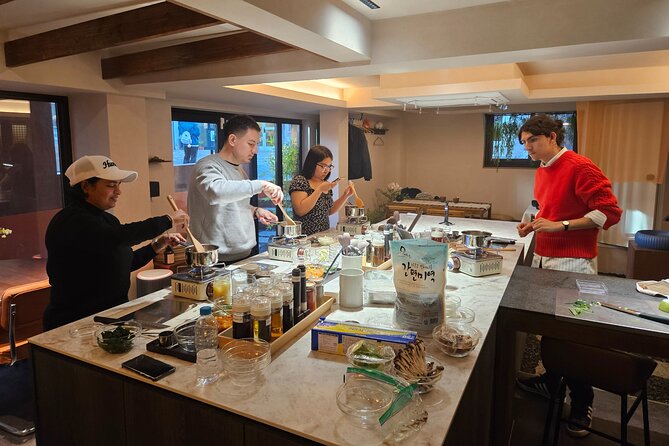
Come hungry and ready to cook. This three-hour Seoul class turns Korean dining into a hands-on meal, with four side dishes, bibimbap, soup or stew, dessert, and chef-served pork belly BBQ. I like the way the class focuses on the whole Korean table rather than one showy dish, and I especially like that you learn about sauces such as doenjang and gochujang while working with seasonal vegetables.
The calm, hanok-inspired studio gives the experience a sense of place, while the small maximum of eight people should make it easier to follow instructions. The main consideration is the price: at $89 per person, this is not a quick cooking lesson or a bargain meal. You are paying for several hours of instruction, many dishes, drinks, and a full cultural experience.
In This Review
- Key points to know before booking
- A Korean meal built around one table
- Entering Soop Table in Mapo-gu
- Seasonal tea and the first taste of Korean ingredients
- Four banchan, four small lessons
- Choosing your main dish and soup or stew
- Plating bibimbap your own way
- Pork belly BBQ and traditional liquor
- Making dessert together after the meal
- What the small group adds
- Is $89 a fair price in Seoul?
- Who should book this cooking class?
- Should you book Soop Table?
- FAQ
- Where does the Korean cooking class take place?
- How long does the experience last?
- How many people can join the class?
- Is the meeting point near public transportation?
- What food will I prepare?
- Is the BBQ included in the cooking?
- Can I choose my main dish?
- Is a drink included?
- What happens if I need to cancel?
Key points to know before booking
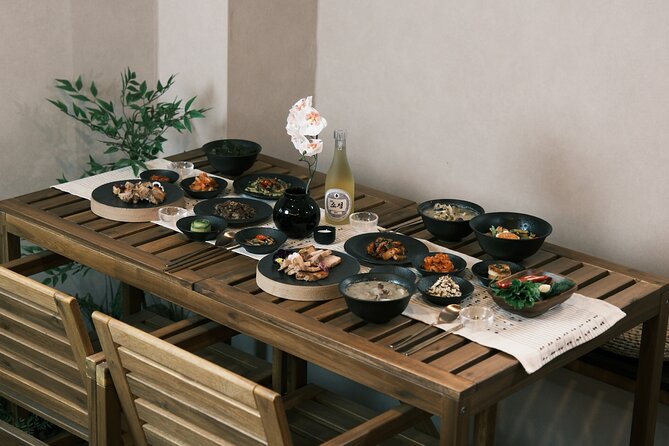
- A complete Korean table: You prepare banchan, bibimbap, soup or stew, a main dish, and dessert rather than focusing on one recipe.
- Chef-served BBQ: The grilled pork belly is prepared and served by the chef, giving you a break from cooking while you eat.
- A small class setting: The activity has a maximum of eight people, a useful size for hands-on instruction.
- A hanok-inspired studio: The cooking space includes traditional design touches, including the lava and slate walkway noted by Woody’s past visitors.
- Your own bibimbap presentation: You plate the bibimbap yourself, so appearance and arrangement are part of the lesson.
- A flexible meal choice: You choose one main dish and one soup or stew based on your taste.
A Korean meal built around one table
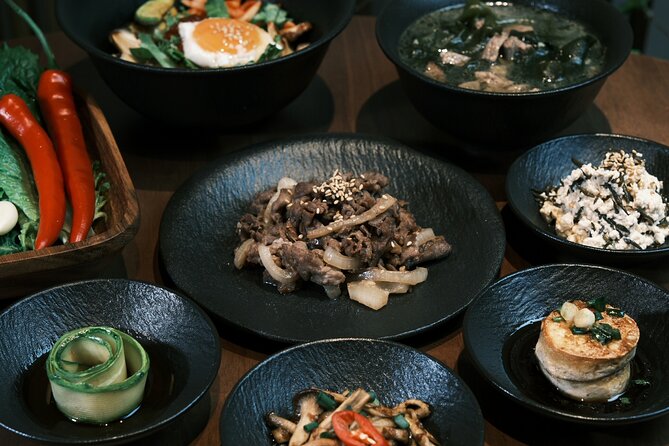
Many Korean meals arrive at the table all at once. Small side dishes sit beside soup, rice, vegetables, and a main dish, giving you different tastes and textures in every bite. This class is designed around that idea rather than a Western course-by-course meal.
That difference matters. You are not simply learning how to make one popular Korean dish and then leaving. You prepare several parts of a meal that work together. By the end, you can see how fermented pastes, seasonal produce, soup, side dishes, and grilled meat fit into the same dining culture.
I like this approach because it explains Korean food through balance. A small bowl of soup can soften a spicy dish. A vegetable side dish can add crunch or acidity. Bibimbap brings rice and toppings together, while BBQ adds a rich, smoky element.
The format also gives you a useful reference point for future meals in Korea. After this class, a table covered with banchan may make more sense. You will have handled the ingredients yourself, and you will understand that the side dishes are not just decoration.
More Cooking Classes in Seoul:
- Local Home Korean Cooking Class & Market Adventure in Seoul
★ 5.0 · 1,024 reviews - Master Korean traditional cooking with a Kimchi chef
★ 5.0 · 385 reviews - Seoul: Korean Cooking Class at a Local Home and Market Tour
★ 5.0 · 348 reviews
Entering Soop Table in Mapo-gu
The class meets at Soop Table: The Hansik Atelier, at 34 Donggyo-ro 46-gil, Mapo-gu, Seoul. The meeting point is near public transportation, and the activity finishes at the same location.
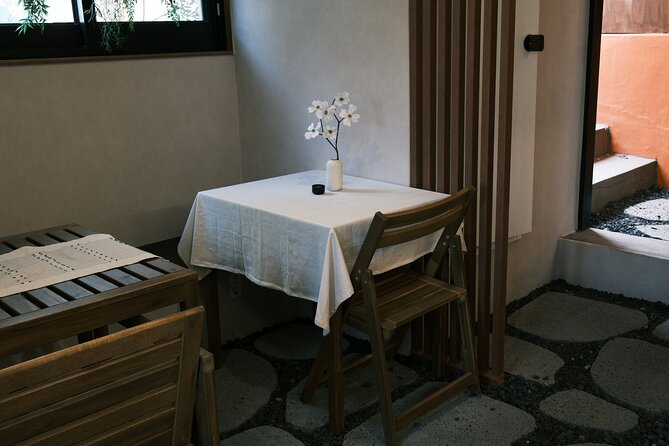
The studio is inspired by traditional Hanok architecture. That does not turn the class into a historical tour, but it does give the cooking room a stronger Korean character than a plain commercial kitchen. The building itself was a major part of the appeal for me, especially with details such as the lava and slate walkway.
The setting sounds carefully considered without being fussy. You are there to cook, not pose in a reconstructed palace or spend half the session waiting for a demonstration. The goal is a working kitchen with a traditional feel.
Because the meeting point is in Mapo-gu, allow enough time to find the building and arrive ready for the start. You receive confirmation when booking, and the class uses a mobile ticket, so keeping the booking details available on your phone is sensible.
Seasonal tea and the first taste of Korean ingredients
The class begins with seasonal Korean welcome tea. This is a quiet opening, but it sets the tone well. Instead of rushing directly to chopping vegetables, you start by hearing about Korean ingredients and the connection between food, nature, and season.
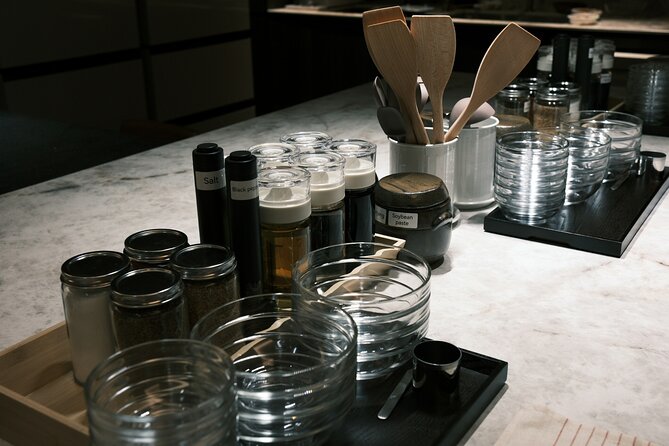
The class gives special attention to fermented pastes, including doenjang and gochujang. Doenjang has a savory, fermented flavor and is often used in soups, stews, and sauces. Gochujang brings heat, sweetness, and depth. These are not just random condiments added at the end. They help form the flavor base of Korean cooking.
Some of the pastes come from the chef’s hometown, which gives the ingredient discussion a personal touch. You get a little sense of how food connects to a particular place and family tradition without turning the class into a long lecture.
I would pay close attention here. If you enjoy recreating meals at home, the explanation of sauces may be more useful than a list of recipes. Korean food can look complicated when many dishes reach the table, but sauces and preparation methods help tie it together.
Four banchan, four small lessons
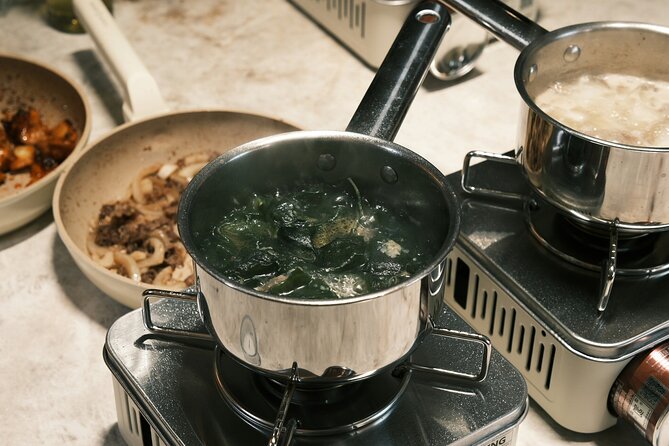
Next, you make four types of Korean side dishes using fresh seasonal vegetables. The exact vegetables can change with the season, but the class presents banchan as an important part of the meal rather than an afterthought.
This is one of the strongest parts of the experience. Four side dishes mean you practice more than one flavor style and more than one kind of preparation. You also learn why a Korean meal can feel varied even when the ingredients are simple.
The work is hands-on. You cook every dish yourself except the BBQ, so you should expect to chop, mix, season, and arrange food during the session. The class is not a demonstration where you sit back and watch the chef do everything.
That practical format is valuable for two reasons. First, you get a better feel for seasoning than you would by merely tasting finished food. Second, you can watch how separate small dishes become part of one meal. You may not leave with restaurant-level knife skills, but you should leave with a clearer sense of how Korean home cooking is assembled.
The four banchan also add time to the meal. If your main goal is eating quickly, this class will feel long. If you want to understand the work behind a Korean table, the extra preparation is exactly the point.
More workshops in Seoul:
- Yongpyong Ski Resort from Seoul with Optional Lesson and Packages
★ 5.0 · 217 reviews - Korean Cooking Class with Grocery Shopping at Seoul Local Market
★ 5.0 · 107 reviews - Royal Seoul Cooking Class in a 100-Year-Old Hanok
★ 5.0 · 81 reviews - Seoul : Taste of Korea, Authentic Home-Style Cooking Class
★ 5.0 · 64 reviews
Choosing your main dish and soup or stew
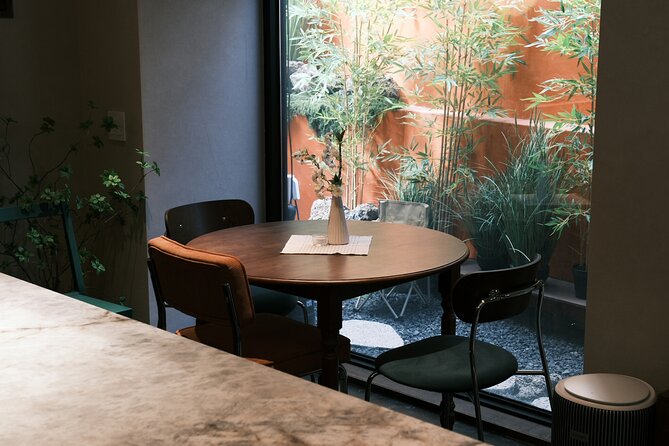
The menu includes one main dish and one soup or stew, chosen according to your taste. This choice gives the class a little flexibility without making the menu too loose to manage.
Soup and stew play different roles in Korean dining, and having one with your meal helps you understand that distinction through eating. A warm broth or stew provides contrast to the side dishes and bibimbap, while the main dish gives the table a central savory element.
The available choices are not listed in the supplied details, so you should confirm the options when booking or when the chef contacts you. Woody, the host, has reached out after booking to confirm dinner choices and timing, which is useful if you have a strong preference.
I appreciate that you choose based on taste. Some people want a mild meal, while others are eager for stronger fermented or spicy flavors. The class lets you take part in that decision instead of giving everyone the exact same plate.
Still, do not expect a fully custom menu. The experience offers a choice of one main dish and one soup or stew, not an open-ended cooking consultation. If you have serious dietary restrictions, ask before booking, since the supplied information does not list substitutions or allergy procedures.
Plating bibimbap your own way
Bibimbap is not only about mixing rice with toppings. The arrangement matters before you stir it all together. In this class, you plate your own bibimbap, making presentation part of the cooking lesson.
This is a nice contrast to the more practical work of preparing banchan. You are encouraged to consider color, spacing, and balance. The result is still your dish, not a plate finished by the chef for a photograph.
I like that the class treats presentation as part of Korean food culture. A full Korean table should look inviting before anyone picks up chopsticks. Learning to arrange your bibimbap helps explain why these meals can feel generous even when many individual portions are small.
Do not worry if your bowl does not look perfect. The useful lesson is seeing how separate ingredients can be arranged into a dish that feels orderly and appealing. You then mix it together and enjoy the flavors as intended.
Pork belly BBQ and traditional liquor
While you are eating, the chef serves grilled pork belly BBQ. This is the one major part of the meal you do not prepare yourself.
That choice makes sense. BBQ requires timing and attention, and having the chef handle it gives you a welcome pause after the earlier cooking. You can concentrate on eating the meal you made while enjoying a familiar Korean favorite prepared by someone with experience.
The class also includes a taste of traditional Korean liquor. The supplied details do not specify the type or amount, so consider it a small tasting rather than a drinking session. If you do not drink alcohol, ask the host about the arrangement before the class.
The BBQ adds value to the $89 price because you are getting more than the dishes you prepared. You receive a full meal with a separate grilled element, tea, dessert, and liquor tasting. The cost is still significant, but it is easier to justify if you want a long food experience rather than a basic recipe class.
Making dessert together after the meal
After the main meal, you make a popular Korean dessert together. The exact dessert is not specified, so you should not book this expecting one particular sweet.
Ending with dessert gives the class a natural finish. You have moved from raw ingredients to side dishes, soup, bibimbap, BBQ, and then a final shared preparation. It also keeps the focus on the full meal rather than treating dessert as something added from outside.
For me, this final step is another sign that the class aims to show the shape of Korean dining. You prepare, arrange, eat, and then finish with something sweet. It is a complete table experience, not simply a lesson in spicy sauces.
The pace should feel unhurried because the class lasts about three hours. That is good for anyone who wants time to ask questions and enjoy the meal. It may feel too slow if you are fitting in several Seoul sights on the same afternoon.
What the small group adds
The class accepts a maximum of eight people. That is a useful limit for a cooking activity. You are more likely to hear the instructions, see the chef’s demonstrations, and receive help while preparing your food than in a large group.
The host, Woody, has been praised for clear cooking instructions and for contacting people soon after booking to confirm meal choices and timing. Those are practical signs of an organized experience, especially when the class includes several dishes.
The atmosphere also appears to be part of the appeal. The studio has been described as delightful and distinctive, with the building and interior details adding to the experience. I would choose this class partly for the space, not just the menu.
A small group does not guarantee a private class, and the exact group size can vary up to the stated maximum. Still, eight is manageable. Couples, solo visitors, and small family groups should all find the format workable.
Is $89 a fair price in Seoul?
At $89 per person, the class sits well above the price of a casual Korean meal. You should not judge it as a restaurant dinner. You are paying for about three hours of instruction, ingredients for many dishes, a seasonal tea, chef-served pork belly BBQ, traditional liquor, dessert, and use of the cooking studio.
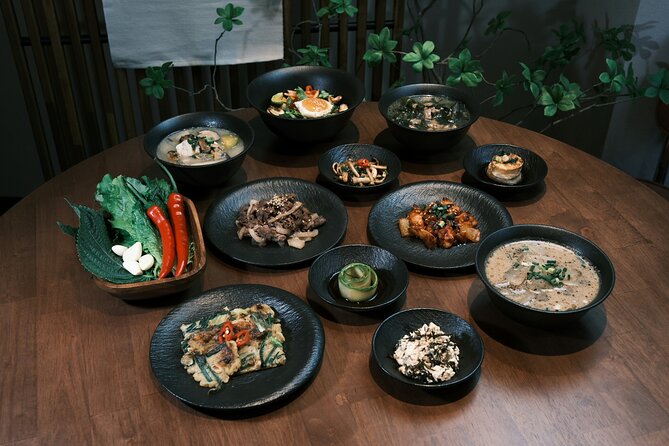
The value is strongest for people who want skills and context along with lunch or dinner. You prepare four banchan, a main dish, soup or stew, and bibimbap. That is a lot of food and activity for one sitting.
The value is weaker if you mainly want to sample Korean food. Seoul offers many cheaper ways to eat bibimbap, BBQ, and soup. This class earns its price through participation, presentation, the small group size, and the carefully designed setting.
I would also consider the time. Three hours is a large part of a sightseeing day, but that time is used for real cooking rather than a market walk or a short demonstration. The host does not run a commercial market tour. If you want market advice, the team can share trusted local suggestions, but the class itself stays in the kitchen.
Who should book this cooking class?
I would recommend it to you if you enjoy learning by doing. It suits people who want to understand Korean food beyond the famous dishes and who like sitting down to eat a meal they helped create.
It is also a good fit for couples. The setting, shared table, and dessert-making finish give the activity a relaxed social shape. The small group can work well for solo visitors too, since cooking provides an easy way to interact without needing a formal sightseeing agenda.
Families may enjoy it, but the supplied information does not state a minimum age or child policy. Check before booking if you are bringing children.
I would be more cautious if you dislike fermented flavors, spicy food, or a long kitchen session. The class includes gochujang, doenjang, several side dishes, and multiple stages of preparation. Ask about the menu if you need mild or adapted food.
The weather policy is worth noting in practical terms. The activity may be canceled for poor weather or if the minimum number of people is not reached. In either case, you are offered another date or experience, or a full refund. You can cancel for a full refund up to 24 hours before the start time, but cancellations or changes inside that window are not refunded or accepted.
Should you book Soop Table?
Book this class if you want a real Korean meal lesson, not a food tour with a few cooking minutes added. The best reasons are the full-table format, the hands-on preparation of almost every dish, the small group, Woody’s clear guidance, and the distinctive hanok-inspired studio.
Skip it if you only want a cheap meal or if your Seoul schedule is too tight for three hours. At $89, the class needs to be treated as both a meal and a cultural activity.
For the right person, it is a satisfying way to spend part of a day in Seoul. You leave with more than a full stomach. You gain a practical understanding of how Korean food is prepared, arranged, shared, and enjoyed at one table.
FAQ
Where does the Korean cooking class take place?
The class meets at Soop Table: The Hansik Atelier, located at 34 Donggyo-ro 46-gil, 1st floor, Mapo-gu, Seoul, South Korea.
How long does the experience last?
The class lasts approximately three hours.
How many people can join the class?
The activity has a maximum of eight participants.
Is the meeting point near public transportation?
Yes. The meeting point is described as being near public transportation.
What food will I prepare?
You prepare four Korean side dishes, one main dish, one soup or stew, and your own bibimbap. You also make a popular Korean dessert.
Is the BBQ included in the cooking?
The chef prepares and serves the grilled pork belly BBQ. You cook every other dish yourself according to the supplied details.
Can I choose my main dish?
Yes. You choose one main dish and one soup or stew based on your taste. The host may contact you after booking to confirm your choices and timing.
Is a drink included?
The class begins with seasonal Korean welcome tea and includes a taste of traditional liquor during the meal.
What happens if I need to cancel?
You can receive a full refund if you cancel at least 24 hours before the experience start time. Cancellations or changes made less than 24 hours before the start time are not refunded or accepted.
Just added in Seoul
- Seoul: Korean & English Language Exchange Global Party★ 5.0 · 28 reviews
- Your Personal Seoul Photographer!★ 4.1 · 15 reviews
- You’re Invited to Our Home in Seoul: The Only Cooking Class!★ 5.0 · 8 reviews
- From Seoul: Yongpyong Ski Day Tour with Transportation★ 4.9 · 40 reviews
- From Seoul: Hwacheon Ice Fishing and Lighting Festival Tour★ 4.5 · 4 reviews
- Seoul: Gangneung BTS K-Pop & K-Drama Filming Locations Tour★ 4.6 · 14 reviews
- Unique Native Experience : Han River Picnic, Board game, BBQ★ 5.0 · 3 reviews
- Seoul: Euljiro Gastroventure Tour★ 4.0 · 1 review
Cooking Classes, compared.
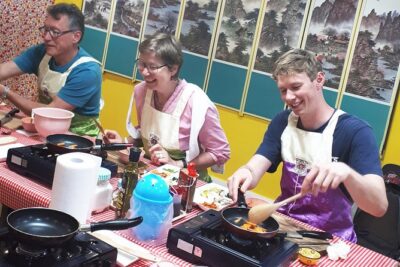
Local Home Korean Cooking Class & Market Adventure in Seoul
Read our review →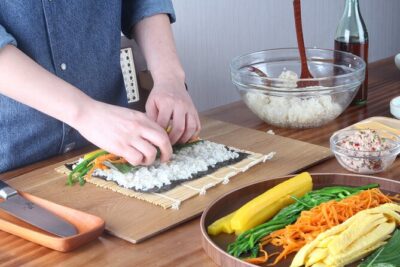
Master Korean traditional cooking with a Kimchi chef
Read our review →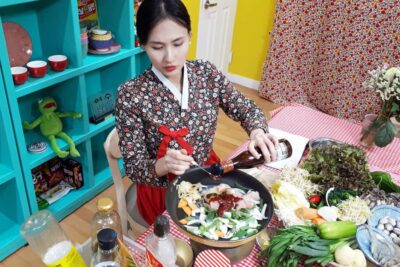
Korean Cooking Class at a Local Home and Market Tour
Read our review →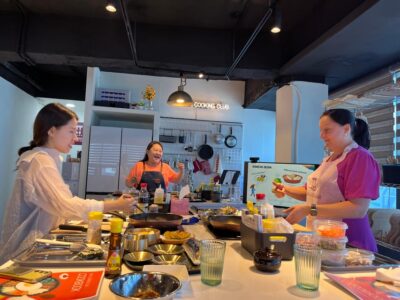
Korean Cooking Class with Grocery Shopping at Seoul Local Market
Read our review →
Korean Kimchi Making Day Experience with a Local Market Tour
Read our review →
Browse the lists this tour appears in