
Reviewed · PALACE TOURS
Layover tour to Gyeongbokgung-Folk Museum-Bukchon-Insadong
A six-hour layover can reveal a lot.
This private Seoul tour turns airport waiting time into a focused introduction to Korean culture, starting at Incheon Airport and ending at Seoul Station. I especially like the efficient AREX train plan, which connects your airport arrival and departure without leaving you to puzzle out Seoul’s rail system. I also like the strong cultural thread linking Gyeongbokgung Palace, the Folk Museum, Bukchon Hanok Village, and Insadong.
The main caution is timing. Six hours sounds generous, but the train ride takes about 1.5 hours in total, and the tour moves through several busy sights. You need a suitable layover, punctual flights, and a clear understanding that the tour ends at Seoul Station, where you continue to Incheon Airport on your own.
In This Review
- Key points at a glance
- Why this layover tour works
- Meeting at Incheon and taking the AREX train
- Gyeongbokgung Palace, the main event
- The National Folk Museum and ordinary Joseon life
- Bukchon Hanok Village between tradition and the city
- Insadong and Jogyesa Buddhist Temple
- What Paul Koo adds to the experience
- Is $254 good value for one person?
- Timing, trains, and the return to Incheon
- Who should book this experience?
- Should you book the Gyeongbokgung layover tour?
- FAQ
- Where does the tour start?
- Where does the tour end?
- How long is the tour?
- Which places are included?
- Is transportation included?
- Is the guide available in English?
- What is not included in the price?
Key points at a glance
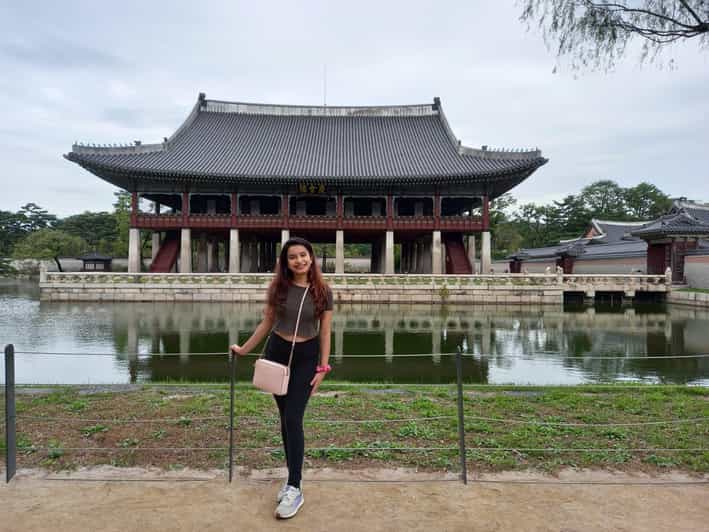
- Gyeongbokgung gets the most time: Expect a two-hour guided visit to Seoul’s most important Joseon-era palace.
- The guide adds cultural context: Paul Koo explains Confucian ideas and how they shaped Korean palace design and daily life.
- The airport connection is built in: AREX train transportation from Incheon to Seoul and back toward the airport is included.
- Bukchon joins old and new Seoul: Traditional hanok homes appear alongside city buildings, with N Seoul Tower visible in the distance.
- You visit four distinct cultural stops: Gyeongbokgung, the National Folk Museum, Bukchon, and Insadong, with Jogyesa Buddhist Temple included near Insadong.
- This is a private, English-language tour: The listed price is $254 for a group of up to one person, so confirm the exact rate if more than one person will join.
Why this layover tour works
Airport layovers often leave you with two poor choices: sit in the terminal, or attempt an ambitious city visit without knowing how long transport will take. This tour gives you a planned route, a local escort, and a clear return point at Seoul Station.
I like that the experience is not built around one photo stop. Gyeongbokgung introduces royal architecture, the Folk Museum shifts attention to ordinary life, Bukchon shows traditional housing in a modern city, and Insadong brings you into a neighborhood associated with Korean arts and culture. Jogyesa adds a Buddhist setting to a tour otherwise centered on Joseon and Confucian traditions.
The itinerary is still tight. The train portion takes around 1.5 hours, followed by two hours at Gyeongbokgung, 30 minutes at the Folk Museum, 40 minutes in Bukchon, one hour in Insadong, and another 30 minutes of public transportation. Those listed times fill the six-hour window closely, so this is best approached as a guided overview, not a leisurely day in Seoul.
The experience is especially useful if you have never used Seoul’s public transportation. Your guide meets you at Incheon Airport, takes you to Seoul Station, helps arrange the return train ticket, and escorts you back to the station after sightseeing. You still need to board the train to Incheon yourself at the end.
More Museum Tours in Seoul
- Seoul: War Memorial of Korea Private Guided Museum Tour
★ 4.9 · 29 reviews - DMZ Tour + The War Memorial of Korea Museum
★ 5.0 · 28 reviews - Color Pool Museum
★ 4.0 · 22 reviews
Meeting at Incheon and taking the AREX train
The tour begins at Incheon International Airport. Your exact meeting time can be chosen after booking, and advance confirmation with the guide is requested.
From the airport, you travel to Seoul Station by AREX. Depending on timing, you may use the express train or the normal train. The express service takes a designated seat and runs roughly once an hour. It offers a more comfortable ride, but it can sell out during peak periods.
The normal train takes about one hour to Seoul, with an estimated difference of around 20 minutes compared with the express option. The practical rule is sensible: if waiting for the express would take more than 20 minutes, the guide may choose the normal train instead.
That decision matters on a layover. A train with a slightly longer ride is often better than standing around on a platform while the clock moves. Transportation from the airport through the tour and back toward Incheon is included, along with the return AREX ticket arrangement.
One detail deserves attention before you book. The experience description says the tour finishes at Seoul Station, where you take the train to Incheon Airport. Another meeting-point note describes the activity as ending back at the meeting point, but the detailed plan clearly says your guide escorts you to Seoul Station and the tour ends there. Confirm this with Paul Koo before departure so you know exactly where the guided portion stops.
Gyeongbokgung Palace, the main event
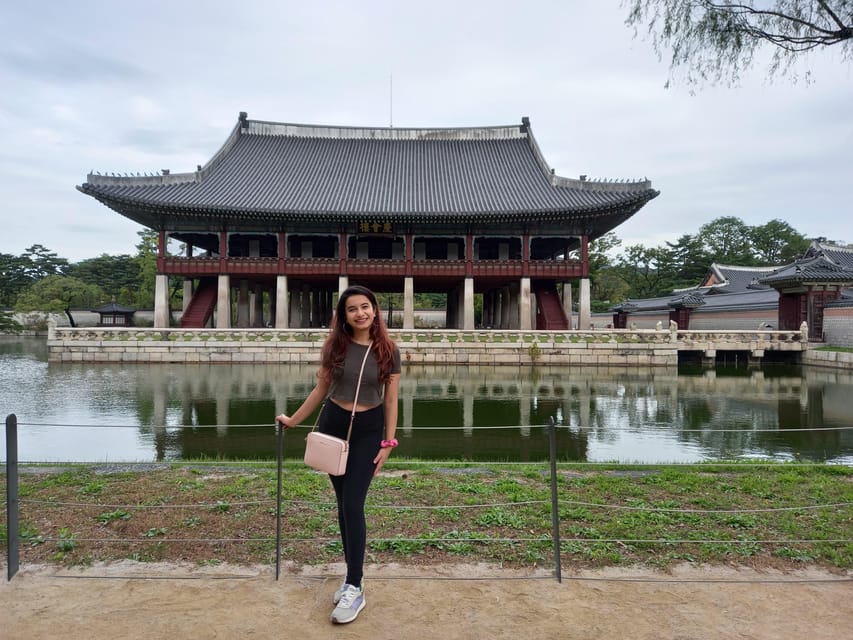
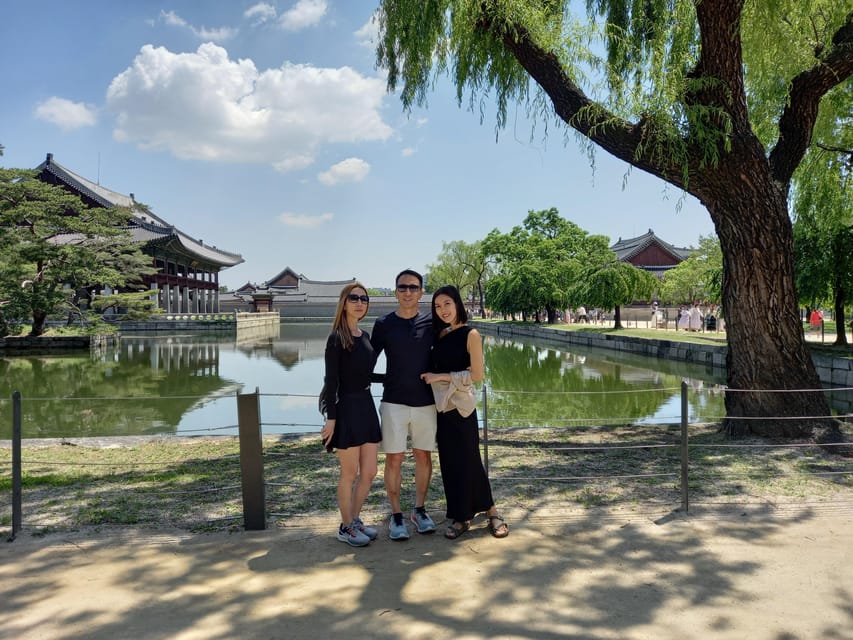
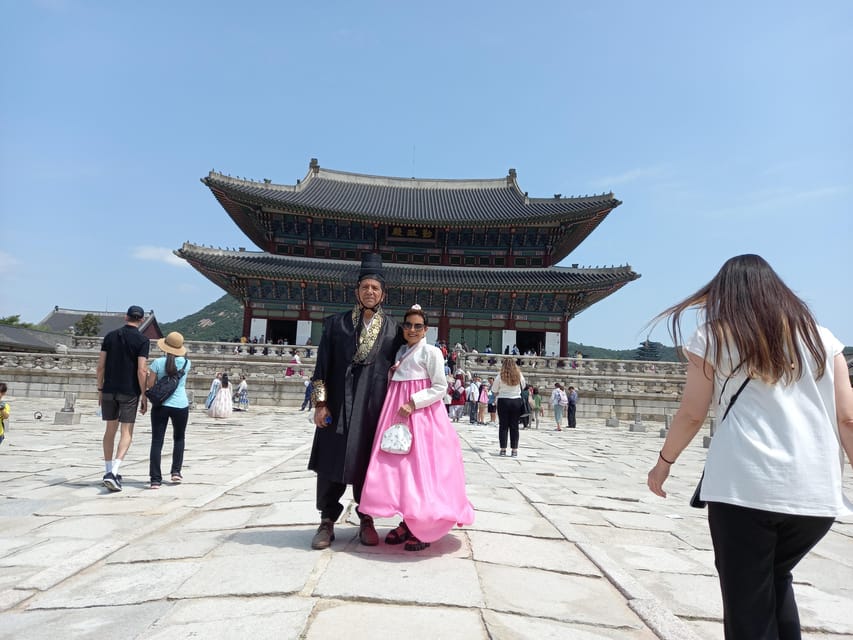
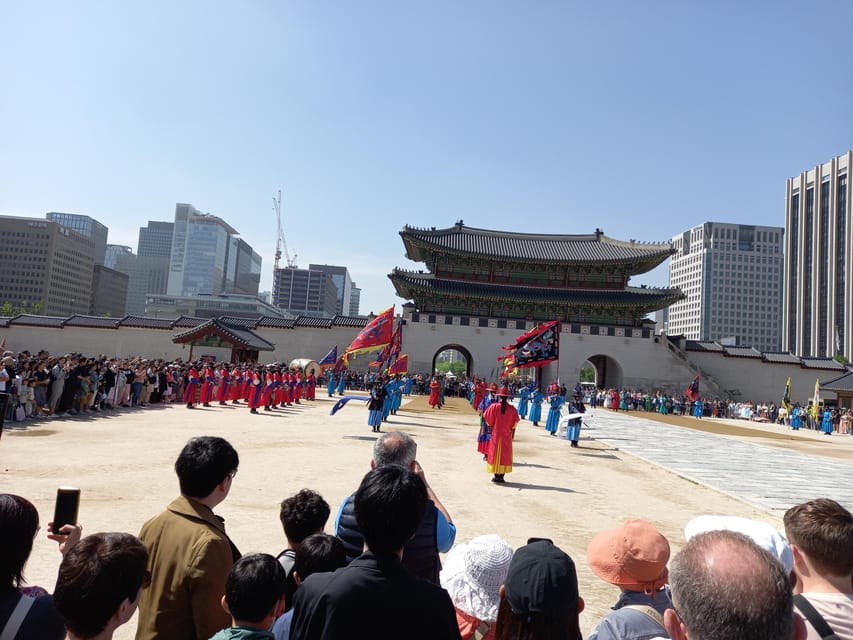
Gyeongbokgung receives about two hours, making it the clear centerpiece of the day. Built in 1395 as the main palace of the Joseon Dynasty, it was the first and largest of Seoul’s major royal palaces.
The appeal here is not just size. The palace was built on flat ground according to traditional palace planning, and its buildings express the Confucian order that shaped Joseon government and society. That gives the visit a useful theme: architecture is not merely decoration. It reflects how people understood power, family, ceremony, and the proper structure of society.
I value the guide’s role most at this stop. Without context, palace gates, courtyards, roofs, and painted details can blur together. With an explanation of Joseon Confucianism and the meaning behind the layout, you can better understand why Gyeongbokgung represents Korean cultural identity.
Paul Koo has studied Korean culture and history for more than 10 years, according to the supplied information, and his explanations of Confucianism are a major strength of the experience. His approach appears to go beyond naming buildings. He helps connect the palace to broader Korean traditions, which gives the architecture more meaning.
You should expect walking and a steady pace. The two-hour visit is long enough for a serious introduction, but not long enough to explore every corner at leisure. If you want extensive photography, quiet time in each courtyard, or a full palace-by-palace study of Seoul, you will need a separate visit.
The National Folk Museum and ordinary Joseon life
The National Folk Museum of Korea follows with a 30-minute guided visit. This is a short stop, but it prevents the tour from focusing only on kings, court buildings, and official ceremony.
The museum presents the lives of ordinary people through displays about seasonal activities and folk culture. It also follows the human life cycle, from birth and childhood through marriage, aging, illness, treatment, and death. Ceremonies and commemorative events help show how family and community life worked during the Joseon period.
That change in focus is valuable. Gyeongbokgung explains the state and royal order. The Folk Museum helps you think about the people who lived within that society. Together, the two stops offer a more complete picture of traditional Korea.
Thirty minutes will provide an introduction rather than a full museum visit. If exhibitions interest you, you may wish you had more time. Still, its location fits neatly into the palace visit, and the stop adds substance without requiring another long transfer.
More Palace Tours in Seoul:
- Seoul: Gyeongbok Palace, Bukchon Village, and Gwangjang Tour
★ 4.9 · 2,321 reviews - Best Seoul City Tour (Gyeongbokgung Palace,Insadong,Namsan Tower)
★ 5.0 · 1,647 reviews - Small-Group Royal Palace and Seoul City Tour (hotel pick-up)
★ 5.0 · 1,474 reviews - Seoul City Sightseeing Tour Including Gyeongbokgung Palace, N Seoul Tower, and Namsangol Hanok Village
★ 5.0 · 1,423 reviews
Bukchon Hanok Village between tradition and the city
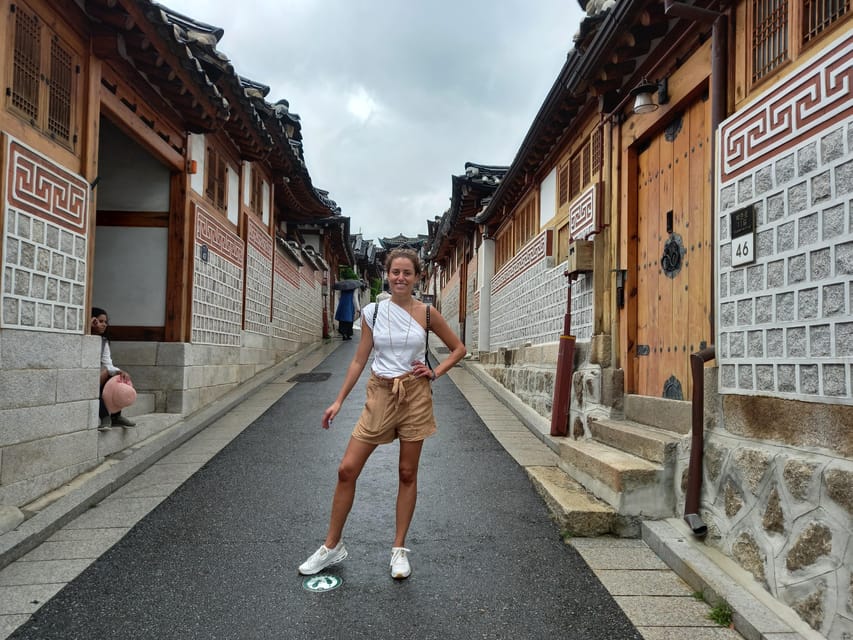
Bukchon Hanok Village receives about 40 minutes. It is known for its cluster of roughly 1,000 hanok, or traditional Korean houses.
Bukchon is different from Gyeongbokgung. The palace was planned as a royal compound, while Bukchon shows a residential neighborhood. The narrow streets and traditional homes give you a sense of how older urban Korea looked, even as modern Seoul rises around it.
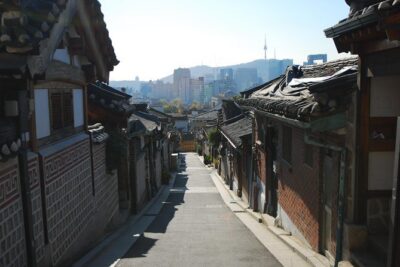
One of the most appealing details is the contrast between old and new. From Bukchon, you may see traditional rooftops set against modern buildings and N Seoul Tower in the distance. That combination makes the neighborhood feel connected to present-day Seoul rather than preserved in isolation.
The drawback is the short visit. Forty minutes allows for a guided walk and photographs, but not a relaxed wander through every lane. Because Bukchon is a real residential area, you should also follow your guide’s instructions and keep noise low near homes.
This stop suits you if you want a clear visual link between traditional architecture and modern Seoul. It is less suited to anyone seeking a long café break or an unhurried shopping session.
Insadong and Jogyesa Buddhist Temple
The Insadong portion lasts about one hour. Insadong is associated with Korean art, traditional culture, and shops, making it a natural final neighborhood stop after the palace and hanok village.
The tour also includes Jogyesa Buddhist Temple, located near Gyeongbokgung and in the Insadong area. It is a small temple, but it serves as the headquarters of Korea’s Buddhist organization. That gives the stop importance beyond its size.
Jogyesa provides a useful contrast with Gyeongbokgung. The palace reflects Joseon Confucian government, while the temple represents Korea’s Buddhist tradition. You get both parts of the cultural story without traveling far across the city.
The one-hour Insadong visit may include time to look around the street and take in the area’s traditional character. Food and beverages are not included, so budget separately if you want a snack or meal. The supplied information also notes that the guide may introduce you to authentic street food, but purchases remain your responsibility.
What Paul Koo adds to the experience
A private guide can make a major difference on a short layover. You are not simply being dropped at a palace with a map. Paul meets you at the airport, handles the route into Seoul, explains the cultural background, and helps you return to the correct station.
The strongest praise attached to this experience concerns Paul’s explanations, kindness, and practical help. He is described as making first-time travel in Korea feel comfortable and easy. His understanding of Confucianism is particularly useful at Gyeongbokgung, where the meaning of the buildings depends heavily on historical and social context.
Another personal touch is photography. Paul has taken pictures for clients at good photo locations and sent the images afterward at no extra charge. This is not listed as a formal inclusion, so you should treat it as a possible bonus rather than a guaranteed service.
The private format also gives you more room to ask questions than a large group tour would. Still, the six-hour schedule means the guide must keep the group moving. The value here is focused interpretation and transport help, not unlimited time at each stop.
Is $254 good value for one person?
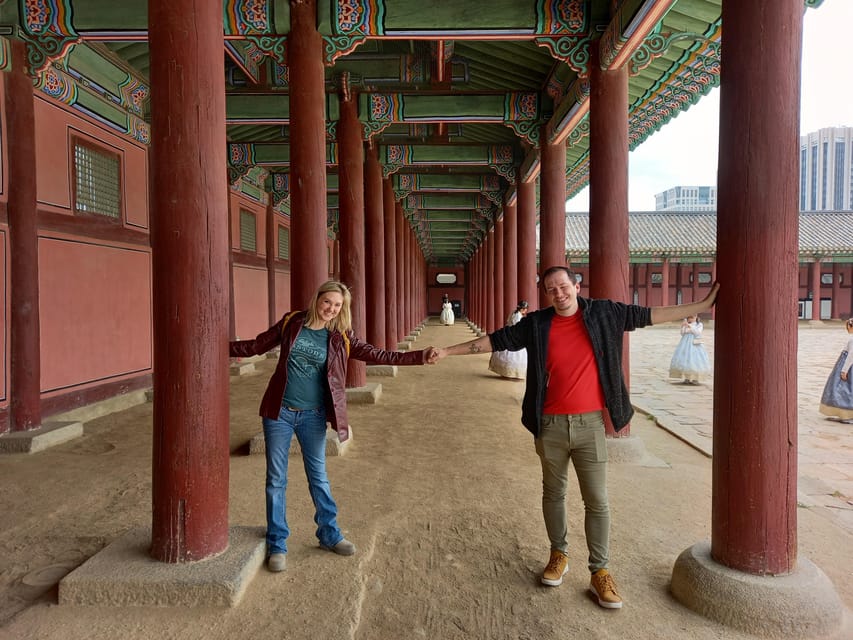
The listed price is $254 per group of up to one person. That wording is unusual, so you should check the final price if you are booking for two or more people.
For a solo visitor, the price is not cheap. You are paying for six hours of private guiding, airport pickup, transport from Incheon to Seoul, the return route toward Incheon, the palace admission fee, and help with a complicated layover schedule. The cost makes more sense if you place a high value on avoiding transport mistakes and getting cultural explanation in English.
The price is less attractive if you are comfortable navigating Seoul alone, have a long layover, and mainly want to see Gyeongbokgung without a guide. In that case, independent transport and individual admission may cost less, though you would lose the structured route and the guide’s background information.
For couples or small private parties, confirm how the rate changes. A private guide shared by several people may offer better value per person, but the supplied pricing only specifies a group of up to one.
Timing, trains, and the return to Incheon
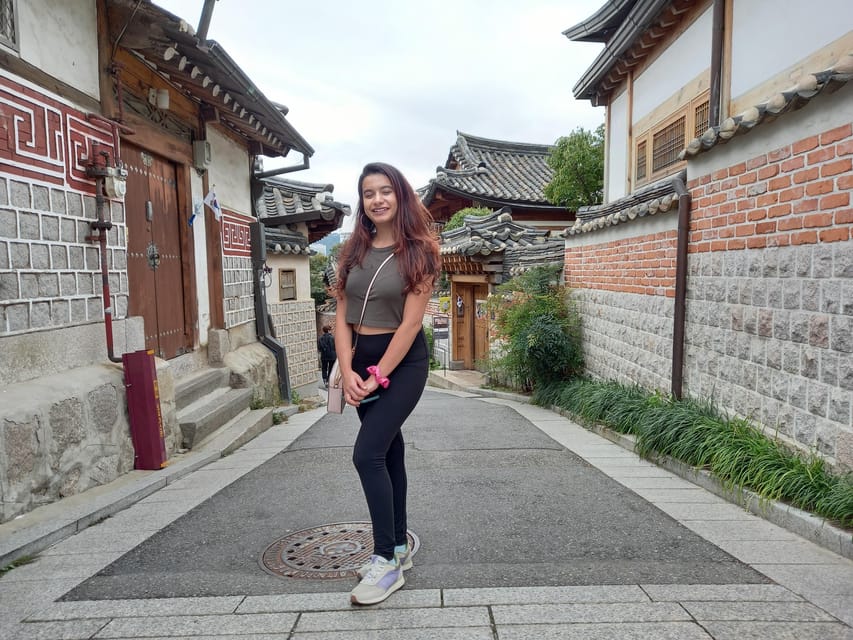
A six-hour schedule requires discipline. If you meet at Incheon at 7 a.m., the guided portion is expected to finish around 1 p.m. at Seoul Station.
The express AREX train uses assigned seats and generally runs about once per hour. In busy periods, it may sell out, which is why advance ticket planning matters. The guide handles the transportation arrangements described in the tour, but you should still provide accurate flight and layover details when booking.
The return is not an airport drop-off with your guide beside you all the way to the terminal. Instead, your guide escorts you to Seoul Station, and you leave on the train for Incheon Airport. Allow enough time after arrival at Incheon for airport procedures and your onward flight. The tour cannot control train delays, airport lines, or flight changes.
Free cancellation is available up to 24 hours before the start for a full refund, and you can reserve now and pay later. Insurance and food are not included.
Who should book this experience?
I would choose this tour if you have a substantial layover, want a private English-language guide, and care about understanding what you are seeing rather than collecting quick photographs. It is also a good fit if Seoul’s rail system feels intimidating during a tight connection.
The tour suits first-time visitors especially well. You get a clear introduction to palace architecture, Joseon social values, everyday folk life, traditional housing, Buddhist practice, and Insadong culture in one route.
You may want a different plan if your layover is short or your flight schedule is uncertain. The schedule leaves little spare time, and the tour ends at Seoul Station rather than taking you directly through the airport terminal. It also will not satisfy you if you want extensive shopping, a long restaurant meal, or a slow palace visit.
Should you book the Gyeongbokgung layover tour?
Book it if you want your first hours in Korea to have structure and meaning. The best part is the link between the sights: Gyeongbokgung explains Joseon ideals, the Folk Museum shows daily life, Bukchon presents traditional homes, and Jogyesa brings in Buddhism. Paul Koo’s cultural explanations and airport-to-station escort add real value.
Skip it if you have less than six hours, dislike fixed schedules, or are happy to explore independently. Before paying, confirm the exact meeting time, the number of people covered by the $254 rate, and the return train plan. With those details settled, this is a strong way to turn an airport layover into a well-organized first look at Seoul.
FAQ
Where does the tour start?
The tour starts at Incheon International Airport, where the English-speaking guide meets you.
Where does the tour end?
The guided tour ends at Seoul Station. Your guide escorts you there so you can take the train back to Incheon Airport.
How long is the tour?
The full experience lasts six hours, including transportation between Incheon Airport, Seoul, and Seoul Station.
Which places are included?
The route includes Gyeongbokgung Palace, the National Folk Museum of Korea, Bukchon Hanok Village, Insadong, and Jogyesa Buddhist Temple.
Is transportation included?
Yes. Transportation from Incheon Airport to Seoul, between the tour stops, and from the tour back to Seoul Station for the return journey toward Incheon is included. The route may use the AREX express or normal train.
Is the guide available in English?
Yes. The tour has a live English-speaking guide, and the group is private.
What is not included in the price?
Food, drinks, and travel insurance are not included. Gyeongbokgung admission and the specified transportation costs are included.
More Hanok Village Tours in Seoul
- Seoul: Gyeongbok Palace, Bukchon Village, and Gwangjang Tour
★ 5.0 · 1,044 reviews - Seoul: Gyeongbok Palace and Bukchon Hanok Walking Tour
★ 4.8 · 157 reviews - Best Walking Tour to Gyeongbok Palace Bukchon Hanok Village
★ 5.0 · 138 reviews - Royal Seoul Cooking Class in a 100-Year-Old Hanok
★ 5.0 · 81 reviews
Just added in Seoul
- Seoul: Korean & English Language Exchange Global Party★ 5.0 · 28 reviews
- Your Personal Seoul Photographer!★ 4.1 · 15 reviews
- You’re Invited to Our Home in Seoul: The Only Cooking Class!★ 5.0 · 8 reviews
- From Seoul: Yongpyong Ski Day Tour with Transportation★ 4.9 · 40 reviews
- From Seoul: Hwacheon Ice Fishing and Lighting Festival Tour★ 4.5 · 4 reviews
- Seoul: Gangneung BTS K-Pop & K-Drama Filming Locations Tour★ 4.6 · 14 reviews
- Unique Native Experience : Han River Picnic, Board game, BBQ★ 5.0 · 3 reviews
- Seoul: Euljiro Gastroventure Tour★ 4.0 · 1 review
Palace Tours, compared.
Gyeongbok Palace, Bukchon Village, and Gwangjang Tour
Read our review →
Best Seoul City Tour (Gyeongbokgung Palace,Insadong,Namsan Tower)
Read our review →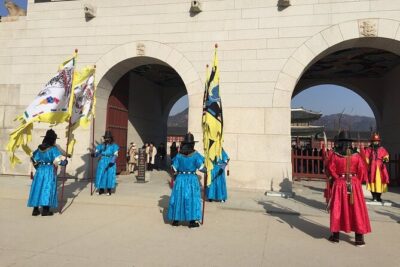
Small-Group Royal Palace and Seoul City Tour (hotel pick-up)
Read our review →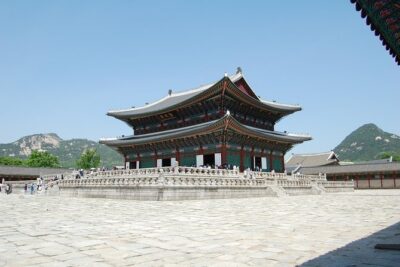
Seoul City Sightseeing Tour Including Gyeongbokgung Palace, N Seoul Tower, and Namsangol Hanok Village
Read our review →Gyeongbok Palace, Bukchon Village, and Gwangjang Tour
Read our review →
Seoul Highlights: Gyeongbok Palace, Insadong & N Seoul Tower
Read our review →
Seoul City Half Day Tour-Gyeongbok Palace Guard Changing Ceremony
Read our review →Browse the lists this tour appears in