
Reviewed · TRADITIONAL CRAFT WORKSHOPS
Learn and Make Your Very Own Craft Makgeolli
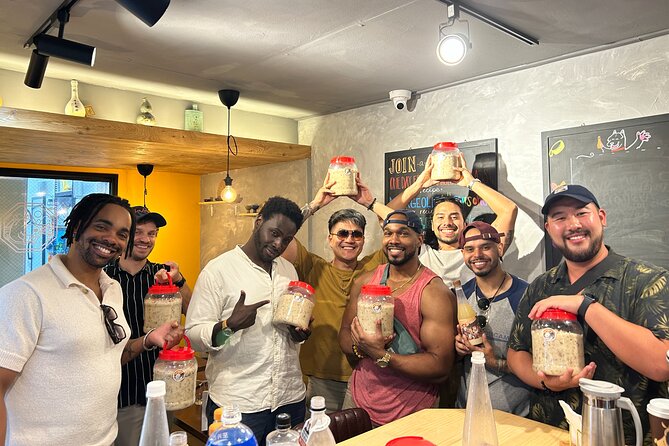
Makgeolli tastes better when you make it. This two-hour class at Baekusaeng Makgeolli gives you more than a drink to sample: you handle the ingredients, learn how fermentation works, and take home about 1.2 liters of makgeolli to finish fermenting yourself. I especially like the generous tasting session and the practical, hands-on brewing work led by Joe, the friendly instructor. The main drawback is that the class is built around fermentation, so your take-home batch is not a finished drink you simply open that night.
You meet at 346-35 Ahyeon-dong in Seoul’s Mapo-gu district and return to the same spot. The class is limited to 15 people, which keeps the lesson personal without making it feel like a private appointment. The $70.70 price is fair if you value instruction, tastings, and a take-home project, but it may feel high if you only want to drink makgeolli without learning how it is made.
In This Review
- What makes this makgeolli class worth your time
- Starting in Ahyeon-dong, with makgeolli on the table
- The tasting comes before the brewing
- Learning the ingredients, tools, nuruk, and yeast
- Making your own batch by hand
- Fermentation continues after you leave Seoul
- A small class with a warm, social feel
- What $70.70 includes in real value
- Who should book this class?
- Practical details to know before booking
- Should you book Baekusaeng Makgeolli?
- FAQ
- Where does the makgeolli class take place?
- Where does the class end?
- How long does the experience last?
- How much does the class cost?
- How far in advance is the class usually booked?
- How much makgeolli do I take home?
- Is the makgeolli ready to drink at the end of class?
- How many people can join the class?
- Is a mobile ticket available?
- What is the cancellation policy?
What makes this makgeolli class worth your time
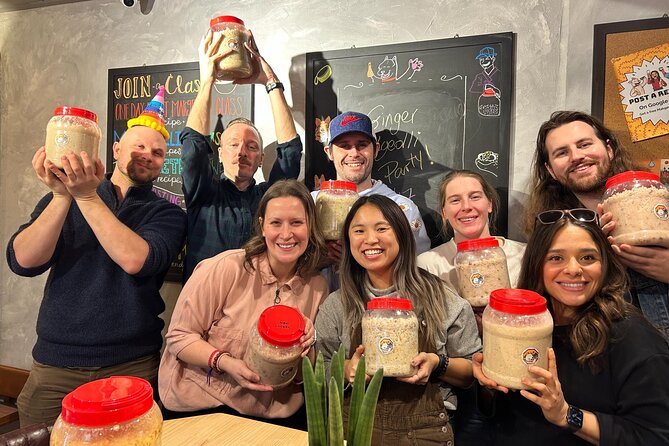
- You make approximately 1.2 liters of makgeolli to continue fermenting at home.
- Joe teaches the full process, including ingredients, tools, nuruk, yeast, filtering, and conditioning.
- The tasting flight shows how varied makgeolli can be, from differences in sweetness and acidity to texture and aroma.
- The class uses traditional methods and real ingredients, rather than reducing the process to a quick demonstration.
- You work with your hands, making this a better choice for curious participants than a simple brewery visit.
- The group size is capped at 15 people, giving you a reasonable chance to ask questions and get involved.
Starting in Ahyeon-dong, with makgeolli on the table
The class begins at Baekusaeng Makgeolli in Ahyeon-dong, a part of Seoul that gives the lesson a local setting rather than a polished tourist attraction. The space has been described as a small, cozy makgeolli bar and microbrewery connected with a traditional Korean market setting. That matters because the class feels tied to the drink’s everyday culture, not separated from it in a generic cooking studio.
The shop is small, so expect an intimate room rather than a large classroom. A group of up to 15 people can fit, but the setting will feel close and social. That can be a plus if you like meeting people over food and drink. If you prefer a quiet, private lesson, the maximum group size is worth noting.
Finding the address may take care. One participant became lost despite receiving clear directions, but Joe patiently helped them locate the shop. I would save the meeting address before leaving your hotel and allow extra time for the journey. The activity begins and ends at the same location, so you do not need to arrange a second pickup point.
More soju and makgeolli tastings in Seoul:
- Soju Tasting at Distillery – story of 3 pigs
★ 5.0 · 166 reviews - Traditional Soju Class and Makgeolli Tasting in Seoul
★ 5.0 · 35 reviews - Makgeolli Brewing Class
★ 5.0 · 21 reviews
The tasting comes before the brewing
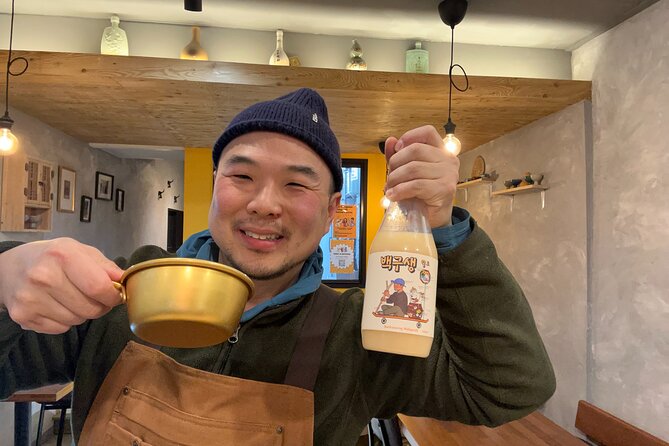
The first part of the class introduces makgeolli through tasting. You sample selected varieties while learning to notice aroma, sweetness, acidity, and texture. This is not just a warm-up with drinks. It gives you a useful reference point before you start making your own batch.
Many people know makgeolli as the milky, lightly sweet rice drink served in Korean restaurants. The tasting helps you see how broad the category can be. Different brewing methods and ingredients can produce very different results. Some versions may seem soft and sweet, while others can have more acidity, a stronger fermented character, or a thicker mouthfeel.
I like this structure because it gives the lesson a clear purpose. Instead of hearing that fermentation changes flavor in theory, you can taste those changes directly. It also helps explain why two bottles labeled makgeolli may not taste alike.
The drink service is generous. One class participant described the sampling as practically unlimited, while the official description presents it as a thoughtful selection of makgeolli. I would plan to taste rather than drink quickly. The class lasts about two hours, and the goal is to understand the differences between the samples, not simply to get through as many glasses as possible.
If you do not drink alcohol, this class may not suit you. The tasting is a central part of the lesson, not an optional extra. The supplied information does not give an alcohol-free alternative.
Learning the ingredients, tools, nuruk, and yeast
After the tasting, Joe explains what goes into makgeolli and what each part does. You learn about the ingredients and equipment used in both traditional and modern brewing. The emphasis is on methods you can understand and repeat at home.
A key term is nuruk, a traditional Korean fermentation starter that supports the brewing process. The class also covers yeast activity and how fermentation develops. You do not need to arrive with brewing experience. The lesson is designed to give beginners enough understanding to continue making makgeolli independently after returning home.
That practical focus is one of the strongest reasons to book. A demonstration can be entertaining, but it often leaves you with little idea what to do next. Here, the aim is to help you become a brewer, not just an audience member. Joe answers questions as he works, and he has also used a whiteboard to write Korean terms for students who needed help hearing or remembering them.
English speakers should find the instruction easy to follow. One participant described Joe’s English as fully native and particularly clear. A Japanese-speaking couple also received help through Google Translate when needed. You should still be prepared to watch closely and copy the process, since the class includes plenty of practical work.
Making your own batch by hand
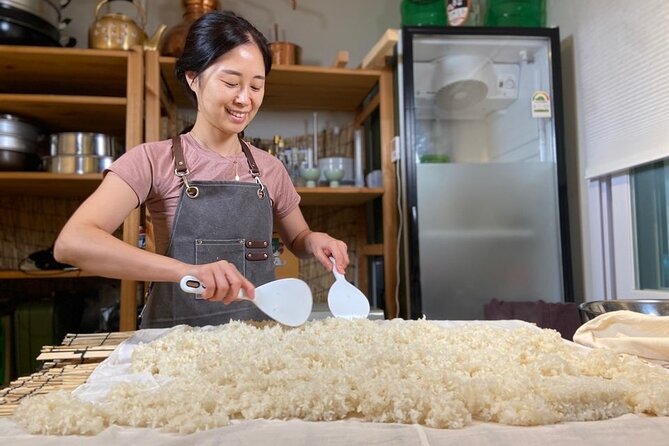
The central portion of the experience is hands-on brewing. You do not merely watch Joe stir a mixture behind a counter. You take part in preparing the makgeolli, working with the ingredients and following the steps that lead to fermentation.
The exact recipe may vary with the class, and the available information does not promise a particular flavor such as pumpkin or fruit. What is clear is that you make a batch using fresh, real ingredients and traditional methods. The process is not presented as a shortcut or a staged photo opportunity.
This is where the class earns much of its value. You feel the texture of the mixture and see how the separate ingredients become a fermenting base. Even if you never brew again, that physical work makes the drink easier to understand. If you do continue at home, you leave with a better idea of what to look for.
Joe’s teaching style also seems suited to people who learn by doing. He is described as organized, patient, and willing to answer questions at each stage. One participant who attended alone received a one-on-one lesson and was able to sample several types while discussing how different brewing methods affect the final drink.
The class does not promise that you will produce a finished, restaurant-ready bottle during the two-hour session. Instead, you take home the makgeolli at an earlier stage and continue the fermentation yourself. That is an important distinction. You are taking home a small brewing project, not simply a souvenir drink.
More traditional craft workshops in Seoul:
- Carve Your Personal Korean Stone Seal with Jeongju in Insadong
★ 5.0 · 134 reviews - Handmade Noodles with Korean Grandma
★ 5.0 · 53 reviews - Write a Meaningful Korean Calligraphy Scroll in Insadong
★ 5.0 · 36 reviews - Traditional Korean Bookbinding Experience in Seoul, Hongdae
★ 5.0 · 16 reviews
Fermentation continues after you leave Seoul
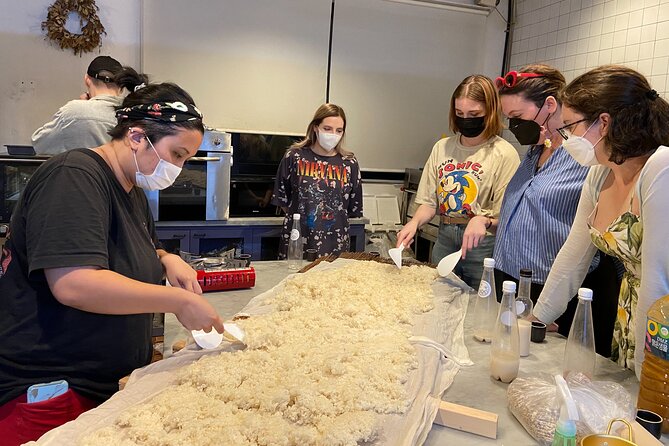
You take home approximately 1.2 liters of your own makgeolli to ferment. This is the feature that changes the class from a tasting into a longer experience. The lesson ends, but your batch still needs attention.
The class covers fermentation, including yeast and nuruk activity, as well as filtering and conditioning techniques. Those subjects help you understand what happens after the hands-on portion. You are not expected to treat the take-home batch as a sealed souvenir. You are learning how to continue the process.
This is useful for two reasons. First, it gives you a reason to remember the lesson after your holiday. Second, it gives you a starting point for brewing at home. Baekusaeng Makgeolli’s wider goal is to help students keep brewing in their own countries, and the class is designed around that long-term idea.
You should consider the practical side before booking. The supplied information does not spell out the exact home instructions, fermentation time, storage requirements, or airport transport rules. Ask Joe about those points during the class, especially if you plan to travel with the batch or continue brewing after your trip.
The take-home portion may also be less convenient for someone flying home immediately. A fermenting container requires care, and the class does not state that it is suitable for checked or carry-on luggage. If you are staying in Seoul for a while, the project may be easier to manage. If you leave Korea the next morning, ask for clear advice before booking.
A small class with a warm, social feel
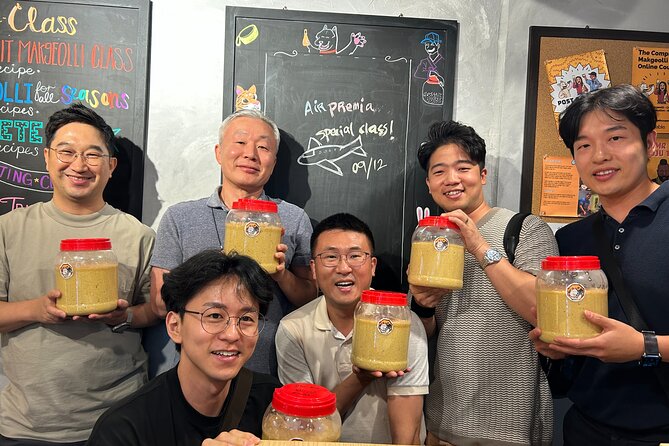
The room and group size shape the experience. With no more than 15 participants, you are likely to work near other people and share the tasting table. That creates an easy social rhythm: listen, taste, ask questions, then work together.
Several participants found the class especially enjoyable as a first-evening activity in Seoul. It offers a gentle introduction to Korean food culture without requiring a full day away from the city. The two-hour length also makes it easy to fit around other plans.
The small venue has limits. You should not expect a grand brewery tour, a large production floor, or a formal museum-style presentation. The appeal is the close instruction and direct participation. If you want industrial brewing equipment and a broad facility to explore, this is not that kind of visit.
The atmosphere has received strong praise. The space is described as quaint, cozy, clean, and similar to a small microbrewery. That combination works well for a class about a drink that is often enjoyed in informal settings.
What $70.70 includes in real value
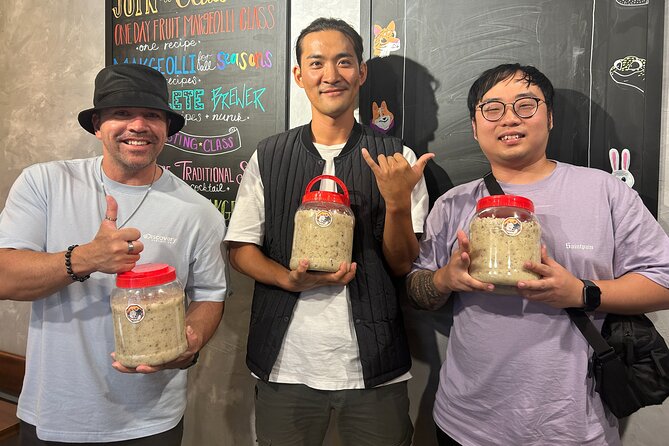
At $70.70 per person, this is more expensive than buying a few bottles of makgeolli at a supermarket or ordering a serving with dinner. The comparison is not quite fair, though. You are paying for instruction, a tasting selection, practical work, and about 1.2 liters of your own fermenting batch.
I see the price as reasonable for people who want a cultural activity with something to take home and continue. The tasting alone would not justify the cost for me. The hands-on brewing and the chance to ask Joe detailed questions make the difference.
The class also offers value if you are curious about brewing but do not know where to start. You learn the basic ingredients, the role of nuruk and yeast, and the stages of fermentation in one sitting. That foundation can save you from buying supplies without understanding how they work.
The price is less attractive if you are not interested in alcohol, do not want to handle ingredients, or cannot care for the fermenting batch afterward. In that case, a food market visit or a simple makgeolli tasting may suit you better.
The experience is booked an average of 23 days ahead, so I would not treat it as a last-minute filler activity. That booking pattern suggests you should reserve it once your Seoul dates are firm, especially if you want a particular day.
Who should book this class?
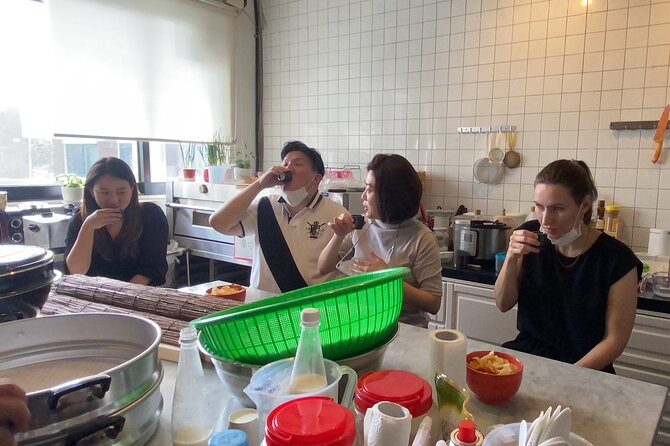
I would recommend Baekusaeng Makgeolli to you if you enjoy food workshops, fermentation, Korean culture, or activities that continue after the tour. It is also a good fit if you like asking questions and prefer making something over watching a demonstration.
Solo participants should feel comfortable booking. Joe has hosted people attending alone and adjusted his attention to their needs. Couples and small groups will also find the format easy, while the group limit gives larger parties a defined maximum.
The class suits beginners because you do not need prior brewing knowledge. It also has enough technical content to interest someone who already makes fermented drinks and wants to compare Korean methods with their own.
I would be more cautious if you want a finished bottle at the end, dislike alcohol tastings, or have no way to continue fermenting the batch. The class asks for curiosity and a little patience. Makgeolli is a living drink, and the take-home part reflects that.
Practical details to know before booking
The experience lasts about two hours and uses a mobile ticket. Confirmation is received when you book. You meet at 346-35 Ahyeon-dong, Mapo-gu, Seoul, and finish at the same point.
The class allows service animals and is near public transportation. The maximum group size is 15 people. The available details do not specify the exact subway station, walking time, class schedule, minimum age, or the precise container used for the take-home batch, so ask the provider if any of those points affect your plans.
Free cancellation is available if you cancel at least 24 hours before the local start time. Cancellations or changes made less than 24 hours before the start are not accepted for a refund.
Should you book Baekusaeng Makgeolli?
Book this class if you want to understand makgeolli from the inside out. The strongest parts are the wide tasting session, Joe’s clear and patient instruction, and the chance to make approximately 1.2 liters that you continue fermenting at home.
Skip it if your main goal is a quick drink or a finished souvenir. For everyone else, the $70.70 fee buys a useful skill, a taste of Korean brewing culture, and a project that keeps the memory of Seoul active after you leave.
FAQ
Where does the makgeolli class take place?
The class begins at 346-35 Ahyeon-dong, Mapo-gu, Seoul, South Korea.
Where does the class end?
The activity ends back at the meeting point.
How long does the experience last?
The class lasts approximately two hours.
How much does the class cost?
The listed price is $70.70 per person.
How far in advance is the class usually booked?
The experience is booked an average of 23 days in advance.
How much makgeolli do I take home?
You take home approximately 1.2 liters of your own makgeolli to continue fermenting.
Is the makgeolli ready to drink at the end of class?
The batch you take home is intended to continue fermenting, so it is not presented as a finished drink at the end of the class.
How many people can join the class?
The activity has a maximum of 15 participants.
Is a mobile ticket available?
Yes. The experience includes a mobile ticket.
What is the cancellation policy?
You can cancel at least 24 hours before the local start time for a full refund. Cancellations and changes made less than 24 hours before the start are not accepted.
Just added in Seoul
- Seoul: Korean & English Language Exchange Global Party★ 5.0 · 28 reviews
- Your Personal Seoul Photographer!★ 4.1 · 15 reviews
- You’re Invited to Our Home in Seoul: The Only Cooking Class!★ 5.0 · 8 reviews
- From Seoul: Yongpyong Ski Day Tour with Transportation★ 4.9 · 40 reviews
- From Seoul: Hwacheon Ice Fishing and Lighting Festival Tour★ 4.5 · 4 reviews
- Seoul: Gangneung BTS K-Pop & K-Drama Filming Locations Tour★ 4.6 · 14 reviews
- Unique Native Experience : Han River Picnic, Board game, BBQ★ 5.0 · 3 reviews
- Seoul: Euljiro Gastroventure Tour★ 4.0 · 1 review
Traditional Craft Workshops, compared.
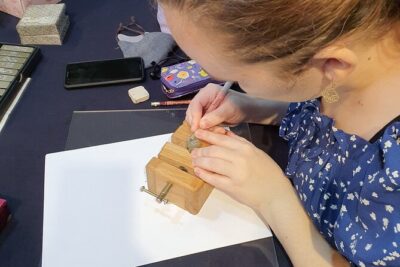
Carve Your Personal Korean Stone Seal with Jeongju in Insadong
Read our review →

Write a Meaningful Korean Calligraphy Scroll in Insadong
Read our review →
Traditional Korean Mother-of-Pearl Craft Workshop
Read our review →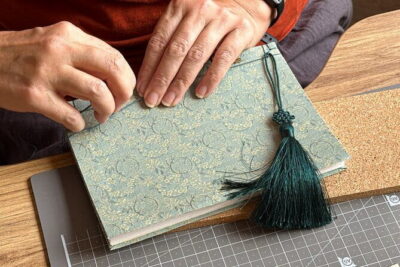
Traditional Korean Bookbinding Experience in Seoul, Hongdae
Read our review →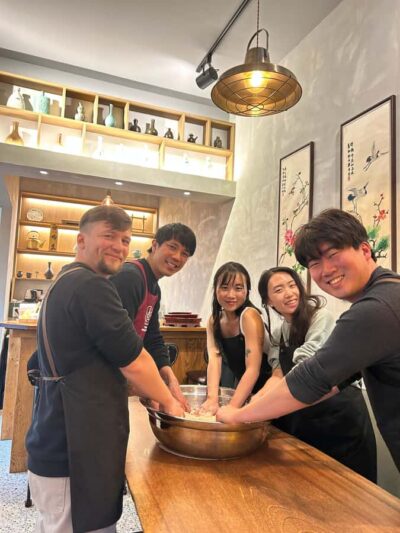
Learn and Craft Makgeolli in a Traditional Brewery
Read our review →
Create a Handmade Traditional Korean Notebook in Insadong
Read our review →
Korean Pottery Town Tour with the pottery class from Busan
Read our review →Browse the lists this tour appears in