
Reviewed · COOKING CLASSES
Secret Cooking Class in Seoul by Secret Food Tours
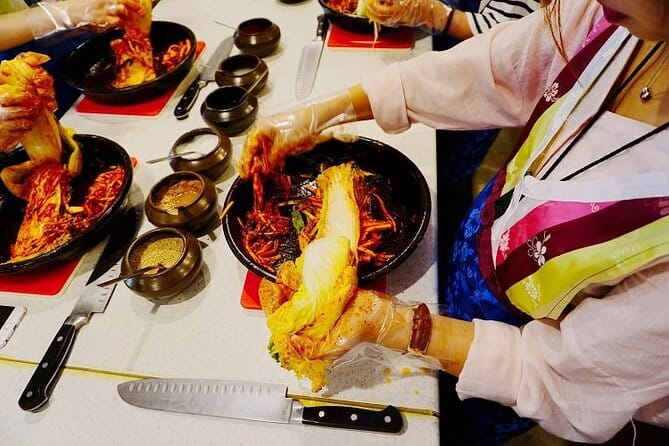
Kimchi has more than one trick. This two-hour Seoul class turns Korea’s famous fermented staple into three hands-on dishes near Gyeongbokgung Palace, with chef Suyeon explaining the traditions behind each one. I like the small group size, capped at eight people, and the useful focus on ingredients you can find in your own city. I also like that you do not simply make one batch of kimchi and go home: you prepare a full meal, including pancake, rice, egg, noodles, and a secret dish.
The main consideration is the $87 price for roughly two hours. That is a fair amount for a hands-on meal, drinks, and expert instruction, but it is not a budget food tasting. You should also remember that the class requires good weather and may be rescheduled if conditions are poor or too few people book.
In This Review
- Key points to know before you book
- Starting near Gyeongbokgung Palace
- Why kimchi makes a smart cooking lesson
- First course: crispy cabbage kimchi pancake
- Second course: radish kimchi with bacon rice and egg
- Third course: cool white kimchi and noodles
- A Korean dinner with makgeolli or soda
- What the two-hour format means
- Is $87 a fair price?
- Who will enjoy this Seoul class most?
- Practical details for a smooth visit
- Should you book Secret Cooking Class in Seoul?
- FAQ
- Where does the Secret Cooking Class in Seoul begin?
- Where does the class end?
- How long does the cooking class last?
- How many people can join the class?
- What dishes will I prepare?
- Is a drink included?
- Can I cancel for a full refund?
Key points to know before you book

- Three kimchi-based dishes: Make cabbage kimchi pancake, radish kimchi with bacon rice and egg, and non-spicy white kimchi with broth and noodles.
- A very small class: The maximum is eight people, giving the chef room to explain techniques and answer questions.
- A central Seoul setting: Meet on the third floor at 36 Jahamun-ro 7-gil in Jongno District, close to Gyeongbokgung Palace and public transportation.
- A meal, not just a lesson: Your food includes a glass of makgeolli or a soda, plus an additional secret dish.
- Good for spice-sensitive diners: White kimchi, or baek-kimchi, brings the flavor of fermentation without the heat of chili.
- A practical ingredient lesson: You learn how to locate Korean cooking ingredients in your own city, not just how to use them in Seoul.
Starting near Gyeongbokgung Palace
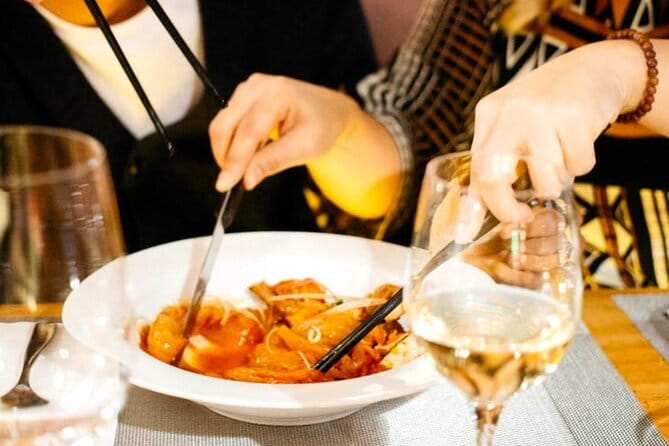
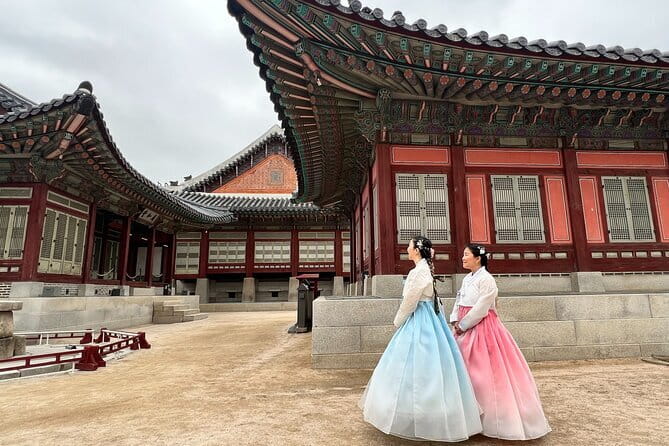
The class begins at 36 Jahamun-ro 7-gil, on the third floor, in Seoul’s Jongno District. The meeting point is near public transportation, and the location gives you a useful pairing of food and place: you can visit Gyeongbokgung Palace before or after the class without crossing the city.
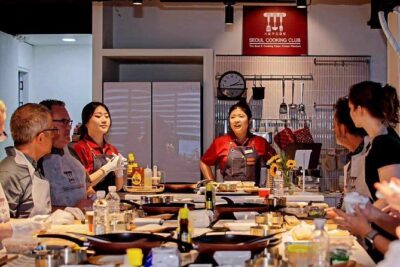
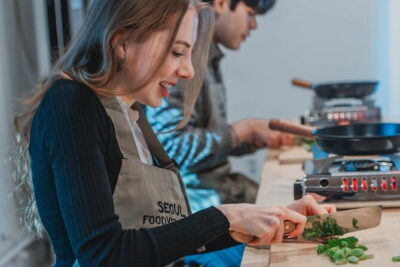
You meet the chef at the designated secret location, wash your hands, and get started with the basic skills needed for a Korean meal. The first few minutes matter more than they may sound. Korean cooking depends on preparation, balance, and knowing how ingredients change as they ferment, fry, or combine with broth.
The group limit of eight is one of the strongest features here. A larger cooking class can turn into a demonstration with a few token moments of chopping. With eight or fewer people, you have a better chance of taking an active role and asking about ingredients, texture, and seasoning.
The exact room setup and kitchen equipment are not specified, so you should not expect a polished restaurant kitchen or a private chef’s table unless the operator confirms it. What is clear is that the format is practical and participatory.
More Cooking Classes in Seoul:
- Local Home Korean Cooking Class & Market Adventure in Seoul
★ 5.0 · 1,024 reviews - Master Korean traditional cooking with a Kimchi chef
★ 5.0 · 385 reviews - Seoul: Korean Cooking Class at a Local Home and Market Tour
★ 5.0 · 348 reviews
Why kimchi makes a smart cooking lesson
Kimchi is often treated as one food, but it is better understood as a whole family of Korean preparations. Cabbage, radish, spice, salt, fermentation, and liquid all change the result. The class uses three types to show that range.
Chef Suyeon explains the history and traditions of kimchi, how it is made, and how many varieties exist. That background gives the cooking a sense of place. You are not just following a recipe from a card. You are learning why kimchi is used as a side dish, a seasoning, a filling, and a base for other foods.
The class also covers fermentation and the balance between strong and subtle flavors. That is especially useful for home cooks. Fermented food can dominate a meal if you treat it as a simple condiment, but the right pairing can make it taste rounded and savory.
I appreciate the promise that you will learn how to find local ingredients in your own city. That makes the lesson more useful after your Seoul visit. You can enjoy Korean food at home instead of leaving the experience behind with the last bite.
First course: crispy cabbage kimchi pancake
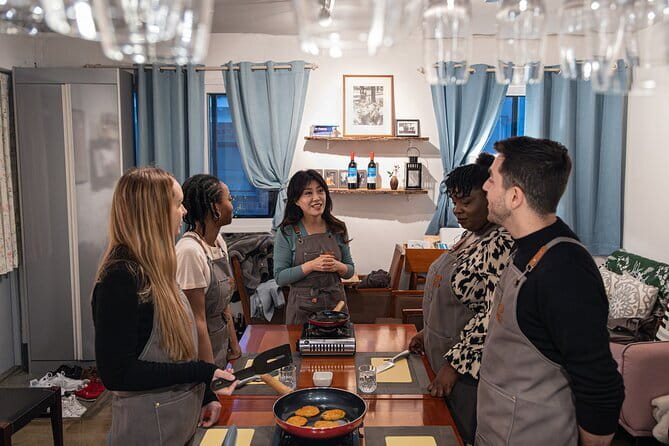
The first dish is kimchi-buchimgae, a cabbage kimchi pancake. It is savory, crisp, and built around the umami of fermented cabbage kimchi.
This is a good opening dish because it shows how kimchi can move from side dish to main ingredient. The pancake format also makes texture part of the lesson. A successful version needs a crisp outside and a tender interior, with the kimchi giving it a sharp, savory edge.
You make your own cabbage kimchi pancake, which means the cooking class begins with something you can eat right away. It is also a forgiving style of Korean food for a first lesson. Even if your pancake is not perfectly shaped, the main point is learning how the ingredients work together.
The class description does not give exact cooking times or the full ingredient list, so you should not plan to reproduce the dish precisely from the tour alone. Take notes if you want to recreate it later, and ask the chef about substitutions available where you live.
Second course: radish kimchi with bacon rice and egg
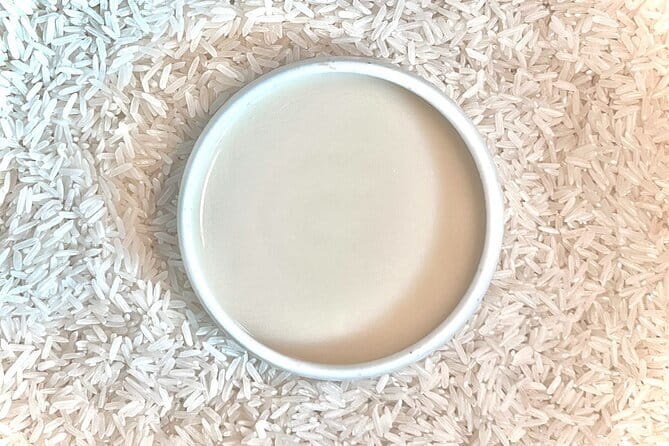
Next comes kkakdugi, the crunchy radish version of kimchi. Unlike the soft texture of cabbage, radish kimchi gives you a firm bite and a fresh snap.
The class then uses it in a hearty stir-fried rice dish with bacon, topped with a golden cooked egg. This is perhaps the most filling part of the meal, and it shows how an older fermented ingredient can work in a modern, comforting dish.
The bacon adds richness, while the egg softens the stronger kimchi flavors. The rice gives the dish body, and the radish supplies texture. That combination makes the lesson especially helpful if you are trying to understand how Korean cooks balance salty, sour, savory, crisp, and creamy elements in one bowl.
Your included serving is not just a sample. The food listed for the class includes radish kimchi with bacon, rice, and eggs. That helps justify part of the price, since you are preparing and eating a substantial dish rather than watching a chef work from a distance.
More Food Tours in Seoul:
- Seoul Street Food Market Tour
★ 5.0 · 1,226 reviews - Seoul: Night Market Food Tour with Local Guide
★ 4.9 · 943 reviews - Downtown Seoul Guided Food & Market Tour with 8+ Local Tastings
★ 5.0 · 580 reviews - Seoul Night Palace & Market Food Tour with Vehicle
★ 5.0 · 275 reviews
Third course: cool white kimchi and noodles
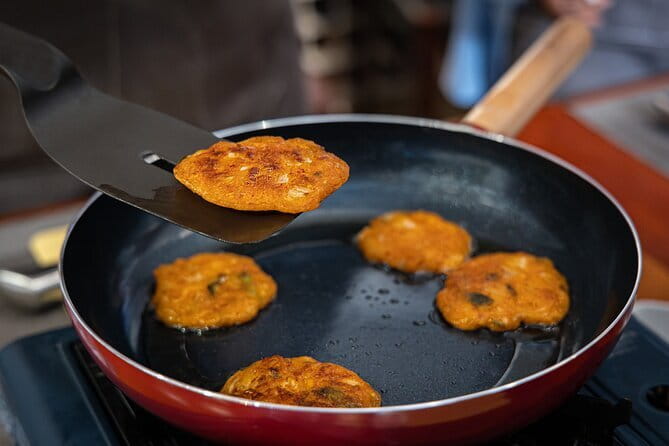
The final named dish is baek-kimchi, or white kimchi. This is a non-spicy style served with a delicate broth and noodles.
For anyone who finds chili-heavy Korean food difficult, this part of the class could be the most rewarding. White kimchi shows that fermentation does not depend on heat. Its appeal comes from freshness, light seasoning, and the contrast between crisp kimchi and gentle broth.
It also gives the meal a different rhythm. The pancake is crisp and savory. The rice is hearty and rich. The white kimchi dish is lighter and more refreshing. Together, the three preparations make the class feel like a lesson in meal planning, not merely a collection of unrelated recipes.
The non-spicy dish is also useful for mixed groups. If one person loves hot food and another prefers mild flavors, both have something to enjoy. You should still ask the chef about the spice level of every component, since the full seasoning details are not provided.
A Korean dinner with makgeolli or soda
As you prepare the dishes, you also enjoy a classic Korean dinner. A glass of makgeolli, a traditional rice wine, is included, and you can choose a soda instead if you do not drink alcohol.
That choice is simple but important. Makgeolli fits the food well, yet an alcohol-free option means you do not have to pay for or accept a drink you will not use. The supplied meal also includes a secret dish, so there is one extra element that is not revealed in advance.
The secret dish adds a little fun, but do not book this class expecting a long tasting menu. The experience lasts about two hours, and its main purpose is learning to prepare the three kimchi dishes. The extra dish is a bonus, not a reason to expect a full restaurant-sized feast.
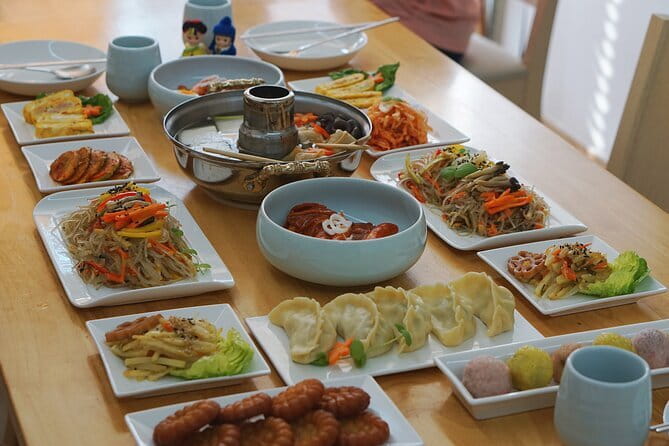
The total amount of food should be satisfying for most people, since it includes pancakes, rice with bacon and egg, noodles with white kimchi, a drink, and the additional dish. Exact serving sizes are not stated, so those with very large appetites may want to keep their expectations sensible.
What the two-hour format means
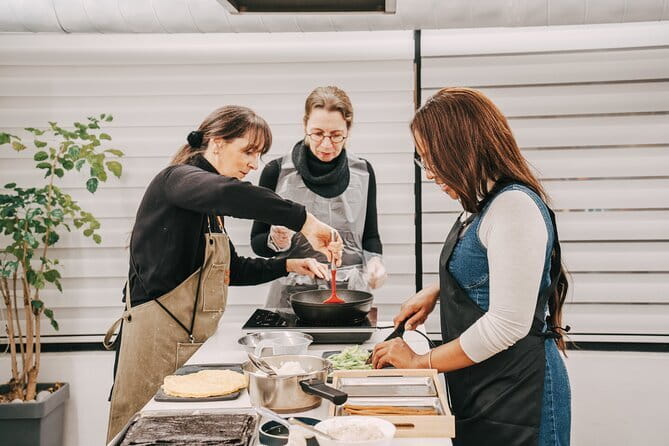
Two hours is enough time for a focused lesson, but it leaves little room for a slow, elaborate cooking program. You will likely spend the session moving from preparation to cooking to eating, with explanations woven through the process.
That compact format works well if you have only a few days in Seoul or want to fit the class around palace sightseeing. It is less suitable if you want a long cultural lecture, a market visit, or an advanced fermentation workshop. None of those are included in the stated program.
The emphasis is on essential skills and three finished dishes. I see that as a strength for most visitors. You get a clear introduction to kimchi and leave with several ways to use it, instead of trying to absorb a large amount of technical information in one sitting.
The class is also booked, on average, eight days ahead. That does not guarantee that every date will sell out, but it is a useful sign that you should not leave this booking until the last moment if your Seoul schedule is tight.
Is $87 a fair price?
At $87 per person, this is not the cheapest way to eat kimchi in Seoul. You can buy kimchi dishes at restaurants for far less. The value comes from the instruction, your active participation, the small group, the drinks, and the food you prepare.
I would judge the price favorably if you want a cooking memory and practical skills, not just lunch. The chef’s explanation of kimchi’s traditions and types adds something a restaurant meal cannot. So does learning how to locate comparable ingredients in your home city.
The value is weaker if you mainly want to sample Korean food or have already taken several cooking classes. In that case, you may prefer to spend $87 on several restaurant meals. You should also consider the short duration. This is a concentrated class, not a half-day food program.
The 5 out of 5 rating from 12 posted ratings, along with a 100 percent recommendation rate, supports the idea that the format is working well for its audience. The sample feedback gives special praise to Suyeon’s explanations and the chance to prepare three separate dishes. Since the number of ratings is still small, I would treat that record as encouraging rather than final proof.
Who will enjoy this Seoul class most?
I would recommend it most strongly to:
- First-time visitors who want food tied to Korean culture
- Couples, friends, and families who enjoy making a meal together
- Home cooks who want techniques they can repeat outside Korea
- Diners who like kimchi but want to understand its different forms
- People who prefer small groups over large demonstrations
- Visitors who need a non-spicy option, thanks to the baek-kimchi dish
It may not suit you if you dislike fermented foods, need a highly detailed professional cooking course, or want a broad tour of Seoul’s markets and restaurants. The program focuses tightly on kimchi and kimchi-based dishes.
Children may enjoy the hands-on format, but the supplied information does not specify a minimum age or child pricing. Check before booking if you are bringing young children.
Practical details for a smooth visit
Your mobile ticket should be ready, and you should allow enough time to find the third-floor meeting point at 36 Jahamun-ro 7-gil. Since the location is near public transportation, public transit should be a practical way to reach the Jongno District meeting area, though the exact route will depend on where you stay.
Confirmation arrives within 48 hours of booking, subject to availability. I would wait for that confirmation before treating the class as fixed in your day-by-day plan.
Free cancellation is available until 24 hours before the start time. Changes or cancellations inside that window are not accepted for a refund. The activity also requires good weather and a minimum number of participants. If poor weather or low enrollment causes cancellation, you are offered another date or experience, or a full refund.
The class ends at the same meeting point. That makes it easy to continue sightseeing in Jongno, return to your hotel, or plan a nearby meal afterward.
Should you book Secret Cooking Class in Seoul?
Book it if you want to do more than eat Korean food. The small group, Chef Suyeon’s kimchi explanations, three distinct preparations, included drink, and secret dish make this a focused introduction to Korean cooking.
I would be especially keen to book it early if your Seoul visit is short and you are staying near central sights. The class gives you a meal, a cultural lesson, and recipes you may be able to repeat at home. Skip it if $87 feels high for a two-hour activity or if you would rather spend that money sampling several restaurants.
For most food-minded visitors, this is a sensible way to turn kimchi from a familiar side dish into the main subject of a memorable Seoul meal.
FAQ
Where does the Secret Cooking Class in Seoul begin?
The class begins on the third floor at 36 Jahamun-ro 7-gil in Jongno District, Seoul, South Korea.
Where does the class end?
The activity ends back at the meeting point.
How long does the cooking class last?
The class lasts approximately two hours.
How many people can join the class?
The maximum group size is eight people.
What dishes will I prepare?
You will prepare a cabbage kimchi pancake, radish kimchi with bacon, rice and egg, and white kimchi with broth and noodles.
Is a drink included?
Yes. You receive a glass of makgeolli or a soda.
Can I cancel for a full refund?
Yes. You can cancel at least 24 hours before the experience start time for a full refund. Cancellations or changes made less than 24 hours before the start time are not accepted for a refund.
More Workshops in Seoul
- Yongpyong Ski Resort from Seoul with Optional Lesson and Packages
★ 5.0 · 217 reviews - Korean Cooking Class with Grocery Shopping at Seoul Local Market
★ 5.0 · 107 reviews - Royal Seoul Cooking Class in a 100-Year-Old Hanok
★ 5.0 · 81 reviews - Seoul : Taste of Korea, Authentic Home-Style Cooking Class
★ 5.0 · 64 reviews
Just added in Seoul
- Seoul: Korean & English Language Exchange Global Party★ 5.0 · 28 reviews
- Your Personal Seoul Photographer!★ 4.1 · 15 reviews
- You’re Invited to Our Home in Seoul: The Only Cooking Class!★ 5.0 · 8 reviews
- From Seoul: Yongpyong Ski Day Tour with Transportation★ 4.9 · 40 reviews
- From Seoul: Hwacheon Ice Fishing and Lighting Festival Tour★ 4.5 · 4 reviews
- Seoul: Gangneung BTS K-Pop & K-Drama Filming Locations Tour★ 4.6 · 14 reviews
- Unique Native Experience : Han River Picnic, Board game, BBQ★ 5.0 · 3 reviews
- Seoul: Euljiro Gastroventure Tour★ 4.0 · 1 review
Cooking Classes, compared.
Local Home Korean Cooking Class & Market Adventure in Seoul
Read our review →
Master Korean traditional cooking with a Kimchi chef
Read our review →
Korean Cooking Class at a Local Home and Market Tour
Read our review →
Korean Cooking Class with Grocery Shopping at Seoul Local Market
Read our review →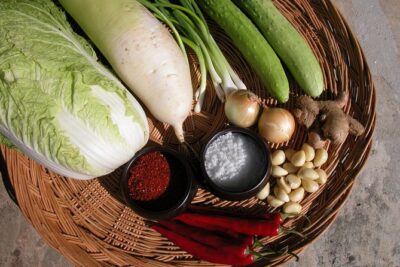
Korean Kimchi Making Day Experience with a Local Market Tour
Read our review →
Browse the lists this tour appears in