
Reviewed · HISTORICAL TOURS
Seoul Walking Tour Korean War History and City Highlights
War history changes how you see Seoul. This walking tour connects the Korean War and the division of Korea with places you might otherwise pass without a second thought. I like its personal narratives and its focus on the Korean Wartime Abduction Remember Trail, a route linked to more than 100,000 South Korean civilians forcibly taken north. I also like the small group size, capped at 15 people. The main drawback is that the tour requires good physical fitness and does not include snacks, bottled water, or entrance tickets.
This is not a standard palace walk. You will pass major sights such as Gwanghwamun, Gyeongbokgung Palace, Changdeokgung Palace, and Jongno, but the main subject is the human cost of war. I would choose it early in a Seoul visit if you want a serious historical introduction before exploring the city on your own.
In This Review
- Key points at a glance
- What this Seoul war history walk is really about
- Beginning at Seodaemun Prison History Hall
- Following the route toward Gwanghwamun
- A short pause near Changdeokgung Palace
- Jongno and the city between the landmarks
- The Seoul National University Hospital massacre site
- Why the small group matters
- Practical planning for the 9:30 am start
- Who will get the most from this experience
- Should you book this Seoul walking tour?
- FAQ
- How much does the Seoul Korean War history walking tour cost?
- How long does the tour last?
- What time does the tour start?
- Where does the tour begin?
- Where does the tour end?
- What is the main historical route?
- Are palace admission tickets included?
- What is included in the tour?
- Are food and drinks included?
- What happens if bad weather cancels the tour?
Key points at a glance
- More than a sightseeing walk: The route links Seoul landmarks to political oppression, wartime abductions, and the continuing division of Korea.
- Starts at Seodaemun Prison History Hall: This opening stop sets the tone by connecting the prison’s past to people taken north during the war.
- Follows a meaningful wartime route: The Korean Wartime Abduction Remember Trail gives the walk a clear purpose beyond checking off famous landmarks.
- Small group, maximum 15 people: The size should make it easier to hear the guide and ask questions.
- A useful city route: The walk connects Seodaemun with central Seoul, passing Gwanghwamun, the palace district, Jongno, and Seoul National University Hospital.
- Supports a stated cause: Every tour supports North Korean human rights initiatives.
What this Seoul war history walk is really about
At $28 per person, this is priced like an accessible introduction rather than a full-day cultural program. You are paying for a guided route, historical interpretation, a map, and a leaflet. The value comes from the links between places, not from paid admissions or elaborate extras.
The walk examines the Korean War through the experience of civilians. That focus matters. Seoul’s palaces and gates are easy to admire as architectural sights, but the route asks you to consider how political control, military violence, and family separation affected ordinary people.
The central subject is the Korean Wartime Abduction Remember Trail. During the war, more than 100,000 South Korean civilians were forcibly taken to North Korea. The tour follows the path connected with those abductions, giving the route a human scale.
You should not expect a general overview of every period in Korean history. The emphasis is narrower: political oppression, wartime violence, abduction, and the lasting effects of the division between North and South Korea. That focus makes the walk more serious than a typical city highlights tour, but also more meaningful if you want history beyond palace photographs.
The experience usually takes about two to three hours. That is long enough to cover several central districts without taking up your entire morning. It also means the guide must keep each stop fairly brief. If you prefer long museum visits or extended time inside palace grounds, this tour may feel quick.
More History Tours in Seoul
- Seoul: Evening Dark History, Folklore & Ghost Story Walking Tour
★ 5.0 · 593 reviews - Hanbok Photoshoot and History Tour at Gyeongbokgung Palace
★ 5.0 · 276 reviews - From Seoul: Dae Jang Geum Park Historic K-Drama Set Tour
★ 4.9 · 143 reviews
Beginning at Seodaemun Prison History Hall
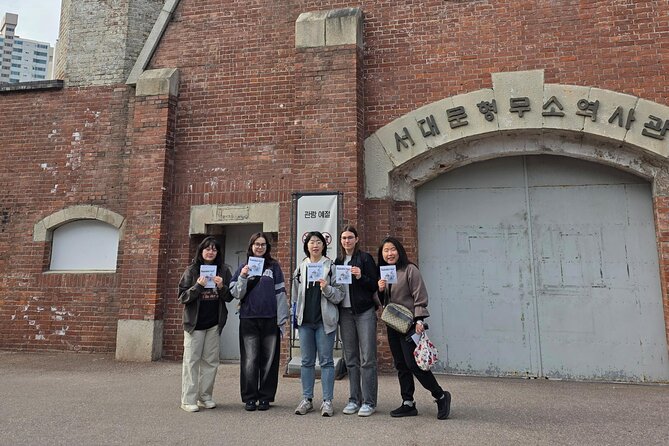
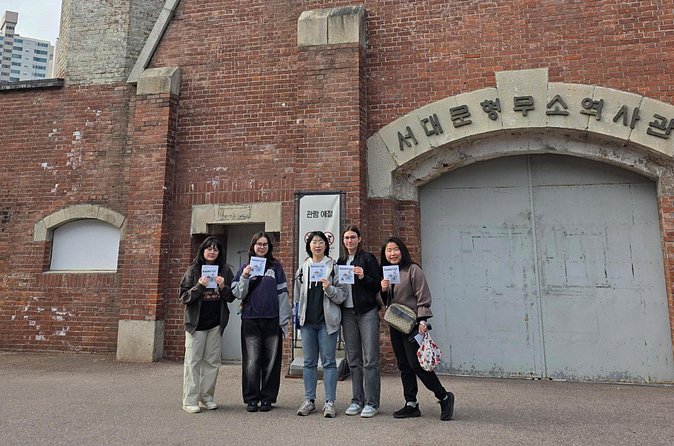
The meeting point is at 92-5 Hyeonjeo-dong in Seodaemun-gu, in front of Seodaemun Prison History Hall. The start time is 9:30 am. You receive a short introduction to the prison and its role in political oppression before the group sets off.
This is a strong starting point because the site frames Korean history through imprisonment and state power. The guide also explains its connection to wartime abductions, so you begin with a clear idea of what the walk is trying to show.
The stop is listed at about 15 minutes, with no admission ticket included. That timing suggests an outdoor orientation rather than a full visit to every exhibit inside the history hall. If you want to tour the museum in detail, plan to return separately or allow extra time before or after the walk. The guided route itself does not promise an extended interior visit.
I would arrive early enough to find the meeting point without rushing. The address is specific, but starting near a museum and a busy city district can still require a little orientation. The tour is near public transportation, which helps, though no particular subway exit or bus route is provided.
Following the route toward Gwanghwamun
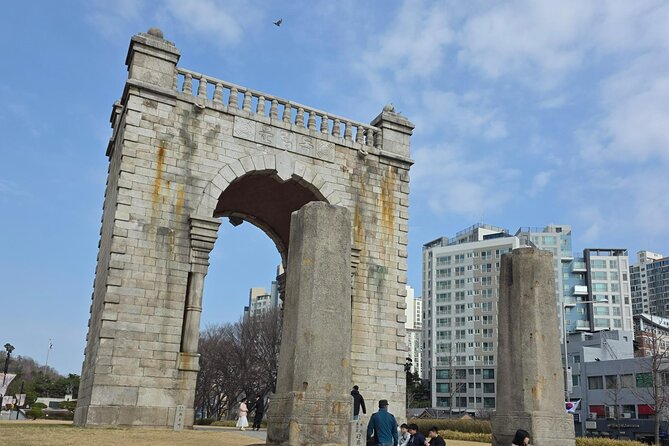
From Seodaemun, the walk continues toward Gwanghwamun Gate. The guide gives a short explanation of the gate and its place in Seoul’s historical center before moving on.
Gwanghwamun is one of the city’s most recognizable landmarks. Here, it functions less as a long sightseeing stop and more as a marker on the route. You get context for the surrounding royal and civic district, then continue toward the next section of the walk.
The scheduled pause is only about five minutes. That is useful to know before booking. You will have time to hear the explanation and take in the setting, but this is not a photo session or a lengthy architectural talk.
The route also includes Gyeongbokgung Palace among Seoul’s major heritage sites. Based on the described schedule, the palace is part of the historical route rather than a guaranteed palace admission and guided interior tour. The same practical point applies to Changdeokgung Palace. You should not assume your $28 includes entry to either palace.
This arrangement can be an advantage. You see how the landmarks fit together geographically while keeping the focus on wartime history. It can also be a limitation if your main goal is detailed palace interpretation.
A short pause near Changdeokgung Palace
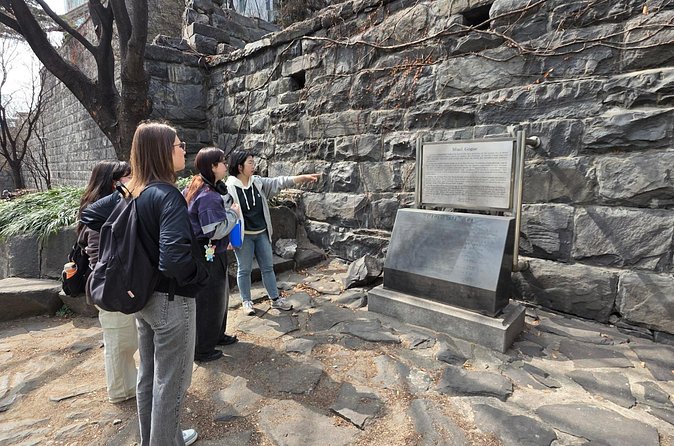
Near Changdeokgung Palace, the group stops for light refreshments and a short explanation of the area’s historical and cultural importance. The pause lasts about 15 minutes.
The timing gives you a chance to catch your breath, especially because the tour requires a strong physical fitness level. Still, snacks and bottled water are not included. Bring your own water and something small to eat if you need regular fuel.
Changdeokgung is an important part of the central Seoul setting, but the guide’s talk also connects the area to wartime turmoil. That contrast is one of the better features of the experience. You are not looking at an isolated monument. You are being asked to see how a familiar royal district formed part of a city shaped by occupation, conflict, and separation.
The stop is brief enough that you should keep your expectations realistic. You may hear a concise explanation and pause near the palace, but the walk is not designed as a full Changdeokgung visit. If you plan to enter the palace afterward, check the timing for yourself and arrange a separate ticket if required.
More Walking Tours in Seoul
- Seoul moonlight walking tour with local historian
★ 5.0 · 940 reviews - Seoul: Nighttime Hidden Gems Walking Tour
★ 5.0 · 775 reviews - Seoul: Dark Side of the City and Ghost Stories Walking Tour
★ 4.8 · 484 reviews - Gangnam Walking Tour on Youth and Society in Seoul Korea
★ 5.0 · 401 reviews
Jongno and the city between the landmarks
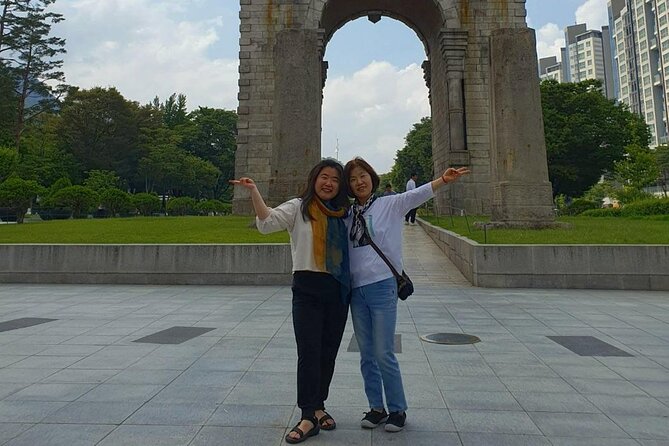
The route continues through Jongno District, one of Seoul’s central historic areas. Jongno helps connect the formal landmarks with the streets and institutions where city life continued during difficult periods.
The itinerary describes both major heritage sites and lesser-known locations. That combination is important. A tour based only on famous gates and palaces would tell you where Seoul’s monuments are. This walk tries to explain what happened around them and why less obvious places matter.
You may find the city setting especially useful if you are new to Seoul. The route links Seodaemun with the Gwanghwamun and Jongno areas, giving you a practical sense of how these central districts relate to one another. After the walk, you can use the provided map and leaflet to revisit places at your own pace.
The walk is not presented as a leisurely café stroll. You will be moving between several points, listening as the guide speaks, and covering enough ground to require good fitness. Comfortable shoes are a sensible choice, though the supplied information does not give a precise distance or terrain description.
The Seoul National University Hospital massacre site
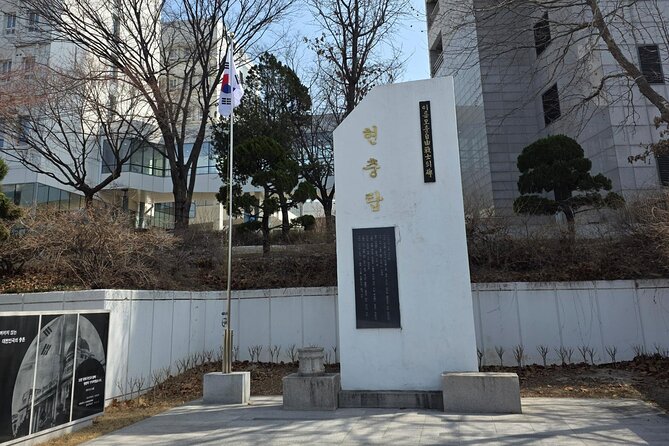
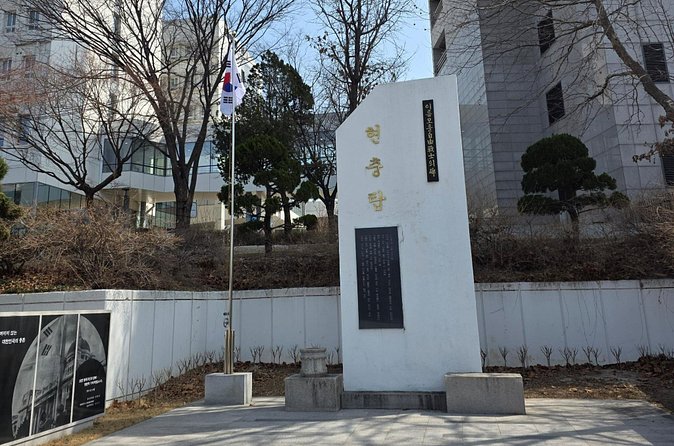
One of the most sobering stops is the Seoul National University Hospital Medical Museum area, at 28-3 Yeongeon-dong in Jongno District. This is where the tour ends.
The guide explains the massacre that took place at Seoul National University Hospital during the Korean War. The talk also addresses how hospitals and public institutions became sites of violence. That subject makes this more than a visit to a medical or civic landmark. It shows how war could reach places meant to protect and serve the public.
The scheduled explanation is about five minutes. That may sound short, but the subject itself is heavy. A concise account can provide a clear final point without turning the tour into a long lecture. You should be prepared for difficult material and for a quieter, more reflective ending.
The end point is useful for continuing your day in Jongno, but transportation from there is not included. You will need to make your own onward plans. The exact route back to your hotel or next sight depends on where you are staying.
Why the small group matters
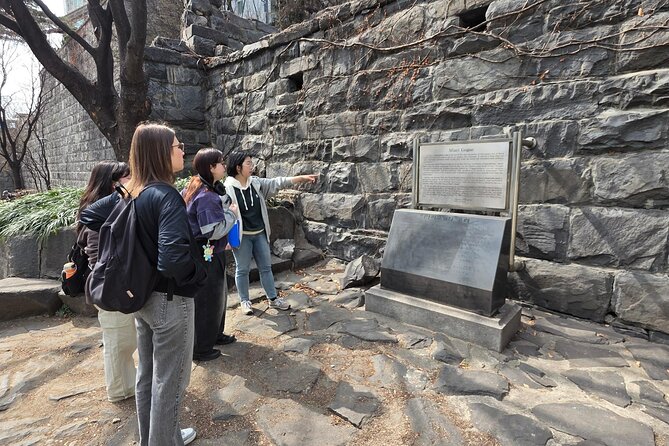
The maximum group size is 15 people. For a history walk built around personal stories, that is a practical limit. You are more likely to hear the guide clearly, keep the group together, and ask a question when a detail catches your attention.
The single available rating is five out of five, with the strongest praise focused on the tour as a must-do way to learn about South Korea’s difficult past. That praise points to the experience’s main strength: it offers stories and connections that are hard to gather by walking between landmarks alone.
At the same time, one rating is not enough to prove that every departure will feel identical. Guide quality, weather, walking pace, and group dynamics can affect any small-group tour. The format gives the experience a good chance to feel personal, but you should still book it for the subject and route, not simply for the rating.
No guide name is provided, so you cannot request a particular guide in advance. What is clear is that the guide’s role is central. The value depends on how well the historical accounts are explained and connected to the places around you.
Practical planning for the 9:30 am start
The tour begins at 9:30 am and lasts about two to three hours. That leaves much of the afternoon free for palace visits, museums, markets, or another part of Seoul.
You receive confirmation when you book. The ticket is mobile, so you can keep the booking on your phone rather than collecting a paper voucher. A map and leaflet are included, while snacks, bottled water, and travel insurance are not.
Because the tour requires a strong physical fitness level, think carefully about your walking ability before booking. The route includes several districts and outdoor stops. Service animals are allowed, and the activity is near public transportation.
The tour requires good weather. If poor weather causes cancellation, you will be offered another date or a full refund. You can cancel for a full refund if you do so at least 24 hours before the local start time. Changes or cancellations made less than 24 hours before the start are not accepted for a refund.
The group size and morning departure make this a good choice for someone who wants a focused introduction without committing an entire day. You should bring water, wear comfortable shoes, and leave room in your schedule for the possibility that the walk runs closer to three hours.
Who will get the most from this experience
I would recommend this walk to you if you want to understand Seoul through the Korean War, not just through palaces and shopping streets. It suits history-minded visitors, people interested in North Korean human rights, and anyone who values personal accounts alongside major landmarks.
It is also useful for a first visit because the route introduces several central areas at once. You learn the basic geography of Seodaemun, Gwanghwamun, the palace district, Jongno, and the hospital area. The map and leaflet can help you return to places that deserve more time.
I would be more cautious about recommending it to you if you want a relaxed sightseeing walk with long stops, extensive palace access, or light entertainment. The subject is painful, the schedule is fairly concentrated, and the tour requires good fitness.
The tour supports North Korean human rights initiatives with every booking. If you prefer experiences that connect sightseeing with a stated social purpose, that gives the price another layer of value.
Should you book this Seoul walking tour?
Book it if you want a compact, serious, and human-focused look at Seoul’s wartime past. For $28, the tour offers a clear route, a small group, historical interpretation, a map, and access to stories you might miss on your own.
Do not book it expecting a full palace tour or a museum-heavy program. You will pass or pause near several major sights, but the heart of the experience is the Korean Wartime Abduction Remember Trail and the explanation of how war affected civilians and public institutions.
For the best fit, schedule it early in your Seoul stay, bring water, wear good walking shoes, and keep your afternoon open for a longer visit to any palace or museum that catches your interest. If those limits suit you, this is a thoughtful way to give Seoul’s famous landmarks a more serious human context.
FAQ
How much does the Seoul Korean War history walking tour cost?
The tour costs $28 per person.
How long does the tour last?
The experience lasts approximately two to three hours.
What time does the tour start?
The tour starts at 9:30 am.
Where does the tour begin?
It begins in front of Seodaemun Prison History Hall at 92-5 Hyeonjeo-dong, Seodaemun-gu, Seoul.
Where does the tour end?
The tour ends at 28-3 Yeongeon-dong in Jongno District, near the Seoul National University Hospital Medical Museum.
What is the main historical route?
The walk follows the Korean Wartime Abduction Remember Trail, connected with more than 100,000 South Korean civilians forcibly taken to North Korea during the war.
Are palace admission tickets included?
No admission tickets are included. The tour passes major sites including Gwanghwamun, Gyeongbokgung Palace, and Changdeokgung Palace, but palace entry is not listed as included.
What is included in the tour?
A map and leaflet are included.
Are food and drinks included?
No. Snacks and bottled water are not included, so you should bring your own.
What happens if bad weather cancels the tour?
If poor weather causes cancellation, you will be offered a different date or a full refund.
Just added in Seoul
- Seoul: Korean & English Language Exchange Global Party★ 5.0 · 28 reviews
- Your Personal Seoul Photographer!★ 4.1 · 15 reviews
- You’re Invited to Our Home in Seoul: The Only Cooking Class!★ 5.0 · 8 reviews
- From Seoul: Yongpyong Ski Day Tour with Transportation★ 4.9 · 40 reviews
- From Seoul: Hwacheon Ice Fishing and Lighting Festival Tour★ 4.5 · 4 reviews
- Seoul: Gangneung BTS K-Pop & K-Drama Filming Locations Tour★ 4.6 · 14 reviews
- Unique Native Experience : Han River Picnic, Board game, BBQ★ 5.0 · 3 reviews
- Seoul: Euljiro Gastroventure Tour★ 4.0 · 1 review
Historical Tours, compared.
Gyeongju UNESCO World Heritage Guided Day Tour
Read our review →
Gyeongju UNESCO World Heritage Guided Day Tour from Busan
Read our review →
Evening Dark History, Folklore & Ghost Story Walking Tour
Read our review →
Old Korea Thousand History Tour of Gyeongju from Busan
Read our review →
Hanbok Photoshoot and History Tour at Gyeongbokgung Palace
Read our review →
UNESCO Heritage Tour Including Bulguksa Temple
Read our review →
Gyeongju UNESCO World Heritage Sites and History Full-Day Tour with Lunch
Read our review →Browse the lists this tour appears in