
Reviewed · HISTORICAL TOURS
Seoul’s Hidden Dark History Guided Tour of Seodaemun Prison
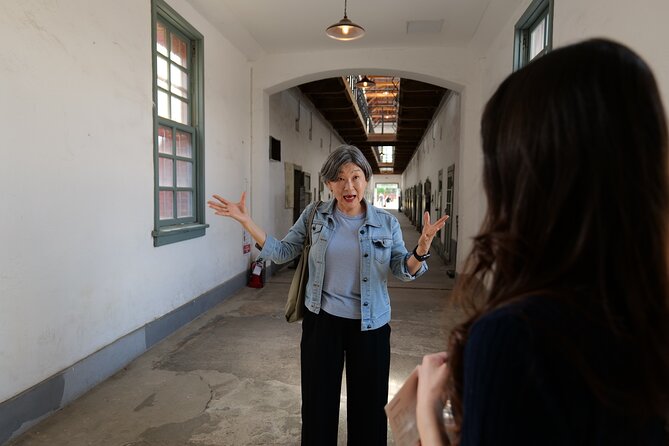
History gets real here. This two-hour Seoul walking tour takes you into original prison cells and interrogation rooms, then explains how Seodaemun Prison became tied to Korea’s fight for independence. I like the small maximum group of 10 and the guide’s more than 10 years of experience with Korean history. I also like that the tour includes the prison admission, though the subject matter is painful and may feel heavy for some people.
The tour begins at Dongnimmun Gate at 2 p.m. and finishes inside Seodaemun Prison History Hall. A possible drawback is the short time: with only about 1 hour and 40 minutes at the main site, you will need to keep moving and may not have time to read every display at length.
In This Review
- Key points to know before you book
- Why Seodaemun Prison belongs on a serious Seoul itinerary
- Starting at Dongnimmun Gate
- Entering Seodaemun Prison History Hall
- The cells, interrogation rooms, and execution grounds
- Yu Gwan-sun and the March 1st Movement
- The guide and the small group format
- Is $31.54 good value?
- Timing, transport, and physical demands
- Who will appreciate this tour most?
- Should you book Seoul’s Seodaemun Prison tour?
- FAQ
- How long does the Seodaemun Prison tour last?
- What time does the tour start?
- Where does the tour begin?
- Where does the tour end?
- Is admission to Seodaemun Prison History Hall included?
- How large is the tour group?
- Can I cancel for a full refund?
Key points to know before you book
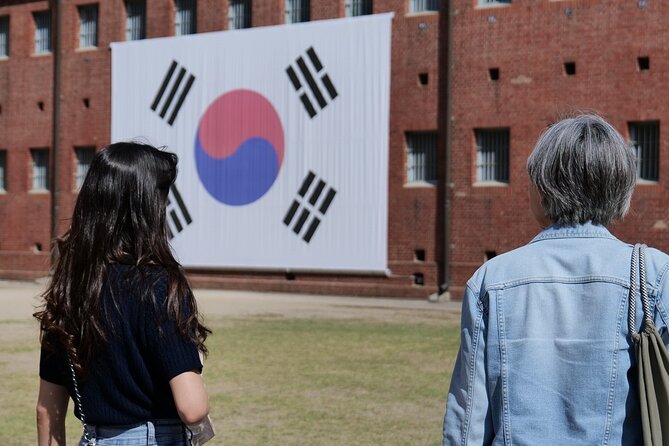
- The tour enters original prison spaces, including solitary cells, underground interrogation rooms, and the execution grounds.
- Dongnimmun Gate provides the opening context, with about 20 minutes devoted to its connection with Korean independence.
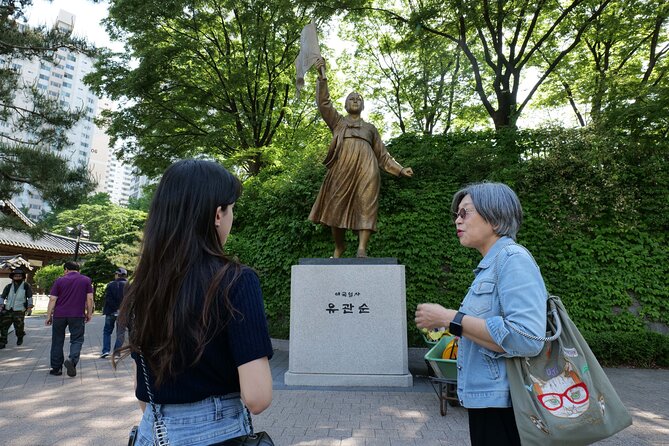
- Yu Gwan-sun’s story is central, linking the prison to the courage of a 17-year-old student during the March 1st Movement.
- The group is limited to 10 people, which should make questions and conversation easier than on a large bus tour.
- The total duration is about two hours, with roughly 1 hour and 40 minutes inside Seodaemun Prison History Hall.
- The price is $31.54 per person, including admission to the prison site, with free cancellation up to 24 hours before the start time.
Why Seodaemun Prison belongs on a serious Seoul itinerary
Seoul is easy to enjoy at street level. You can visit palaces, shop in busy districts, and eat very well without spending much time thinking about the country’s modern past. Seodaemun Prison asks something different of you.
Built in 1908 during Japanese colonial rule, the prison was used to hold and execute Korean independence activists. Today, the site is a memorial and historical museum. Its importance comes from the way the buildings make the story physical. You are not only hearing about imprisonment and resistance. You are walking through the spaces where those events took place.
That makes this a useful choice if you want more than familiar sightseeing. The tour helps connect Seoul’s present-day confidence with the sacrifices made during the independence movement. It also gives you a clearer sense of why national memory remains such an important part of Korean public life.
The subject is serious. This is not a light afternoon activity to place between shopping stops. You will hear about interrogation, imprisonment, executions, and the suffering of independence activists. I would plan something quieter afterward rather than rushing straight into a packed evening schedule.
More History Tours in Seoul
- Seoul: Evening Dark History, Folklore & Ghost Story Walking Tour
★ 5.0 · 593 reviews - Hanbok Photoshoot and History Tour at Gyeongbokgung Palace
★ 5.0 · 276 reviews - From Seoul: Dae Jang Geum Park Historic K-Drama Set Tour
★ 4.9 · 143 reviews
Starting at Dongnimmun Gate
The meeting point is 102-6 Hyeonjeo-dong in Seodaemun-gu, and the tour starts at 2 p.m. The first stop is Dongnimmun Gate, where you spend about 20 minutes learning about the independence monument built by Korea in 1890.
This short introduction matters because it gives the prison a wider setting. You begin with a symbol connected to national independence before entering a place associated with colonial control and punishment. The sequence is simple but effective: first the idea of self-rule, then the cost paid by people who fought for it.
Since admission to the gate is free, this part of the experience is not about seeing a long list of attractions. It is about getting your bearings and hearing the basic political context before the main visit. The guide’s explanation should help you understand why the prison site is not an isolated museum, but part of a broader story about Korea’s independence movement.
Twenty minutes is enough for an introduction, but not enough for a lengthy examination of every detail. If Dongnimmun Gate is your main interest, you may want to allow extra time outside the tour. The guided portion is designed to move on to the prison.
Entering Seodaemun Prison History Hall
The main portion lasts about 1 hour and 40 minutes. Admission is included, so you do not need to budget separately for the site ticket when judging the $31.54 price.
Inside, the route includes solitary cells, interrogation rooms, underground interrogation areas, and the execution yard. These are difficult places, but their original or preserved form gives the visit its force. A standard museum display can explain dates and names. A cell or interrogation space makes you consider the cramped, controlled conditions in a more direct way.
I especially like the way the tour is built around the prison’s actual spaces. The guide can explain what happened while you are looking at the rooms themselves, which keeps the information tied to something visible. That approach is more useful than a broad lecture about colonial-era Korea that could take place anywhere.
You should expect the pace to be purposeful. The total visit is not long, and there is a lot to cover. You may have time to pause and look around, but the tour is not designed as a completely free-form museum visit. If you want to read every panel or study each exhibit independently, plan to return on your own if the schedule allows.
The cells, interrogation rooms, and execution grounds
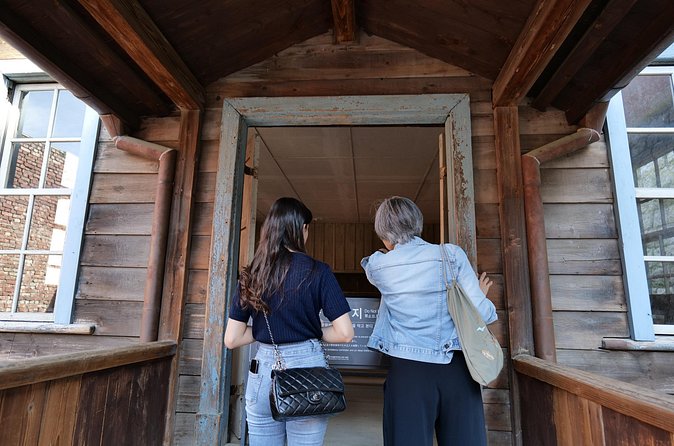
The prison’s solitary cells are among the most important parts of the route. Their value is not in visual spectacle. It is in the reminder that many people were reduced to confinement, isolation, and uncertainty because of their political beliefs.
The interrogation rooms add another layer. Here, the focus shifts from imprisonment to the methods used to punish and break resistance. You can expect the guide to explain how these rooms fit into the prison’s wider function during Japanese rule. Because the tour is limited to 10 people, you should have a better chance to ask for clarification than you would in a much larger group.
The execution grounds are likely to be the most emotionally difficult stop. The guide explains the sacrifices of Korean independence activists in a place directly connected to those deaths. This is where the tour moves beyond dates and political terms. You are asked to think about the individual people behind the movement.
Some visitors may find this portion upsetting. That is not a flaw, but it is something to consider before booking. If you prefer history presented at a distance, this tour may feel too intense. If you want to understand the human cost of Korea’s independence struggle, the execution area is an essential part of the visit.
A completely different kind of day:
- Best DMZ Tour Korea from Seoul (Red Suspension Bridge Optional)
★ 5.0 · 41,422 reviews - DMZ Tour: 3rd Tunnel, Option(Suspension Bridge, Boat) from Seoul
★ 5.0 · 21,373 reviews - DMZ tour south Korea from Seoul (NK experience hall, defector)
★ 5.0 · 20,599 reviews - Seoul: DMZ Tour with Optional Suspension Bridge
★ 4.8 · 5,277 reviews
Yu Gwan-sun and the March 1st Movement
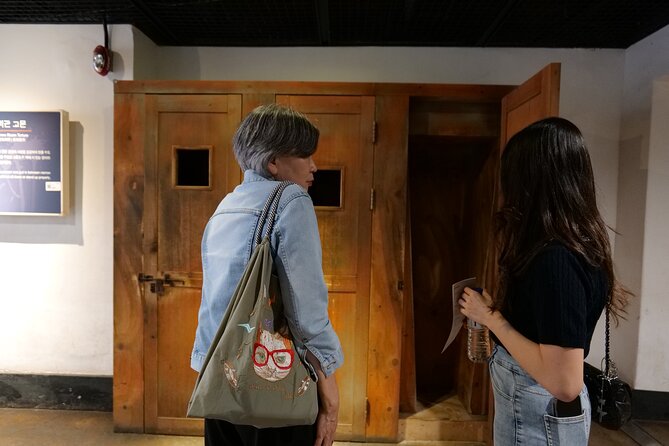
The story of Yu Gwan-sun gives the tour a personal center. She was a 17-year-old student whose courage during the March 1st Movement made her a national symbol.
Her age is important. It prevents the independence movement from becoming an abstract story about famous leaders and political organizations. You are reminded that young people also took part, accepted serious risks, and became targets of colonial repression.
A good guide can use one person’s story to help you understand the wider movement. The tour presents Yu Gwan-sun not only as a name to remember, but as an example of courage under pressure. Her story also helps younger visitors connect with the site. The events are not so distant that they belong only to textbooks or monuments.
The supplied feedback describes the experience as a detailed walk through the Korean independence movement and a strong explanation of how the prison was used. That praise points to the tour’s main strength: it connects the personal story of Yu Gwan-sun with the institution around you. You get both the national picture and the human scale.
The guide and the small group format
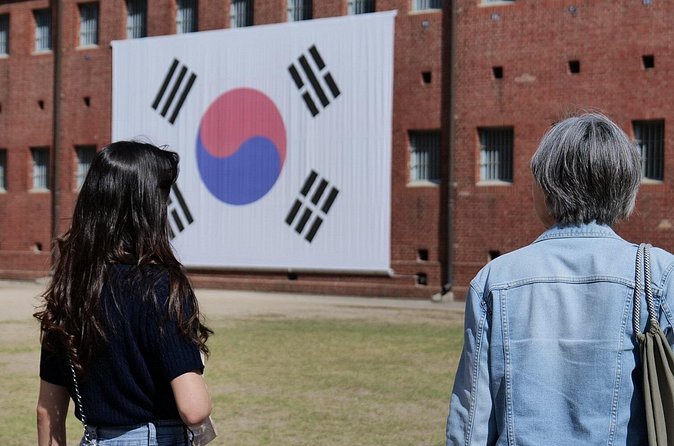
The professional guide has more than 10 years of experience in Korean history. No guide name is provided, but the experience description places the emphasis on historical explanation rather than simple sightseeing commentary.
That distinction matters at Seodaemun Prison. You do not need someone merely to point out a room. You need help understanding why the prison was built, whom it held, and how the independence movement fits into Korea’s modern identity.
The group has a maximum of 10 people. That is a strong practical feature for a site where the subject calls for questions and careful listening. You are less likely to feel lost in a crowd, and the guide can potentially respond to the group’s interests as the route progresses.
The tour has received a perfect rating from three reviews, including praise for its detailed treatment of the independence movement and the prison’s use. That is a small sample, so I would not treat it as proof that every outing will be identical. Still, the feedback matches the experience’s clearest selling point: this is built around explanation, not just entry to a museum.
Is $31.54 good value?
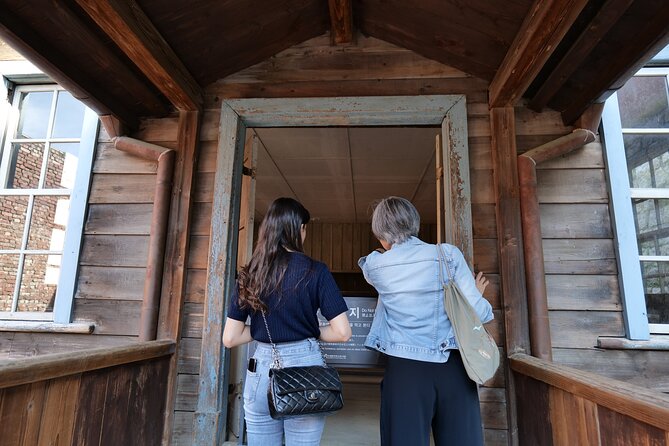
At $31.54 per person, the tour is reasonably priced for a guided two-hour historical visit, especially because admission to Seodaemun Prison History Hall is included. You are paying for the site entry, a professional guide, a structured route, and the chance to ask questions in a group of no more than 10.
The value depends on how much help you want with the history. If you are happy to visit the prison independently and read the displays at your own pace, a self-guided visit may suit you better. The tour’s price makes sense if you want the events explained as you move through the cells, interrogation rooms, and execution grounds.
The average booking time is 31 days in advance. That suggests you should not leave this until the last afternoon of your Seoul trip, especially if your dates are fixed. The small group may fill before a larger sightseeing activity would.
Free cancellation up to 24 hours before the start time adds some flexibility. If you cancel less than 24 hours before 2 p.m. on the tour date, you will not receive a refund, and changes within that period are not accepted. Keep the local cut-off time in mind when making plans.
Timing, transport, and physical demands
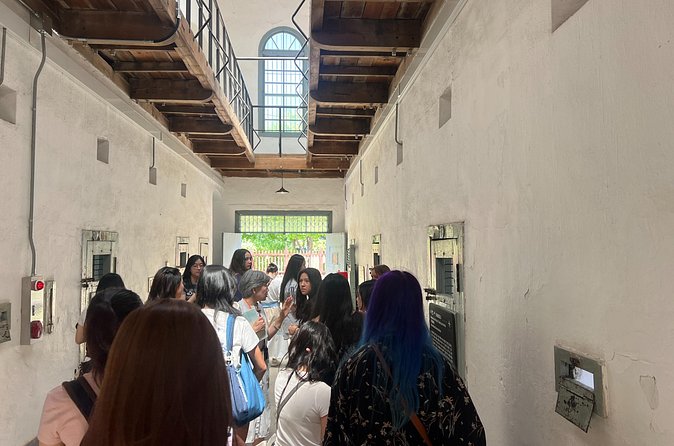
The tour is near public transportation, making it practical to reach without arranging a private vehicle. The start and end points are both in Seodaemun-gu, but they are listed separately, so check the exact meeting point before setting out.
You should allow enough time to reach 102-6 Hyeonjeo-dong for the 2 p.m. start. Arriving early is sensible because missing the opening explanation at Dongnimmun Gate could make the later prison visit harder to follow.
A moderate level of physical fitness is recommended. The experience is a walking tour through a historic site, so you should be comfortable walking for about two hours and moving through the prison complex. The information does not specify stairs, walking distance, or seating, so anyone with mobility concerns should ask the provider before booking.
Because the tour ends at Seodaemun Prison History Hall at 251 Tongil-ro, you can plan your next activity from the finish point rather than assuming you will return to the starting location. The information does not state whether transportation back is arranged, so plan your onward route independently.
Who will appreciate this tour most?
I would recommend this experience to you if you want to understand Seoul beyond royal palaces, modern shopping streets, and food markets. It suits people who enjoy guided context and prefer to leave a museum with a clearer sense of why the place matters.
It is also a good fit for visitors studying Korean history, anyone interested in the March 1st Movement, and people who value small-group tours. The Yu Gwan-sun story gives younger visitors a personal entry point, while the prison buildings offer a direct setting for understanding colonial repression.
Parents should consider the age and sensitivity of their children before booking. The tour deals with interrogation, execution, and sacrifice. Those topics may be meaningful for older children and teenagers, but the experience is not intended as a cheerful family attraction.
I would be less likely to choose it if you have only a short stop in Seoul and want a relaxed overview of the city. The tour asks for attention and emotional energy. It is best treated as a serious historical visit, not a quick photo stop.
Should you book Seoul’s Seodaemun Prison tour?
Book it if you want a focused, small-group explanation of one of Seoul’s most important modern historical sites. The combination of Dongnimmun Gate, original prison spaces, execution grounds, and Yu Gwan-sun’s story gives the two-hour route a clear purpose.
The strongest reasons to choose it are the included admission, the group limit of 10, and the guide’s more than 10 years of experience with Korean history. The main caution is emotional weight, followed by the limited time for independent museum browsing.
For $31.54, this is a fair choice if guided interpretation matters to you. I would reserve ahead, arrive early for the 2 p.m. start, and leave room in your day to think about what you have seen. If you want the Seoul that sits beneath the polished modern city, this tour earns its place on your itinerary.
FAQ
How long does the Seodaemun Prison tour last?
The experience lasts approximately two hours. About 20 minutes are spent at Dongnimmun Gate, followed by around 1 hour and 40 minutes at Seodaemun Prison History Hall.
What time does the tour start?
The tour starts at 2 p.m.
Where does the tour begin?
The meeting point is 102-6 Hyeonjeo-dong, Seodaemun-gu, Seoul, South Korea.
Where does the tour end?
The tour ends at Seodaemun Prison History Hall, 251 Tongil-ro, Seodaemun-gu, Seoul, South Korea.
Is admission to Seodaemun Prison History Hall included?
Yes. Admission to Seodaemun Prison History Hall is included in the tour.
How large is the tour group?
The activity has a maximum of 10 people.
Can I cancel for a full refund?
Yes. You can cancel at least 24 hours before the experience start time for a full refund. Cancellations or changes made less than 24 hours before the start time are not accepted for a refund.
Just added in Seoul
- Seoul: Korean & English Language Exchange Global Party★ 5.0 · 28 reviews
- Your Personal Seoul Photographer!★ 4.1 · 15 reviews
- You’re Invited to Our Home in Seoul: The Only Cooking Class!★ 5.0 · 8 reviews
- From Seoul: Yongpyong Ski Day Tour with Transportation★ 4.9 · 40 reviews
- From Seoul: Hwacheon Ice Fishing and Lighting Festival Tour★ 4.5 · 4 reviews
- Seoul: Gangneung BTS K-Pop & K-Drama Filming Locations Tour★ 4.6 · 14 reviews
- Unique Native Experience : Han River Picnic, Board game, BBQ★ 5.0 · 3 reviews
- Seoul: Euljiro Gastroventure Tour★ 4.0 · 1 review
Historical Tours, compared.
Gyeongju UNESCO World Heritage Guided Day Tour
Read our review →
Gyeongju UNESCO World Heritage Guided Day Tour from Busan
Read our review →
Evening Dark History, Folklore & Ghost Story Walking Tour
Read our review →
Old Korea Thousand History Tour of Gyeongju from Busan
Read our review →
Hanbok Photoshoot and History Tour at Gyeongbokgung Palace
Read our review →
UNESCO Heritage Tour Including Bulguksa Temple
Read our review →
Gyeongju UNESCO World Heritage Sites and History Full-Day Tour with Lunch
Read our review →Browse the lists this tour appears in