
Reviewed · HISTORICAL TOURS
Echoes of Silla Gyeongju Historical Guided Day Tour from Busan
Ancient Korea comes alive in Gyeongju. This full-day trip from Busan packs Silla-era temples, royal tombs, hanok homes, fashionable cafés, and evening lights into a well-planned route. I especially like the mix of major sights and everyday streets, and the guides receive strong praise for making the past easy to follow. The main tradeoff is the long 10 to 11-hour day, with travel between Busan and Gyeongju included in that total.
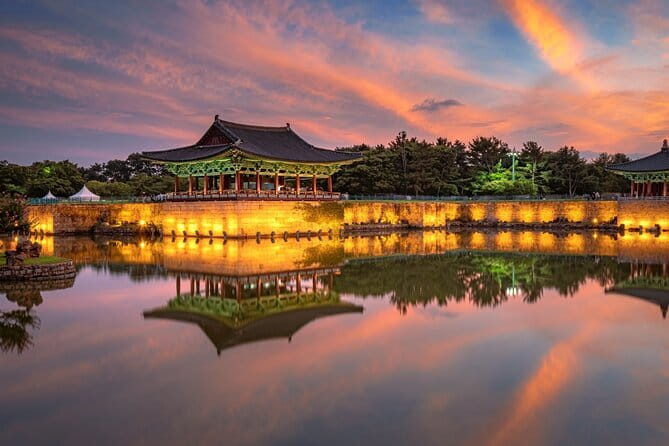
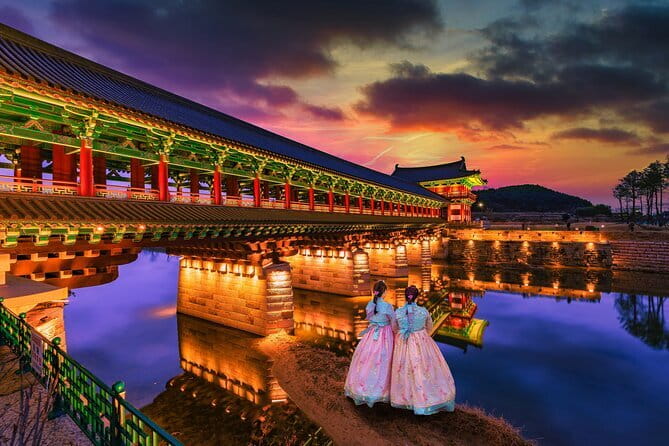
Two things make this tour appealing: Bulguksa Temple gets a generous two hours and 20 minutes, and the day ends with Donggung Palace, Wolji Pond, and Woljeonggyo Bridge after dark. That timing gives you both the formal grandeur of Silla monuments and the softer beauty of Gyeongju at night.
You should also know that lunch and personal expenses are not included. The group can reach as many as 43 people, so the experience may feel more like a classic coach tour than a quiet private outing. Still, English and Chinese-speaking staff, air-conditioned transport, and admission to Donggung and Wolji make the $64 price attractive.
In This Review
- Six details that shape the day
- Why Gyeongju works so well as a day trip from Busan
- Bulguksa Temple: two hours with Silla architecture
- Lunch and the rhythm of a long touring day
- Gyochon Traditional Village and the Choi family story
- Daereungwon Tomb Complex: walking among Silla royal mounds
- Hwangnidan-gil: old buildings with a modern pulse
- Donggung Palace and Wolji Pond after sunset
- Woljeonggyo Bridge under evening lights
- Guides who make the history easier to follow
- Group size, transport, and the real cost of convenience
- Who should book this Gyeongju tour?
- Final call: good value for a full day in Gyeongju
- FAQ
- How long does the Gyeongju tour from Busan last?
- What language is the tour offered in?
- Is transportation included?
- Is lunch included in the price?
- Which admission fee is included?
- How large can the tour group be?
- Can I cancel for a full refund?
Six details that shape the day
- Bulguksa Temple receives the longest stop, with time to study its stone stairways, Buddhist halls, and Silla design.
- Gyochon Traditional Village offers a slower change of pace, with hanok houses and the story of the Gyeongju Choi clan.
- Daereungwon contains 23 royal tombs, including the famous Cheonmachong tomb.
- Hwangnidan-gil adds modern Gyeongju, with street food, coffee, shopping, and restored traditional buildings.
- The evening schedule matters, since Donggung Palace and Wolji Pond are followed by illuminated Woljeonggyo Bridge.
- The guides are a major strength, with Lucy, Kelvin, Bobby Kim, Amy, Sophie, Cindy, and Juna all singled out for friendly, lively presentation.
Why Gyeongju works so well as a day trip from Busan
Gyeongju was the capital of Silla, a Korean kingdom that lasted for roughly 1,000 years and shaped much of the peninsula’s early culture. The city is unusually rewarding because its historic sites are spread through an ordinary provincial city rather than hidden inside a single museum complex.
That makes the day feel varied. You move from a mountain temple to a traditional village, then from grassy royal tombs to a café-lined street. Later, the old royal district takes on a quieter mood beside the pond and stream.
The tour is useful if you are staying in Busan but do not want to arrange several trains, buses, admissions, and walking routes yourself. Gyeongju has many separate sights, and a guide can connect them into one story. You give up some freedom, but you gain structure and transport.
The price is $64 per person. For that amount, you receive round-trip transport by air-conditioned van or coach, English or Chinese-speaking staff, and admission to Donggung Palace and Wolji Pond. Meals, insurance, and other personal spending are extra. Since the day includes several major locations, the cost is reasonable for anyone who values convenience and guided context.
More History Tours in Busan
- From Busan: Gyeongju UNESCO World Heritage Guided Day Tour
★ 4.8 · 1,250 reviews - Gyeongju UNESCO World Heritage Guided Day Tour from Busan
★ 5.0 · 660 reviews - Old Korea Thousand History Tour of Gyeongju from Busan
★ 5.0 · 518 reviews
Bulguksa Temple: two hours with Silla architecture
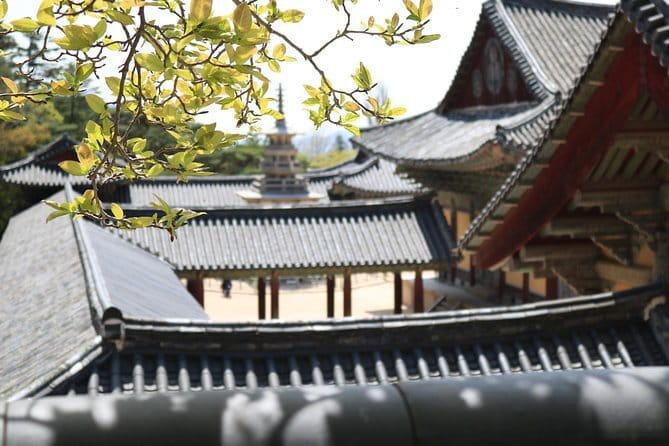
Bulguksa is the grand opening, and the generous 2-hour-20-minute visit is one of the best features of the schedule. This UNESCO World Cultural Heritage site was originally built in the eighth century and is widely regarded as one of Korea’s most important Buddhist temples.
You can expect a large complex with stone stairways, courtyards, wooden halls, and carefully arranged architectural details. The temple is not just a pretty backdrop. Its design reflects the skill and religious ideals of Silla, so a guide adds real value here. Without explanation, you might notice the carved stonework and colorful halls but miss how the parts fit together.
I like that the schedule does not treat Bulguksa as a quick photo stop. Two hours and 20 minutes gives you time to walk through the complex at a sensible pace, pause for pictures, and listen to the guide without feeling rushed from one gate to the next.
The drawback is that the first stop sets a fairly serious historical tone. If you prefer a relaxed shopping day or a short sightseeing outing, this may feel demanding from the start. Comfortable shoes are a practical choice, since temple visits involve walking around a substantial site.
Lunch and the rhythm of a long touring day
Lunch is part of the day’s flow, but the meal is not included in the price. The exact restaurant or menu is not specified, so plan to pay separately and keep your expectations flexible.
This arrangement has one advantage: you are not paying for a set meal you may not want. It also means you should budget for food and be ready for a group-oriented break. The overview places lunch among historic surroundings, which fits the atmosphere of Gyeongju rather than turning the day into a rushed stop at an anonymous roadside restaurant.
The schedule is full, but not absurdly so. The six listed stops add up to nearly seven hours on site, and travel between locations is included in the 10 to 11-hour total. Traffic and weather can change the timing, so you should not expect every stop to run like a train timetable.
Gyochon Traditional Village and the Choi family story
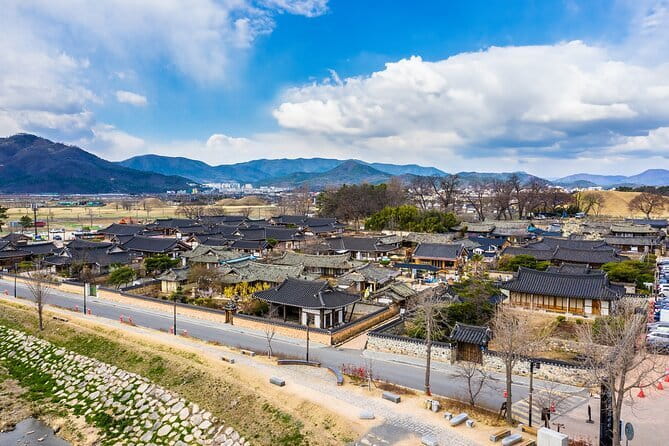
Gyochon Traditional Village receives 1 hour and 40 minutes, making it more than a quick walk past a few old houses. The village centers on the Gyeongju Choi clan, a family known for preserving its wealth over 12 generations and producing influential figures.
The appeal here is personal scale. Bulguksa shows royal and religious ambition. Gyochon turns your attention to homes, family life, traditional crafts, and the way people lived within a historic community. Hanok houses give the stop a strong visual identity, but the family story gives it a human one.
You can expect time to explore rather than simply photograph the entrance. The village is a good place to slow down, notice rooflines and courtyards, and compare older domestic architecture with the newer businesses elsewhere in Gyeongju.
Do not expect a fully preserved village untouched by modern life. That would be an unrealistic picture of a popular historic district. The value is in seeing how traditional buildings and present-day tourism share the same space.
More History Tours in Gyeongju
- From Busan: Echoes of Silla Gyeongju Historical Day Tour
★ 4.8 · 55 reviews - Gyeongju Historic Areas Day Tour with Sky Capsule from Busan
★ 5.0 · 18 reviews - Gyeongju The UNESCO World heritage sites tour(Private tour)
★ 5.0 · 17 reviews - From Busan: Gyeongju Historical Day Tour with Sky Capsule
★ 4.7 · 17 reviews
Daereungwon Tomb Complex: walking among Silla royal mounds
Daereungwon is known as the Park of Royal Tombs and contains 23 tombs from the Silla Dynasty. Instead of entering an underground ruin or viewing a single monument behind glass, you walk through a broad green area dotted with large rounded burial mounds.
The stop lasts about 50 minutes. That is enough to understand the site, see several tombs, and visit the famous Cheonmachong tomb if the group schedule allows. Cheonmachong is especially important because it revealed valuable Silla artifacts, giving historians a clearer picture of royal burial customs and material culture.
This is one of the most unusual sights in Gyeongju. The tombs look simple from a distance, but their size tells you about the power and resources of the people buried inside. I appreciate the contrast with Bulguksa: here, the setting is open and quiet, and the main sight is the shape of the earth itself.
The limitation is the short visit. Fifty minutes will not support a slow, detailed study of every mound. If royal archaeology is your main interest, you may want a separate return visit. On this tour, Daereungwon works best as a focused introduction.
Hwangnidan-gil: old buildings with a modern pulse
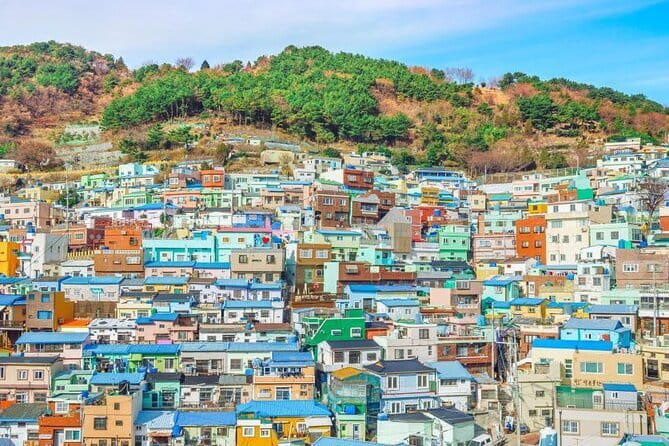
Next comes Hwangnidan-gil Street, directly beside Daereungwon. This is where Gyeongju changes character. Traditional-style buildings now hold cafés, food shops, boutiques, and small businesses, creating a popular meeting point between old and new Korea.
The scheduled hour gives you a taste rather than a full shopping session. You might use it for a snack, specialty coffee, a short browse, or photographs of the street’s mix of tiled roofs and contemporary storefronts. Since food is not included, this is also the most obvious place to spend some of your own money.
I like this stop because it keeps the day from becoming a procession of monuments. History is easier to understand when you see it next to daily life. Hwangnidan-gil shows that Gyeongju is not only an archaeological site. It is also a living city with current tastes and a young social scene.
The tradeoff is that the street can feel more commercial than traditional. If you want untouched historic scenery, this will not be the highlight. If you enjoy a coffee break, street food, and a little browsing, the hour is well used.
Donggung Palace and Wolji Pond after sunset
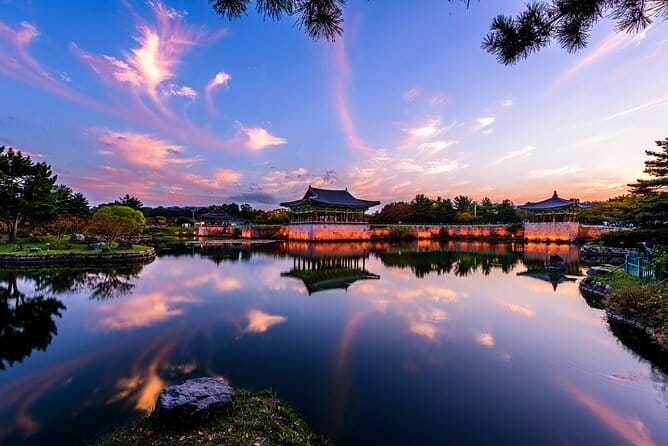
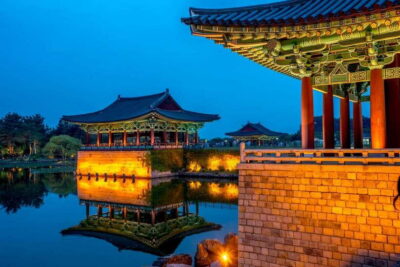
The tour then moves into one of Gyeongju’s most atmospheric stops, Donggung Palace and Wolji Pond. The pond was first constructed in 674 as an artificial water feature connected with the Silla royal complex. In 1972, it was temporarily drained, and thousands of Silla artifacts were found in the mud and water.
The visit lasts about 40 minutes, and evening is the right time for it. Palace buildings reflected in the pond and carefully lit paths create a calm change from the daytime streets. This is a place for looking across the water, listening to the guide, and taking photographs rather than racing through a checklist.
Admission to Donggung and Wolji is included, which improves the value of the tour. The timing also gives the route a clear build: temple in the daytime, village and tombs in the afternoon, royal water gardens at dusk.
Forty minutes is enough for an introduction, but it is not a long private stroll. If you become absorbed in the reflections or want to photograph from several angles, the group schedule may feel tight. Even so, placing this stop late in the day is a smart choice.
Woljeonggyo Bridge under evening lights
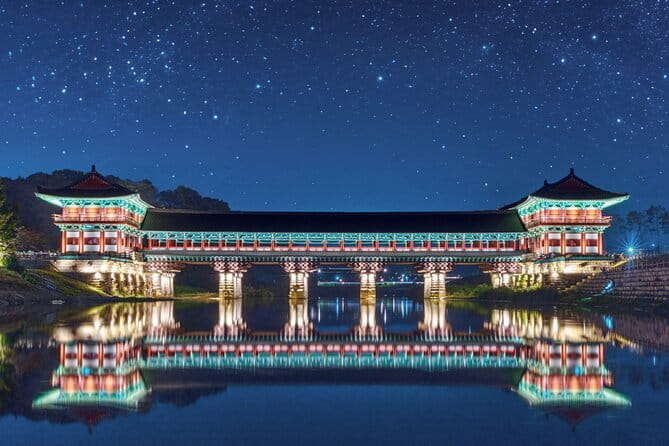
The final stop is Woljeonggyo Bridge, with about 20 minutes for a walk and photographs. The bridge crosses Woljeongcheon Stream and is associated with old Korean engineering, including sturdy stone arches and a long history reaching back centuries.
The short visit works because the bridge is primarily a visual finale. Illuminated at night, it gives you a strong last image of Gyeongju before the return journey. After a day of temples, tombs, and historic houses, the bridge offers a simple closing walk beside the water.
Twenty minutes is not enough for a long riverside exploration. It is enough to cross or approach the bridge, see the lighting, and take pictures. I would keep your camera ready and avoid spending the entire stop in one place.
Guides who make the history easier to follow
The strongest praise for this experience centers on the guides. Lucy and Kelvin are described as warm, fun, and proud to share Korea’s past. Bobby Kim is praised for his energy and storytelling, while Amy is noted for being helpful during a long day.
Sophie receives particular approval for her friendly manner, clear English, and ability to keep the group organized. Cindy works with her on the English-speaking portion. Juna is also praised for making the history informative without creating dull stretches.
Guide quality can vary on any shared tour, but the repeated pattern here is encouraging. The best guide for this route will not merely name a temple or tomb. They will help you understand why Silla mattered, how the sites connect, and what details are worth noticing.
English and Chinese-speaking staff are included. If you need a specific language, confirm the arrangements when booking, since the information provided does not promise that every departure will offer both languages in the same way.
Group size, transport, and the real cost of convenience
Transport is by air-conditioned van or coach, and the maximum group size is 43 people. That is a significant detail. A coach-sized group can make the $64 price possible, but it may also mean waiting for people to regroup and listening to explanations from a little farther away.
Travel time between stops is already part of the 10 to 11-hour day. You should think of this as a complete excursion from Busan, not a short local outing. The air-conditioned vehicle matters, especially after walking at Bulguksa, Gyochon, Daereungwon, and the evening sites.
The tour is near public transportation, and most people can participate. Specific accessibility details are not provided, so anyone needing special arrangements should ask the provider before booking. The route includes several walking stops, and the schedule can change with traffic or weather.
Free cancellation is available if you cancel at least 24 hours before the local start time. Changes or cancellations within 24 hours are not accepted for a refund. That is a useful safety net, but it does not cover a last-minute change of plans.
Who should book this Gyeongju tour?
I would recommend it most strongly to you if:
- You are staying in Busan and want to see Gyeongju without arranging transport yourself.
- You care about Korean history, temples, royal tombs, and traditional architecture.
- You prefer a guide to explain what you are seeing.
- You want a full day with both major monuments and modern city life.
- You enjoy evening photography and scenic stops.
- You are comfortable with a shared group and a firm schedule.
I would think twice if you want a slow, private visit with long meals and plenty of unscheduled wandering. The day covers a lot of ground, and the group may be large. You also need to pay for lunch and personal purchases separately.
Final call: good value for a full day in Gyeongju
At $64, this is a solid way to reach Gyeongju from Busan and see its key Silla-era sights in one day. The route is well balanced: Bulguksa supplies the major temple, Gyochon adds traditional homes, Daereungwon brings royal burial grounds, Hwangnidan-gil shows modern Gyeongju, and the final two stops provide memorable evening scenery.
The main reason to book is the combination of planning and guiding. Names such as Lucy, Kelvin, Bobby Kim, Amy, Sophie, Cindy, and Juna are associated with friendly, energetic explanations, and that matters on a history-heavy route.
Book it if you want a convenient first look at Gyeongju and can handle a long day. Skip it if you would rather spend a night in the city and explore each district at your own pace. For most first-time visitors based in Busan, the tour offers a practical and enjoyable introduction to Korea’s Silla capital.
FAQ
How long does the Gyeongju tour from Busan last?
The tour lasts approximately 10 to 11 hours, including travel time between the stops.
What language is the tour offered in?
English and Chinese-speaking staff are included.
Is transportation included?
Yes. Transport by air-conditioned van or coach is included.
Is lunch included in the price?
No. Meals are not included, so you need to pay for lunch and any other food yourself.
Which admission fee is included?
Admission to Donggung Palace and Wolji Pond is included. The other listed stops show no admission ticket charge.
How large can the tour group be?
The maximum group size is 43 people.
Can I cancel for a full refund?
Yes, if you cancel at least 24 hours before the experience start time. Cancellations or changes made less than 24 hours before the start are not accepted for a refund.
Just added in Busan
- Small Group 7D Korea package Tour with Seoul Gyeongju Busan Jeju★ 4.5 · 13 reviews
- Private Transfer from Seoul to Busan(up to 12 passengers)★ 5.0 · 1 review
- Jinhae Cherry Blossom + Busan Sunrise from Seoul★ 4.5 · 5 reviews
- 7 days Flexible Tour for Major Cities(Seoul,Busan,Gyeongju etc)★ 5.0 · 5 reviews
- PREMIUM 5 Days Tour for Wonder of Korea(Mt. Seoraksan, Andong, Gyeongju, Busan)★ 5.0 · 1 review
- 5 Days Tour for Korea’s past and present(Mt.Seoraksan, Andong, Gyeongju, Busan)★ 5.0 · 1 review
- 7 Days Highlight Korea Tour(Seoul, Nami, DMZ, Andong, Gyeongju, Busan)★ 5.0 · 1 review
- 5-Day Korea Golden route by K-shuttle Tour from Seoul Including Busan, Yeosu★ 4.5 · 37 reviews
Historical Tours, compared.
Gyeongju UNESCO World Heritage Guided Day Tour
Read our review →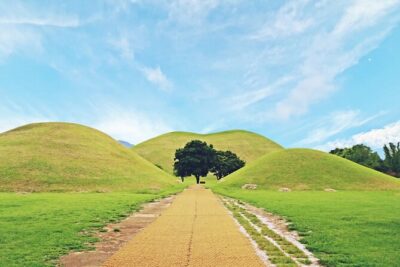
Gyeongju UNESCO World Heritage Guided Day Tour from Busan
Read our review →
Evening Dark History, Folklore & Ghost Story Walking Tour
Read our review →
Old Korea Thousand History Tour of Gyeongju from Busan
Read our review →
Hanbok Photoshoot and History Tour at Gyeongbokgung Palace
Read our review →
UNESCO Heritage Tour Including Bulguksa Temple
Read our review →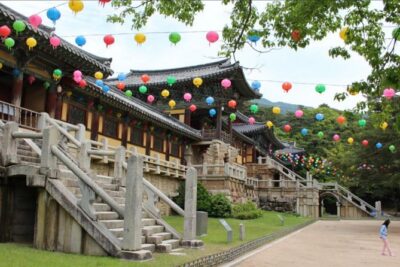
Gyeongju UNESCO World Heritage Sites and History Full-Day Tour with Lunch
Read our review →Browse the lists this tour appears in