
Reviewed · HISTORICAL TOURS
From Busan: Gyeongju Full-Day Historical Tour
Ancient Korea is closer than you think. This 10-hour trip links Bulguksa Temple and Donggung Palace and Wolji Pond with royal tombs, a traditional village, and the old streets of Gyeongju. I like the included admission fees and the simple pickup and drop-off at central Busan meeting points. I also like the mix of major sights and free time. The drawback is the length: one recent booking ran from about 11 a.m. to 9:30 p.m., and you may return tired.
You travel in a van or bus through the Korean countryside, with an English guide explaining how Gyeongju relates to the Three Kingdoms and Unified Silla periods. Guide Bada received especially warm praise for making the day informative and entertaining, though one account noted some confusion on the road. Crowds can also limit your time at the most popular monuments, so this is a sightseeing sweep, not a slow archaeological study.
In This Review
- Key points at a glance
- Why Gyeongju makes a good day trip from Busan
- Meeting the bus in Busan
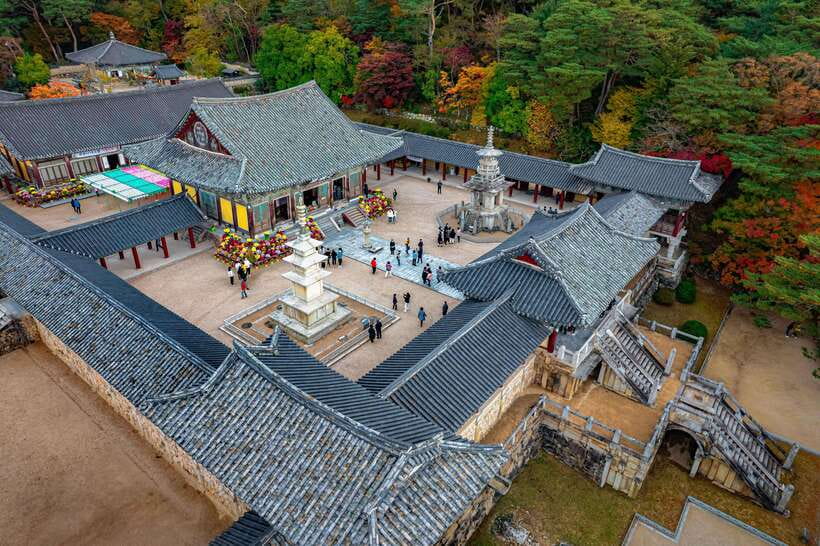
- Bulguksa Temple: a strong first stop
- Lunch and the practical middle of the day
- Yangdong Traditional Village and its hanok houses
- Daereungwon Tomb Complex and the Silla royal past
- Hwangridan-gil and the everyday side of old Gyeongju
- Cheomseongdae, Korea’s ancient observatory
- Donggung Palace and Wolji Pond at the finish
- How good is the guide service?
- The long-day question
- Is $60 good value?
- Should you book this Gyeongju tour?
- FAQ
- How long does the Gyeongju tour last?
- Where does the tour begin in Busan?
- Where does the tour finish?
- Is transportation included?
- Are attraction admission fees included?
- Is lunch included?
- What language is the guide service?
- What should I bring?
- Can I join if I use a wheelchair?
Key points at a glance
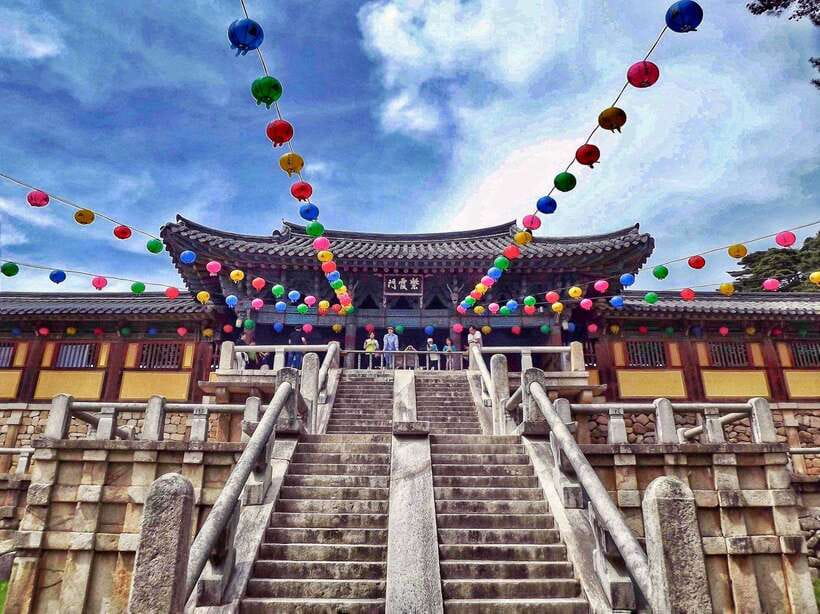
- Bulguksa sets the historical tone: Spend about 70 minutes at one of Korea’s best-known Buddhist temple sites, with admission and guiding included.
- Wolji Pond is the visual finale: The palace buildings reflected in the water give you one of the day’s most memorable views.
- You see several sides of Gyeongju: The schedule combines temples, tombs, a hanok village, a 1960s street, and an astronomical observatory.
- The $60 price covers the main costs: Transportation, attraction entry, and an English and Chinese tour guide are included, but lunch, drinks, insurance, and personal spending are not.
- Plan for a physically active day: Comfortable shoes and sunscreen matter, and the tour is not suitable for wheelchair users or people with mobility impairments.
- Free cancellation gives you some breathing room: You can cancel up to 24 hours before departure for a full refund, and reserve now while paying later.
Why Gyeongju makes a good day trip from Busan
Busan is a modern port city, but Gyeongju offers a very different sense of time. It was the center of the Silla kingdom and later the Unified Silla period, when much of the Korean Peninsula came under one rule. The tour uses that long story as its thread, moving from Buddhist architecture to royal burial grounds and courtly buildings.
I find the route appealing because it does not rely on just one famous stop. Bulguksa gives you religion and architecture. Daereungwon gives you royal burial customs. Yangdong Traditional Village shows traditional homes and village design. Cheomseongdae adds a scientific note, while Wolji Pond brings the royal court back into view.
The price is reasonable for a full day from Busan. You are paying $60 for transport, admission to the listed attractions, and a live English guide. That can be good value when you consider the distance between Busan and the separate sites around Gyeongju. You still need to buy your own meal and drinks, and you should budget for personal purchases.
The trade-off is pace. Six main sightseeing stops, a meal break, and short periods of free time fill a long day. If you want to sit quietly at each temple or take dozens of photographs at every site, the schedule may feel tight.
More History Tours in Busan
- From Busan: Gyeongju UNESCO World Heritage Guided Day Tour
★ 4.8 · 1,250 reviews - Gyeongju UNESCO World Heritage Guided Day Tour from Busan
★ 5.0 · 660 reviews - Old Korea Thousand History Tour of Gyeongju from Busan
★ 5.0 · 518 reviews
Meeting the bus in Busan
There are three starting points, identified in the booking information by these map codes: 5356+G3, 427Q+GM, and 5575+78. Your exact meeting point depends on the option you choose, so check it carefully before leaving your accommodation.
Pickup and drop-off at central Busan points are useful if you do not want to arrange a separate intercity journey. Once aboard the van or bus, you can watch the Korean countryside pass by instead of handling directions, transfers, and attraction tickets yourself.
The transport is described as comfortable and spacious, but the day is still long. One booking account recorded roughly 10 and a half hours in the vehicle and on tour, from 11 a.m. to 9:30 p.m. That detail matters if you have evening plans in Busan. I would leave the night open.
Bulguksa Temple: a strong first stop
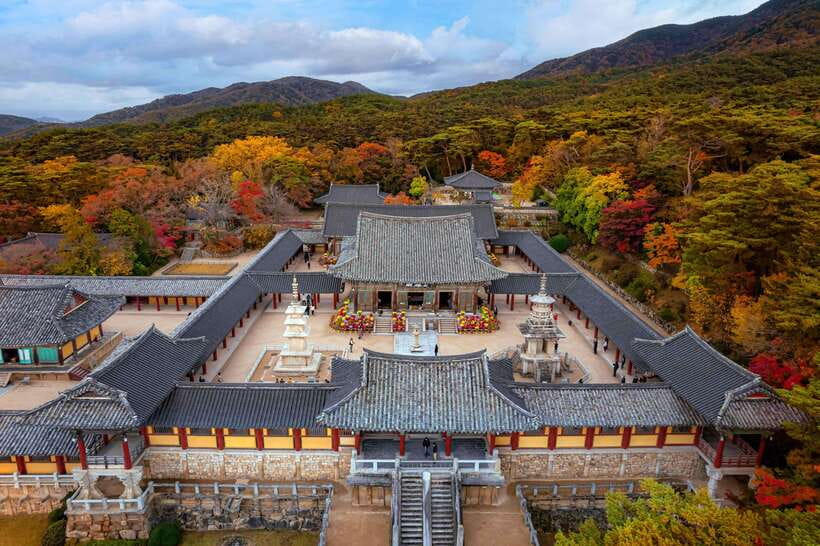
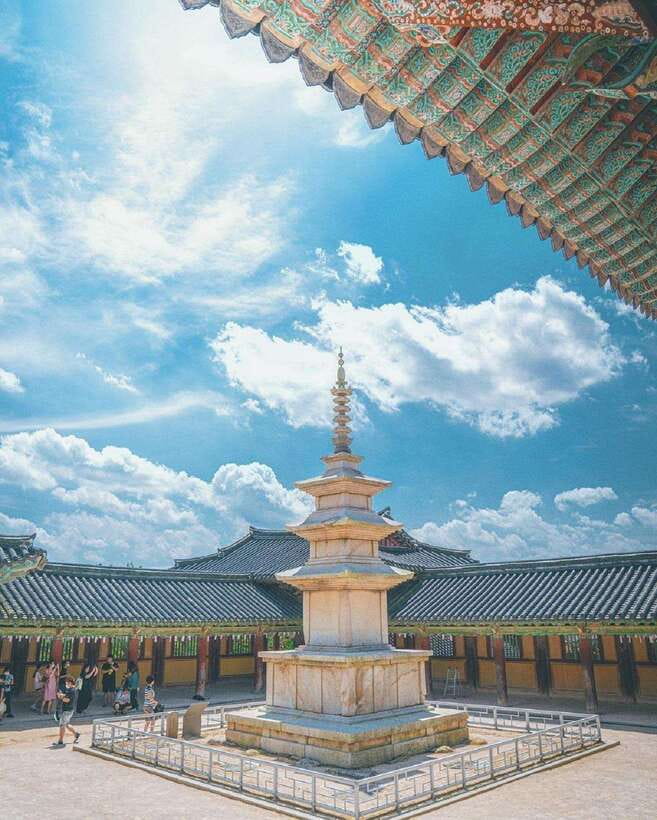
The day begins in Gyeongju at UNESCO-listed Bulguksa Temple, with about 70 minutes for a guided visit. The temple is valued not only for its buildings, but also for how its stonework and structures fit the surrounding setting.
Your guide explains the site and points out the relationship between the temple and the natural setting. That guidance helps you read details that can be easy to miss if you arrive without context. The visit also gives the tour a calm and serious opening before the busier parts of the day.
Seventy minutes is enough for an introduction and photographs, but it is not an exhaustive visit. If Buddhist art, temple design, or Silla-era construction is your main interest, you may wish for more time. For a day tour, though, this is a worthwhile use of the schedule.
Wear shoes that are easy to walk in. The tour specifically advises comfortable footwear, and sunscreen is sensible because several stops involve time outdoors.
Lunch and the practical middle of the day
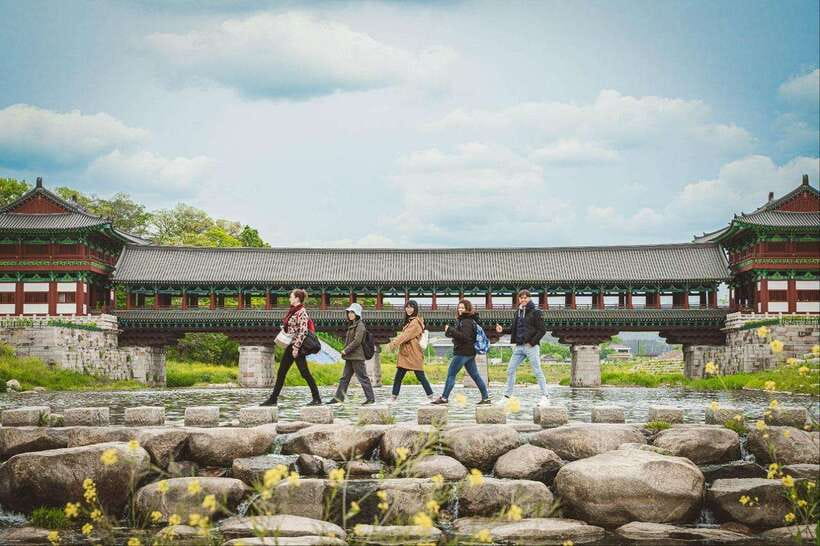
A local restaurant break lasts about one hour. Food is not included, so you pay for your own meal and drinks.
The supplied details do not specify the restaurant, menu, or dietary arrangements. I would treat this as a useful pause rather than a featured food experience. Bring any essentials you need, especially if you have strict dietary requirements, since no special meal information is provided.
The break also matters physically. The rest of the route includes open sites, walking, and several stops close together. Use this hour to eat, refill water, and check the weather before continuing.
More History Tours in Gyeongju
- From Busan: Echoes of Silla Gyeongju Historical Day Tour
★ 4.8 · 55 reviews - Gyeongju Historic Areas Day Tour with Sky Capsule from Busan
★ 5.0 · 18 reviews - Gyeongju The UNESCO World heritage sites tour(Private tour)
★ 5.0 · 17 reviews - From Busan: Gyeongju Historical Day Tour with Sky Capsule
★ 4.7 · 17 reviews
Yangdong Traditional Village and its hanok houses
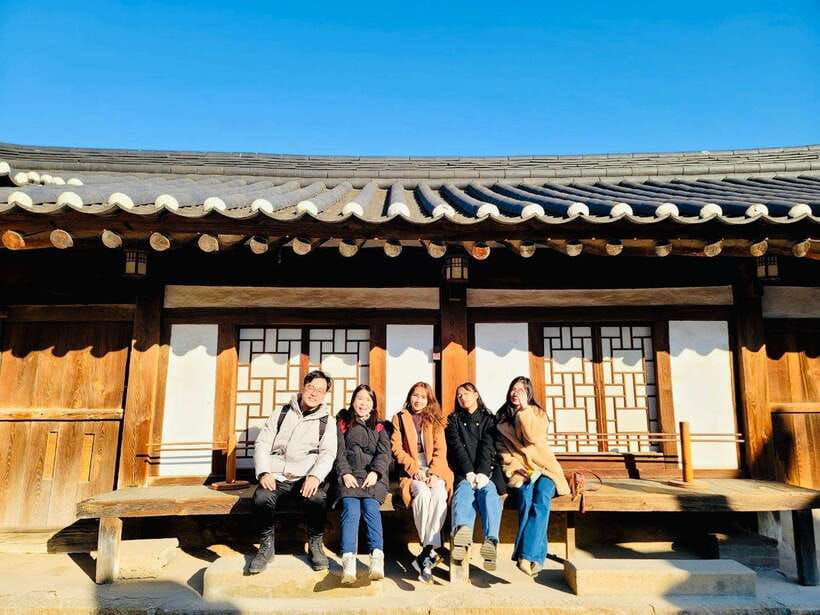
Yangdong Folk Village brings a more intimate kind of history. Instead of monumental temples and royal tombs, you see elegant hanok houses and a traditional village setting. The guided visit and photo stop last about one hour.
This is one of the tour’s best changes of pace. The buildings help you picture how traditional Korean homes were arranged and used. The charm comes from the village as a whole, not from one single object.
The schedule describes the stop as a guided visit with time for photographs. That means you should listen for the larger explanation, then use the remaining minutes to study the houses and take pictures. Avoid expecting a slow, private wander through every lane. The full-day route has to keep moving.
Daereungwon Tomb Complex and the Silla royal past
At Daereungwon, you enter one of Gyeongju’s most important burial areas. The complex contains large tombs linked to Silla monarchs, queens, and high-ranking aristocrats. The rounded grassy mounds are easy to recognize, but their scale and purpose become clearer with a guide’s explanation.
The visit lasts about one hour. I like this stop because it gives you a direct sense of how Silla society marked status and power. These are not just attractive green mounds. They are royal and aristocratic burial places, and their presence explains why Gyeongju feels less like a typical city sightseeing stop and more like an open historical district.
You also get a short 30-minute break and photo period after the tomb complex. That free time is useful for taking pictures without having to follow every spoken explanation. It is one reason the tour feels less rigid than a nonstop march between monuments.
Hwangridan-gil and the everyday side of old Gyeongju
The route continues through Hwangridan-gil, a street lined with carefully preserved buildings from the 1960s. This section offers a different look at Gyeongju. Instead of focusing only on ancient Silla, you see a more recent layer of the city.
The old-fashioned atmosphere works well between the tombs and the palace grounds. You can stroll, take in the preserved façades, and enjoy a brief sense of ordinary town life. The supplied schedule gives 30 minutes for a break, photographs, and free time, so use it to set your own pace.
Do not confuse this with a long independent shopping visit. The time is short, and the tour still has Cheomseongdae and Wolji Pond ahead. Keep an eye on the meeting instructions so a quick wander does not become a stressful dash back to the vehicle.
Cheomseongdae, Korea’s ancient observatory
Cheomseongdae is a 30-minute photo stop. The stone structure is associated with astronomy during the Silla period, adding science to a day otherwise dominated by religion, royal power, and traditional homes.
Because this is listed as a photo stop rather than a long guided visit, expect a concise look. Your guide may provide useful context, but the schedule does not allow a lengthy examination. It works best as a compact stop that breaks up the route and gives you another recognizable Gyeongju landmark.
The half-hour also gives you another chance to rest your legs before the final major sight. Keep sunscreen handy, since the tour takes place rain or shine and much of the day is outdoors.
Donggung Palace and Wolji Pond at the finish
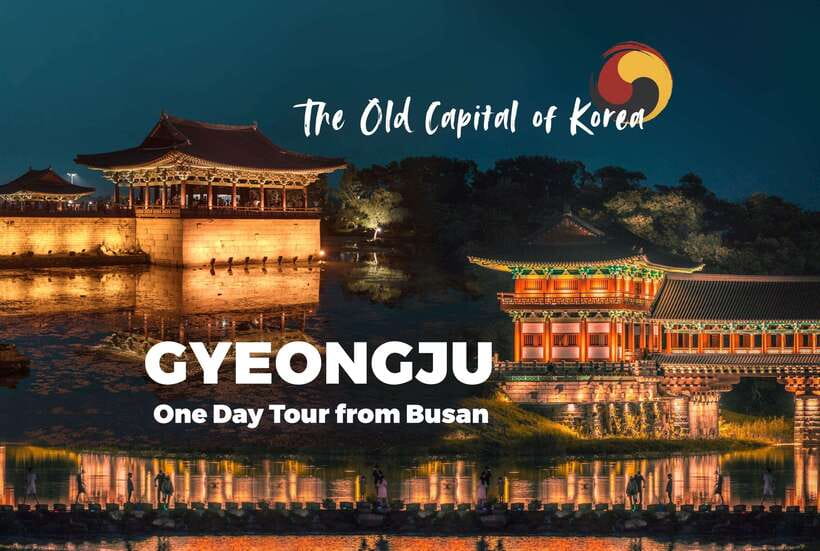
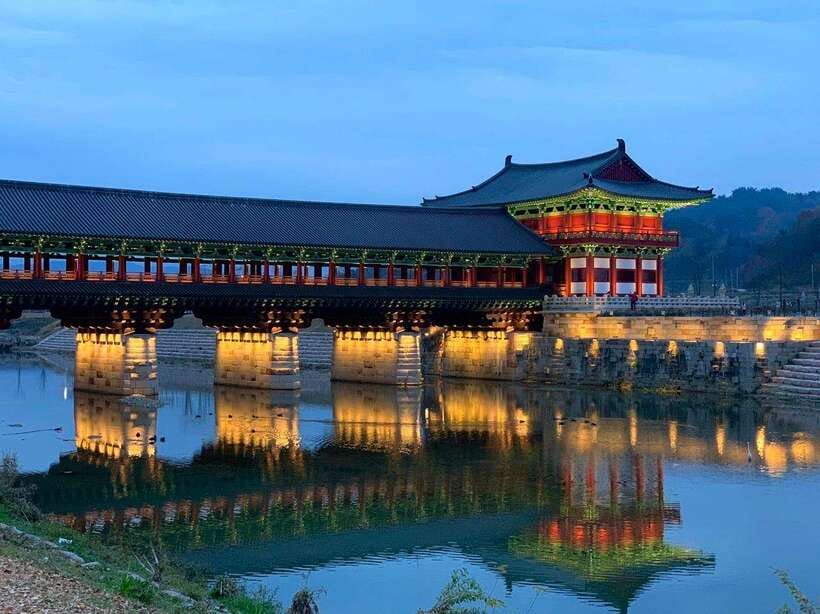
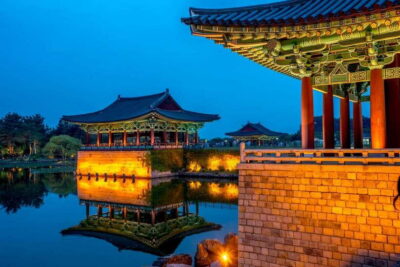
The final major stop is Donggung Palace and Wolji Pond, also known as Anapji Pond. You have about one hour for sightseeing and photographs.
This is the tour’s most polished visual moment. Palace buildings line the water, and their reflections create the scene that many people remember most clearly from Gyeongju. Your guide explains the palace’s connection to the Unified Silla period, giving the view a historical frame instead of leaving it as a simple photo stop.
The timing is sensible. After temples, tombs, village houses, and an observatory, the pond offers a quieter and more graceful finish. Still, crowds can affect your experience. A recent booking found that busy conditions made it difficult to enjoy the sights fully. You may need patience at the best viewpoints, especially if several groups arrive together.
This is also a good reason to bring a phone or camera with enough battery. The palace reflections are the kind of scene you will want to photograph, but do not let the camera keep you from listening to the explanation.
How good is the guide service?
The tour includes an English and Chinese guide, with English specifically listed for this activity. The strongest praise in the supplied feedback went to the guides, especially Bada, who was described as informative, entertaining, and good at keeping the day varied.
Another booking praised two friendly guides who gave plenty of explanations and created a pleasant mood. That matters on a long coach outing. A guide who can connect each stop to the Three Kingdoms and Unified Silla story makes the route feel like one journey rather than a pile of unrelated attractions.
There is one caution. A booking also noted some wrong turns during the drive. That may have added time and frustration, though it did not erase the positive comments about the guides themselves. I would judge this as a generally strong guiding experience with the possibility of ordinary road or navigation hiccups.
The current score is 4.1 out of 5 from six reviews. That is a good, not perfect, result. The pattern is clear: the guides and organization receive the warmest praise, while crowding, the long duration, and the mixed appeal of some sights are the main reservations.
The long-day question
Ten hours is a serious commitment. You leave Busan, spend the day moving among several Gyeongju sites, and return to your original Busan meeting point. One account described everyone as quite tired by the end, which is entirely believable given the timetable.
You should book this if you want broad coverage in one day and prefer someone else to handle transport. You may not enjoy it as much if you want a relaxed pace, long meals, or extended time at one temple.
The tour is not suitable for people with mobility impairments or wheelchair users. The information does not give a detailed step-free plan, so anyone with walking concerns should choose carefully. Comfortable shoes are essential even if you normally manage full sightseeing days well.
Is $60 good value?
For $60, the package includes transportation from a Busan meeting point, entry to the visited attractions, and an English and Chinese guide. That is a fair price for reaching multiple Gyeongju sites in one day without arranging separate transport.
Food and drinks are extra, as are travel insurance and personal expenses. The final cost will therefore be higher than the advertised price, but the main sightseeing costs are already covered.
I think the value is strongest for first-time visitors to Gyeongju who want an efficient overview. You get the major names, a guide to connect them, and a ride back to Busan. The value is weaker for repeat visitors who already know the city or who would rather spend a whole morning at Bulguksa and the afternoon at Wolji Pond.
The free cancellation policy also helps. You can cancel up to 24 hours in advance for a full refund, and the reserve-now, pay-later option keeps your plans flexible.
Should you book this Gyeongju tour?
Book it if you have one open day from Busan and want to see the main historical sights without managing a complicated route. I especially recommend it for first-time visitors who value explanation, included admission, and a guide who can connect royal tombs, Buddhist buildings, village homes, and Unified Silla court culture.
Think twice if crowds frustrate you, if you dislike long vehicle days, or if you need wheelchair access. The schedule is full, the return may be late, and the best sites may feel hurried when busy.
For most able-bodied visitors with limited time, I see this as a practical introduction to Gyeongju. It gives you the broad picture. You can return later for the slower version.
FAQ
How long does the Gyeongju tour last?
The tour lasts 10 hours. One booking described being out from about 11 a.m. until 9:30 p.m., so you should allow for a long day.
Where does the tour begin in Busan?
There are three possible starting points: 5356+G3, 427Q+GM, and 5575+78. The exact meeting point depends on the option booked.
Where does the tour finish?
Drop-off is available at the same three listed locations: 5575+78, 427Q+GM, and 5356+G3.
Is transportation included?
Yes. Transportation from the designated Busan meeting point is included, using a comfortable and spacious van or bus.
Are attraction admission fees included?
Yes. Entry to the visited attractions is included in the tour price.
Is lunch included?
No. The tour includes a one-hour break at a local restaurant, but food and drinks are not included.
What language is the guide service?
The activity lists a live English guide and also specifies English and Chinese tour guide service in the included features.
What should I bring?
Bring comfortable shoes and sunscreen. The tour runs in rain or shine.
Can I join if I use a wheelchair?
No. The tour is not suitable for wheelchair users or people with mobility impairments.
Just added in Busan
- Small Group 7D Korea package Tour with Seoul Gyeongju Busan Jeju★ 4.5 · 13 reviews
- Private Transfer from Seoul to Busan(up to 12 passengers)★ 5.0 · 1 review
- Jinhae Cherry Blossom + Busan Sunrise from Seoul★ 4.5 · 5 reviews
- 7 days Flexible Tour for Major Cities(Seoul,Busan,Gyeongju etc)★ 5.0 · 5 reviews
- PREMIUM 5 Days Tour for Wonder of Korea(Mt. Seoraksan, Andong, Gyeongju, Busan)★ 5.0 · 1 review
- 5 Days Tour for Korea’s past and present(Mt.Seoraksan, Andong, Gyeongju, Busan)★ 5.0 · 1 review
- 5-Day Korea Golden route by K-shuttle Tour from Seoul Including Busan, Yeosu★ 4.5 · 37 reviews
- 7 Days Highlight Korea Tour(Seoul, Nami, DMZ, Andong, Gyeongju, Busan)★ 5.0 · 1 review
Historical Tours, compared.
Gyeongju UNESCO World Heritage Guided Day Tour
Read our review →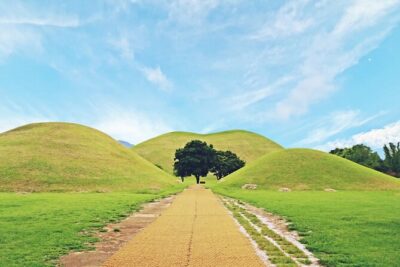
Gyeongju UNESCO World Heritage Guided Day Tour from Busan
Read our review →
Evening Dark History, Folklore & Ghost Story Walking Tour
Read our review →
Old Korea Thousand History Tour of Gyeongju from Busan
Read our review →
Hanbok Photoshoot and History Tour at Gyeongbokgung Palace
Read our review →
UNESCO Heritage Tour Including Bulguksa Temple
Read our review →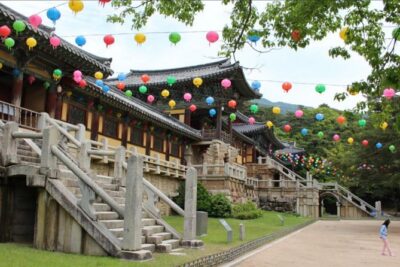
Gyeongju UNESCO World Heritage Sites and History Full-Day Tour with Lunch
Read our review →Browse the lists this tour appears in