
Reviewed · UNESCO WORLD HERITAGE TOURS
Busan: Gyeongju UNESCO Legacy Tour with National Museum
Ancient Korea makes a fine day trip. This $48 Gyeongju tour from Busan packs temples, royal tombs, a bamboo forest, a museum, and traditional neighborhoods into one long day. I like the strong mix of nature and culture, and I like the small-group feel often provided by the clean, comfortable van. The main drawback is the pace: twelve hours and many stops leave little room for lingering.
The tour also takes care of the awkward parts of visiting Gyeongju independently, including the long drive, parking, tolls, and route planning. Guides such as Kang, Yaho, DK, Chris, and Drake have earned praise for clear English, humor, patience, and personal attention. Still, lunch and admission to Ahopsan Forest and Donggung Palace and Wolji Pond cost extra, so the headline price is not the final cost.
In This Review
- Key points at a glance
- Why Gyeongju deserves a full day from Busan
- Ahopsan Bamboo Forest begins the day quietly
- Lunch is local, but budget separately
- Bulguksa Temple is the day’s essential stop
- Gyochon Village shows everyday tradition
- Gyeongju National Museum puts the pieces together
- Donggung Palace, royal tombs, and Woljeonggyo Bridge
- A comfortable van makes the packed route possible
- Guides add the value you cannot get from a map
- What $48 really buys you
- Who should book this Gyeongju day tour
- Should you book it?
- FAQ
- How long does the Gyeongju tour last?
- Where can I join the tour in Busan?
- Is the Busan Station pickup at the KTX gate?
- Is lunch included in the price?
- Are attraction admission fees included?
- Can I visit Donggung Palace and Wolji Pond instead of the museum?
- Can Ahopsan Forest be skipped?
- What happens during cherry blossom season?
- What language does the guide speak?
- Are pickup and drop-off included?
Key points at a glance
- A full Silla-era day from Busan: You see major cultural sites without changing hotels or arranging several local transfers.
- Ahopsan is a peaceful opening: The 400-year-old bamboo grove gives the day a quiet start, though entry is optional and not included.
- Bulguksa is the historic centerpiece: Stone pagodas, temple halls, and wooded courtyards reward both guided explanation and free wandering.
- Spring brings a different plan: From March 24 to April 12, Dalmaji Hill or Daereungwon may replace some regular stops, depending on blossoms and conditions.
- Small groups improve the experience: The van can feel personal, especially when the group is only two, three, or six people.
- The schedule is ambitious: You gain breadth, but some stops last only 30 minutes.
Why Gyeongju deserves a full day from Busan
Busan is Korea’s lively port city. Gyeongju offers a very different mood, shaped by the Silla kingdom, which ruled much of the Korean Peninsula for centuries. Its old temples, tombs, bridges, and museum collections are spread across a broad area, so transport matters.
That is the real value of this tour. At $48 per person, you are paying not only for a guide but also for a vehicle, fuel, tolls, parking, and round-trip transport from central Busan. A public transport day could cost less in fares, but it would require more planning and would make this number of stops difficult.
The tour starts at Busan Subway Station Exit 4 at 8:10, Seomyeon Subway Station Exit 4 at 8:30, or Haeundae Subway Station Exit 5 at 9:10. If you choose Busan Station, note the meeting point carefully: it is not the KTX gate.
You return to the same three general areas in the evening. Exact arrival time can shift with traffic, and traffic between Busan and Gyeongju can be heavy during holidays or poor weather. One useful feature is WhatsApp contact, so provide accurate contact details before departure.
More Busan trips:
- Busan: Gyeongju Guided Day Trip to Three Kingdoms Capital
★ 4.8 · 1,925 reviews - From Busan: Gyeongju UNESCO World Heritage Guided Day Tour
★ 4.8 · 1,250 reviews - Gyeongju UNESCO World Heritage Guided Day Tour from Busan
★ 5.0 · 660 reviews
Ahopsan Bamboo Forest begins the day quietly
Ahopsan Bamboo Forest is a 400-year-old grove known for its calm paths and cinematic appearance. The bamboo gives you a softer start than a busy monument, with tall green stems, filtered light, and a sense of separation from the road.
The planned visit lasts about an hour. That is enough for a walk and photographs, but not enough for a long forest ramble. Admission is not included, and the forest is optional. If you prefer not to enter, you can relax at a nearby café with scenic views.
This choice gives the morning some flexibility, but it also means you should confirm what your day includes. The supplied details describe both the forest and a café alternative, so the exact arrangement may depend on conditions and the group’s choice.
Spring can change the opening act. From March 24 through April 12, the tour may visit Haeundae Dalmaji Hill instead, depending on cherry blossom timing and local conditions. Dalmaji-gil is especially suited to a coastal Busan view and seasonal flowers, while Ahopsan offers a quieter nature experience.
Lunch is local, but budget separately
Lunch takes about an hour at a local restaurant, and the meal is not included in the $48 price. You should allow extra money for food and tell the operator in advance about allergies, dietary restrictions, or other needs.
The exact restaurant can vary. One particularly useful detail is that a typical Korean buffet has been available for about 9,900 Korean won, though that should not be treated as a fixed price or guaranteed menu.
Lunch is more than a fuel stop on a day this long. It gives you a chance to try Korean food without spending time searching for a restaurant in an unfamiliar part of Gyeongju. It also breaks up the long run of historical sites.
Bulguksa Temple is the day’s essential stop
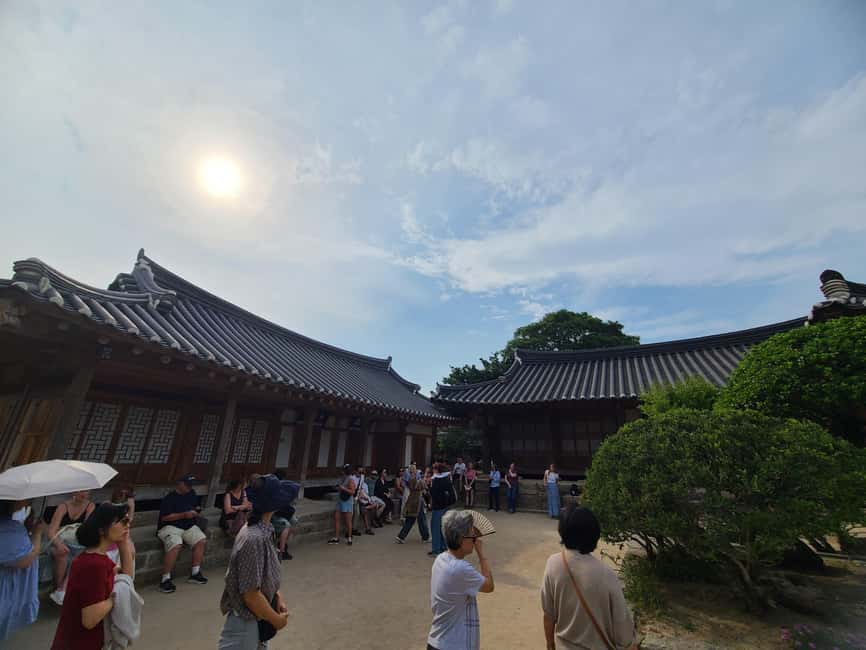
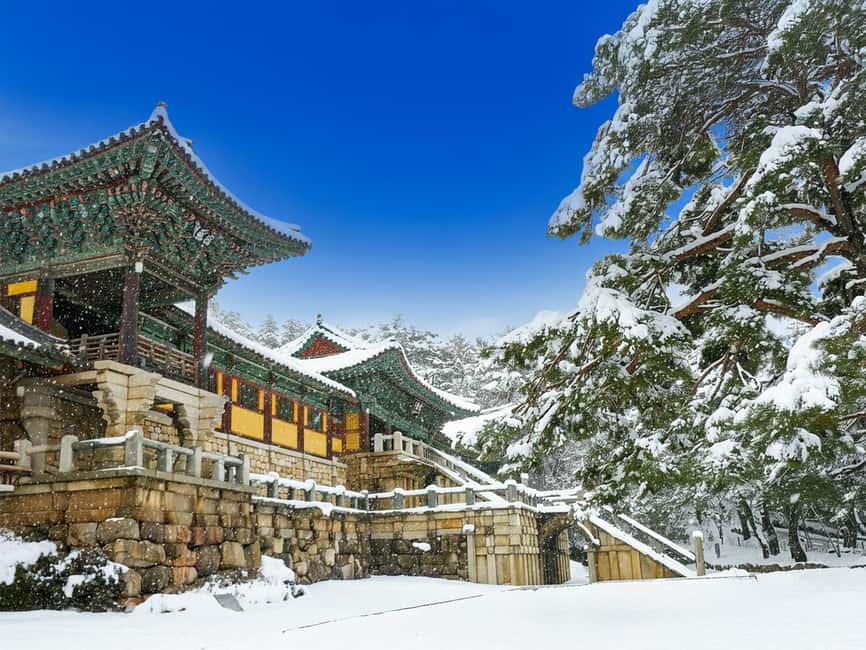
Bulguksa Temple is the strongest reason to book this experience. The UNESCO World Heritage site presents Silla Buddhist design through temple halls, stone stairways, courtyards, and famous pagodas set among trees.
The planned visit lasts around an hour. That is enough to see the principal areas and hear the story behind the stonework, but you should not expect a slow, detailed architectural study. The best approach is to stay with the guide for the introduction, then use your free time for photographs and a quiet look around.
Several people who joined the tour singled out the temple as their favorite stop. That makes sense. A guide can explain why a pagoda matters, how the site reflects Silla beliefs, and what you are actually seeing instead of leaving you with a collection of attractive buildings.
The tour’s guides have different personalities, but the strongest pattern is clear explanation combined with warmth. Kang is repeatedly praised for patience and for giving enough free time. Yaho is praised for Buddhist and Korean cultural knowledge, careful driving, and checking on the group. The guide assigned to your departure may be someone else, so treat these names as examples rather than a promise.
More Gyeongju trips:
- Old Korea Thousand History Tour of Gyeongju from Busan
★ 5.0 · 518 reviews - Gyeongju UNESCO sites Private tour with licensed tour guide
★ 5.0 · 275 reviews - Private Gyeongju Tour – Explore Gyeongju UNESCO Sites
★ 5.0 · 272 reviews - Gyeongju: UNESCO Heritage Tour Including Bulguksa Temple
★ 4.8 · 104 reviews
Gyochon Village shows everyday tradition
After Bulguksa, the tour shifts from royal and religious history to traditional neighborhood life. Gyeongju Gyochon Traditional Village contains hanok houses and historic places connected with older ways of living.
The village visit is listed at about 30 minutes, followed by another 30 minutes at Choe Jun’s House. That is brief, but it adds useful variety. Instead of seeing only grand monuments, you get a look at domestic architecture, local crafts, food, and the feel of a traditional street.
This is also a practical place to eat. One person particularly enjoyed bibimbap in the village, including both bulgogi and vegetarian versions. Your time here may be too short for a long meal and extensive browsing, so follow the guide’s instructions closely.
The short duration is both a strength and a weakness. You see more of Gyeongju, but you may leave wishing for another hour. If your priority is quiet exploration of hanok lanes, this tour may feel rushed.
Gyeongju National Museum puts the pieces together
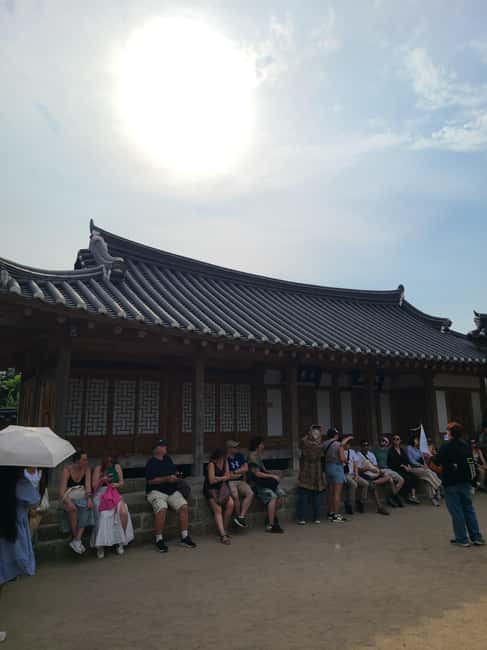
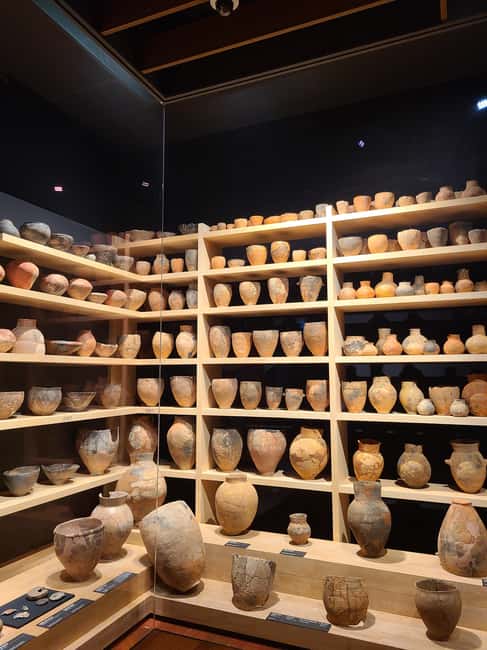
The Gyeongju National Museum is normally the tour’s main indoor history stop. Its Silla artifacts and national treasures help explain the monuments you have already seen, giving context to the kingdom’s art, religion, burial customs, and material culture.
About an hour is allocated here. That is a sensible amount for a broad introduction, especially after a full morning outdoors. You can focus on the major objects and ask the guide questions rather than trying to read every display.
The museum is particularly valuable after Bulguksa. A pagoda or temple roof can be beautiful on its own, but museum objects help you understand the craft and beliefs behind it. For families, this balance of objects and outdoor places can make the ancient history easier to follow.
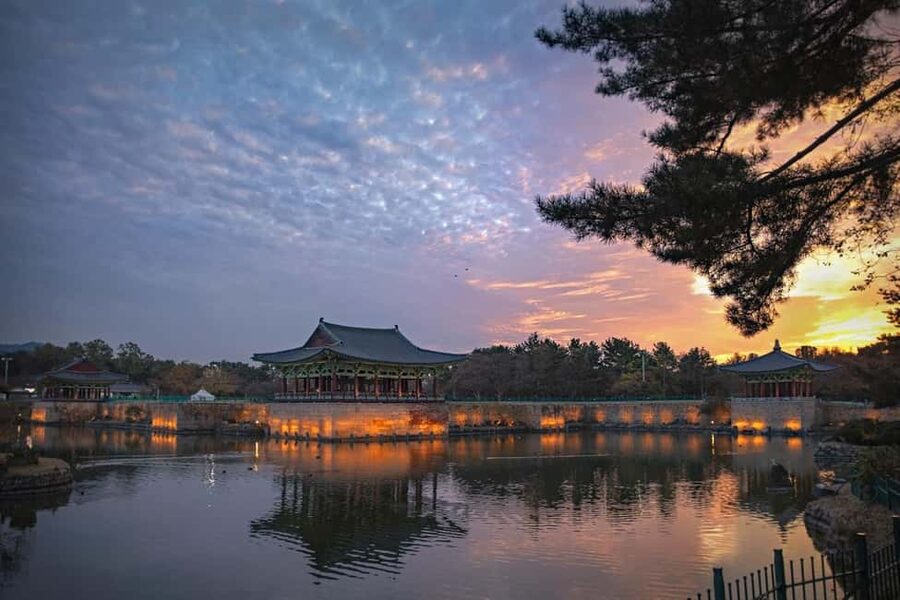
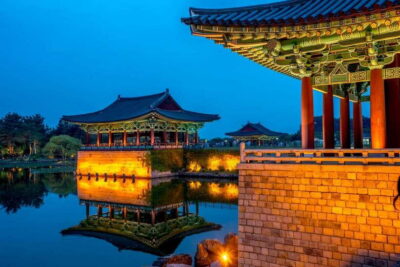
The museum can close unexpectedly or be replaced because of local conditions. On one such day, the schedule included Donggung Palace and Wolji Pond instead. That is not an equal substitute for a museum collection, but it can produce a beautiful evening visit, especially when the pond and palace lights come on.
Donggung Palace, royal tombs, and Woljeonggyo Bridge
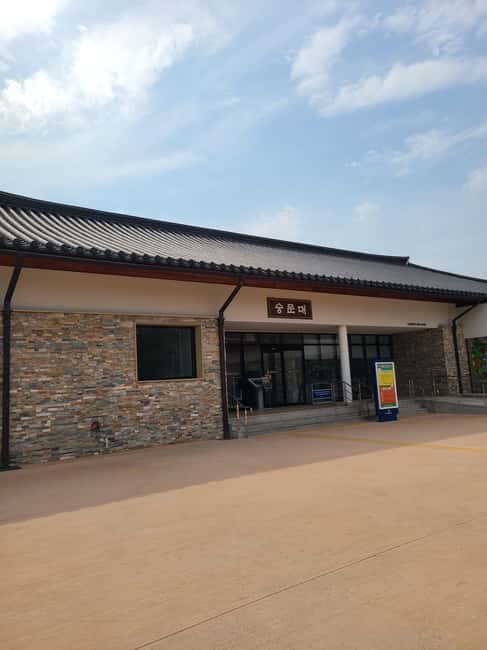
Donggung Palace and Wolji Pond is listed as an optional paid attraction. Admission is not included, and you may choose it instead of the museum. The planned visit lasts about 30 minutes, so think of it as a scenic historical stop rather than a full palace tour.
Daereungwon Tomb Complex is another important part of Gyeongju’s Silla story. Its large royal burial mounds are set behind stone walls, and the rounded tombs give the city a distinctive appearance. During cherry blossom season, the trees may frame the paths and tombs beautifully.
The seasonal plan can replace the museum with Daereungwon from March 24 through April 12, depending on bloom conditions. Spring scenery is never guaranteed on an exact date, so book this option for the broader Gyeongju experience rather than for blossoms alone.
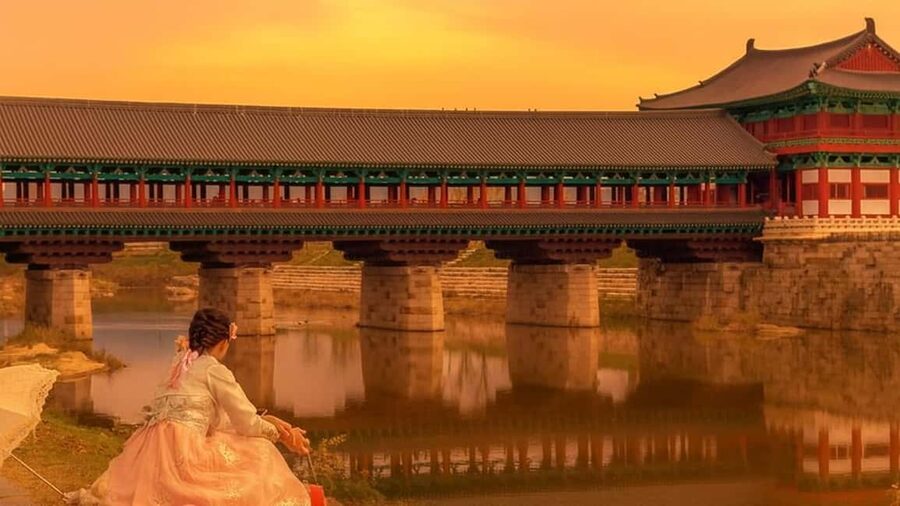
Woljeonggyo Bridge provides a fitting final image. The reconstructed Silla-era bridge crosses the water with a strong, elegant outline, and the light around sunset or after dark can make it especially photogenic. One person described the evening bridge view as a highlight, while another enjoyed the reflections at sunset.
The bridge stop lasts about 30 minutes. That is enough for photographs and a short look, but the timing is important. Traffic or the season may determine whether you see warm sunset light, blue hour, or illuminated night scenery.
A comfortable van makes the packed route possible
The vehicle is one of the tour’s practical advantages. The package includes round-trip transfers, fuel, parking, and tolls, and several people praised the van as clean, comfortable, and in good condition.
Group size can vary. Some departures feel almost private with only two or three people, while another group of six described the minivan as personal and comfortable. A larger group would naturally feel less intimate, but the format is still easier than managing several buses and local connections yourself.
The driver and guide may be the same person. That arrangement worked especially well for people who praised Yaho, Andrew, and other guides for safe driving and careful attention. It also means the guide must divide attention between the road and commentary, so the amount of information may vary during transit.
The day is long, and the schedule covers a lot of ground. You should expect walking at temples, villages, tombs, and forest paths, along with repeated boarding and unloading. Wear shoes suited to uneven outdoor surfaces and bring water, especially in warm weather.
Guides add the value you cannot get from a map
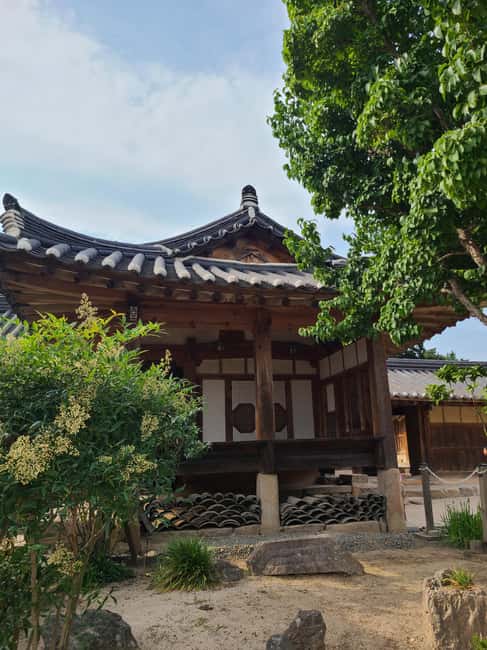
This tour depends heavily on its guide. The most praised qualities are not simply factual explanation but patience, humor, organization, and the ability to check that everyone is comfortable.
Kang is often described as warm, clear, flexible, and good at mixing guided time with independent exploration. Yaho receives praise for his English, cultural knowledge, restaurant choice, photography help, and safe driving. DK, Chris, Drake, Andrew, and Ciro are also described as friendly and attentive in different departures.
That personal care matters on a long day. A good guide can help you understand a pagoda, find the right photo angle, explain a Korean dish, or adjust the rhythm when rain and traffic cause trouble.
The listed language support includes English and Chinese, while the activity information specifically confirms a live English-speaking guide. If Chinese commentary is essential for your party, confirm availability before booking.
What $48 really buys you
The price is strong for a 12-hour outing. You receive transport from central Busan, a professional guide, fuel, tolls, and parking, while visiting several places that are spread across Gyeongju.
You still need to budget for lunch, Ahopsan Forest entry, Donggung Palace and Wolji Pond admission if selected, and personal expenses. The cost remains attractive if you value convenience and explanation, but it is not an all-inclusive day.
The tour is also good value for solo visitors. A person traveling alone avoids the cost and effort of arranging a private driver, and the small-group setting can feel sociable without requiring a large coach.
The tradeoff is time. A slower private tour could give you longer at Bulguksa, Gyochon Village, or the museum. This departure is best for seeing the major sights in one day, not for studying one site in depth.
Who should book this Gyeongju day tour
I would choose this tour if you are staying in Busan and want a first look at Gyeongju without spending a night there. It suits families, solo visitors, couples, and anyone who prefers a guide to explain what makes the monuments important.
It is also a good fit if you want variety. The day moves from bamboo forest to Korean food, Buddhist architecture, hanok houses, museum objects, royal tombs, and a lit bridge.
I would hesitate if you dislike early starts, long vehicle days, or a fixed schedule. You may also prefer a slower independent visit if your main goal is extended museum time or careful photography.
The 5.0 rating from 172 ratings is unusually strong, and the repeated praise focuses on guide quality, clean transport, free time at stops, and smooth organization. Those are exactly the elements that can make a packed day feel manageable.
Should you book it?
Book this tour if you want maximum coverage of Gyeongju in a single day from Busan, with a friendly English-speaking guide and transport handled for you. At $48, it offers good value once you understand that meals and some admissions are extra.
Choose it especially for Bulguksa, the Silla collections, the bamboo forest, and the chance to end beside Woljeonggyo Bridge. Just accept the long day and changing seasonal plan. If you do, this is a practical and rewarding introduction to Korea’s ancient capital.
FAQ
How long does the Gyeongju tour last?
The tour lasts approximately 12 hours, including transportation between Busan and Gyeongju and the scheduled sightseeing stops.
Where can I join the tour in Busan?
Pickup is available at Busan Subway Station Exit 4 at 8:10, Seomyeon Subway Station Exit 4 at 8:30, or Haeundae Subway Station Exit 5 at 9:10.
Is the Busan Station pickup at the KTX gate?
No. The pickup is at Busan Subway Station Exit 4, not the KTX gate.
Is lunch included in the price?
No. Lunch is not included. You pay the lunch cost separately at the local restaurant.
Are attraction admission fees included?
No. Admission to Ahopsan Forest and Donggung Palace and Wolji Pond is not included. These are optional spots.
Can I visit Donggung Palace and Wolji Pond instead of the museum?
Yes. The supplied tour information says you can choose Donggung Palace and Wolji Pond instead of the Gyeongju National Museum.
Can Ahopsan Forest be skipped?
Yes. Ahopsan Forest is optional. If you do not enter, you may relax at a nearby café with scenic views.
What happens during cherry blossom season?
From March 24 through April 12, the tour may offer Haeundae Dalmaji Hill instead of Ahopsan Forest and Daereungwon Tomb Complex instead of the museum, depending on weather and blossom conditions.
What language does the guide speak?
The activity confirms a live English-speaking guide. The tour information also lists English and Chinese language support.
Are pickup and drop-off included?
Yes. Round-trip transfers to and from the selected Busan meeting location are included. Drop-off is available around Haeundae Station Exit 5, Seomyeon, or Busan Station.
More Museum Tours in Gyeongju
- Gyeongju UNESCO Sites Tour by KTX train; The Museum Without walls
★ 4.5 · 11 reviews - Seoul: War Memorial of Korea Private Guided Museum Tour
★ 4.9 · 29 reviews - DMZ Tour + The War Memorial of Korea Museum
★ 5.0 · 28 reviews - Color Pool Museum
★ 4.0 · 22 reviews
More UNESCO Sites in Gyeongju
- Gyeongju UNESCO World Heritage Sites and History Full-Day Tour with Lunch
★ 5.0 · 104 reviews - From Busan to Gyeongju UNESCO Legacy Tour with National Museum
★ 5.0 · 87 reviews - Full day Private Gyeongju UNESCO Heritage Tour : a glimpse into Silla
★ 5.0 · 60 reviews - Gyeongju The UNESCO World heritage sites tour(Private tour)
★ 5.0 · 17 reviews
Just added in Gyeongju
- Yangdong village & Gyeongju Unesco Site Private Van Tour★ 5.0 · 1 review
- Small Group 7D Korea package Tour with Seoul Gyeongju Busan Jeju★ 4.5 · 13 reviews
- Gyeongju UNESCO Sites Tour by KTX train; The Museum Without walls★ 4.5 · 11 reviews
- Full-Day Small Group GyeongJu History Tour from Seoul★ 5.0 · 2 reviews
- 7 days Flexible Tour for Major Cities(Seoul,Busan,Gyeongju etc)★ 5.0 · 5 reviews
- PREMIUM 5 Days Tour for Wonder of Korea(Mt. Seoraksan, Andong, Gyeongju, Busan)★ 5.0 · 1 review
- 5 Days Tour for Korea’s past and present(Mt.Seoraksan, Andong, Gyeongju, Busan)★ 5.0 · 1 review
- 7 Days Highlight Korea Tour(Seoul, Nami, DMZ, Andong, Gyeongju, Busan)★ 5.0 · 1 review
UNESCO World Heritage Tours, compared.
Gyeongju UNESCO World Heritage Guided Day Tour
Read our review →

East Jeju Essentials – Seongsan Ilchulbong (UNESCO) & Haenyeo
Read our review →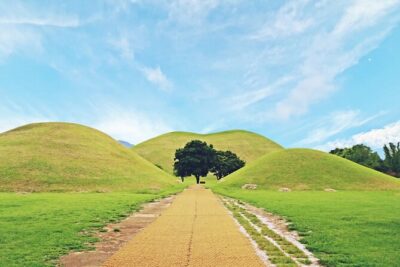
Gyeongju UNESCO World Heritage Guided Day Tour from Busan
Read our review →
Jeju Southern UNESCO Full Day Tour with Mt.Halla
Read our review →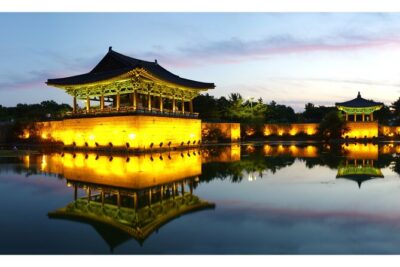
Gyeongju UNESCO sites Private tour with licensed tour guide
Read our review →
Private Gyeongju Tour – Explore Gyeongju UNESCO Sites
Read our review →Browse the lists this tour appears in