
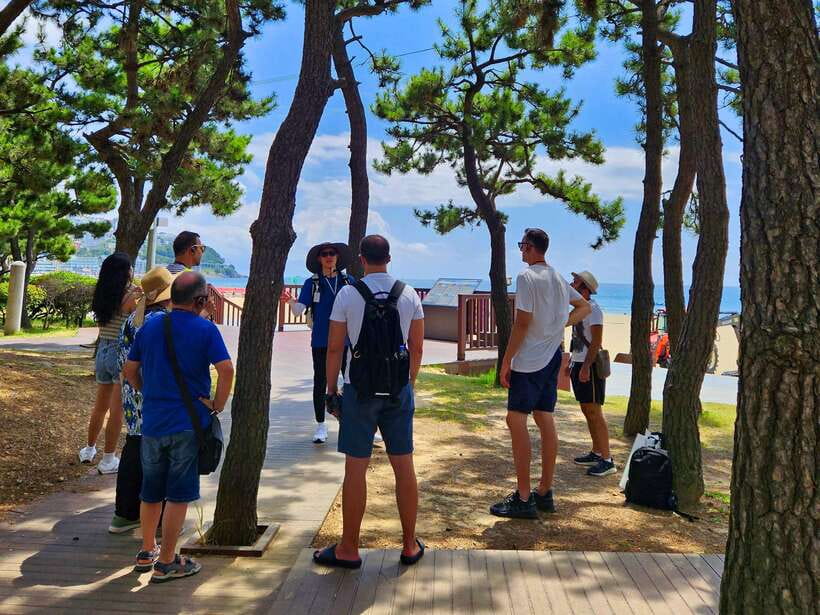
Reviewed · WALKING TOURS
Busan: Haeundae 100-Minute Walking Tour
Haeundae is more than a beach. This walking tour connects the sand, old railway, hot spring culture, Korean War, and Dongbaek Island into one clear story. I especially like the local focus and the way the route shows how a fishing village became one of South Korea’s best-known destinations. The main consideration is the pace: you cover about 2 kilometers and climb a hill roughly 50 meters high.
I also like that the guide, Kim Ingyu, brings more than a standard script. He has written about Busan, speaks fluent English, and is happy to answer questions. His relaxed style has made the tour feel like time spent with a well-informed local friend for many people. Still, $29 is a fair but not bargain-level price for a 90-minute walk, so you should book it for the stories rather than expect a long list of major sights.
The route is easy overall and wheelchair accessible, but the hill, sunshine, and beachside walking call for comfortable shoes, water, and perhaps a sun umbrella. Children under 10 and people over 70 should not book this activity according to the stated limits.
In This Review
- Key points to know before you book
- Why Haeundae deserves a history walk
- Starting beside the old Haeundae Station
- Haeundae Beach beyond the postcard view
- Gunam-ro and the seaside hot spring story
- Returning to the former station at Atelier Chik Chik Pok Pok
- Dongbaek Island and the final coastal views
- What the $29 price really buys you
- Pace, weather, and who should book
- How this tour compares with exploring alone
- Should you book the Haeundae walking tour?
- FAQ
- Where does the Haeundae walking tour meet?
- How do I reach the meeting point?
- How long does the tour last?
- How much does the tour cost?
- What language is the tour offered in?
- What places are included on the route?
- How much walking is involved?
- Is the tour wheelchair accessible?
- What should I bring?
- Can I cancel for a refund?
Key points to know before you book

- Haeundae’s past comes first: Learn how the old Donghae-Nambu railway helped turn a quiet coastal area into a major destination.
- The beach has a wartime story: Haeundae Beach is tied not only to tourism, but also to the Korean War and the later presence of a U.S. military base.
- Gunam-ro began with a hot spring: The street grew from Gunam Oncheon, described as Korea’s only seaside hot spring and once enjoyed by Korean royalty.
- The route ends at Dongbaek Island: Coastal views accompany stories about Choi Chi-Won, the scholar linked to Haeundae’s name.
- The guide is a major part of the value: Kim Ingyu is praised for clear English, humor, patience, and his ability to explain Korean history without making the walk feel like a lecture.
- Allow more than the advertised minimum: The experience is described as both 90 minutes and 1 hour 40 minutes, so plan around 100 minutes to avoid a rushed schedule.
Why Haeundae deserves a history walk
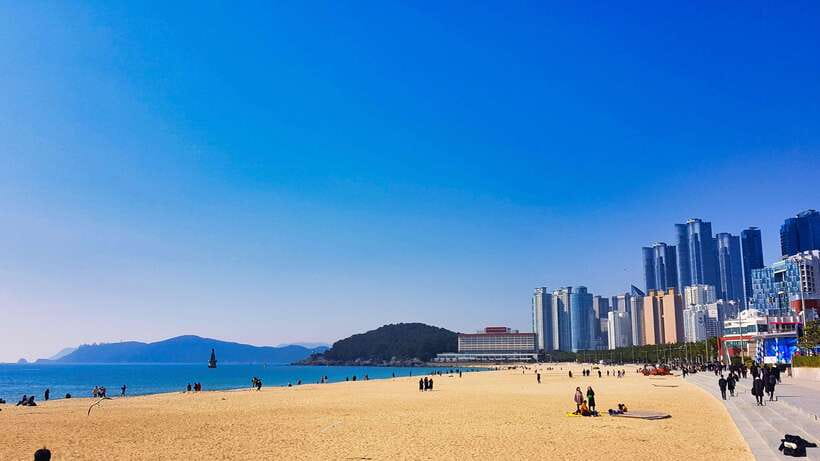
Haeundae is easy to read at a glance. You see a broad beach, tall buildings, restaurants, shopping streets, and a steady flow of people. The harder part is understanding how all of those pieces arrived.
This tour gives you that missing context. It presents Haeundae as a place shaped by transport, leisure, war, literature, and rapid economic growth. That makes the visit more rewarding than simply taking photographs along the shoreline.
The area receives around 10 million visitors each year, yet its older identity can be easy to miss. Before the skyscrapers, Haeundae was a quiet fishing village. Its fortunes changed through the appeal of its seaside hot spring and the arrival of the railway. Later, its location and Busan’s role during the Korean War added another layer to its story.
I like tours that explain how a place changed instead of treating it as a frozen postcard. This one does exactly that. You will still enjoy the beach and ocean views, but you will also understand why Haeundae matters to Busan and to South Korea.
More Busan trips:
- Busan: Gyeongju Guided Day Trip to Three Kingdoms Capital
★ 4.8 · 1,925 reviews - Small Group Full Day Busan Tour (Max 6 Pax)
★ 5.0 · 1,464 reviews - From Busan: Gyeongju UNESCO World Heritage Guided Day Tour
★ 4.8 · 1,250 reviews
Starting beside the old Haeundae Station
The meeting point is at Haeundae Atelier Chik Chik Pok Pok, the former Haeundae Station, at 621 Haeundae-daero. It is near the plaza outside Exit 4 of Haeundae Station on Busan Metro Line 2.
After coming out of Exit 4, look for the public square on your right. The guide carries a flag, which should make the meeting spot fairly easy to identify. I would arrive a little early because the station exit and surrounding streets can be busy, especially if you are visiting Haeundae during a popular season.
Beginning at the former station is a smart choice. The tour starts with the force that helped reshape the district, rather than opening with the obvious beach view. You learn about the Donghae-Nambu Line and its role during the Japanese colonial period.
The old railway is not treated as a dry transport fact. It becomes part of the explanation for Haeundae’s growth. Rail access helped connect the area with the wider region and supported its change from a local coastal settlement into a destination for visitors.
The old railway has since been repurposed for modern attractions such as Blue Line Park. That contrast is useful. You can see how Busan has kept parts of its transport past in public use while continuing to build a modern city around it.
The stop is guided for about 20 minutes. This is one of the longer sections of the walk, and it gives you a useful frame for everything that follows.
Haeundae Beach beyond the postcard view

From the station area, the route heads to Haeundae Beach for about 20 minutes of guided discussion. The beach is the visual star of the tour, but the guide uses it to tell a more serious story.
The shoreline became a U.S. military base after the Korean War. That detail changes the way you look at the sand and hotels around it. Haeundae was not simply developed as a resort in a straight line. Its use was affected by the conflict on the Korean Peninsula and by the relationship between South Korea and North Korea.
This is one of the tour’s most useful features for first-time visitors. You do not need to be an expert on Korean history to follow the explanation. The guide links national events to a place you can see with your own eyes.
The walk also places Busan within the larger story of South Korea’s growth. Busan became the country’s second-largest city, and Haeundae moved from fishing village to high-rise district. The beach represents tourism and modern prosperity, but its history also reflects disruption, military use, and national division.
You should expect an open, exposed section here. On sunny days, shade may be limited, so bring water and consider carrying a sun umbrella. The beach is a fine place for photos, but it is not necessarily the quietest part of the route. If you prefer small streets and close conversation, you may enjoy the later stops more.
Gunam-ro and the seaside hot spring story
A short five-minute walk leads toward Gunam-ro, where the guided portion lasts about eight minutes. The street is now part of Haeundae’s busy central area, but the tour looks further back to Gunam Oncheon.
This hot spring is described as Korea’s only seaside hot spring. It was once favored by Korean royalty, and its presence helped shape the cultural and social life of Haeundae.
That is a small but important detail. It shows that Haeundae’s appeal did not begin with modern hotels or beach festivals. People were already coming here for rest, health, and leisure before the current resort identity took shape.
Gunam-ro also helps connect the formal history to everyday city life. You walk through a street used for ordinary dining, shopping, and movement, while learning why that street developed where it did. I find this kind of stop more useful than simply hearing dates beside a monument.
The drawback is that this is a brief stop. At eight minutes, it cannot provide a full account of hot spring culture. It works better as one piece of the larger story than as a complete attraction on its own.
More Walking Tours in Busan:
- Real Busan Walking Experience
★ 5.0 · 27 reviews - Busan Private Walking Tour with a Local
★ 4.5 · 11 reviews - Busan: Jagalchi Market & Gamcheon village Walking Tour
★ 5.0 · 7 reviews - Busan: Jagalchi Market & Gamcheon Village Walking Tour With Guide
★ 5.0 · 1 review
Returning to the former station at Atelier Chik Chik Pok Pok
The itinerary then includes a 12-minute walk back toward Haeundae Atelier Chik Chik Pok Pok, with another guided section of about 20 minutes. This gives the old station more attention after you have seen the beach and Gunam-ro.
That return is valuable because the station means more now. You have already heard how leisure, transport, and tourism shaped the district. The railway is no longer just an old structure or photo stop. It becomes a link between the hot spring, the beach, and Haeundae’s modern identity.
This part also suits people who want a broader introduction to Busan. The guide does not limit the conversation to a few buildings. He places Haeundae within the rise of Busan and explains the city’s movement from coastal settlement to major urban center.
Kim Ingyu’s teaching style is a strong reason to choose this walk. He is described as clear and fluent in English, with a good balance between facts, stories, and conversation. He has also offered restaurant and sightseeing suggestions, which can help you decide what to do after the tour.
A private-feeling experience is possible if bookings are light. Some people have found themselves as the only participant or part of a very small group. That can make it easier to ask questions and shape the conversation. You should not assume you will receive a private tour, but the possibility is a pleasant bonus.
Dongbaek Island and the final coastal views
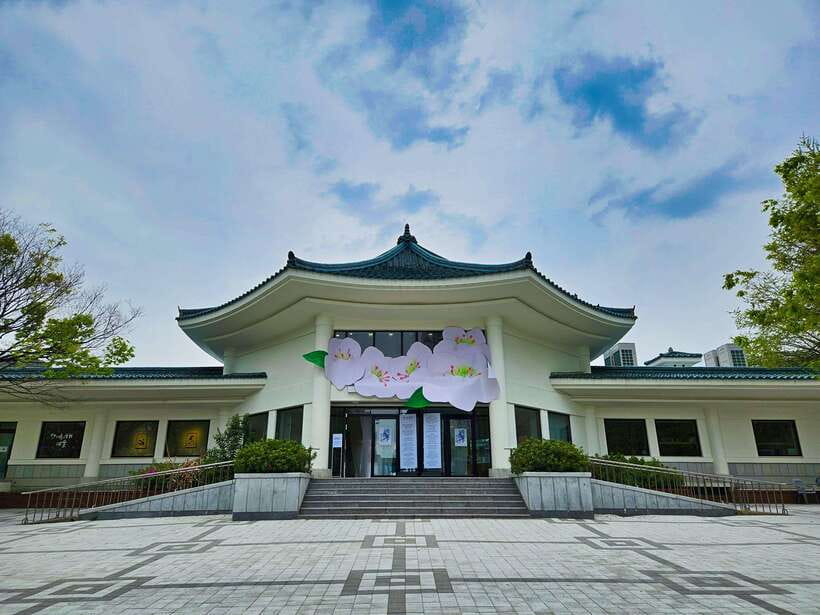
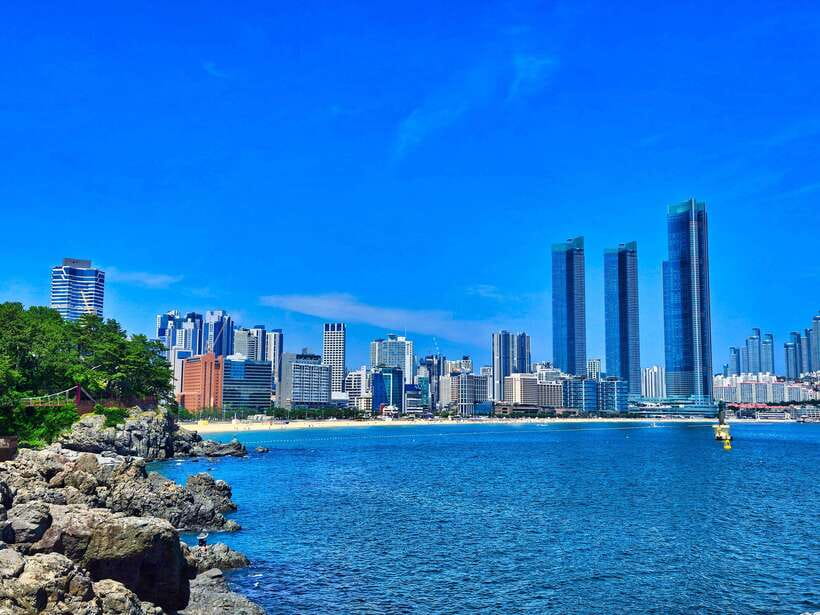
The final 18-minute walk leads to Dongbaekseom, or Dongbaek Island. The guided portion here lasts about 15 minutes and brings the tour to a calmer coastal setting.
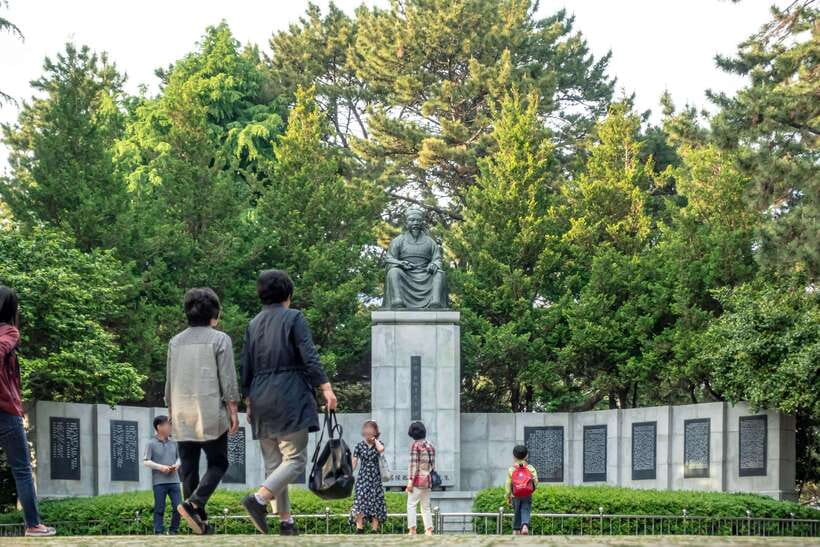
This is where you hear about Choi Chi-Won, the scholar associated with the name Haeundae. The story gives the district a literary and historical connection that is easy to overlook when your attention is fixed on the beach towers.
Dongbaek Island also provides a change of mood. Earlier sections place you in the middle of roads, railway history, and the beach district. Here, the coastal views give you a chance to pause and consider the changes you have just heard about.
I would save a little energy for this final section. Although the walk is rated easy, the route includes a hill about 50 meters high. The operator also describes the experience as wheelchair accessible, but the hill and 2-kilometer route are still practical details worth considering if you have limited mobility.
The ending works well for photographs. It is also a useful place to continue exploring on your own, since the guide can point out further areas of interest. The tour does not appear to include a meal or attraction admission, so treat Dongbaek Island as the conclusion of the guided walk rather than the start of another organized activity.
What the $29 price really buys you
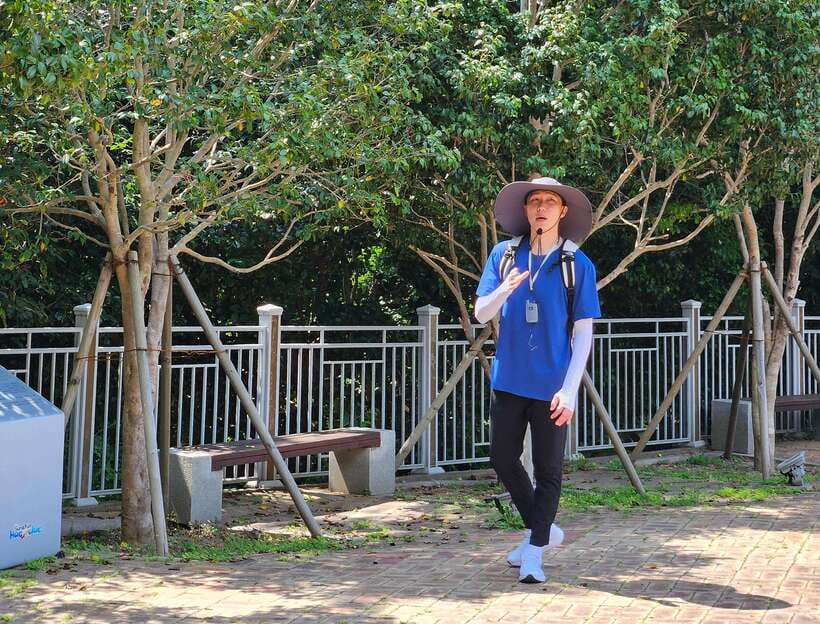
At $29 per person, this is not the cheapest way to see Haeundae. You can walk along the beach for free, visit public streets without a guide, and take your own photographs.
The value comes from the interpretation. You are paying for an English-speaking guide who links several separate places into one story: the colonial-era railway, the hot spring, the beach’s wartime use, Korean division, Busan’s growth, and Choi Chi-Won.
That is a good price for you if history and local context are important parts of a trip. It is less compelling if you only want a scenic stroll or a quick orientation to restaurants and shops.
The wireless transmitter and receiver are included, with complimentary earphones. Personal wired earphones with a 3.5-millimeter connection are recommended for hygiene reasons. This system can be helpful when the group is spread out or when street noise makes ordinary conversation difficult.
You also receive practical value from the guide’s local advice. Several people have appreciated suggestions for restaurants and other Busan attractions. Those tips are not the main product, but they can make the tour pay off beyond its 90 to 100 minutes.
Free cancellation up to 24 hours before the activity and a reserve-now, pay-later option reduce the risk of fitting it into a changing Busan schedule. Travel insurance is not included.
Pace, weather, and who should book
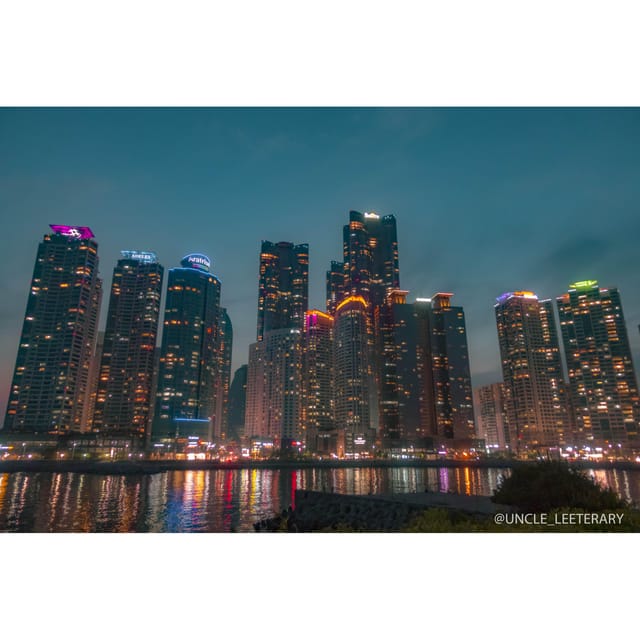
The route is rated easy and suitable for most fitness levels. You walk about 2 kilometers, but the tour is not a long-distance hike. The main physical points are the hill, the outdoor exposure, and the need to stay on your feet for roughly an hour and a half.
Wear shoes you can comfortably walk in. Bring your own drinking water, since water is not listed as included. On bright days, a sun umbrella is a practical addition.
Rain does not automatically make the experience impossible. The guide has used a backup plan in wet weather, including a historical presentation and more conversation about the area. Even so, you should check conditions before setting out, since several parts of the planned route are outdoors.
The tour is best for:
- Adults who want Busan’s history explained in plain English
- First-time visitors who want to get their bearings in Haeundae
- People staying near Haeundae with 100 free minutes
- Visitors who enjoy asking questions and having a conversation with a guide
- Anyone interested in the Korean War, national division, and South Korea’s rapid growth
It is not suitable for children under 10 or people over 70 under the stated conditions. Families with older children should also consider the history-focused content and the hill before booking.
Audio recording is not allowed. You should also confirm the start time when booking, since availability varies.
How this tour compares with exploring alone
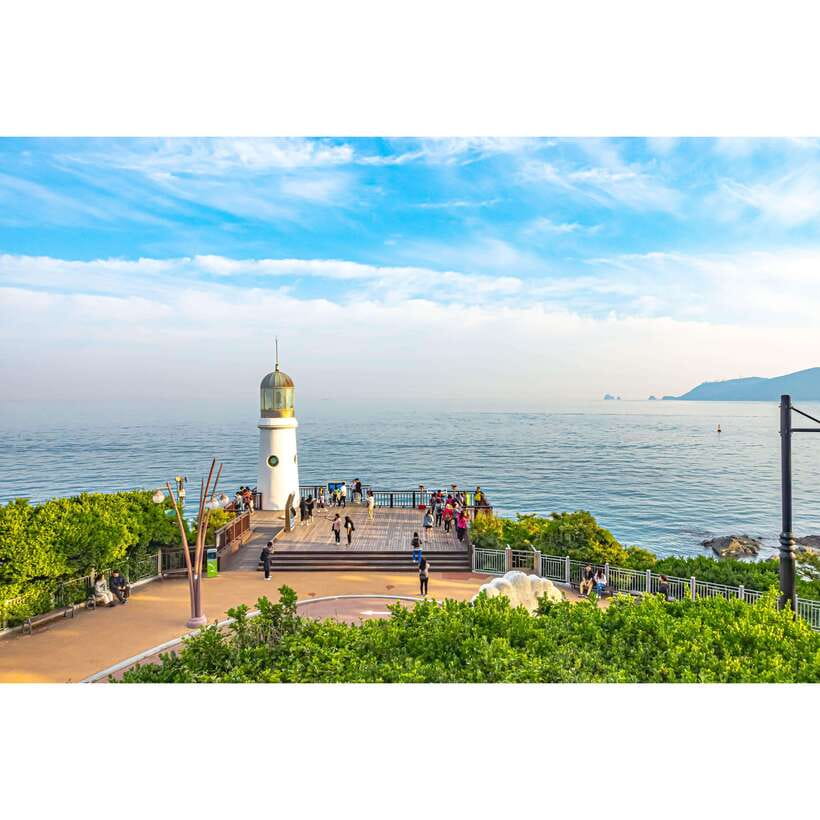
An independent walk gives you more freedom. You can stop for coffee, linger at the beach, shop along Gunam-ro, or change direction whenever you like. It also costs less if you are traveling on a tight budget.
The weakness is context. Without a guide, the old station may look like a repurposed building, Gunam-ro may seem like an ordinary commercial street, and the beach may appear to tell only a modern tourism story.
This guided route gives each place a reason to matter. It also keeps the walk focused, which is useful if you have limited time in Busan.
I would not choose it if you prefer silence, photography at your own pace, or a flexible food crawl. I would choose it at the beginning of a Busan visit, when a clear local introduction can shape how you understand the rest of the city.
Should you book the Haeundae walking tour?
Book it if you want history attached to real places, not just a list of Busan attractions. Kim Ingyu’s clear English, friendly manner, and ability to answer questions add much of the value, especially for visitors who want an informed conversation rather than a hurried speech.
Skip it if you only have time for the beach itself, dislike guided schedules, or would rather spend $29 on food and transport. Also think twice if the 2-kilometer walk and hill will be uncomfortable.
For most adults interested in Busan’s past, I would book this early in the stay. It gives Haeundae a wider meaning, from railway and hot spring retreat to wartime site and modern coastal district. Just plan for 100 minutes, wear good shoes, and bring water.
FAQ
Where does the Haeundae walking tour meet?
The meeting point is Haeundae Atelier Chik Chik Pok Pok at the former Haeundae Station, 621 Haeundae-daero, Haeundae-gu, Busan.
How do I reach the meeting point?
Take Busan Metro Line 2 to Haeundae Station and exit through Exit 4. A public square is on your right as you leave the exit. Walk to the square and look for the guide holding a flag.
How long does the tour last?
The activity is listed as 90 minutes, while the description also calls it a 1-hour 40-minute or 100-minute tour. Plan for about 100 minutes so you are not rushed afterward.
How much does the tour cost?
The listed price is $29 per person.
What language is the tour offered in?
The live guided tour is offered in English.
What places are included on the route?
The route includes the former Haeundae Station, Haeundae Beach, Gunam-ro, and Dongbaekseom, also known as Dongbaek Island.
How much walking is involved?
You will walk approximately 2 kilometers and climb a hill about 50 meters high. The route is rated easy.
Is the tour wheelchair accessible?
Yes, the activity is described as wheelchair accessible. The route still includes approximately 2 kilometers of walking and a hill, so consider those conditions when planning.
What should I bring?
Bring comfortable shoes and your own drinking water. A sun umbrella is recommended if the weather is sunny.
Can I cancel for a refund?
You can cancel up to 24 hours in advance for a full refund. A reserve-now, pay-later option is also available.
Just added in Busan
- Small Group 7D Korea package Tour with Seoul Gyeongju Busan Jeju★ 4.5 · 13 reviews
- Private Transfer from Seoul to Busan(up to 12 passengers)★ 5.0 · 1 review
- Jinhae Cherry Blossom + Busan Sunrise from Seoul★ 4.5 · 5 reviews
- 7 days Flexible Tour for Major Cities(Seoul,Busan,Gyeongju etc)★ 5.0 · 5 reviews
- PREMIUM 5 Days Tour for Wonder of Korea(Mt. Seoraksan, Andong, Gyeongju, Busan)★ 5.0 · 1 review
- 5 Days Tour for Korea’s past and present(Mt.Seoraksan, Andong, Gyeongju, Busan)★ 5.0 · 1 review
- 7 Days Highlight Korea Tour(Seoul, Nami, DMZ, Andong, Gyeongju, Busan)★ 5.0 · 1 review
- 5-Day Korea Golden route by K-shuttle Tour from Seoul Including Busan, Yeosu★ 4.5 · 37 reviews
Walking Tours, compared.

Seoul moonlight walking tour with local historian
Read our review →
Evening Dark History, Folklore & Ghost Story Walking Tour
Read our review →
Dark Side of the City and Ghost Stories Walking Tour
Read our review →
Gangnam Walking Tour on Youth and Society in Seoul Korea
Read our review →
Gyeongbok Palace and Bukchon Hanok Walking Tour
Read our review →
Best Walking Tour to Gyeongbok Palace Bukchon Hanok Village
Read our review →
Highlights & Hidden Gems With Locals: Best of Seoul Private Walking Tour
Read our review →Browse the lists this tour appears in