
Reviewed · UNESCO WORLD HERITAGE TOURS
1-DAY Gyeongju UNESCO and Culture tour.
Gyeongju rewards a full day. This Busan tour brings you to Korea’s ancient Silla capital by air-conditioned minivan, with hotel pickup and a guide who can explain what you are seeing instead of leaving you to decode stone pagodas and royal tombs alone. I especially like the small group limit of eight and the chance to visit both famous UNESCO sites and quieter cultural stops.
I also like the practical door-to-door transport. You do not have to arrange the long journey from Busan, change vehicles, or work out how to connect Bulguksa Temple with the tomb district. The main drawback is the $300 per-person price, which is high unless you value private transport, a guide, and a full day of sightseeing.
In This Review
- Key points before you book
- Why Gyeongju makes a good day trip from Busan
- Seokguram Cave and the Buddha facing the sea
- Bulguksa Temple’s raised stone terraces
- Gyeongju Folk Craft Village and Gyochon Village
- Daereungwon’s royal tombs
- Cheomseongdae, an ancient observatory
- Gyeongju National Museum’s Silla collection
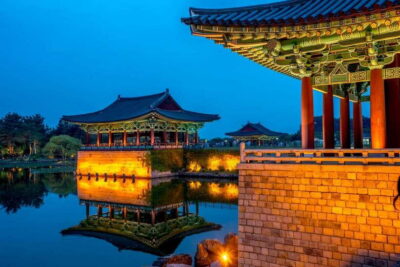
- Donggung Palace and Wolji Pond
- What the $300 price really buys you
- Pickup, group size, and timing
- Who will get the most from this Gyeongju tour
- Should you book it?
- FAQ
- How long does the Gyeongju tour last?
- Does the tour include pickup from Busan?
- How many people can join the tour?
- Is transportation included?
- Are entrance fees included?
- Is lunch included?
- Is Gyeongju National Museum free?
- Can cruise ship passengers join the tour?
- What is the cancellation policy?
Key points before you book
- A full Silla-era day from Busan: See Bulguksa Temple, Seokguram Cave, royal tombs, Cheomseongdae, and Donggung Palace and Wolji Pond without changing hotels.
- A maximum of eight people: The small group keeps the day more personal, and the tour is private to your booking group.
- Frank Yi leads the experience: One published account gives Frank special credit for fitting in the planned sights while adapting to very hot weather.
- Entrance costs are mostly separate: Daereungwon Tomb Complex and Wolji Pond each cost KRW 3,000 per person. Meals are also extra.
- Several stops are free: Gyeongju Gyochon Traditional Village and Gyeongju National Museum do not require an admission charge.
- Flexible pickup: Pickup and drop-off are offered at your Busan hotel or another requested location, with cruise passengers needing to provide ship timing details.
Why Gyeongju makes a good day trip from Busan
Gyeongju was the capital of the Silla Kingdom for centuries, from 57 BC to AD 935. You see that long story in scattered form: temple terraces in the hills, rounded royal tombs in the city, an ancient astronomical structure, museum displays, and the remains of a palace beside a pond.
That spread is the reason this tour works better than a quick single-site outing. You are not seeing only one temple and calling it Gyeongju. You get a broad look at the old capital, from religious art to royal burial customs and everyday craft traditions.
The drive from Busan is handled in an air-conditioned minivan, and gas, tolls, and parking are included. That matters on a day with many stops. Gyeongju’s sights are not all clustered around one gate, so a private vehicle saves time and energy.
The tour lasts about eight to ten hours. That is a long day, but the schedule gives you enough time to see the major places without making the trip feel like a single rushed photo stop. The guide can also adjust the pace within reason, a useful point in hot weather. One account specifically praised Frank Yi for helping the group see what it wanted despite difficult heat.
More Gyeongju trips:
- Busan: Gyeongju Guided Day Trip to Three Kingdoms Capital
★ 4.8 · 1,925 reviews - From Busan: Gyeongju UNESCO World Heritage Guided Day Tour
★ 4.8 · 1,250 reviews - Gyeongju UNESCO World Heritage Guided Day Tour from Busan
★ 5.0 · 660 reviews
Seokguram Cave and the Buddha facing the sea
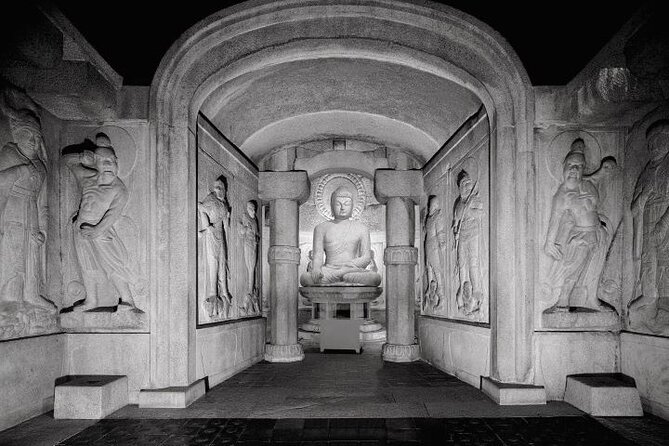
Seokguram is an artificial granite grotto on the slopes above the coast. Its design includes an antechamber, a corridor, and a round main chamber, where a large Sakyamuni Buddha sits facing the sea.
The appeal here is not simply the statue. The grotto shows how Silla builders joined architecture, sculpture, and religious purpose into one carefully planned space. Your guide can help you understand why the Buddha’s position matters and how the chamber was arranged.
This is one of the tour’s most important stops, but it may not be the easiest for every visitor. The attraction is built on a hillside, and the full experience involves walking from the access area. The supplied information does not give a precise walking distance or accessibility rating, so you should ask the operator if mobility is a concern.
Seokguram also sets the tone for the day. You are not just checking off buildings. You are seeing how Silla Buddhism shaped art and construction. Keep your expectations sensible: the focus is the grotto and Buddha, not a long period of quiet exploration.
Bulguksa Temple’s raised stone terraces
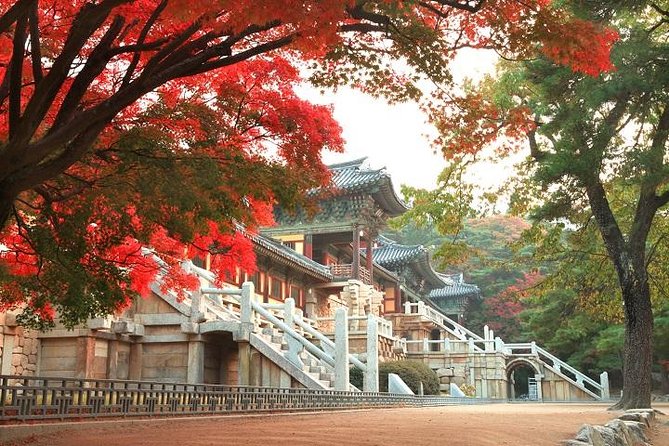
Bulguksa is the major temple complex on this route. Its wooden halls sit on raised stone terraces, and the grounds are divided into areas including Birojeon, the hall of the Vairocana Buddha.
The stone terraces are a key part of the visit. They create a formal approach and show the skill of the builders, while the wooden structures bring a different texture and scale. I like this pairing with Seokguram. At Seokguram, the focus is a single sacred grotto and statue. At Bulguksa, you see a larger working temple complex with several buildings and levels.
The planned visit lasts about one hour. That is enough for a guided look at the main areas, but not enough for an unhurried study of every hall and detail. If you are deeply interested in Korean Buddhist architecture, you may wish the schedule allowed longer.
Admission is not included, so plan to pay at the site. The tour information specifically lists admission as an additional cost, but it does not state the current Bulguksa price. Ask Frank Yi or the operator for the latest amount before the day begins.
Gyeongju Folk Craft Village and Gyochon Village
The Gyeongju Folk Craft Village offers a change of pace after the major temple sites. It consists of about 40 thatched and tile-roofed homes occupied by local artisans working in fields such as metal, pottery, wood, jewelry, and traditional Korean paper.
The stop lasts about 40 minutes. That is a short window, so think of it as a compact introduction rather than a full craft workshop. You might find enough time to browse and see the village setting, but the schedule does not promise a hands-on class or a particular demonstration.
Gyeongju Gyochon Traditional Village also lasts about 40 minutes. Here, the main point is the House of the Gyeongju Choi Clan, listed as Important Folklore Material No. 27. The village is also linked with Gyeongju Gyodong Beopju liquor, an Important Intangible Cultural Asset.
Admission to Gyochon Village is free. The stop gives the day some human scale. After temples, tombs, and museum cases, you see traditional homes and cultural practices tied to local families. The tour information does not promise a tasting, so do not book this stop expecting alcohol service.
More UNESCO sites in Gyeongju:
- Gyeongju UNESCO sites Private tour with licensed tour guide
★ 5.0 · 275 reviews - Private Gyeongju Tour – Explore Gyeongju UNESCO Sites
★ 5.0 · 272 reviews - Busan: Gyeongju UNESCO Legacy Tour with National Museum
★ 5.0 · 172 reviews - Gyeongju UNESCO World Heritage Sites and History Full-Day Tour with Lunch
★ 5.0 · 104 reviews
Daereungwon’s royal tombs
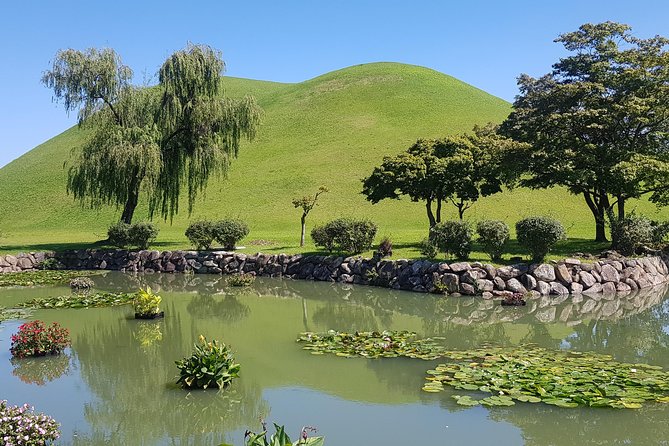
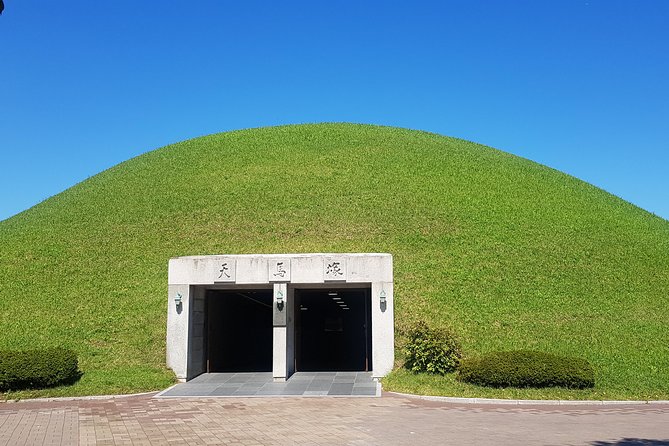
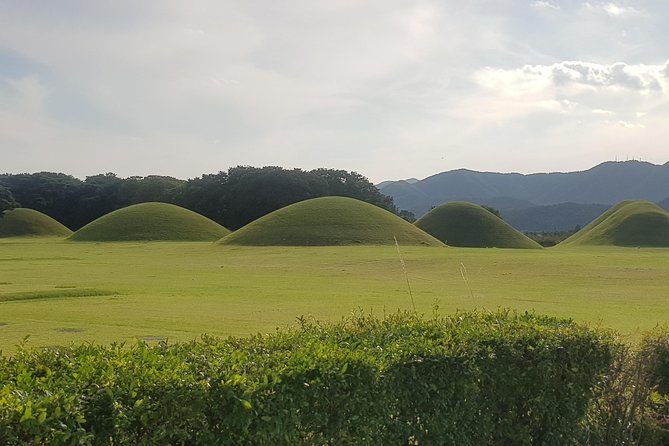
The Daereungwon Tomb Complex is one of the most memorable places in Gyeongju. Large rounded burial mounds for Silla kings and nobles rise across the grounds, giving the area an unusual shape and a quiet sense of scale.
There are 23 large tombs in the complex. Thirteen have been excavated, though only one is open to the public. That detail helps explain why the site can look like a park while still carrying serious archaeological importance.
The planned stop lasts 40 minutes. I think that is enough to walk among the main mounds and understand the burial style, but you will not have unlimited time for every path. The site is best appreciated slowly, so stay close to the guide and use the time for context rather than trying to photograph every mound.
Admission is KRW 3,000 per person and is not included. That is a small extra charge compared with the tour price, but it is useful to know because the operator asks you to pay entrance costs on the spot.
Cheomseongdae, an ancient observatory
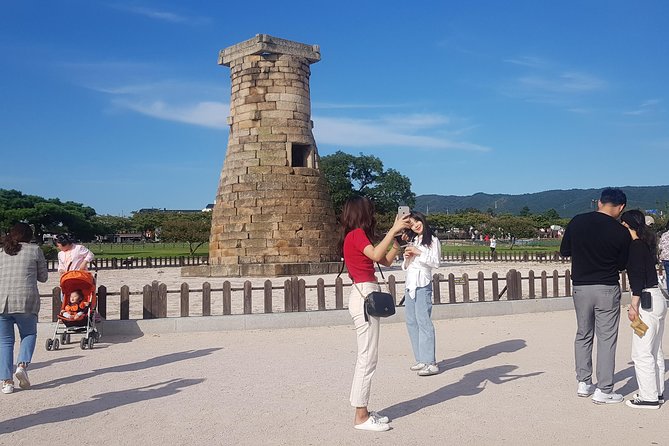
Cheomseongdae Observatory is one of Gyeongju’s most recognizable landmarks. Built during the reign of Queen Seondeok, from 632 to 647, it has a cylindrical form and reaches about nine meters high.
The visit lasts around 30 minutes. That is enough to see the structure, hear its place in Silla science, and take photographs. It is not a museum visit with a long indoor display, so this stop works best when your guide explains what makes the simple stone form important.
I like the contrast here. The temples show Buddhist belief, the tombs show royal burial customs, and Cheomseongdae points toward astronomy and state-sponsored learning. You get a wider picture of Silla society instead of hearing only about kings and temples.
Gyeongju National Museum’s Silla collection
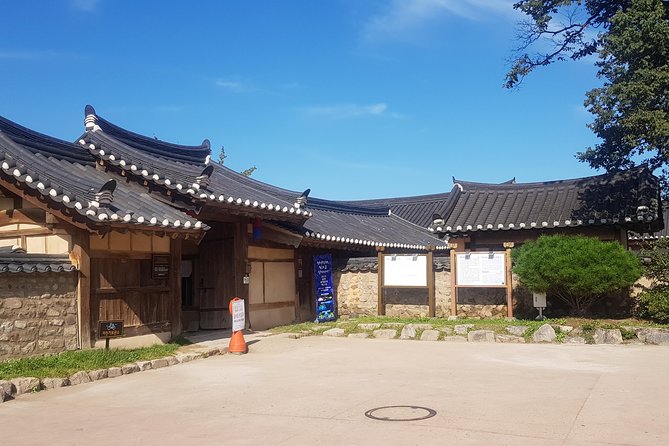
The Gyeongju National Museum gives the day an indoor pause and helps connect the outdoor sites. It houses artifacts from the Silla period, which lasted from 57 BC to AD 935, and is used by both local residents and people visiting the city.
The scheduled visit is about one hour. Admission is free. That combination makes the museum especially useful in hot weather, and one published experience specifically noted the value of adjusting the day around high temperatures.
The museum is where separate stops begin to make more sense. Objects connected to Buddhism, royal life, and Silla craftsmanship can give you a clearer idea of what the stone structures and burial mounds represented. The exact galleries open during your visit can change, and the supplied information does not list individual exhibits, so let the guide shape your focus.
If museums are not your priority, one hour may feel long compared with the short outdoor stops. If you want historical context, it may be one of the best uses of time on the tour.
Donggung Palace and Wolji Pond
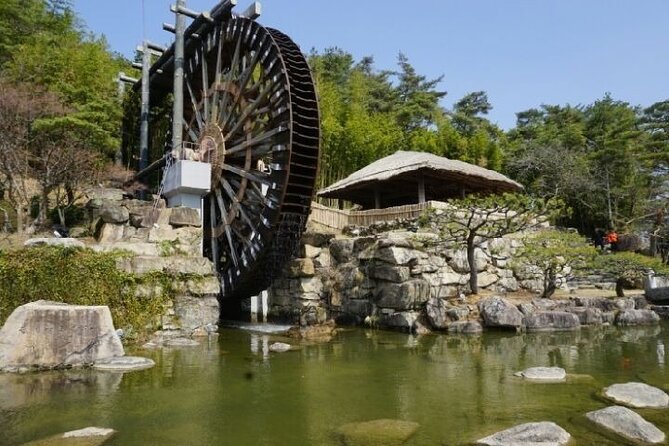
Donggung Palace and Wolji Pond was a secondary palace used by the Silla crown prince. It also served as a banquet site for important events.
The pond and palace remains are visited for about 40 minutes. This is a strong late-day stop because it brings royal ceremony into the story. The site is not simply another temple or tomb. It shows how the ruling family used water, buildings, and formal gatherings.
Admission is KRW 3,000 per person and is not included. The tour description refers to the pond as Anapji in one place and Donggung Palace and Wolji Pond elsewhere. These names refer to the same attraction, so you should not worry if the guide uses either name.
The visit is fairly brief. If you want a long walk around the pond, check the schedule with the operator before booking, since traffic, weather, and earlier stops can affect the final pace.
What the $300 price really buys you
At $300 per person, this is not a budget day trip. The value comes from the package rather than from low admission prices. Your fee covers private transportation, the driver and guide service, fuel, tolls, parking, and pickup and drop-off.
That can be worthwhile for a small group that wants convenience. You avoid arranging transport from Busan, and you can ask questions throughout the day. The vehicle also matters because the stops are spread across Gyeongju.
The price makes less sense if you mainly want a short visit to Bulguksa and one other sight. Independent transport and public options may cost less, though you would need to manage the connections and timing yourself. This tour is aimed at people who want a full sightseeing day with a guide and do not want to handle the logistics.
Meals are not included. One account praised a Korean barbecue lunch but noted that it cost more than expected, even though it was delicious. Treat lunch as an extra budget item, and ask about the expected restaurant price before ordering if you want to keep spending predictable.
Entrance fees are also extra. The confirmed amounts provided are KRW 3,000 for Daereungwon and KRW 3,000 for Wolji Pond. Bulguksa admission is not included, and the operator states that entrance decisions and payment are made on the spot.
Pickup, group size, and timing
Pickup is free from your Busan hotel or another requested location. The meeting instructions say the pickup point and time can be requested, with the guide meeting you near the exit gate and identifying the pickup by your name.
The tour is described as a small-group experience limited to eight people, while the additional information says it is a private activity for your group only. In practical terms, confirm the exact vehicle and group arrangement when booking, especially if you are traveling with a larger party.
At least two people are required. A booking can be canceled after confirmation if the minimum is not met, in which case you should be offered an alternative or a full refund.
Cruise passengers need to provide the ship name, docking time, disembarkation time, and re-boarding time when booking. That is important because an eight to ten-hour trip needs a careful return plan.
The tour offers a mobile ticket and confirmation at booking. Free cancellation is available up to 24 hours before the start time. Changes or cancellations inside that 24-hour window are not accepted for a refund.
Who will get the most from this Gyeongju tour
I would choose this tour if you are staying in Busan and want Gyeongju’s main cultural sites in one day. It fits couples, families, and small groups who value a private vehicle and direct access to a guide.
It also suits first-time visitors who want help connecting the sites. Without context, a tomb mound can look like a grassy hill, and a stone terrace can seem like a beautiful staircase. Frank Yi’s role, according to the published experience, includes explaining the places and adjusting the day to the conditions.
You should think twice if your main goal is a slow, scholarly visit to one or two places. The schedule covers seven stops, and the short visits at Cheomseongdae, Gyochon, the craft village, and Daereungwon leave limited time for lingering.
Hot weather is another consideration. The day can be adapted within reason, and the museum offers an indoor break, but you are still covering several outdoor sites. Bring water, wear practical shoes, and be ready for walking around temple grounds, villages, tombs, and palace remains.
Should you book it?
Book this tour if you want the easiest way to see Gyeongju from Busan, especially when your group values a guide, hotel pickup, and a private vehicle. The strongest parts are the wide range of sights, the eight-person limit, and the chance to adjust the pace with Frank Yi.
Skip it if $300 per person feels too steep or if you prefer independent travel. The admission fees and lunch are extra, and some stops are short. For a full day that covers Gyeongju’s temples, tombs, museum, villages, observatory, and palace pond, though, the price can be fair when convenience matters most.
FAQ
How long does the Gyeongju tour last?
The experience lasts approximately eight to ten hours.
Does the tour include pickup from Busan?
Yes. Free pickup and drop-off are offered from your Busan hotel or another requested location.
How many people can join the tour?
The tour is limited to eight people, and it is described as a private activity for your group only. A minimum of two people is required.
Is transportation included?
Yes. Private transportation in an air-conditioned minivan is included, along with gas, tolls, and parking fees.
Are entrance fees included?
No. Entrance fees are paid separately on site. Daereungwon Tomb Complex costs KRW 3,000 per person, and Donggung Palace and Wolji Pond costs KRW 3,000 per person. Bulguksa admission is also not included.
Is lunch included?
No. Meals are not included. Korean barbecue may be available as a lunch option, but the cost is extra.
Is Gyeongju National Museum free?
Yes. Admission to Gyeongju National Museum is free.
Can cruise ship passengers join the tour?
Yes, but cruise passengers must provide the ship name, docking time, disembarkation time, and re-boarding time when booking.
What is the cancellation policy?
You can cancel up to 24 hours before the experience start time for a full refund. Cancellations or changes made less than 24 hours before the start time are not accepted for a refund.
More Day Trips in Gyeongju
- 7 Highlights Gyeongju City One Day Small Group Tour from Busan
★ 5.0 · 24 reviews - Busan: 7 Highlights Gyeongju City One Day Tour
★ 4.9 · 10 reviews - From Busan: Busan & Gyeongju One Day Tour
★ 5.0 · 5 reviews - Busan: Winter Healing Park and (Gyeongju/Daegu) One Day Tour
★ 5.0 · 5 reviews
Just added in Gyeongju
- Yangdong village & Gyeongju Unesco Site Private Van Tour★ 5.0 · 1 review
- Small Group 7D Korea package Tour with Seoul Gyeongju Busan Jeju★ 4.5 · 13 reviews
- Gyeongju UNESCO Sites Tour by KTX train; The Museum Without walls★ 4.5 · 11 reviews
- Full-Day Small Group GyeongJu History Tour from Seoul★ 5.0 · 2 reviews
- 7 days Flexible Tour for Major Cities(Seoul,Busan,Gyeongju etc)★ 5.0 · 5 reviews
- PREMIUM 5 Days Tour for Wonder of Korea(Mt. Seoraksan, Andong, Gyeongju, Busan)★ 5.0 · 1 review
- 5 Days Tour for Korea’s past and present(Mt.Seoraksan, Andong, Gyeongju, Busan)★ 5.0 · 1 review
- 7 Days Highlight Korea Tour(Seoul, Nami, DMZ, Andong, Gyeongju, Busan)★ 5.0 · 1 review
UNESCO World Heritage Tours, compared.
Gyeongju UNESCO World Heritage Guided Day Tour
Read our review →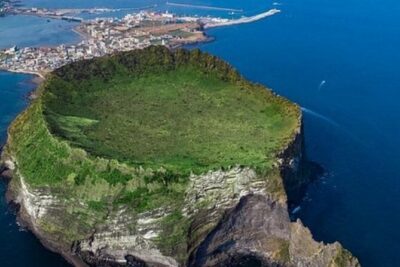

East Jeju Essentials – Seongsan Ilchulbong (UNESCO) & Haenyeo
Read our review →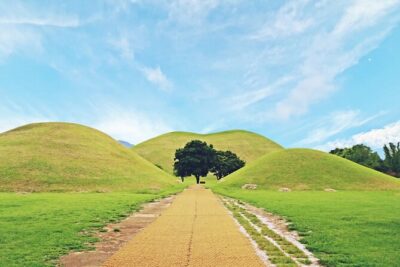
Gyeongju UNESCO World Heritage Guided Day Tour from Busan
Read our review →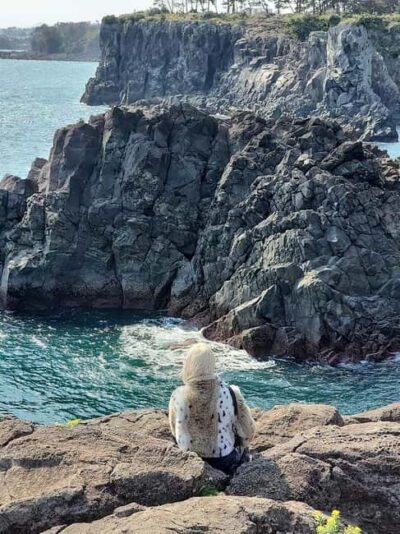
Jeju Southern UNESCO Full Day Tour with Mt.Halla
Read our review →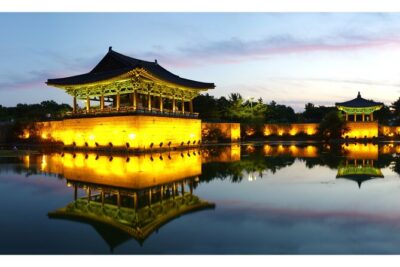
Gyeongju UNESCO sites Private tour with licensed tour guide
Read our review →
Private Gyeongju Tour – Explore Gyeongju UNESCO Sites
Read our review →Browse the lists this tour appears in