
Reviewed · GYEONGJU TOURS
Gyeongju One-Day Tour from Daegu
Ancient Korea fits into one long day. This 10-hour Gyeongju tour from Daegu links the city’s major Silla-era sights, from Bulguksa Temple to royal tombs and a palace pond, without asking you to solve Korea’s transport puzzle yourself. I especially like the included entrance fees and the chance to end with Woljeonggyo Bridge after dark.
I also like the practical pacing. One solo guest praised the on-time pickup van, useful explanations, and engaging guide, which matters when a full day could easily become a blur of temples and tombs. The main drawback is simple: meals and hotel pickup are not included, and the group can reach 42 people, so this is not a private or slow-moving tour.
In This Review
- Key points to know before booking
- Why Gyeongju makes a strong day trip from Daegu
- Bulguksa Temple: the right opening to Gyeongju
- Gyochon Village and the traditional side of town
- Daereungwon Tomb Complex and the scale of Silla power
- Hwangridan-gil: two hours for food and a change of pace
- Donggung Palace and Wolji Pond after the tombs
- Woljeonggyo Bridge at night
- Transport, group size, and the day’s rhythm
- What the $76.19 price really covers
- Who should book this Gyeongju day tour
- Should you book it?
- FAQ
- Where does this Gyeongju tour begin?
- How long does the tour last?
- What attractions are included?
- Are entrance fees included?
- Is transportation included?
- Are meals included?
- How large can the group be?
- What is the cancellation policy?
Key points to know before booking
- Bulguksa Temple opens the day with Silla-era stonework and mountain scenery.
- Daereungwon Tomb Complex gives you a close look at the huge burial mounds of Silla royalty and aristocrats.
- Two hours on Hwangridan-gil provide time for food, cafés, shops, and old streets.
- Donggung Palace and Wolji Pond is one of the day’s most atmospheric historical stops.
- Woljeonggyo Bridge is saved for an evening view, when its lights reflect across the water.
Why Gyeongju makes a strong day trip from Daegu
Gyeongju was the capital of the Silla kingdom for more than a thousand years. You do not need to know every king’s name to appreciate the place. The city’s story is visible in temple courtyards, grassy burial mounds, palace ruins, traditional houses, and bridges built in an old Korean style.
That variety is the chief reason I like this route. It is not just a temple tour. You move between religious sites, royal remains, traditional neighborhoods, and a modern café street built around preserved older buildings.
At $76.19 per person, the price is reasonable if you value simplicity. Your fee covers round-trip transfers, admission to the listed attractions, and a professional guide. You still pay for lunch, snacks, and personal purchases, but the important entry costs are already handled.
The trade-off is time. Six stops in about 10 hours require a firm schedule. You get a useful first look at Gyeongju, not a leisurely archaeological study. If you want to photograph every roofline or sit quietly at each site, you may find the day hurried.
More Gyeongju trips:
- Busan: Gyeongju Guided Day Trip to Three Kingdoms Capital
★ 4.8 · 1,925 reviews - From Busan: Gyeongju UNESCO World Heritage Guided Day Tour
★ 4.8 · 1,250 reviews - Gyeongju UNESCO World Heritage Guided Day Tour from Busan
★ 5.0 · 660 reviews
Bulguksa Temple: the right opening to Gyeongju
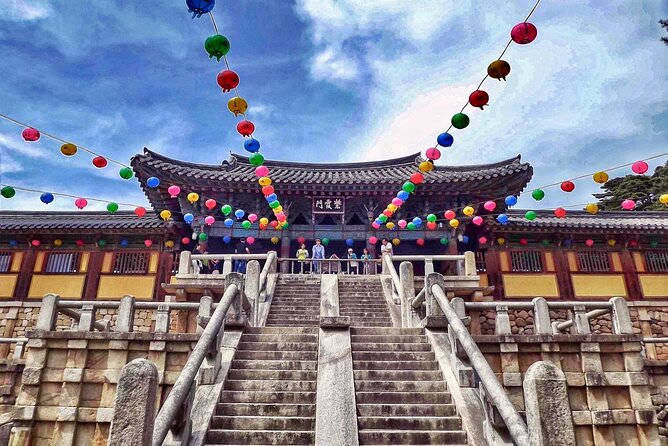
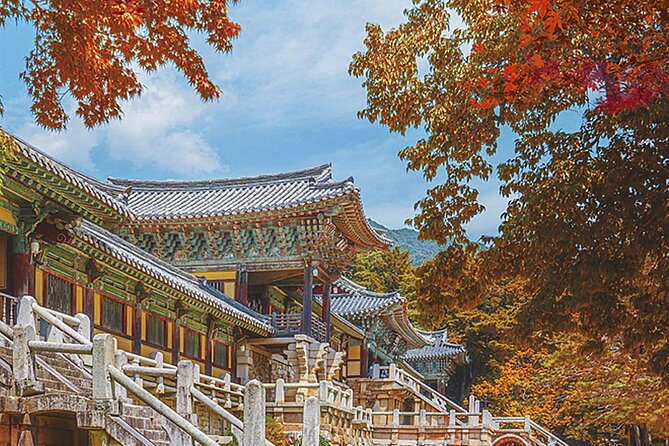
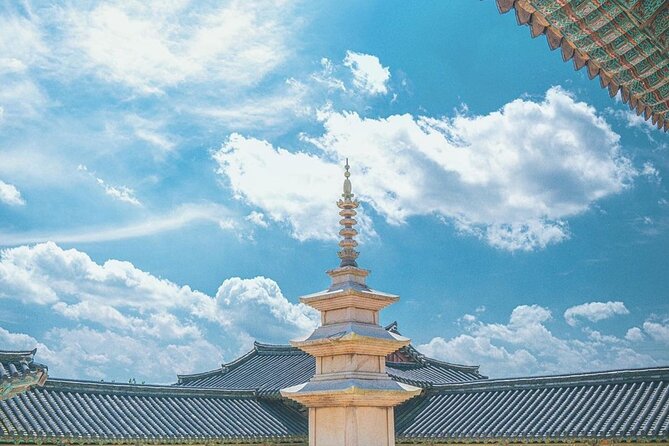
The tour begins at Bulguksa Temple, a UNESCO World Heritage Site and one of Korea’s best-known religious monuments. The temple represents the Silla period, and its setting matters as much as its buildings. Stone structures and wooded slopes work together here, giving you a clear sense of how Silla builders connected sacred architecture with nature.
You have about one hour at Bulguksa, with admission included. That is enough to see the main areas and listen to the guide’s explanation, but it is not an invitation to wander every path. Keep your camera ready, yet give yourself time to notice the stone details and the way the temple sits against the surrounding scenery.
This is also a useful first stop because it gives the rest of the day a historical anchor. Later, when you see tombs and palace ruins, you will have a better idea of the kingdom that created them.
The limitation is the one-hour visit. Bulguksa can reward a longer stay, especially if you prefer quiet observation to a quick survey. Still, including it in a day trip is a strong choice. It is the sort of place that would be awkward to fit into an independent schedule if you also wanted to see central Gyeongju before evening.
Gyochon Village and the traditional side of town
Gyeongju Gyochon Traditional Village offers a change of scale. Instead of grand temple grounds, you see hanok houses, stone walls, restaurants, Gyeongju Hyanggyo, and the nearby Woljeonggyo area.
The stop is listed as a brief passage through the village, so you should not expect a long guided visit here. Think of it as a scenic link between major sights, with a chance to see traditional Korean buildings in a lived-in town setting.
This part of the route is valuable because Gyeongju is not only an outdoor museum. The old houses and stone-wall lanes show how heritage fits into daily life. You might find the short timing frustrating if you want to explore every lane, but the stop adds texture to a schedule otherwise dominated by formal monuments.
The village also prepares you for Hwangridan-gil, where older buildings and newer businesses share the same part of the city.
Daereungwon Tomb Complex and the scale of Silla power
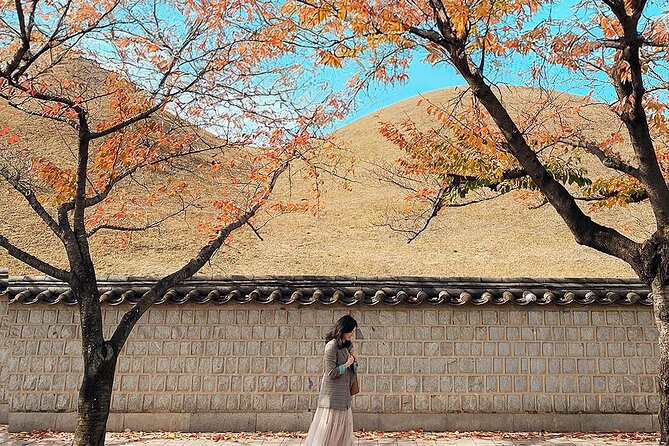
At Daereungwon Tomb Complex, the city’s past rises in broad, grassy mounds. The area contains large tombs associated with kings, queens, and aristocrats of the old Silla era.
You have about one hour here. That gives you time to walk among the burial mounds and grasp their size. From ground level, the rounded tombs can look calm and almost simple. Their scale tells a different story. These were not ordinary graves, but major royal and elite monuments created to preserve status beyond death.
I find this stop especially effective for visitors who have already seen Korean palaces or temples and want a different kind of historical clue. There are no towering buildings to dominate the view. Instead, the open space lets the tombs define the setting.
Try not to rush past the mounds as if they were just grassy hills. Their plain surfaces are part of their power. The guide’s explanations are useful here because the site itself does not tell you everything at a glance.
One hour should work for a first visit, though it may feel short for anyone who wants extended photographs or detailed reading. The group size can also affect how freely you move, particularly if many people gather around the guide.
A completely different kind of day:
- Old Korea Thousand History Tour of Gyeongju from Busan
★ 5.0 · 518 reviews - Gyeongju UNESCO sites Private tour with licensed tour guide
★ 5.0 · 275 reviews - Private Gyeongju Tour – Explore Gyeongju UNESCO Sites
★ 5.0 · 272 reviews - Busan: Gyeongju UNESCO Legacy Tour with National Museum
★ 5.0 · 172 reviews
Hwangridan-gil: two hours for food and a change of pace
Two hours on Hwangridan-gil give the day some breathing room. The street preserves old buildings from the 1960s and now includes restaurants, cafés, and shops. It is a more modern stop than the temple and tomb complex, but that contrast is exactly what makes it useful.
I like having a substantial block of free time here. After several formal heritage sites, you can eat, browse, take photographs, or simply sit down. Since meals are not included, this is the natural time to buy lunch.
You should keep an eye on the meeting time. Two hours sounds generous, but it can pass quickly if you are choosing a restaurant or waiting for food. If you prefer a tightly guided day, the unstructured period may feel less organized. If you enjoy setting your own pace, it may be the most comfortable part of the tour.
The preserved older buildings give Hwangridan-gil a sense of place without pretending the city stopped in the Silla era. That mix of old streets and current businesses helps you understand how Gyeongju functions now, not only how it looked centuries ago.
Donggung Palace and Wolji Pond after the tombs
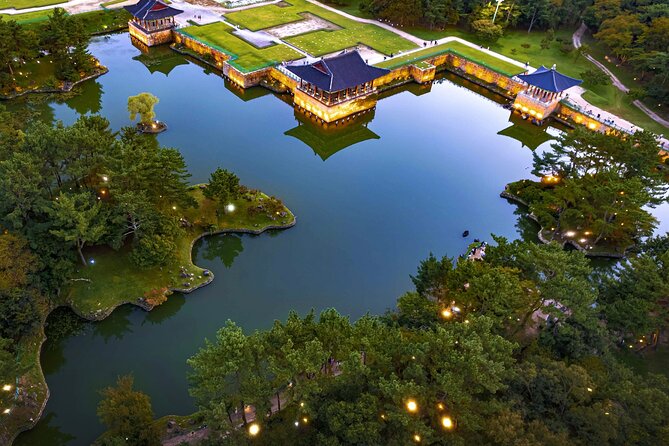
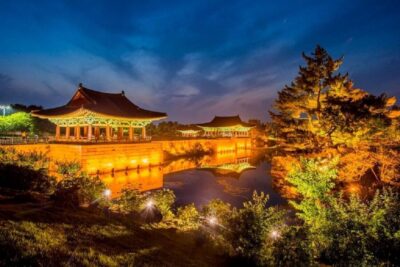
Donggung Palace and Wolji Pond, also known as Anapji Pond, brings you back to the Unified Silla period. It is a palace site beside a carefully shaped body of water, and the reflection of the buildings is central to its appeal.
You have about one hour here. The setting rewards a slower walk around the pond, though the schedule means you will need to keep moving with the group. The site is especially attractive as the light changes, making its position later in the day a sensible choice.
This stop adds court life to the story. Bulguksa shows religious ambition, while Daereungwon shows royal burial customs. Donggung Palace and Wolji Pond suggests ceremony, residence, and the careful use of water and architecture to create a royal setting.
Do not expect a complete palace to remain. You are visiting a historic site with reconstructed or surviving elements rather than a fully intact royal compound. The pond and its reflections do much of the visual work, so the experience depends partly on weather and light.
Woljeonggyo Bridge at night
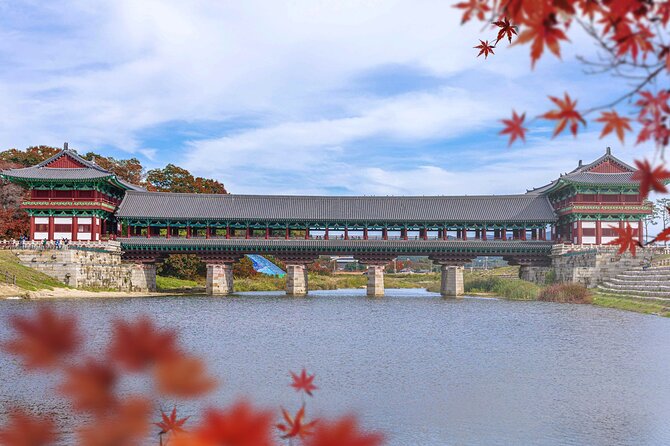
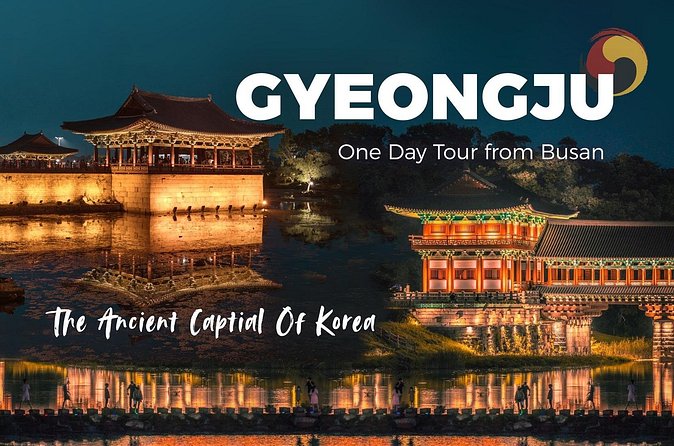
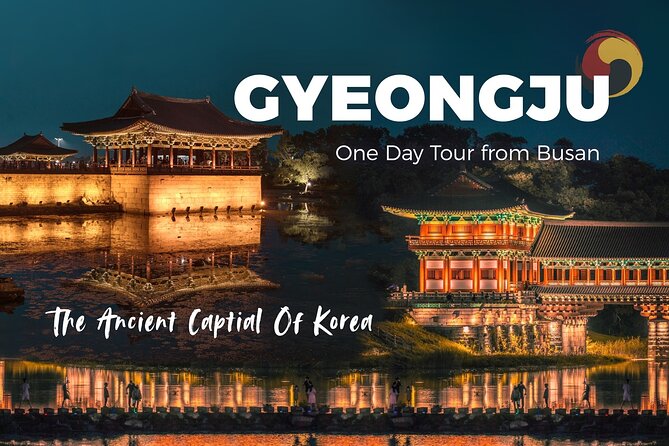
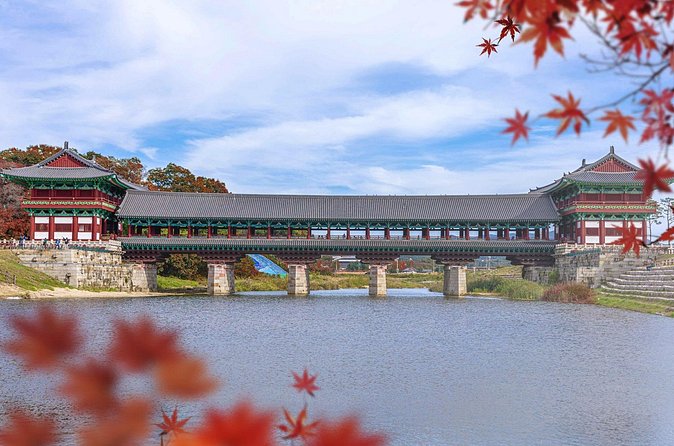
The final stop is Woljeonggyo Bridge, known for its traditional design and evening illumination. Lights reflect on the water, giving you a strong closing scene after a day of temples, tombs, and palace remains.
You have about one hour here, which should allow time for photographs and an evening walk. The bridge is not simply a functional crossing in this context. Its lit structure gives you a visual reminder that Gyeongju’s heritage is still presented as part of the city’s current life.
This is a smart ending because the mood changes. Earlier stops ask you to think about stone, burial, and royal history. At Woljeonggyo, you can enjoy the view more directly.
Weather matters at this stop. The tour requires good weather, and rain could reduce the pleasure of an evening walk or lead to a cancellation. If the operator cancels because of poor conditions, you can choose a different date or receive a full refund.
Transport, group size, and the day’s rhythm
Round-trip transfers are included, but hotel pickup and drop-off are not. You need to make your own way to the designated pickup point, so check the meeting details carefully before the morning begins. The tour is near public transportation, which helps, but the exact transfer arrangement still matters.
The van received praise for being comfortable and on time, and the guide was described as engaging and well informed. Those details matter more than fancy wording on a full-day outing. A late start or uncomfortable vehicle would make the long schedule much harder.
The maximum group size is 42 people. That is a sizable group, though the tour’s fixed stops and included transport make it practical for covering a wide area. You should expect group timing at each site rather than private attention.
The pacing appears to be one of the stronger features. The solo guest who assessed the tour positively found the rhythm right and the explanations relevant. That suggests the guide knows how to give useful context without turning every stop into a lecture.
Still, a 42-person group can be slower when everyone gathers, walks, and boards the vehicle. If you prefer complete freedom, a private guide or independent trip may suit you better. If you want the main sights arranged in a logical order, this setup saves work.
What the $76.19 price really covers
At $76.19, I would judge the value by the amount of coordination included. You receive transport, attraction admission, and a guide across a 10-hour day. You are paying not only to enter Gyeongju’s major sights, but also to avoid arranging several separate journeys.
The price does not cover meals, hotel pickup, or personal expenses. That is not unusual, but you should budget for lunch and any drinks or purchases on Hwangridan-gil. The two-hour stop there gives you time to choose and pay for your own food.
The value is strongest for a first visit, a solo trip, or anyone staying in Daegu who wants to see several parts of Gyeongju in one day. It is weaker for repeat visitors who already know the transport system and want long, quiet periods at one or two sites.
Confirmation arrives when you book, and the experience uses a mobile ticket. Most people can participate, according to the available details, and the activity is near public transportation.
Free cancellation is available if you cancel at least 24 hours before the start time. Changes or cancellations inside that period are not accepted for a refund. The tour also requires a minimum number of participants, so an operator cancellation for that reason brings a choice of another date or experience, or a full refund.
Who should book this Gyeongju day tour
I would recommend this trip if you want a broad first look at Gyeongju without handling every transfer yourself. It suits solo visitors especially well, since the guide, vehicle, and fixed plan remove much of the uncertainty of a long day alone.
It also works for history-minded couples and families who want major sights in one outing. The schedule includes enough variety to keep the day from becoming six versions of the same monument.
You may want another option if you dislike group travel, need hotel pickup, or prefer to linger. The 10-hour schedule is full, and the largest possible group is 42 people. Gyeongju rewards wandering, but this tour gives you an organized introduction rather than unlimited time.
Should you book it?
Book this tour if your priority is efficient sightseeing with a guide, included admissions, and dependable transport from Daegu. Bulguksa Temple, Daereungwon, Hwangridan-gil, Donggung Palace and Wolji Pond, and Woljeonggyo Bridge give you a well-rounded picture of Gyeongju in one day.
Skip it if your ideal visit means slow photography, long meals, or deep exploration of one site. For everyone else, the reasonable price, useful pacing, and strong guide feedback make this a practical way to meet Korea’s ancient capital without making the day harder than it needs to be.
FAQ
Where does this Gyeongju tour begin?
The tour is based in Daegu, and hotel pickup and drop-off are not included. You will need to reach the designated meeting point yourself.
How long does the tour last?
The experience lasts approximately 10 hours.
What attractions are included?
The route includes Bulguksa Temple, Gyeongju Gyochon Traditional Village, Daereungwon Tomb Complex, Hwangridan-gil, Donggung Palace and Wolji Pond, and Woljeonggyo Bridge.
Are entrance fees included?
Yes. Admission to the listed attractions is included in the tour price.
Is transportation included?
Yes. Round-trip transfers are included.
Are meals included?
No. Meals are not included, so you should plan to pay for food during the day.
How large can the group be?
The tour can have a maximum of 42 participants.
What is the cancellation policy?
You can cancel at least 24 hours before the experience starts for a full refund. Cancellations or changes made less than 24 hours before the start time are not accepted for a refund.
Just added in Gyeongju
- Yangdong village & Gyeongju Unesco Site Private Van Tour★ 5.0 · 1 review
- Small Group 7D Korea package Tour with Seoul Gyeongju Busan Jeju★ 4.5 · 13 reviews
- Gyeongju UNESCO Sites Tour by KTX train; The Museum Without walls★ 4.5 · 11 reviews
- Full-Day Small Group GyeongJu History Tour from Seoul★ 5.0 · 2 reviews
- 7 days Flexible Tour for Major Cities(Seoul,Busan,Gyeongju etc)★ 5.0 · 5 reviews
- PREMIUM 5 Days Tour for Wonder of Korea(Mt. Seoraksan, Andong, Gyeongju, Busan)★ 5.0 · 1 review
- 5 Days Tour for Korea’s past and present(Mt.Seoraksan, Andong, Gyeongju, Busan)★ 5.0 · 1 review
- 7 Days Highlight Korea Tour(Seoul, Nami, DMZ, Andong, Gyeongju, Busan)★ 5.0 · 1 review
Gyeongju Tours, compared.
Gyeongju Guided Day Trip to Three Kingdoms Capital
Read our review →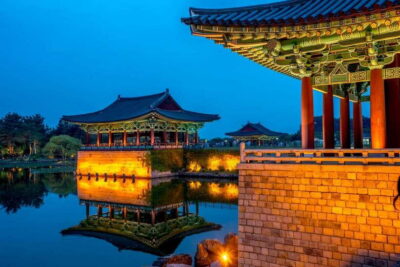
Gyeongju UNESCO World Heritage Guided Day Tour
Read our review →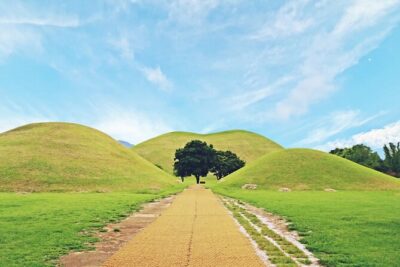
Gyeongju UNESCO World Heritage Guided Day Tour from Busan
Read our review →
Old Korea Thousand History Tour of Gyeongju from Busan
Read our review →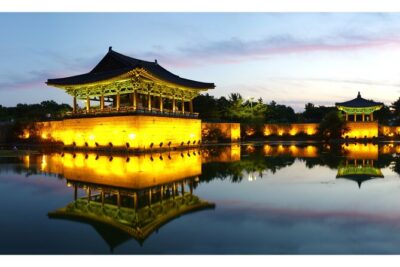
Gyeongju UNESCO sites Private tour with licensed tour guide
Read our review →
Private Gyeongju Tour – Explore Gyeongju UNESCO Sites
Read our review →
Gyeongju UNESCO Legacy Tour with National Museum
Read our review →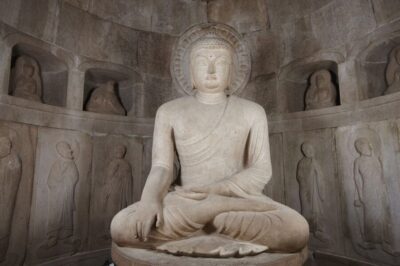
UNESCO Heritage Tour Including Bulguksa Temple
Read our review →Browse the lists this tour appears in