
Reviewed · UNESCO WORLD HERITAGE TOURS
Korean UNESCO World Heritage Tour including Gyeongju, Andong and Daegu(2N3D)
Ancient Korea unfolds in three busy days. This private tour links Gyeongju’s Silla treasures with Andong’s traditional village life and Haeinsa’s remarkable Buddhist collection, all with a driver, guide, and hotel pickup. I like the freedom of a private vehicle, and I like that Wi-Fi and bottled water are included for the long road stretches. The main catch is cost: at $988.49 per person, you still pay separately for two nights of Daegu accommodation and all lunches.
I also like the practical route. Public transport would make this combination awkward, especially when Haeinsa, Andong, Gyeongju, and Daegu all enter the picture. You get a strong first look at traditional Korea without having to sort out regional buses or explain every destination across a language barrier. Still, the pace is full: expect early starts, several hours on the road, and only a short taste of each city.
In This Review
- Key points to know before booking
- Why this route works from Busan
- Day 1: Silla art and royal tombs in Gyeongju
- Seokguram, an hour above the East Sea
- Bulguksa and its stone pagodas
- Cheonmachong Tomb and the Silla royal past
- Gyeongju National Museum and the Emille Bell
- Day 2: Andong’s village traditions and local flavor
- Three hours in Hahoe Folk Village
- Andong Folk Museum and Confucian culture
- Andong Soju Museum and a small tasting
- Day 3: Haeinsa, herbal medicine, and Daegu food
- Haeinsa Temple in the Gaya Mountains
- Daegu Yangnyeongsi Herbal Medicine area
- Seomun Market for a final taste of Daegu
- What the private price really buys you
- Who should book this three-day route?
- Should you book it?
- FAQ
- Where does the tour begin?
- Can the tour start somewhere other than Busan?
- How long does the experience last?
- Is this a private tour?
- Is hotel pickup included?
- Is transportation included?
- Are admission tickets included?
- Is accommodation included?
- Are meals included?
- Can I cancel the tour for a refund?
Key points to know before booking
- Gyeongju begins with two UNESCO-linked Buddhist sites: Seokguram and Bulguksa provide the tour’s strongest introduction to Korea’s Silla-era art and architecture.
- The private format is the real luxury: Your own driver and guide can keep the schedule focused on your group rather than a large bus.
- Andong offers a change of mood: Hahoe Folk Village and the folk museums focus on traditional homes, Confucian customs, food, and local life.
- Haeinsa is the spiritual high point: The mountain temple is home to the Goryeo Daejanggyeong, also called the Koreana Tripitaka.
- Daegu adds everyday Korea: Herbal medicine displays and Seomun Market bring the tour back from royal tombs and temples to food, shopping, and city life.
- Budget carefully: The price includes private transport, guides, admission tickets, Wi-Fi, water, and hotel transfers, but not lodging or lunch.
Why this route works from Busan
South Korea is easy to explore in and around Seoul, but the historic heart of the southeast needs more planning. Gyeongju, Andong, Haeinsa, and Daegu sit in different directions, and a three-day route by public transport would require careful connections and a fair amount of patience.
This tour removes that puzzle. Pickup begins at 8:00 a.m. from your hotel in Busan, and the private air-conditioned minivan carries you between the major stops. You can watch the countryside pass by, use the onboard Wi-Fi, and leave the navigation to someone else.
That convenience matters most if you are visiting Korea for the first time, traveling with family, or carrying luggage between cities. The guide and driver also help with the language barrier, which can make smaller museums, local food areas, and regional transport less stressful.
The tradeoff is that this is not a slow, lingering trip. You have roughly one hour at Seokguram, just over an hour at Bulguksa, and similar timed visits at the other major stops. I would think of it as a well-organized introduction, not a deep stay in each destination.
More History Tours in Busan
- From Busan: Gyeongju UNESCO World Heritage Guided Day Tour
★ 4.8 · 1,250 reviews - Gyeongju UNESCO World Heritage Guided Day Tour from Busan
★ 5.0 · 660 reviews - Old Korea Thousand History Tour of Gyeongju from Busan
★ 5.0 · 518 reviews
Day 1: Silla art and royal tombs in Gyeongju
Seokguram, an hour above the East Sea
The first stop is Seokguram, a hermitage connected with Bulguksa Temple. The grotto looks toward the East Sea and is known for Buddhist sculpture from the Silla period. Admission is included, and the planned visit lasts about one hour.
This is a strong opening because it puts art, religion, and setting together. You are not simply looking at an old building. The grotto’s position above the coast gives the site a sense of purpose, while the sculptures offer an early look at the artistic skill that made Silla-era Gyeongju so important.
The visit is fairly short, so pay attention to the guide’s explanation rather than expecting a long period for quiet exploration. The stop also pairs naturally with Bulguksa, since both belong to the same UNESCO World Heritage designation.
Bulguksa and its stone pagodas
Bulguksa means Temple of the Buddha Land, and it is the best-known Buddhist temple on this route. You have about 70 minutes here, with admission included.
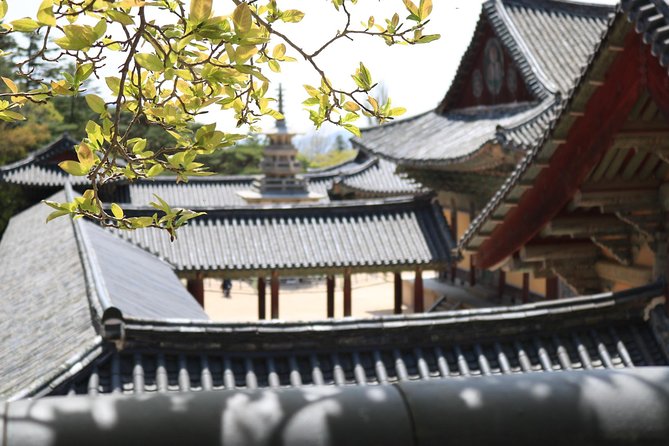
The temple is linked to the Silla Kingdom and contains important relics, including the Dabotap and Seokgatap stone pagodas. Those pagodas give the visit a clear visual focus, while the broader temple grounds show how religious buildings, courtyards, and stonework fit together.
I would not rush through this stop. Bulguksa is one of the places where the tour’s value becomes clear, because the guide can explain what you are looking at instead of leaving you to identify every gate and pagoda on your own.
The limitation is time. One hour and ten minutes is enough for an informed visit, but not enough for an unhurried study of every corner. If your main reason for booking is Buddhist architecture, you may wish the schedule allowed longer here.
More History Tours in Gyeongju
- From Busan: Echoes of Silla Gyeongju Historical Day Tour
★ 4.8 · 55 reviews - Gyeongju Historic Areas Day Tour with Sky Capsule from Busan
★ 5.0 · 18 reviews - Gyeongju The UNESCO World heritage sites tour(Private tour)
★ 5.0 · 17 reviews - From Busan: Gyeongju Historical Day Tour with Sky Capsule
★ 4.7 · 17 reviews
Cheonmachong Tomb and the Silla royal past
The tour then moves into central Gyeongju for Cheonmachong Tomb, or Heavenly Horse Tomb. The name comes from a painting of a heavenly horse found during the tomb’s excavation in 1973. The tomb belonged to an unknown Silla king, and the planned visit lasts about 70 minutes.
This stop helps you understand that Gyeongju is more than temples. The city is also filled with burial sites connected to the Silla royal family. Cheonmachong gives you a direct sense of how archaeological discoveries have shaped the modern city.
The visit works best when paired with the museum that follows. The tomb gives you the site, while the museum gives you objects and context. Without that pairing, the burial mound could feel like a large grassy rise with too little explanation.
Gyeongju National Museum and the Emille Bell
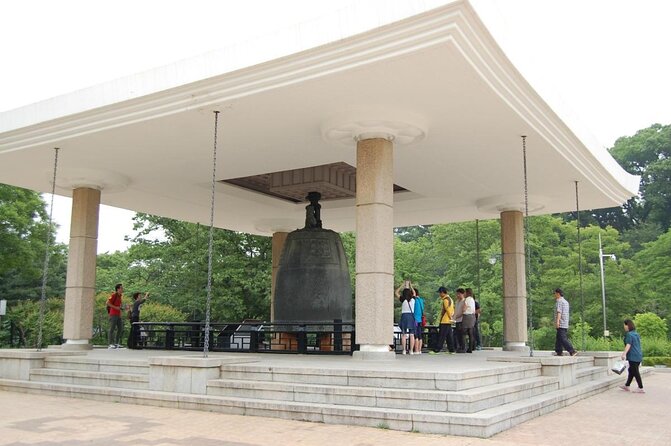
The Gyeongju National Museum is allotted 80 minutes and includes admission. Its collection contains about 3,000 Silla relics, including King Seongdeok’s Bell, often called the Emille Bell, and National Treasure No. 29.
This is an important stop for anyone who wants more than attractive temple photographs. The museum connects the objects to the wider Silla period and helps explain the craftsmanship, beliefs, and royal culture behind the monuments you have already seen.
The schedule gives you enough time for the main highlights, but not for every exhibit in detail. If you are a museum person, ask your guide to help you prioritize. If you are more interested in outdoor sites, the museum still earns its place because it makes the day’s temples and tombs easier to understand.
Day 2: Andong’s village traditions and local flavor
Three hours in Hahoe Folk Village
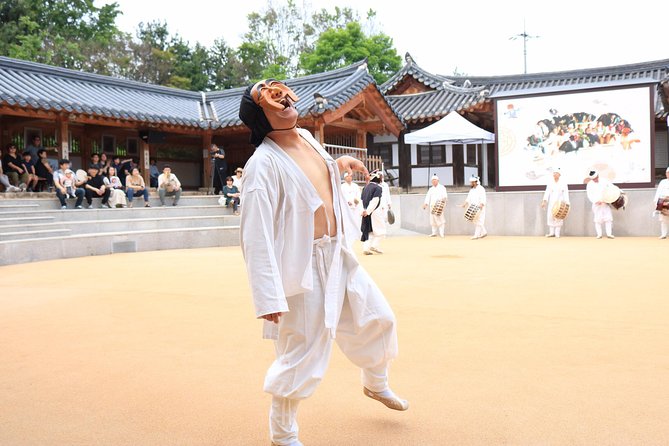
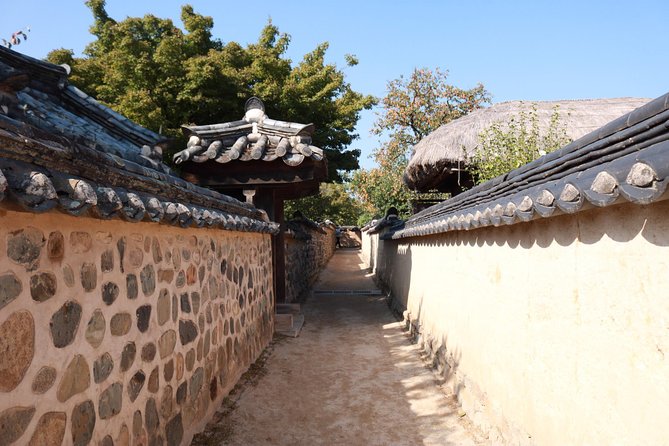
Day two shifts from royal Silla monuments to traditional village life. Andong Hahoe Folk Village is a UNESCO World Heritage site and home to descendants of the Pungsan Ryu clan. Its traditional houses have been preserved, making this the longest stop of the entire tour, at about three hours.
That extra time is welcome. Hahoe is not a quick photo stop. You can look at the arrangement of homes, consider how a clan-based village functioned, and see a different side of Korean culture from the temples and tombs of Gyeongju.
I especially like the contrast in the route. Gyeongju presents Korea through royal power and Buddhist art. Hahoe focuses on family, homes, customs, and village continuity. It gives the trip a more human scale.
Even three hours can pass quickly, particularly if you want to walk slowly and take photographs. The schedule does not specify a separate lunch stop, and lunch is not included, so ask your guide early about when and where you will eat. That simple question can make the day more comfortable.
Andong Folk Museum and Confucian culture
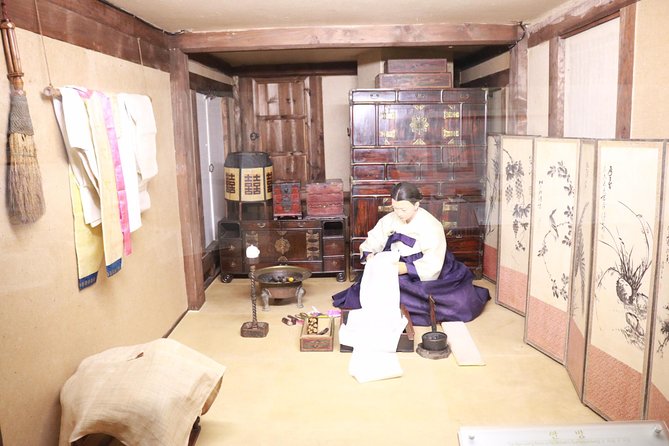
The Andong Folk Museum follows with a one-hour visit. Andong is known for Confucian culture, and the museum presents past lifestyles, folk customs, and important ceremonies.
This is useful preparation for understanding Hahoe. Instead of treating old houses as scenery, you get a clearer picture of the social practices that shaped daily life. The museum also gives you an indoor break after time outdoors in the village.
The visit is short enough to keep the day moving, but you should not expect a complete study of Andong’s culture. Think of it as a focused introduction that adds meaning to the village rather than a full museum day.
Andong Soju Museum and a small tasting
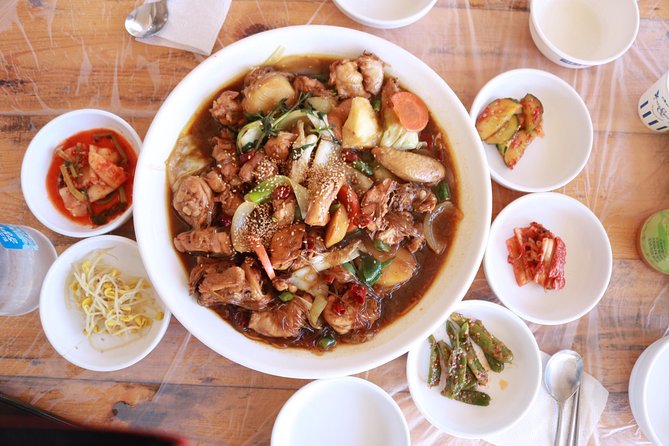
The final stop is the Andong Soju Museum, planned for about 30 minutes. You can see how traditional soju is made, learn about local foods, and taste Andong soju.
This is one of the tour’s more personal touches. Temples and museums explain Korea’s past, but a local drink connects you with food traditions that remain part of daily life. The tasting also breaks up what could otherwise be a very formal history-focused day.
The stop is brief, so the tasting should be treated as an introduction rather than a full food experience. If you do not drink alcohol, advise the operator about your preferences before departure. Vegetarian meals are available when requested at booking, but lunch itself is not part of the price.
Day 3: Haeinsa, herbal medicine, and Daegu food
Haeinsa Temple in the Gaya Mountains
Haeinsa Temple receives about 90 minutes, with admission included. It is one of Korea’s Three Jewel Temples and is located in the Gaya Mountains. Its great treasure is the Goryeo Daejanggyeong, also known as the Koreana Tripitaka.
For many people, this will be the most memorable stop. The temple gives you a mountain setting and a major Buddhist landmark, while the woodblocks connect the site to Korea’s literary and religious heritage. The route’s first day shows Silla sculpture and temple design. Haeinsa adds the story of preserving Buddhist scripture.
The time allotment is enough for a guided visit, but the temple deserves your full attention. One review described Haeinsa as especially beautiful on a misty Sunday morning, and that detail points to the site’s appeal: weather and quiet can shape the mood here. You should also expect the mountain setting to feel different from urban Busan or central Daegu.
Since Haeinsa is reached by private vehicle on this tour, you avoid the complicated transport planning that can make a visit difficult on a tight schedule. That convenience is one of the strongest reasons to consider the tour despite its price.
Daegu Yangnyeongsi Herbal Medicine area
Back in Daegu, the tour visits the Yangnyeongsi herbal medicine area for about 40 minutes. You can see different herbs and learn about traditional medical care in Korea.
This is a compact stop, but it broadens the trip beyond monuments and museums. It shows a form of local knowledge that is tied to markets, remedies, and everyday health practices. The visit may appeal most if you enjoy food, medicine, and street-level culture as much as architecture.
Do not expect a long workshop or treatment session. The planned time is enough to look around and learn the basic role of the area, but the stop is more observational than hands-on.
Seomun Market for a final taste of Daegu
The final stop is Seomun Market, one of Korea’s largest and liveliest markets. You have about 50 minutes, and admission is free.
This is a smart way to finish. After three days of royal sites, Buddhist temples, village homes, and museums, the market brings you into present-day Daegu. You can look for local foods, clothing, and fashion items, and you get a chance to end the trip with ordinary shopping rather than another formal monument.
Fifty minutes is enough to sample the atmosphere and make a few purchases, but not enough to explore a major market in depth. If food is a priority, tell your guide what you want to try. Lunch is separate, so Seomun Market may also be a practical place to arrange food, depending on the day’s timing.
What the private price really buys you
The listed price is $988.49 per person. That is a serious amount, especially because two nights of accommodation in Daegu and lunches are not included.
Still, the value is not only in the admission tickets. The price covers a private air-conditioned minivan, a driver and professional guide, hotel pickup and drop-off, bottled water, onboard Wi-Fi, and admission to the scheduled sites. You are paying for the route, the driving time, and the ability to reach places that are not easy to combine by public transport.
The private format matters most for families and small groups. You do not share the vehicle with strangers, and the guide’s attention belongs to your party. You can also discuss the pace and ask for help with food choices, museum priorities, or the day’s timing.
Group discounts are available, though the exact discount is not specified. If you are traveling with several people, compare the total with the cost of separate transport, admission tickets, guides, and taxis. For one person or a couple on a strict budget, the cost will be harder to justify.
The tour is booked an average of 61 days in advance, which suggests you should not leave planning until the last minute if your dates are fixed. Confirmation is provided at booking, and free cancellation is available until 24 hours before the start time.
Who should book this three-day route?
I would recommend it to a first-time visitor who wants a broad introduction to southeastern Korea without handling intercity transport. It also suits families, older relatives, and anyone who values hotel pickup, a private vehicle, and direct help from a guide.
History and architecture fans will appreciate the concentration of UNESCO sites. Food and local-culture fans will enjoy Andong soju, the herbal medicine area, and Seomun Market, though the limited meal time means you should plan ahead.
I would be more cautious if you prefer slow travel. The schedule includes long drives and fixed visits, and the three days cover a lot of ground. You will see major highlights, but you will not have the freedom to spend half a day at one temple or museum.
The tour can start from Gyeongju or another city near Busan, according to the provided arrangements. That option may help if your wider trip already takes you away from Busan, but confirm the exact pickup and overnight plan before paying.
Should you book it?
Book this tour if your priority is maximum coverage with minimum transport hassle. Gyeongju, Andong, Haeinsa, and Daegu make an excellent cultural circuit, and the private vehicle solves the hardest practical problem.
Skip it if $988.49 feels too high once you add hotels and meals, or if you want long, unplanned visits. For the right group, the price buys time, comfort, and access to a difficult route. For a solo budget visitor, independent planning may be the better choice.
FAQ
Where does the tour begin?
The tour is based in Busan and begins with hotel pickup at 8:00 a.m.
Can the tour start somewhere other than Busan?
It may be possible to start from Gyeongju or another city near Busan. Confirm the requested starting point with Kangsan Travel Service Co., Ltd. before booking.
How long does the experience last?
The tour lasts approximately three days and includes two nights in Daegu, with accommodation arranged separately.
Is this a private tour?
Yes. Only your group participates, and the tour uses a private vehicle with a driver and guide.
Is hotel pickup included?
Yes. Daily hotel pickup and drop-off are included.
Is transportation included?
Yes. Transport is provided in a private, air-conditioned minivan. Bottled water and onboard Wi-Fi are also included.
Are admission tickets included?
Yes. Admission is included for the scheduled visits to Seokguram, Bulguksa, Cheonmachong Tomb, Gyeongju National Museum, Hahoe Folk Village, Andong Folk Museum, Andong Soju Museum, Haeinsa Temple, and the Daegu Yangnyeongsi site.
Is accommodation included?
No. Two nights of accommodation in Daegu are not included. The tour office can provide information and recommend places to stay.
Are meals included?
Lunch is not included. A vegetarian option is available if you request it at the time of booking.
Can I cancel the tour for a refund?
You can cancel at least 24 hours before the local start time for a full refund. Cancellations or changes made less than 24 hours before the start time are not accepted for a refund.
More UNESCO Sites in Busan
- Busan: Gyeongju UNESCO Legacy Tour with National Museum
★ 5.0 · 172 reviews - From Busan to Gyeongju UNESCO Legacy Tour with National Museum
★ 5.0 · 87 reviews - 3-Days 2-Nights Gyeongju UNESCO Sites & Busan City [Private Tour from Seoul]
★ 4.5 · 11 reviews - UNESCO Tongdosa Temple + Gourmet Eonyang Style Bulgogi Lunch
★ 5.0 · 7 reviews
Just added in Busan
- Small Group 7D Korea package Tour with Seoul Gyeongju Busan Jeju★ 4.5 · 13 reviews
- Private Transfer from Seoul to Busan(up to 12 passengers)★ 5.0 · 1 review
- Jinhae Cherry Blossom + Busan Sunrise from Seoul★ 4.5 · 5 reviews
- 7 days Flexible Tour for Major Cities(Seoul,Busan,Gyeongju etc)★ 5.0 · 5 reviews
- PREMIUM 5 Days Tour for Wonder of Korea(Mt. Seoraksan, Andong, Gyeongju, Busan)★ 5.0 · 1 review
- 5 Days Tour for Korea’s past and present(Mt.Seoraksan, Andong, Gyeongju, Busan)★ 5.0 · 1 review
- 7 Days Highlight Korea Tour(Seoul, Nami, DMZ, Andong, Gyeongju, Busan)★ 5.0 · 1 review
- 5-Day Korea Golden route by K-shuttle Tour from Seoul Including Busan, Yeosu★ 4.5 · 37 reviews
UNESCO World Heritage Tours, compared.
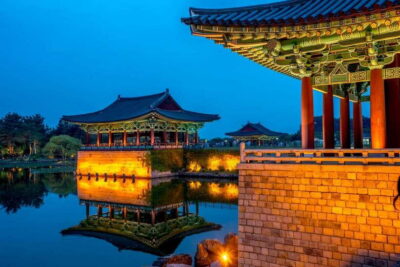
Gyeongju UNESCO World Heritage Guided Day Tour
Read our review →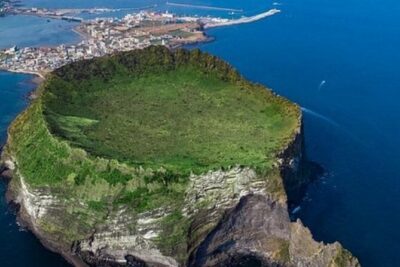
East Jeju Essentials – Seongsan Ilchulbong (UNESCO) & Haenyeo
Read our review →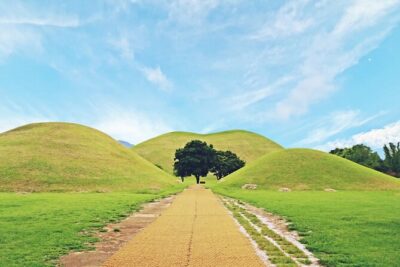
Gyeongju UNESCO World Heritage Guided Day Tour from Busan
Read our review →
Jeju Southern UNESCO Full Day Tour with Mt.Halla
Read our review →
Gyeongju UNESCO sites Private tour with licensed tour guide
Read our review →
Private Gyeongju Tour – Explore Gyeongju UNESCO Sites
Read our review →Browse the lists this tour appears in