
Reviewed · GYEONGJU TOURS
Gyeongju One-Day Tour from Daegu(Drop-off Busan)
Gyeongju turns ancient Korea into an easy day trip. I like the mix of major Silla-era sights and lively modern streets, especially Bulguksa Temple, Daereungwon Tomb Complex, and Hwangridan-gil. I also like that transport, entrance fees, and a professional guide are bundled into the $83.18 price, so you can focus on the city rather than piecing together buses and tickets.
The main thing to check is the departure wording. The tour title says from Daegu with drop-off in Busan, while the tour details describe a full-day trip from Busan and a return to Busan. Confirm the pickup point before paying. The schedule is also full, and lunch is not included.
In This Review
- Key points to know before booking
- Why Gyeongju works so well as a day trip
- Bulguksa Temple and the Silla setting
- Gyochon Village and Woljeonggyo Bridge
- Daereungwon Tomb Complex and Silla burial mounds
- Two hours on Hwangridan-gil
- Donggung Palace and Wolji Pond after dark
- Woljeonggyo Bridge as the final photo stop
- Transport, group size, and the price
- Who will get the most from this tour
- Should you book the Gyeongju day tour?
- FAQ
- Where does the tour depart from?
- Where does the tour end?
- How long does the experience last?
- What attractions are included?
- Are attraction admission fees included?
- Is lunch included?
- Is hotel pickup and drop-off included?
- How many people can join the tour?
- Can I cancel for a full refund?
Key points to know before booking
- Six Gyeongju stops in about 10 hours: The day covers temples, tombs, traditional homes, a shopping street, a palace pond, and a historic bridge.
- Silla history takes center stage: Bulguksa, Daereungwon, and Donggung Palace and Wolji Pond each show a different side of Korea’s ancient capital.
- Hwangridan-gil adds a modern pause: You get two hours among preserved 1960s buildings, shops, and places to eat.
- Woljeonggyo Bridge is timed for evening: Its illuminated reflection on the water gives the day a memorable final photo stop.
- A guide can make the difference: Sang was praised for being patient, funny, available, and well informed about the places on the route.
- The group may reach 42 people: This keeps the cost reasonable, but it may feel less personal than a small-group tour.
Why Gyeongju works so well as a day trip
Gyeongju was the capital of the Silla kingdom for more than a thousand years. You do not need to know every royal name or date to appreciate the city. Its history is spread across temples, grassy burial mounds, palace ruins, village lanes, and water gardens, so the tour gives you several different ways to understand the place.
That variety is the real strength of this route. You are not spending the whole day inside museums or looking at one type of monument. One hour may put you beside a Buddhist temple, and the next may place you among traditional houses or cafés in a restored old district.
The trip lasts about 10 hours, which gives you enough time to see the main sights without arranging local transport yourself. The tradeoff is pace. Gyeongju rewards slow wandering, but this schedule asks you to keep moving and return to the bus on time.
The tour includes admission to the listed attractions and round-trip transportation. That is useful in a city where the sights are spread out. You will still need money for lunch, drinks, and personal purchases.
More Busan trips:
- Busan: Gyeongju Guided Day Trip to Three Kingdoms Capital
★ 4.8 · 1,925 reviews - Small Group Full Day Busan Tour (Max 6 Pax)
★ 5.0 · 1,464 reviews - From Busan: Gyeongju UNESCO World Heritage Guided Day Tour
★ 4.8 · 1,250 reviews
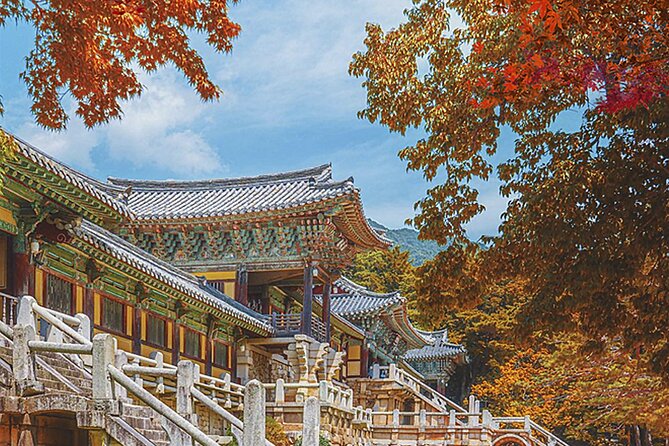
Bulguksa Temple and the Silla setting
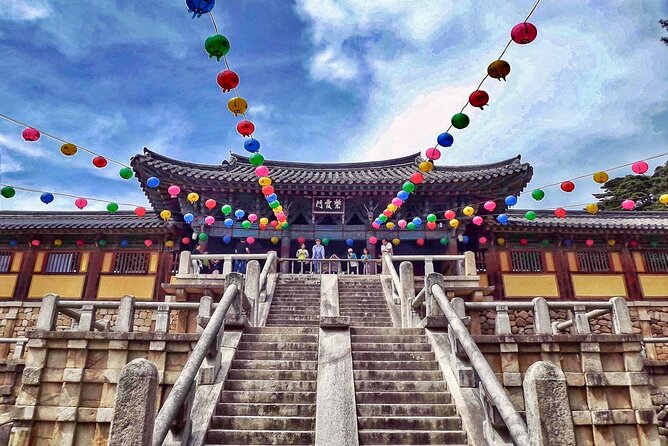
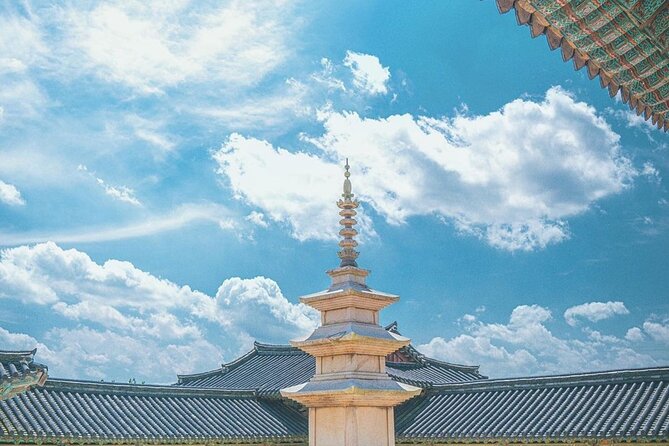
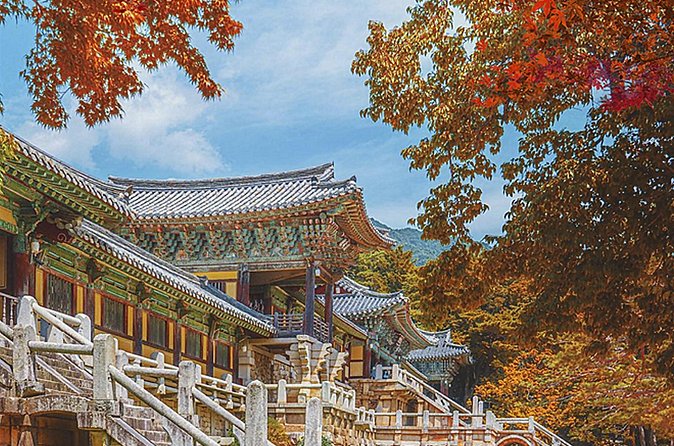
Bulguksa Temple is the grand historical opening to the day. It is a UNESCO World Heritage Site and one of the clearest places to see how Silla-era Buddhism shaped Korean art and architecture.
The setting matters as much as the buildings. The temple sits in harmony with its natural surroundings, which gives the visit a calmer feel than a busy city attraction. You can look at the structure itself, then step back and take in the relationship between stonework, temple buildings, and the surrounding scenery.
The supplied schedule lists only one minute at Bulguksa, which appears unusually brief for a temple visit. It may be a scheduling error or shorthand in the published timing, so I would confirm how much actual time you receive before booking. If the stop really is that short, you will have time for a quick look rather than a relaxed visit.
Admission is included, so you do not have to handle a separate ticket. A guide is especially useful here because the temple represents the Silla period, and a few clear explanations can turn decorative details into meaningful ones.
Gyochon Village and Woljeonggyo Bridge
Gyeongju Gyochon Traditional Village shifts the mood from formal monument to old neighborhood. The area is made up of hanok houses, stone-wall lanes, Gyeongju Hyanggyo, restaurants, and the nearby Woljeonggyo Bridge.
You get about an hour here. That is enough to walk through the main section, take photographs, and notice how the traditional houses are used today. The appeal is not only the architecture. The village shows how historic buildings can remain part of ordinary city life rather than sitting apart as a preserved display.
The nearby bridge is also part of the cultural setting, although the tour gives it a separate evening stop later. At Gyochon, you may see it in a different light and understand its place beside the village and waterway.
This stop suits you if you enjoy details such as tiled roofs, stone walls, wooden doors, and quieter lanes. It may feel short if you want to stop at restaurants or spend time browsing every corner. Since lunch is not included, the village may also tempt you to eat, but the one-hour allocation could make a full meal difficult.
Daereungwon Tomb Complex and Silla burial mounds
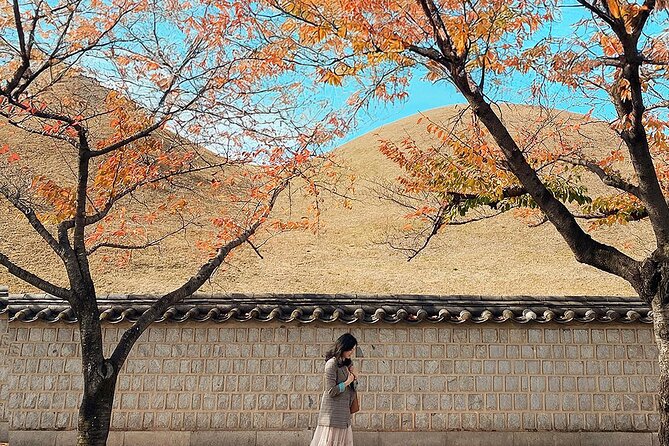
Daereungwon Tomb Complex gives Gyeongju its most distinctive visual symbol: large grassy burial mounds rising through the city. These are tombs connected to kings, queens, and aristocrats of the old Silla era.
The hour here is well used because the site is easy to understand at a glance but more interesting when you consider what the mounds represent. They are not scattered ruins. They form a dense burial area, showing the importance of royal and elite funerary customs in Silla society.
I like this stop because it makes ancient history feel physical. You are not only hearing about a former kingdom. You are walking among the remains of its ruling class, with the rounded tombs providing a strong sense of scale.
The complex is also a good contrast to Bulguksa. The temple reflects religious life and ceremony, while Daereungwon points toward royal power, family status, and burial traditions. A guide can help connect the two stops without forcing you to study a long list of dates.
More Gyeongju trips:
- Gyeongju UNESCO World Heritage Guided Day Tour from Busan
★ 5.0 · 660 reviews - Old Korea Thousand History Tour of Gyeongju from Busan
★ 5.0 · 518 reviews - Busan: Gyeongju UNESCO Legacy Tour with National Museum
★ 5.0 · 172 reviews - From Busan to Gyeongju UNESCO Legacy Tour with National Museum
★ 5.0 · 87 reviews
Two hours on Hwangridan-gil
Hwangridan-gil is the most relaxed section of the day. The street preserves old buildings from the 1960s and uses them for shops, restaurants, and other modern businesses. It gives you a chance to see how Gyeongju’s older urban character fits into present-day life.
Two hours is the longest stop on the route, and that is sensible. You have room to eat lunch, browse, take photographs, or simply rest after several historic sites. Since lunch is not included, this is the clearest opportunity to buy a meal, though the tour does not specify which restaurant or how much time is reserved for dining.
Do not expect the same atmosphere as a quiet temple or burial ground. Hwangridan-gil is a popular street with a more social, commercial feel. That change is useful, but if your main goal is archaeology, you may find the two-hour stop generous.
I would treat this as flexible time rather than dead time. You can use it to recover from the morning, purchase snacks, and enjoy the restored buildings at your own pace. The preserved 1960s façades also give you a more recent layer of Gyeongju, not just its ancient past.
Donggung Palace and Wolji Pond after dark
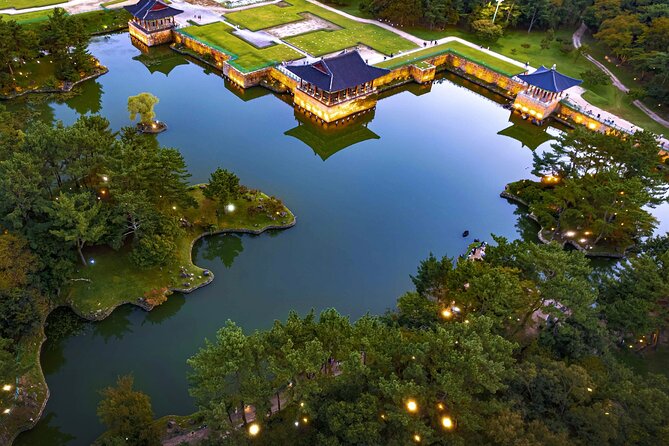
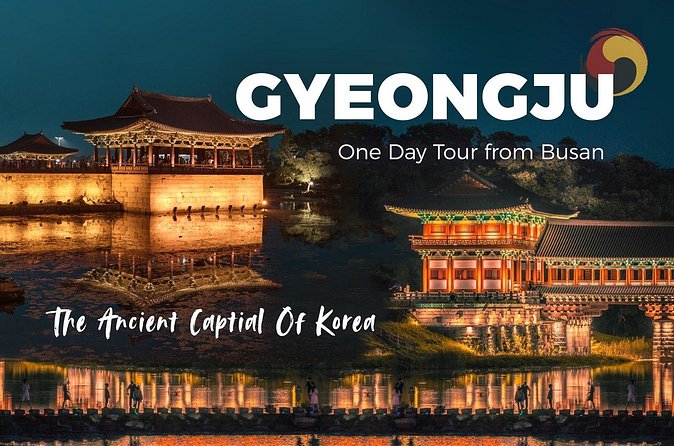
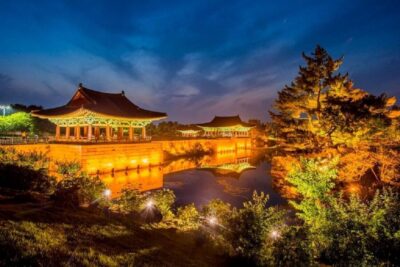
Donggung Palace and Wolji Pond, formerly known as Anapji Pond, is one of the day’s most atmospheric sites. It was part of a palace complex from the Unified Silla period, and the water reflects the structures along its edge.
The one-hour visit gives you time to walk around the pond and view the palace remains from different angles. The setting is particularly effective in the evening, when lights and reflections add another layer to the site.
This is a good example of why the tour’s timing matters. A palace site can feel abstract in daylight, but water, buildings, and illumination make the location easier to picture. You may find the area especially rewarding for photography, though the tour does not promise a specific sunset or lighting condition.
The stop also works well after Hwangridan-gil. You move from food, shops, and restored city buildings back into the older royal world. That contrast helps prevent the day from feeling like one long sequence of similar monuments.
Woljeonggyo Bridge as the final photo stop
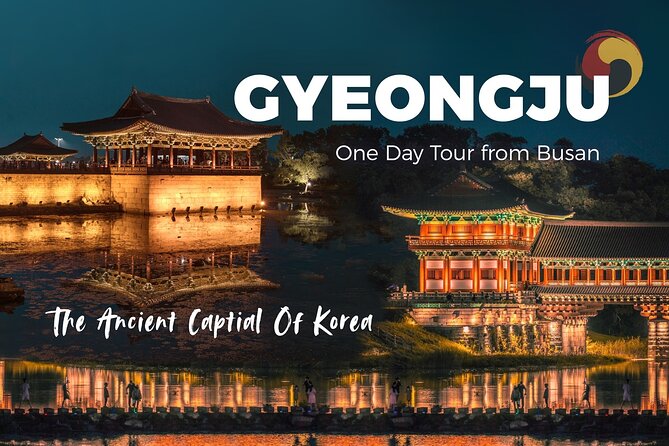
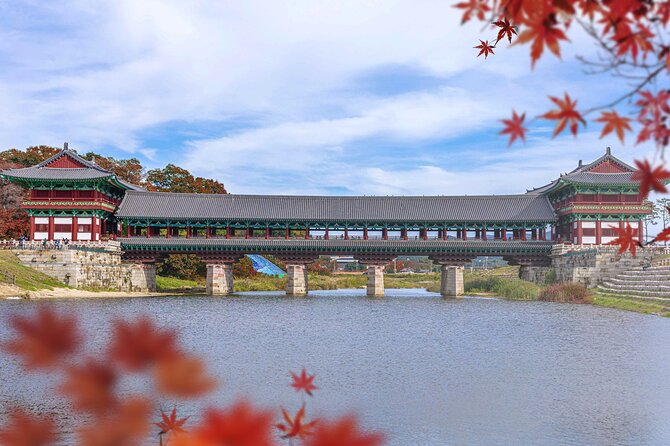
The final featured stop is Woljeonggyo Bridge, with about 30 minutes set aside for the evening view. Traditional Korean design, night lighting, and reflections on the water make it a natural closing scene.
Half an hour is enough for photographs and a short stroll, but not for a long exploration. Keep your expectations focused on the view rather than a full bridge visit.
This stop is also one reason to bring a phone or camera with enough battery. The tour includes a mobile ticket, but the bridge itself is best appreciated visually, and the reflection is likely to be the image you remember most from the day.
The bridge connects neatly with the earlier Gyochon Village stop. Seeing the area first as part of a traditional neighborhood, then later under lights, gives the route a sense of return and continuity.
Transport, group size, and the price
At $83.18 per person, the tour offers fair value if you want an organized day with transportation, attraction admission, and a guide. Gyeongju’s sites are spread across town, so a planned vehicle saves you from working out several separate journeys.
The price is less attractive if you prefer long visits at a single site or want complete control over meal times. The group can include up to 42 people, which is a sizable coach group. That keeps the tour accessible in price, but you should expect fixed meeting times and less freedom than on a private excursion.
The guide is an important part of the value. Sang received especially strong praise for being patient, funny, available, and well informed. Those qualities matter on a busy sightseeing day. A patient guide can repeat instructions, answer questions, and help a large group stay together without making the experience feel hurried.
The details do not state the vehicle type, exact pickup time, or the length of the ride. They also do not clearly resolve the Daegu and Busan departure wording. Contact Lecirt before booking and confirm the starting city, meeting point, drop-off location, and expected return time.
The tour is near public transportation, and most people can participate. Hotel pickup and drop-off are not included, so you need to reach the designated meeting point yourself.
Who will get the most from this tour
I would recommend this trip if you are staying in the Busan or Daegu area and want a first look at Gyeongju without building a complicated plan. It suits first-time visitors, couples, families, and anyone who prefers a guide to explain the meaning behind the sites.
It is also a good choice if you value variety. You see a temple, village, tombs, a preserved street, a palace pond, and a bridge in one day. That range gives you a useful introduction to Gyeongju’s past and present.
You may want another option if you dislike group schedules, need a slow pace, or want to spend several hours at Bulguksa or Donggung Palace and Wolji Pond. The maximum group size of 42 is worth taking seriously.
Free cancellation is available if you cancel at least 24 hours before the start time. Changes made less than 24 hours before departure are not accepted, and the amount paid is not refunded. The experience depends on good weather and a minimum number of participants. If poor weather or low enrollment cancels the trip, you are offered another date or experience, or a full refund.
Should you book the Gyeongju day tour?
Book it if you want efficient coverage of Gyeongju’s main sights, included admissions, and a guide who can keep the day clear and manageable. The combination of Silla monuments, traditional streets, modern Hwangridan-gil, and evening bridge views gives you a broad introduction for $83.18.
Before booking, confirm the departure city and meeting point. If the Daegu-to-Busan routing is correct for your plans, this is a practical way to turn a travel day into a memorable visit to Korea’s ancient capital. If you want quiet, unhurried exploration, choose a smaller or self-guided plan instead.
FAQ
Where does the tour depart from?
The tour title identifies Daegu as the starting location, but other details describe the experience as departing from Busan. Confirm the exact departure city and meeting point with Lecirt before booking.
Where does the tour end?
The tour information states that you return to Busan after visiting Gyeongju. The title also describes drop-off in Busan.
How long does the experience last?
The tour lasts approximately 10 hours.
What attractions are included?
The route includes Bulguksa Temple, Gyeongju Gyochon Traditional Village, Daereungwon Tomb Complex, Hwangridan-gil, Donggung Palace and Wolji Pond, and Woljeonggyo Bridge.
Are attraction admission fees included?
Yes. Admission to the listed attractions is included in the tour price.
Is lunch included?
No. Lunch and other personal expenses are not included.
Is hotel pickup and drop-off included?
No. Hotel pickup and drop-off are not included. The tour is near public transportation.
How many people can join the tour?
The activity can have a maximum of 42 travelers.
Can I cancel for a full refund?
Yes, if you cancel at least 24 hours before the experience start time. Cancellations or changes made less than 24 hours before the start time are not refunded.
Just added in Busan
- Small Group 7D Korea package Tour with Seoul Gyeongju Busan Jeju★ 4.5 · 13 reviews
- Private Transfer from Seoul to Busan(up to 12 passengers)★ 5.0 · 1 review
- Jinhae Cherry Blossom + Busan Sunrise from Seoul★ 4.5 · 5 reviews
- 7 days Flexible Tour for Major Cities(Seoul,Busan,Gyeongju etc)★ 5.0 · 5 reviews
- PREMIUM 5 Days Tour for Wonder of Korea(Mt. Seoraksan, Andong, Gyeongju, Busan)★ 5.0 · 1 review
- 5 Days Tour for Korea’s past and present(Mt.Seoraksan, Andong, Gyeongju, Busan)★ 5.0 · 1 review
- 7 Days Highlight Korea Tour(Seoul, Nami, DMZ, Andong, Gyeongju, Busan)★ 5.0 · 1 review
- 5-Day Korea Golden route by K-shuttle Tour from Seoul Including Busan, Yeosu★ 4.5 · 37 reviews
Gyeongju Tours, compared.
Gyeongju Guided Day Trip to Three Kingdoms Capital
Read our review →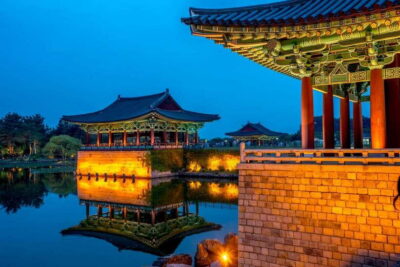
Gyeongju UNESCO World Heritage Guided Day Tour
Read our review →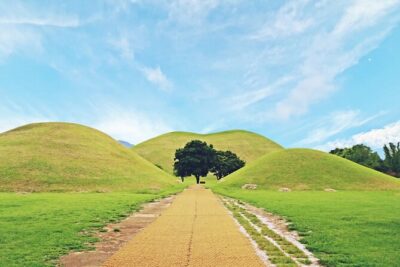
Gyeongju UNESCO World Heritage Guided Day Tour from Busan
Read our review →
Old Korea Thousand History Tour of Gyeongju from Busan
Read our review →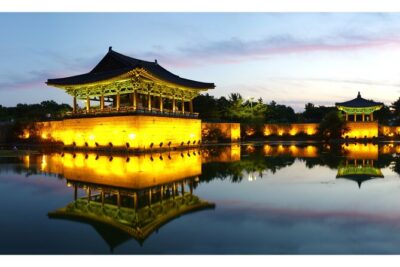
Gyeongju UNESCO sites Private tour with licensed tour guide
Read our review →
Private Gyeongju Tour – Explore Gyeongju UNESCO Sites
Read our review →
Gyeongju UNESCO Legacy Tour with National Museum
Read our review →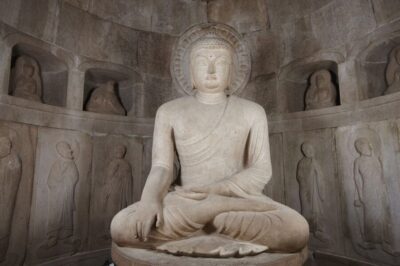
UNESCO Heritage Tour Including Bulguksa Temple
Read our review →Browse the lists this tour appears in