
Reviewed · TEMPLE STAYS
Gyeongju UNESCO World heritage tour including Bulguksa from Seoul by KTX train
Gyeongju rewards a full day. This private tour makes the long trip from Seoul worthwhile by pairing a round-trip KTX ticket with a minivan tour of Korea’s ancient Silla capital. I especially like the efficient route and the chance to see both Bulguksa Temple and Seokguram Grotto, two UNESCO-listed sites that are difficult to cover well without local transport.
I also like the range of stops: royal tombs, an ancient observatory, a major museum, and a Joseon-era village. The main consideration is the price, $460 per person, and the fact that lunch is not included despite the tour description mentioning a restaurant lunch. You pay for your meal on the spot, but you can choose what you want.
In This Review
- Key points at a glance
- Why Gyeongju feels like a museum without walls
- Meeting your guide at Singyeongju Station
- Seokguram Grotto and the east-facing Buddha
- Bulguksa Temple, Korea’s best-known Buddhist site
- Cheonmachong Tomb and Gyeongju’s royal dead
- Gyeongju National Museum and the Silla story
- Cheomseongdae and the science of Silla
- Gyochon Village and later Korean traditions
- Lunch, walking, and the day’s pace
- Is $460 per person a good value?
- Who will get the most from this Gyeongju day trip?
- Booking advice and cancellation terms
- Should you book this tour?
- FAQ
- Where does the tour begin?
- What time does the tour start?
- Is transportation from Seoul included?
- Is lunch included?
- How long does the experience last?
- Is this a private tour?
- Are admission fees included?
- Can I cancel for a full refund?
Key points at a glance
- KTX travel from Seoul: Your round-trip train ticket is included, and the guide meets you at the platform at Singyeongju Station.
- Two major UNESCO sites: Seokguram Grotto and Bulguksa Temple anchor the day.
- Private minivan touring: Only your group participates, with an air-conditioned vehicle, bottled water, and onboard WiFi.
- A useful history mix: The route covers Silla tombs, Buddhist art, royal-era science, a museum, and a Joseon traditional village.
- About seven hours on the ground: The schedule is full, with roughly five hours of sightseeing before allowing time for transfers and lunch.
- Good practical footwear matters: You will do a moderate amount of walking, so comfortable shoes are essential.
Why Gyeongju feels like a museum without walls
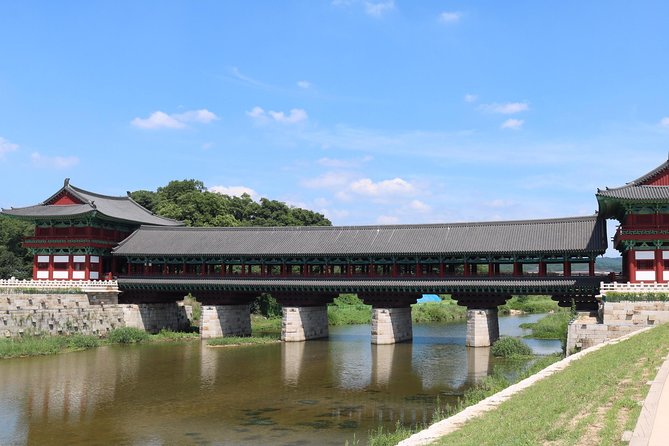
Gyeongju was the capital of the Silla Dynasty, and its historic remains are spread across the modern city and surrounding hills. That gives the city its memorable nickname: a museum without a roof. Instead of putting every important object behind glass, Gyeongju lets you encounter temples, tombs, observatories, villages, and archaeological sites in their original settings.
That variety is the real strength of this day. You are not spending seven hours at one monument or rushing through a single museum. You move from Buddhist sculpture to royal burial customs, then to ancient science and later Korean domestic architecture.
The tour also gives you a practical way to reach Gyeongju from Seoul. The KTX removes the need to arrange separate long-distance transport, and the guide is scheduled to meet you at the platform of Singyeongju Station. From there, the air-conditioned minivan saves time between sites that are spread across the city and nearby hills.
More History Tours in Gyeongju
- From Busan: Gyeongju UNESCO World Heritage Guided Day Tour
★ 4.8 · 1,250 reviews - Gyeongju UNESCO World Heritage Guided Day Tour from Busan
★ 5.0 · 660 reviews - Old Korea Thousand History Tour of Gyeongju from Busan
★ 5.0 · 518 reviews
Meeting your guide at Singyeongju Station
The activity begins at 9:30 am at Gyeongju Station, identified in the booking details as Singyeongju Station at 80 Singyeongjuyeok-ro, Geoncheon-eup. The guide waits at the KTX platform, which is an important detail. You do not need to find a downtown office or work out a second meeting point after arriving by train.
Your round-trip KTX ticket is included. Since the tour starts with a platform pickup and ends back at the meeting point, keep your arrival and return arrangements tied closely to the tour schedule. The exact train information should be checked when you receive confirmation.
The private format is useful here. Only your group participates, so the pace is not set by a large coach party. You can ask questions directly and hear explanations as you move between sites. The vehicle includes air conditioning, bottled water, and WiFi.
Seokguram Grotto and the east-facing Buddha
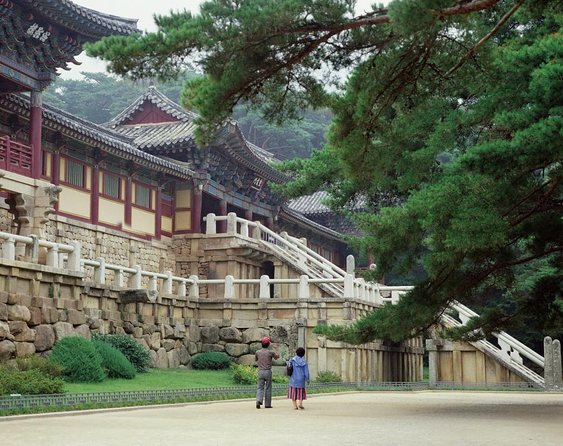
The first stop is Seokguram, a hermitage connected with Bulguksa Temple. You have about one hour here, and admission is included.
Seokguram is best understood as a sacred Buddhist setting rather than simply another museum stop. The grotto contains Buddhist sculptures and looks toward the East Sea. The coastal view helps explain why the site feels set apart from the city, even though it is part of the same cultural complex as Bulguksa.
This is one of the most important stops on the day for anyone interested in Korean Buddhist art. The central sculpture and surrounding figures are among the finest Buddhist works associated with Korea, and the site shares UNESCO World Heritage status with Bulguksa Temple.
The drawback is time. One hour allows you to see the grotto and hear the main explanation, but it does not leave much room for a slow visit. The site is also reached away from the city center, which is exactly why the included minivan is valuable. You avoid spending your limited day arranging separate transport.
Bulguksa Temple, Korea’s best-known Buddhist site
The tour then continues to Bulguksa Temple for about 70 minutes. Admission is included, and the temple is presented as Korea’s most famous Buddhist temple.
Bulguksa rewards close attention to its old architecture. Look at the stone stairways, raised platforms, gates, pagodas, and the careful relationship between the buildings and the hillside. The temple contains several national treasures, so the guide’s explanation helps you see more than a collection of attractive roofs and courtyards.
I like the pairing of Seokguram and Bulguksa. One is a remote stone sanctuary with sculpture at its center. The other is a larger temple complex where architectural design, ritual space, and national heritage come together. Visiting both gives you a fuller picture of Silla-era religious culture than visiting either site alone.
Seventy minutes is enough for a useful introduction, though it is not an exhaustive architectural study. If you want to photograph every corner or pause at length in each courtyard, the schedule may feel brisk. The tour is designed for broad coverage, not for an entire day at one temple.
More Temple Visits in Gyeongju:
- Gyeongju: UNESCO Heritage Tour Including Bulguksa Temple
★ 4.8 · 104 reviews - From Daegu: Gyeongju UNESCO Tour 7 Highlights with Bulguksa
★ 4.6 · 5 reviews - Seoul: Mt Seorak + Naksansa Temple or Nami Island Group Tour
★ 4.7 · 422 reviews - Best Things to Do – Half Day Seoul Trip (Seoul Palace & Temple)
★ 5.0 · 190 reviews
Cheonmachong Tomb and Gyeongju’s royal dead
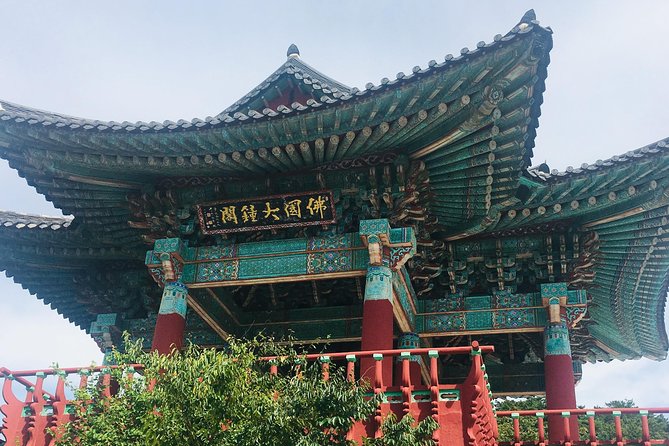
Cheonmachong Tomb is the next major stop, with about 50 minutes in the tomb park area. The peaceful setting makes a sharp change from the temple sites, and the area is popular for photographs.
You can also enter Cheonmachong itself, which contains a small museum. This makes the stop more informative than simply viewing a grassy mound from outside. The tomb gives you a direct look at how Silla royal burial sites were preserved and interpreted.
The park setting is part of the appeal. Gyeongju’s ancient tombs are not hidden away in a distant archaeological zone. They appear within the city, surrounded by open paths and quiet views. That is one reason the museum-without-a-roof idea works so well here.
The visit lasts less than an hour, so you should think of it as a focused introduction. You will not have time to study every tomb area in detail. Still, entering one tomb and seeing its small exhibition adds a useful human scale to the grander temple stops.
Gyeongju National Museum and the Silla story
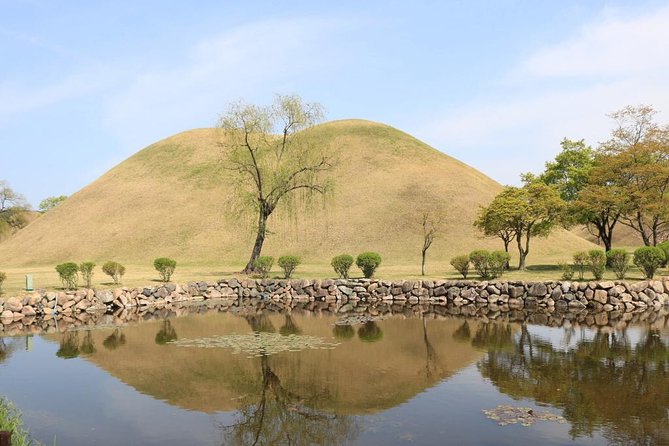
The longest scheduled visit is at Gyeongju National Museum, where you have about 90 minutes. Admission is included.
This is the place to connect the separate pieces of the day. The museum holds a large collection of Silla artifacts and covers the wider story of Korean history. After seeing temples and tombs in the open air, you can look at objects in a more controlled setting and understand how daily life, religion, craft, and royal power fit together.
I would pay close attention to the Silla material, since it gives context to Bulguksa and Cheonmachong. The museum is especially helpful if you arrive in Gyeongju knowing the names of famous sites but not yet understanding how they relate to one another.
Ninety minutes is a sensible amount of time for a first visit. It gives you room to see the main collection without turning the day into a museum marathon. If you prefer to read every label, you may want more time, but the broad schedule keeps the tour moving.
The museum also provides a useful break from outdoor sightseeing. Gyeongju’s sites can involve walking and changing weather, so an indoor stop adds comfort as well as historical value.
Cheomseongdae and the science of Silla
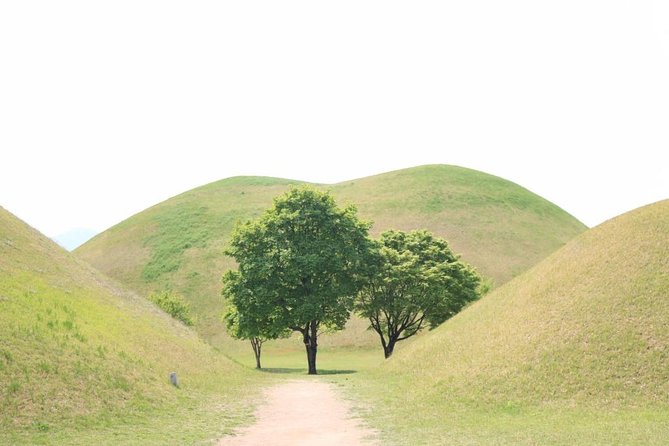
Cheomseongdae Observatory receives a short 10-minute stop. That may sound brief, but the site is compact and easy to view from outside.
The stone tower is associated with the scientific achievements of the Silla Dynasty. The tour description connects it with observing the sky and forecasting weather, giving you a glimpse of how astronomy and practical knowledge mattered in the ancient capital.
This stop works best as a quick visual lesson rather than a long visit. You will not have time for an extended study, but the guide can explain why the structure matters before you continue. It also adds balance to the itinerary. Gyeongju is not only temples and royal tombs. It preserves evidence of science and organized society too.
Bring your camera, but do not expect a lengthy stop. The 10-minute schedule is one of the clearest signs that this tour aims to show you the city’s main highlights in one day.
Gyochon Village and later Korean traditions
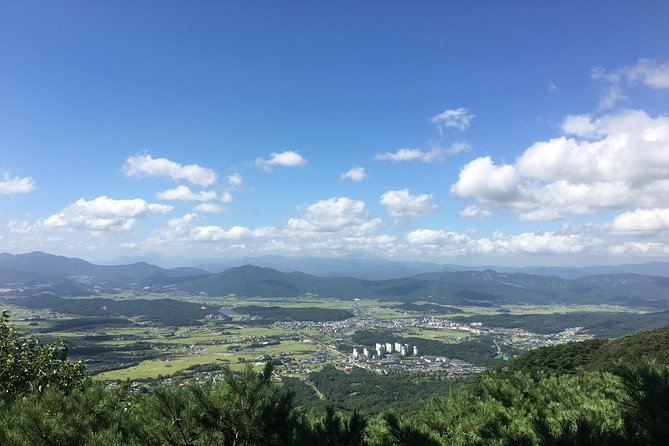
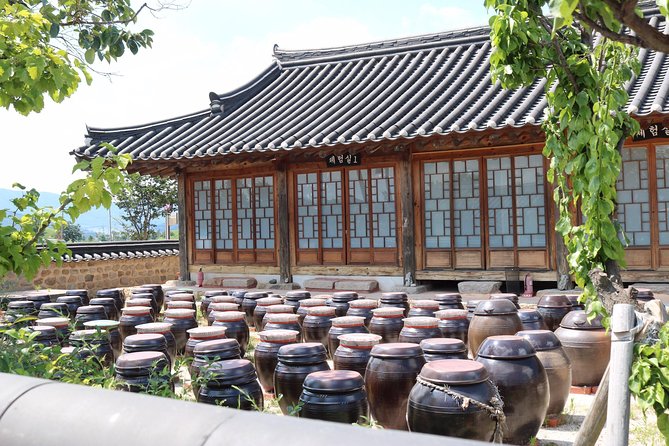
The final listed stop is Gyeongju Gyochon Traditional Village, where you have about 20 minutes. This is a Joseon Dynasty folk village, so it represents a later period than the Silla sites that dominate the day.
The village helps prevent Gyeongju from becoming a tour of only ancient monuments. You get a brief look at traditional Korean homes and the character of a historic residential setting. It is a smaller stop, but it widens the story from royal capital and Buddhist center to everyday life in a later Korean era.
Twenty minutes is enough to look around, take photographs, and get a sense of the village. It is not enough for a slow, detailed exploration. If traditional architecture is your main interest, this portion may feel too short. For most people, though, it is a pleasant final contrast before returning to the station.
Lunch, walking, and the day’s pace
Lunch is not included in the price. You pay on the spot and choose your own menu, which gives you control over cost and food preferences. The tour information refers to a restaurant lunch, but you should budget separately because the meal is clearly listed as an extra.
The day is described as approximately seven hours, with a 9:30 am start. The six sightseeing stops total about five hours of scheduled visit time, leaving the rest for driving, transfers, meeting arrangements, and lunch.
That makes this a full but sensible day. You see a lot, yet the stops are not all long enough for the schedule to feel slow. The tradeoff is that you will not have much free time to wander on your own.
A moderate amount of walking is involved. Wear comfortable shoes, especially because the tour includes temple grounds, a tomb park, museum galleries, and village paths. Bottled water is provided, but you should still dress for the conditions of the day.
Is $460 per person a good value?
At $460 per person, this is not a budget day trip. The value depends on what you want to remove from your own planning.
The price includes the round-trip KTX ticket, a private air-conditioned vehicle, an English-speaking guide, bottled water, onboard WiFi, admission fees, and taxes and handling charges. It also includes pickup and return at Singyeongju Station. Those pieces add up, especially when you consider that Gyeongju’s major sites are spread out.
The private format is the biggest factor. You are not paying only for entry tickets. You are paying for a guide and a dedicated vehicle that link the sites together in a single day. For a small group that values convenience and direct explanations, the cost may be reasonable.
The price is harder to justify if you are comfortable planning your own KTX journey, using local transport, and visiting at a slower pace. Independent visitors can gain more flexibility, though they must handle the route, tickets, admissions, and timing themselves.
Group discounts are available, so check the final per-person rate if you are booking for several people. Lunch remains an extra cost, and you should not assume it is covered.
Who will get the most from this Gyeongju day trip?
I would recommend this tour most strongly to first-time visitors based in Seoul who want to see Gyeongju without changing hotels. The combination of KTX and minivan makes a demanding day much easier to manage.
It also suits you if you want historical explanation at each stop. The route is broad, and the guide can tie together Silla Buddhism, royal burial customs, ancient science, museum collections, and Joseon village life.
Families and small private groups may appreciate the flexible format and the vehicle. People who prefer a slow pace, long museum visits, or several hours at Bulguksa may find the schedule too tight.
The tour has a five-star rating from one published assessment, which is a very small sample. The praise focuses on beautiful places, spectacular views, and clear historical explanation, including a strong recommendation for learning about Korea’s past. That matches the tour’s greatest strength: it gives you a wide, well-connected introduction rather than one isolated attraction.
Booking advice and cancellation terms
Confirmation is provided when you book, and most people can participate. The tour can change without notice because of local conditions, so keep a little flexibility in your day.
Free cancellation is available if you cancel at least 24 hours before the experience begins. Cancellations or changes made within 24 hours are not accepted for a refund, and the cutoff uses local time.
Because the tour is commonly booked well ahead, with an average booking lead time of 73 days, reserve early if your Seoul schedule is fixed. Pay particular attention to the meeting details at Singyeongju Station and the separate lunch cost.
Should you book this tour?
Book it if you want maximum historical coverage with minimum transport planning. Bulguksa and Seokguram alone make Gyeongju worthwhile, and the tomb, museum, observatory, and village stops give the day much more range.
Skip it if $460 feels too high or if you want to explore independently. The schedule is efficient rather than leisurely, and lunch is extra.
For a first visit from Seoul, I find the strongest case is convenience: KTX tickets, station pickup, private driving, admissions, and an English-speaking guide are bundled into one day. You will return with a clear sense of why Gyeongju is often described as Korea’s museum without a roof.
FAQ
Where does the tour begin?
It begins at Singyeongju KTX Station, listed at 80 Singyeongjuyeok-ro, Geoncheon-eup, Gyeongju. The guide waits for you at the KTX platform.
What time does the tour start?
The scheduled start time is 9:30 am.
Is transportation from Seoul included?
Yes. A round-trip KTX train ticket is included, along with minivan transportation during the Gyeongju sightseeing portion.
Is lunch included?
No. You pay for lunch on the spot, and you can choose the menu you want.
How long does the experience last?
The tour lasts approximately seven hours.
Is this a private tour?
Yes. Only your group participates in the activity.
Are admission fees included?
Yes. Admission is included for Seokguram, Bulguksa Temple, Cheonmachong Tomb, Gyeongju National Museum, and the other listed included attractions.
Can I cancel for a full refund?
Yes, if you cancel at least 24 hours before the experience start time. Cancellations or changes made less than 24 hours before the start are not accepted for a refund.
More Train Journeys in Gyeongju
- Gyeongju UNESCO Sites Tour by KTX train; The Museum Without walls
★ 4.5 · 11 reviews - Busan: Coastal Treasures Beach Train, Culture Village & More
★ 4.7 · 832 reviews - Busan’s Cultural Wonders with Beach Train & Gamcheon Village etc
★ 4.5 · 663 reviews - Busan city tour from Seoul by KTX bullet train
★ 5.0 · 39 reviews
More UNESCO Sites in Gyeongju
- Gyeongju UNESCO sites Private tour with licensed tour guide
★ 5.0 · 275 reviews - Private Gyeongju Tour – Explore Gyeongju UNESCO Sites
★ 5.0 · 272 reviews - Busan: Gyeongju UNESCO Legacy Tour with National Museum
★ 5.0 · 172 reviews - Gyeongju UNESCO World Heritage Sites and History Full-Day Tour with Lunch
★ 5.0 · 104 reviews
Just added in Gyeongju
- Yangdong village & Gyeongju Unesco Site Private Van Tour★ 5.0 · 1 review
- Small Group 7D Korea package Tour with Seoul Gyeongju Busan Jeju★ 4.5 · 13 reviews
- Gyeongju UNESCO Sites Tour by KTX train; The Museum Without walls★ 4.5 · 11 reviews
- Full-Day Small Group GyeongJu History Tour from Seoul★ 5.0 · 2 reviews
- 7 days Flexible Tour for Major Cities(Seoul,Busan,Gyeongju etc)★ 5.0 · 5 reviews
- PREMIUM 5 Days Tour for Wonder of Korea(Mt. Seoraksan, Andong, Gyeongju, Busan)★ 5.0 · 1 review
- 5 Days Tour for Korea’s past and present(Mt.Seoraksan, Andong, Gyeongju, Busan)★ 5.0 · 1 review
- 7 Days Highlight Korea Tour(Seoul, Nami, DMZ, Andong, Gyeongju, Busan)★ 5.0 · 1 review
Temple Stays, compared.

Mt Seorak + Naksansa Temple or Nami Island Group Tour
Read our review →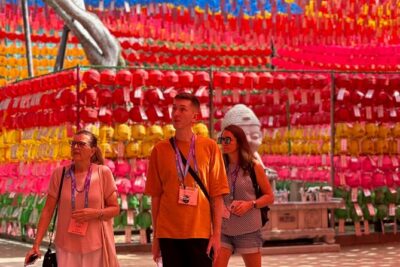
Best Things to Do – Half Day Seoul Trip (Seoul Palace & Temple)
Read our review →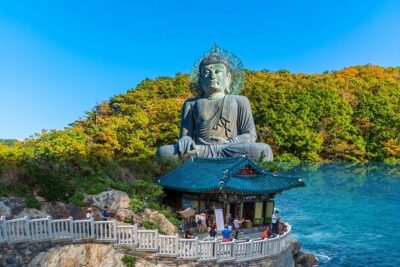
Mount Seorak and Naksansa Temple One Day Tour from Seoul
Read our review →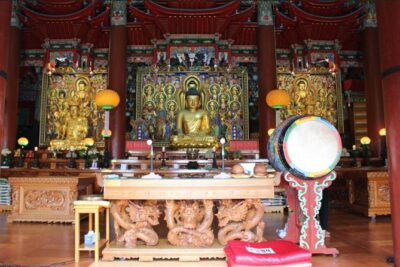
Busan Tour: Gamcheon Village & Haedong Yonggungsa Temple + Lunch
Read our review →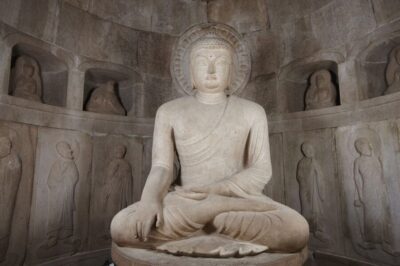
UNESCO Heritage Tour Including Bulguksa Temple
Read our review →
Full Day Busan Tour Including Haedong Yonggungsa Temple
Read our review →
Private Busan tour with gamcheon culture village and the temple (Customizable)
Read our review →
Day Tour of Suwon Hwaseong Fortress Starfield Waujeongsa Temple
Read our review →Browse the lists this tour appears in