
Reviewed · COOKING CLASSES
Busan Kkakdugi(Korean radish Kimchi) class with various options
Bring your appetite and a clean container. This Busan cooking class turns a simple Korean side dish into a friendly cultural lesson, with hands-on work, lunch, and homemade kkakdugi to take home. I like the small-group setting, limited to six people in the main description, and I like that the recipe is simple enough to repeat in your own kitchen.
The class also includes a meal during the long marinating break, plus a short visit to a nearby beach for photographs. The main drawback is the timing: salting the radish takes about two hours, so this is not a quick demonstration. The class information also gives a maximum of eight people elsewhere, so confirm the final group size when booking.
In This Review
- What makes this class worth your time
- A small Busan class with a personal feel
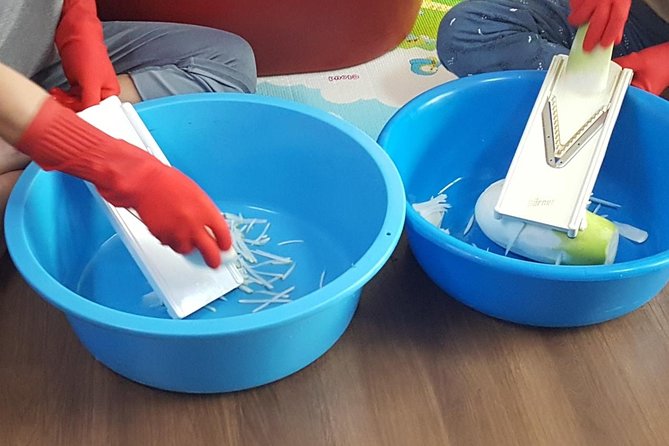
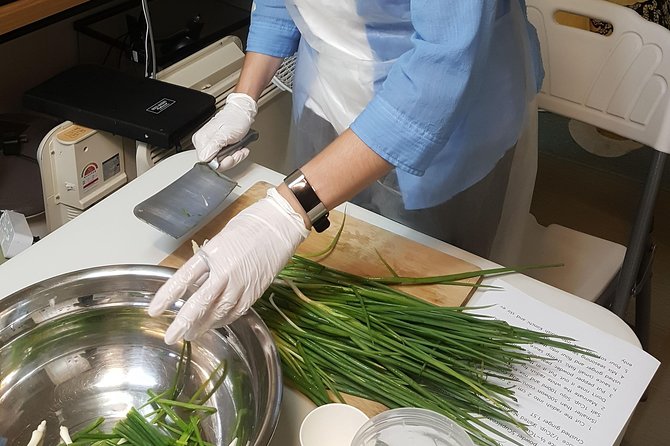
- Starting with the radish
- Making the seasoning sauce
- Lunch during the two-hour wait
- Mixing the finished kkakdugi
- The nearby beach photo stop
- What the $100 price includes
- Who will enjoy this Busan food experience
- Practical advice before you book
- Should you book the kkakdugi class?
- FAQ
- Where does the Busan kkakdugi class begin?
- How long does the experience last?
- How many people can join the class?
- Is lunch included?
- Do I take home the kimchi I make?
- Is a market tour included?
- Does the class include a beach visit?
- Is the recipe suitable for beginners?
- What happens if the class is canceled because of weather or too few participants?
What makes this class worth your time
- You make real kkakdugi by hand, rather than watching an instructor prepare it for you.
- The radish rests for about two hours, giving you time for lunch and conversation.
- Lunch is included at a Korean Chinese restaurant, with coffee or tea also provided.
- You take home your own radish kimchi in a plastic food container.
- Paul leads the class in English, with an easy recipe aimed at first-time cooks.
- A nearby beach stop adds photographs and fresh air after the kitchen work.
A small Busan class with a personal feel
You meet at Seomyeon subway station, at 730 Jungang-daero in Busanjin District. From there, the group moves to the instructor’s kitchen. This meeting point is practical because it sits near public transportation, though you should allow enough time to find the exact station exit or meeting spot.
The class is designed to feel more like cooking with a local host than attending a large commercial demonstration. The advertised group size is six, while the additional information lists a maximum of eight. Either way, this is much smaller than a typical food tour, and that matters when you are handling ingredients, asking questions, or trying to follow a recipe in English.
Paul is the instructor named in the experience details. He is described as friendly, enthusiastic, and able to communicate in English. That is useful here because the class depends on small instructions: how to salt the radish, how long to leave it, and how to mix the seasoning evenly.
More Busan trips:
- Busan: Gyeongju Guided Day Trip to Three Kingdoms Capital
★ 4.8 · 1,925 reviews - Small Group Full Day Busan Tour (Max 6 Pax)
★ 5.0 · 1,464 reviews - From Busan: Gyeongju UNESCO World Heritage Guided Day Tour
★ 4.8 · 1,250 reviews
Starting with the radish
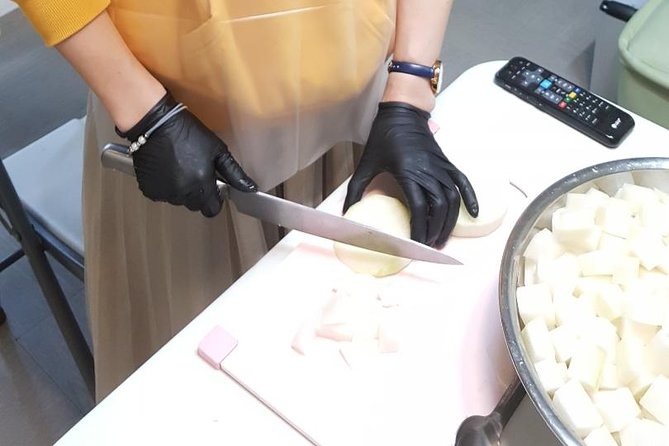
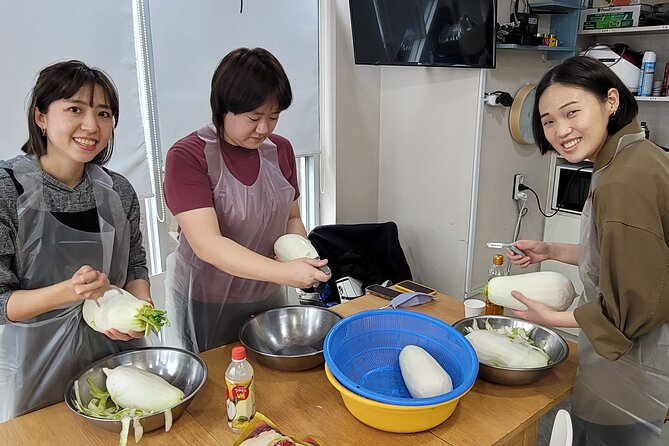
The first stage is a short explanation of how to make radish kimchi. The ingredient is Korean radish, cut and prepared for salting. Kkakdugi is the cube-shaped radish kimchi often served with Korean meals, and it has a firmer bite than cabbage kimchi.
The radish is salted first and must marinate for roughly two hours. This is the key point to understand before booking. The class lasts about three and a half hours, but you are not cooking continuously for all of that time. Some of the time is a planned pause while the radish changes texture.
That pause is not wasted time. The salt draws out moisture and helps the radish take on the seasoning later. For you, it also means the class does not feel like a rushed kitchen challenge. You can eat lunch, talk with the instructor, and learn about Korean food and the local area.
Still, you should not expect a rapid recipe demonstration followed by immediate tasting. If you want a tightly packed cooking class with several dishes, this one may feel slow. Its appeal is the patient process and the chance to make a useful amount of one dish.
Making the seasoning sauce
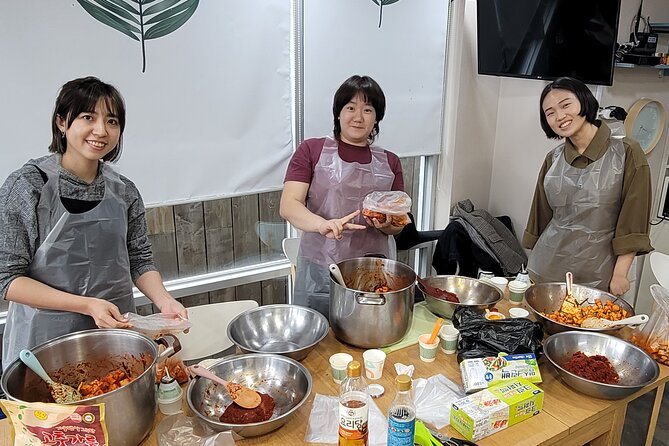
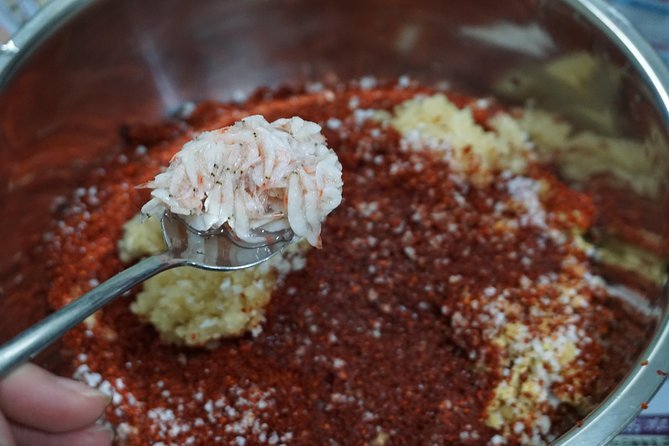
While the radish rests, you prepare the seasoning sauce. The recipe is deliberately kept straightforward, which makes it a good choice if you have never made kimchi before or do not cook Korean food at home.
The instructor provides step-by-step guidance, and the class makes enough seasoning sauce to leave participants with extra. That extra sauce can be used the next time you prepare kkakdugi, so the value is not limited to the portion made during the class.
Spice is worth discussing. One participant found that the full amount of chili paste was far too hot and chose to use half. The instructor also offers different recipes, so you can adjust the heat to suit your taste. If you prefer mild food, say so early and ask how much chili paste to use before mixing the batch.
This is a useful lesson for home cooks. Korean recipes often taste best when adjusted to the ingredients and the people eating them. A fixed amount of chili paste may work for one table but not another. Here, you get a chance to learn the basic method and make a sensible change.
Lunch during the two-hour wait
Lunch is included at a Korean Chinese restaurant during the marinating break. That is a practical addition because the class takes up most of a half-day, and you would otherwise have a long wait with nothing scheduled.
The meal is not presented as a separate restaurant tour. It functions as part of the class, giving you time to eat and speak with Paul while the radish marinates. One session included spicy mixed noodles with sea snail, which gives you an example of the type of Korean food that may be served.
Coffee or tea is also included. The exact lunch dish is not presented as a fixed menu, so you should treat the restaurant meal as part of the experience rather than booking it for one specific specialty.
I like this break because food classes can become tiring when every minute is spent standing over a counter. Here, the meal gives the group a natural pause. It also lets you ask questions about Korean dishes outside the single recipe you are making.
More Cooking Classes in Busan:
- Korean cooking class in Haeundae, Busan
★ 5.0 · 92 reviews - Busan Tailored Korean cooking class (Vegan OK)with market tour
★ 5.0 · 66 reviews - Busan: Small-Group Traditional Korean Food Cooking Class
★ 4.9 · 58 reviews - Busan Local Food Cooking Class with Market Tour
★ 5.0 · 53 reviews
Mixing the finished kkakdugi
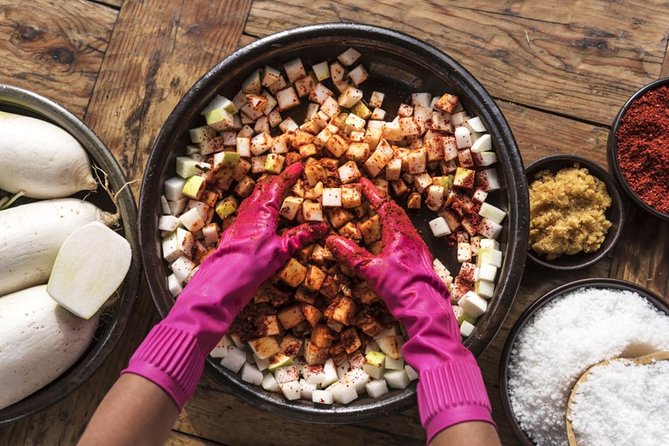
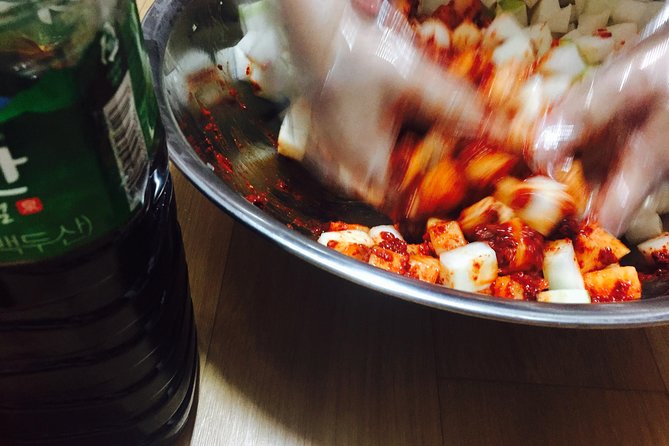
Once the radish has been salted properly, you return to the main cooking task. You mix the radish with the seasoning sauce and learn how to coat the pieces evenly. The process is accessible to first-timers, and one class produced about five kilograms of kkakdugi.
That quantity is important. This is not merely a tiny tasting portion. The amount you make may be enough to share, though the exact quantity can depend on the number of participants and the recipe used that day.
The instructor then places the finished radish kimchi into a plastic food container for you. This makes the take-home portion simple to manage, but you should still think about carrying it carefully after class. Kimchi is a fermented food with a strong smell, and a secure container matters if you have more sightseeing afterward.
The recipe is also meant to be recreated at home. You receive the practical benefit of seeing each stage, from salting to seasoning, rather than leaving with only a printed list of ingredients. Paul has also offered to send another recipe after the class, adding a little extra value for people who want to continue cooking Korean food.
The nearby beach photo stop
After the kitchen portion, the instructor takes the group to a nearby beach for photographs. This gives the afternoon a change of pace and adds a little Busan atmosphere beyond the kitchen.
The beach visit is not described as a long sightseeing stop, and you should not book this class as a full coastal tour. Think of it as a short photo opportunity after cooking. It can be a pleasant way to finish, especially if you want a few pictures connected to the day.
The stated end point is back at the meeting point. Since the itinerary also includes the beach, ask the instructor for the exact order and return arrangement on the day. This is especially useful if you have a fixed dinner reservation or another activity afterward.
What the $100 price includes
The price is $100 per person. That is not a low-cost cooking lesson, so the value depends on what you want from the outing.
You are paying for about three and a half hours, instruction, ingredients, lunch at a Korean Chinese restaurant, coffee or tea, and a take-home portion of radish kimchi in a plastic container. You also receive the cultural side of the experience: a local kitchen, conversation with the instructor, and an introduction to a dish that is closely tied to Korean meals.
The class may offer group discounts, which could improve the value for families or friends booking together. The small group is another reason the price can make sense. You receive direct help instead of standing at the back of a large room.
The value is weaker if you only want to taste kimchi or watch someone cook. It is stronger if you want to learn a repeatable recipe and leave with food you prepared yourself. The five-kilogram batch described in one session also suggests that the class can produce a generous amount, though you should not assume an identical quantity every time.
Private expenses and travel insurance are not included. The market tour is also not included. That last point matters because some food experiences begin with a market visit and use it to explain ingredients. This class goes directly from the station to the kitchen.
Who will enjoy this Busan food experience
I would recommend this class to first-time kimchi makers, home cooks, and visitors who prefer a personal activity over a standard sightseeing route. It also suits people who want a cultural experience with a meal, rather than a class that focuses only on technique.
It should work well for couples, small groups of friends, and families with an interest in Korean food. The recipe is simple, and the instructor’s enthusiasm helps keep the mood relaxed. You do not need advanced cooking skills to take part.
You should think twice if you dislike spicy food, have limited time, or want a market-based food tour. The chili level can be adjusted, but the class still centers on a Korean radish kimchi recipe. And because of the two-hour marinating period, the schedule is not easy to compress.
The class also requires good weather. If poor weather causes cancellation, you are offered another date or a full refund. It also requires a minimum number of participants, so a cancellation for that reason comes with the choice of a different date or experience, or a full refund.
The normal cancellation policy is strict: the experience is non-refundable and cannot be changed for any reason once booked. Check your plans carefully before paying.
Practical advice before you book
Plan on about three and a half hours, with additional time for getting to and from Seomyeon. Wear clothes you do not mind using in a kitchen, although no special clothing requirement is given.
Bring a reusable bag if you expect to carry the kimchi around afterward. The class supplies the plastic container, but a second bag can make transport easier.
If you are sensitive to chili, ask about the seasoning before the sauce is mixed. The class can provide recipe variations, and one session used half the chili paste because the full amount was too hot.
Do not assume a market visit is part of the day. It is specifically excluded. If you want to shop for ingredients or see a Korean food market, you will need to arrange that separately.
Confirmation is sent within 48 hours of booking, subject to availability. The experience is offered with mobile ticketing, and group discounts may be available.
Should you book the kkakdugi class?
Book it if you want to make a substantial batch of radish kimchi, eat lunch with a local instructor, and learn a recipe you can use at home. The small-group format, friendly English guidance, and take-home container are the strongest reasons to choose it.
Skip it if your schedule is tight or you mainly want a market tour. The two-hour marinating stage shapes the whole outing, and the beach stop is a short photo visit rather than a full Busan coastal excursion.
For the right person, $100 buys more than a meal. You get a hands-on food lesson, a relaxed cultural exchange, lunch, and a practical souvenir you prepared yourself. That is a fair deal for a half-day activity, provided you are ready for spice, patience, and a container of kimchi on the way home.
FAQ
Where does the Busan kkakdugi class begin?
The class begins at Seomyeon subway station, at 730 Jungang-daero in Busanjin District, Busan, South Korea.
How long does the experience last?
The experience lasts approximately three hours and 30 minutes.
How many people can join the class?
The main description gives a maximum group size of six. The additional information lists a maximum of eight travelers, so you should confirm the final group size when booking.
Is lunch included?
Yes. Lunch at a Korean Chinese restaurant is included, along with coffee and/or tea.
Do I take home the kimchi I make?
Yes. The class provides radish kimchi and a plastic food container for taking it home.
Is a market tour included?
No. The local market tour is not included in this cooking class.
Does the class include a beach visit?
Yes. After the class, the instructor takes participants to a nearby beach for photographs.
Is the recipe suitable for beginners?
Yes. The class uses a simple recipe and step-by-step instruction designed to make the process accessible to first-time cooks.
What happens if the class is canceled because of weather or too few participants?
If poor weather causes cancellation, you are offered a different date or a full refund. If the minimum number of participants is not reached, you are offered a different date or experience, or a full refund.
More Workshops in Busan
- [BUSAN,GamcheonVillage] Private Korean Art Painting Class
★ 5.0 · 20 reviews - Korean Pottery Town Tour with the pottery class from Busan
★ 5.0 · 7 reviews - Busan private tour : K-pop dance class + tour
★ 5.0 · 6 reviews - Busan Dialect Class with local snack
★ 5.0 · 3 reviews
Just added in Busan
- Small Group 7D Korea package Tour with Seoul Gyeongju Busan Jeju★ 4.5 · 13 reviews
- Private Transfer from Seoul to Busan(up to 12 passengers)★ 5.0 · 1 review
- Jinhae Cherry Blossom + Busan Sunrise from Seoul★ 4.5 · 5 reviews
- 7 days Flexible Tour for Major Cities(Seoul,Busan,Gyeongju etc)★ 5.0 · 5 reviews
- PREMIUM 5 Days Tour for Wonder of Korea(Mt. Seoraksan, Andong, Gyeongju, Busan)★ 5.0 · 1 review
- 5 Days Tour for Korea’s past and present(Mt.Seoraksan, Andong, Gyeongju, Busan)★ 5.0 · 1 review
- 7 Days Highlight Korea Tour(Seoul, Nami, DMZ, Andong, Gyeongju, Busan)★ 5.0 · 1 review
- 5-Day Korea Golden route by K-shuttle Tour from Seoul Including Busan, Yeosu★ 4.5 · 37 reviews
Cooking Classes, compared.
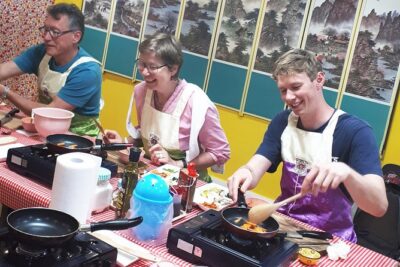
Local Home Korean Cooking Class & Market Adventure in Seoul
Read our review →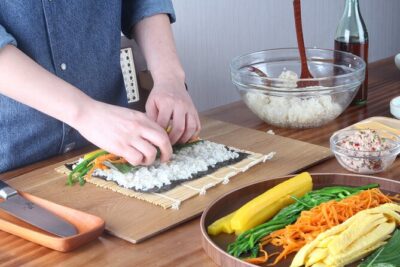
Master Korean traditional cooking with a Kimchi chef
Read our review →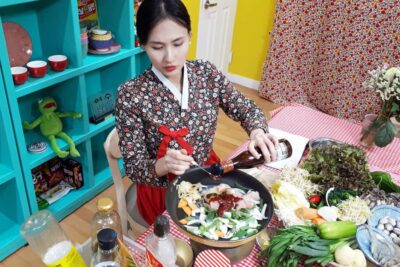
Korean Cooking Class at a Local Home and Market Tour
Read our review →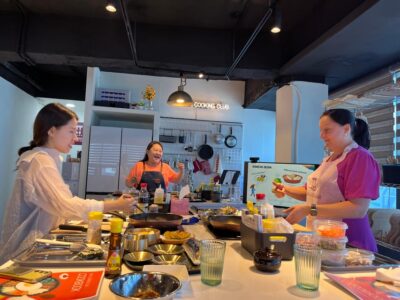
Korean Cooking Class with Grocery Shopping at Seoul Local Market
Read our review →
Korean Kimchi Making Day Experience with a Local Market Tour
Read our review →
Browse the lists this tour appears in