
Reviewed · GYEONGJU TOURS
Guided Car Tour in Geyongju with a Local Guide
Gyeongju rewards curious visitors. This four-hour private car tour links the city’s most important Silla-era sights with the comfort of an air-conditioned electric car and a guide who grew up here. I especially like the small maximum of three people, which keeps the outing flexible, and the chance to hear local stories rather than receive only a standard site-by-site explanation. The main consideration is communication: the guide may not speak much English, so you should be comfortable using Google Translate or Papago.
The route is also a sensible answer to Gyeongju’s spread-out attractions. Bulguksa and Seokguram are difficult to combine with central sights on foot in a short visit, while a car makes the connections easy. At $70.70 per person, the price is not bargain-basement, but it is reasonable for a private half-day ride, pickup, local guidance, and access to five major places.
In This Review
- Key points before you book
- Why a car helps in spread-out Gyeongju
- Bulguksa Temple: the strongest first stop
- Seokguram: a quiet mountain pilgrimage
- Bomun Lake: a change of pace
- Woljeonggyo Bridge: an evening favorite in daylight
- Gyeongju National Museum: put the sites into context
- The guide makes the difference
- Translation apps work, with one important caveat
- Is $70.70 per person good value?
- Timing, weather, and practical planning
- Who should choose this four-hour tour?
- Should you book the Gyeongju car tour?
- FAQ
- How long does the guided car tour in Gyeongju last?
- How many people can join the tour?
- What places are included?
- Is pickup available?
- Does the guide speak English?
- Are admission tickets included?
- Can I cancel for a full refund?
Key points before you book
- A maximum of three people makes this a private-feeling tour rather than a bus outing.
- The electric car has air conditioning, a welcome feature during warm or humid Korean weather.
- Bulguksa and Seokguram give you the strongest dose of Gyeongju’s Buddhist heritage.
- Translation apps are part of the experience, and past communication has worked well through Google Translate.
- The route can be flexible, with some visitors replacing Bomun Lake with Woljeonggyo Bridge when it suited their plans.
- Pickup and drop-off are practical advantages, especially if you are staying outside the central historic area or need to finish at the train station.
Why a car helps in spread-out Gyeongju
Gyeongju is not a city you can fully understand from one compact old town. Important sights are scattered between temple hills, museum grounds, lakeside roads, royal-era remains, and the modern city. Public transportation can get you around, but four hours is a tight window for combining Bulguksa, Seokguram, Bomun Lake, Woljeonggyo, and the museum.
This tour solves that problem with door-to-door transport. Pickup is offered from the Noseo-dong area, and the end point can be arranged anywhere in Gyeongju-si. Past arrangements have included hotel pickup and a finish at the train station, which is useful if this is your last stop before leaving town.
The car is electric and air-conditioned. That matters more than it may sound. Gyeongju’s major sites can involve outdoor walking, steps, and exposure to sun or rain, so a cool, quiet ride between stops gives you a chance to rest. The vehicle is limited to three people, which also means you are not waiting for a large group to gather.
The tour begins at 10:00 am and lasts about four hours. The planned schedule gives roughly one hour each at Bulguksa, Seokguram, and the Gyeongju National Museum, with thirty minutes at Bomun Lake and thirty minutes at Woljeonggyo. That is a brisk but workable introduction.
More Gyeongju trips:
- Busan: Gyeongju Guided Day Trip to Three Kingdoms Capital
★ 4.8 · 1,925 reviews - From Busan: Gyeongju UNESCO World Heritage Guided Day Tour
★ 4.8 · 1,250 reviews - Gyeongju UNESCO World Heritage Guided Day Tour from Busan
★ 5.0 · 660 reviews
Bulguksa Temple: the strongest first stop
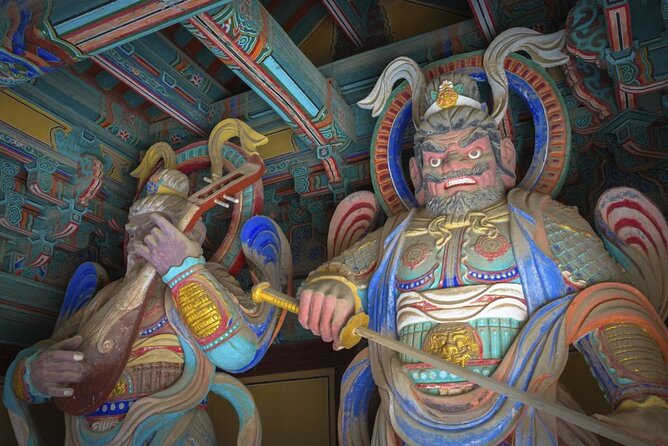
Bulguksa is the heart of the tour. This major Buddhist temple is one of South Korea’s best-known historic sites and a UNESCO World Heritage Site. Its importance is not just age. The temple brings together stone platforms, timber buildings, stairways, pagodas, and carefully arranged courtyards in a setting that makes the architecture easy to appreciate.
You have about an hour here. That is enough for a useful first look, particularly if your guide points out details you might otherwise pass without noticing. A local guide can also connect the temple to Gyeongju’s role as the capital of the Silla Kingdom, which lasted from 57 BC to AD 935.
The temple can be especially attractive when decorated for a Buddhist festival. One Korean-speaking participant described seeing Bulguksa dressed for Buddha’s Birthday and finding the sight deeply moving. That sort of timing is not guaranteed, but it shows how the temple can feel different depending on the season and religious calendar.
I would not expect a slow, scholarly examination of every hall in one hour. If you like to photograph architectural details or pause often, the visit may feel short. Still, for a first encounter with Gyeongju, Bulguksa gives you the clearest sense of why the city matters.
Seokguram: a quiet mountain pilgrimage
Seokguram is visited with Bulguksa because the two sites are closely connected, yet the mood is different. This eighth-century Buddhist cave temple is another UNESCO World Heritage Site. Its central image, a carefully made Buddha, is the reason many people consider this the highlight of the day.
The visit is allotted one hour. That gives you time to reach the cave area, see the shrine, and take in the setting without turning the stop into a rushed photo call. The cave itself is the main focus, so this is a place where a guide’s background explanation can help you understand what you are seeing.
Seokguram is also one of the reasons the car is valuable. The site is near Bulguksa but not part of Gyeongju’s central walkable core. Reaching both independently takes planning, while the tour handles the transition for you.
Keep your expectations sensible. This is a short stop within a half-day route, not an extended mountain excursion. The attraction is also more contemplative than theatrical. You are there to appreciate a sacred Buddhist work and its setting, not to expect a large museum-style display.
Bomun Lake: a change of pace
After two major religious sites, Bomun Lake provides a lighter break. Also called the Bomun Tourist Complex, it is an artificial lake created by damming the Bomunho River and covers about 2.6 square kilometers. The planned visit is thirty minutes.
This stop is less about ancient monuments and more about giving the day some breathing room. You can enjoy the water, take photographs, and see a different side of Gyeongju. The area is part of the city’s modern tourism zone, so it helps show that Gyeongju is more than temples and royal remains.
Thirty minutes is probably the right amount of time for a quick scenic pause. If you want a long lakeside walk, a leisurely meal, or time at one of the area’s other attractions, this tour will not provide enough time. One useful feature is flexibility: a couple staying near Bomun Lake arranged to replace this stop with Woljeonggyo Bridge. You can ask about a similar adjustment before or during the tour, though changes depend on timing and the guide.
A few more options to weigh up in Gyeongju
- Gyeongju UNESCO sites Private tour with licensed tour guide
★ 5.0 · 275 reviews - Gyeongju: Private Car Tour with a Licensed Tour Guide
★ 5.0 · 85 reviews - Echoes of Silla Gyeongju Historical Guided Day Tour from Busan
★ 5.0 · 14 reviews - Gyeongju Private Tour with hidden gem by local tour guide
★ 5.0 · 8 reviews
Woljeonggyo Bridge: an evening favorite in daylight
Woljeonggyo, also called Woljeong Bridge, is a historic stone bridge with major cultural and architectural value. It dates from Korea’s early history and is regarded as one of the country’s oldest surviving bridges. The scheduled visit is thirty minutes.
A half-hour gives you time to see the structure and take photographs, but not to linger for a long walk around the surrounding area. If you have already seen the bridge at night, a daytime visit may feel less dramatic. If you have not, this short stop offers a useful look at its design and place in Gyeongju’s historic center.
The bridge is also a good example of why an adjustable route helps. Some people will prefer a scenic lake stop; others will want another historic monument. Since the tour is private and capped at three people, you can discuss your priorities rather than simply follow a fixed bus schedule.
Gyeongju National Museum: put the sites into context
The final major stop is the Gyeongju National Museum, with about one hour allotted. The museum holds more than 160,000 artifacts connected with Gyeongju and the Silla Kingdom. This is where the morning’s temples and monuments begin to make more sense as part of a larger period of Korean history.
I like having a museum at the end of the route. After seeing Bulguksa, Seokguram, and Woljeonggyo in person, objects inside the museum can feel less abstract. You have already seen the scale and setting of the city, so the displays have a stronger connection to place.
One hour is enough for an introduction, not a full museum visit. The collection is large, and anyone especially interested in Silla art or archaeology may want to return independently. If your main interest is scenery and outdoor photography, the museum may feel more demanding than the lake or bridge. Your guide can help you focus your time, which is useful when the clock is running.
The guide makes the difference
The most praised part of this experience is the guide’s attitude. Descriptions repeatedly highlight punctuality, kindness, patience, careful driving, and a willingness to adjust the pace. One guide identified as Sang Jong was described as caring and attentive. Another account refers to Mr. Lee. Names and spellings may vary, but the pattern is clear: the human service is a major reason this tour earns such strong marks.
The guide is from Gyeongju and can add personal stories about the area. That local connection is valuable in a city where facts can otherwise blur together. You may also get restaurant suggestions, lists of places to see after the tour, and help choosing sights that work well on foot.
There are thoughtful touches in the feedback. When one participant’s husband became ill and stayed behind, the guide brought him rice porridge and abalone. That is not a promised part of the tour, but it reflects the personal care some people have received.
The guide may also take commemorative photographs. Again, this is not a formal guarantee, but it has been part of the experience for some people and can be helpful when you are traveling as a small group.
Translation apps work, with one important caveat
You should book this tour knowing that English ability may be limited. Several people expected an English-speaking guide but instead communicated through Google Translate. The result was generally positive, with lively conversations and explanations handled by phone.
Google Translate and Papago can bridge a surprising amount of distance, especially when you are discussing simple questions about sites, food, and local customs. One especially practical tip is to download Papago before the tour. Having a translation app ready avoids wasting time with installation or weak connections.
Still, app-based communication is slower than speaking directly. Complex historical questions may require shorter exchanges, and a translation error can create confusion. If you want a polished lecture in fluent English, this is not the safest choice. If you value a friendly local companion and can communicate patiently through an app, the arrangement can work very well.
Is $70.70 per person good value?
At $70.70 per person, the value depends on your group size and priorities. For one person, the cost is higher than joining a large group excursion. For two or three people, you are paying for a private car, pickup, air conditioning, a local guide, and a route that covers sites spread across the city and surrounding hills.
The admission tickets are listed as free, so the price is mainly for transport, time, and personal service. That makes the tour particularly useful if you do not want to work out connections between Bulguksa, Seokguram, Bomun Lake, the bridge, and the museum on your own.
I would call it a practical time-saving purchase rather than a low-cost sightseeing deal. The tour is also more valuable during a short stay, when losing half a day to transport would be frustrating. If you are in Gyeongju for several days and enjoy planning public transportation, you may prefer to visit at your own speed.
The group limit is a real part of the value. With no more than three participants, you can ask for a slower pace, take photographs, and discuss small changes without managing a crowd.
Timing, weather, and practical planning
The tour starts at 10:00 am and runs for about four hours. Traffic can affect the schedule, especially during Chuseok holidays. Bad weather can also lead to cancellation, with a different date or full refund offered in that case.
Because the itinerary is full, I would avoid adding complicated plans immediately afterward unless you have plenty of spare time. The schedule works best when you treat it as a focused introduction rather than trying to squeeze in extra major sights.
Wear comfortable shoes. You will be visiting temples, a bridge, museum grounds, and outdoor areas, so expect walking even though the car handles the long connections. Service animals are allowed, and most people can participate. The tour is near public transportation, but the pickup service is the more useful feature if your accommodation is not close to the central sights.
Cancellation is free when made at least 24 hours before the start time. Changes or cancellations inside that window are not refunded, except when the operator cancels for poor weather or because the minimum number of participants is not met.
Who should choose this four-hour tour?
I would recommend it most strongly to:
- First-time visitors with only half a day in Gyeongju
- Couples or small families who want private transport
- People who want Bulguksa and Seokguram without arranging separate connections
- Visitors interested in local stories and food recommendations
- Anyone who prefers a relaxed pace to a large organized group
- Visitors who are comfortable using a translation app
You may want another option if fluent English guiding is essential, if you want long visits at each museum or temple, or if you prefer exploring entirely on foot. The route covers a lot, but each stop is necessarily selective.
Should you book the Gyeongju car tour?
Book it if you want to see Gyeongju’s major highlights efficiently and value a kind local guide more than a formal English lecture. The combination of Bulguksa, Seokguram, Bomun Lake, Woljeonggyo, and the National Museum gives you temples, sculpture, scenery, architecture, and Silla artifacts in one manageable morning.
Before booking, prepare Google Translate or Papago and accept that communication may take extra time. If you do that, the small electric car, flexible route, pickup service, and guide’s personal care make $70.70 per person a fair price for a short stay. I would choose this tour early in a Gyeongju visit, then use the guide’s suggestions to explore the places you have time to see on foot afterward.
FAQ
How long does the guided car tour in Gyeongju last?
The tour lasts approximately four hours and begins at 10:00 am.
How many people can join the tour?
The tour has a maximum of three participants.
What places are included?
The planned route includes Bulguksa Temple, Seokguram, Bomun Lake, Woljeonggyo Bridge, and the Gyeongju National Museum.
Is pickup available?
Yes. Pickup is offered, with the listed starting point in Noseo-dong, Gyeongju-si. The end point can be arranged anywhere in Gyeongju-si.
Does the guide speak English?
English ability may be limited. Communication can be handled through Google Translate or another translation app, and downloading Papago before the tour is a useful preparation.
Are admission tickets included?
The listed admission information shows free admission for each stop.
Can I cancel for a full refund?
Yes, if you cancel at least 24 hours before the experience start time. Cancellations or changes made less than 24 hours before the start are not refunded. If the tour is canceled because of poor weather or insufficient participants, you are offered another date or a full refund.
Just added in Gyeongju
- Yangdong village & Gyeongju Unesco Site Private Van Tour★ 5.0 · 1 review
- Small Group 7D Korea package Tour with Seoul Gyeongju Busan Jeju★ 4.5 · 13 reviews
- Gyeongju UNESCO Sites Tour by KTX train; The Museum Without walls★ 4.5 · 11 reviews
- Full-Day Small Group GyeongJu History Tour from Seoul★ 5.0 · 2 reviews
- 7 days Flexible Tour for Major Cities(Seoul,Busan,Gyeongju etc)★ 5.0 · 5 reviews
- PREMIUM 5 Days Tour for Wonder of Korea(Mt. Seoraksan, Andong, Gyeongju, Busan)★ 5.0 · 1 review
- 5 Days Tour for Korea’s past and present(Mt.Seoraksan, Andong, Gyeongju, Busan)★ 5.0 · 1 review
- 7 Days Highlight Korea Tour(Seoul, Nami, DMZ, Andong, Gyeongju, Busan)★ 5.0 · 1 review
Gyeongju Tours, compared.
Gyeongju Guided Day Trip to Three Kingdoms Capital
Read our review →
Gyeongju UNESCO World Heritage Guided Day Tour
Read our review →
Gyeongju UNESCO World Heritage Guided Day Tour from Busan
Read our review →
Old Korea Thousand History Tour of Gyeongju from Busan
Read our review →
Gyeongju UNESCO sites Private tour with licensed tour guide
Read our review →
Private Gyeongju Tour – Explore Gyeongju UNESCO Sites
Read our review →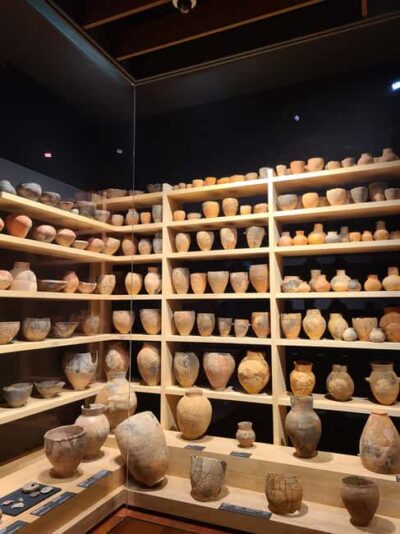
Gyeongju UNESCO Legacy Tour with National Museum
Read our review →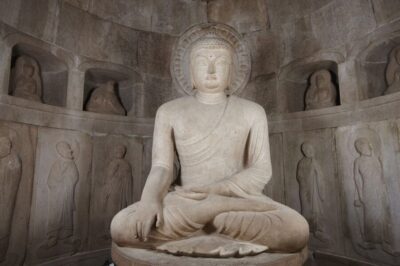
UNESCO Heritage Tour Including Bulguksa Temple
Read our review →Browse the lists this tour appears in